Baton Rouge is known for its culture, its food, its university energy, and its deep Southern roots but it also carries one of the most troubling legacies of unsolved killings in the American South.
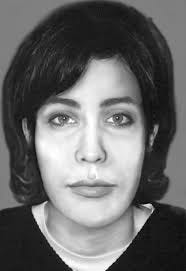
Alongside the well-publicized series of serial murders that plagued Baton Rouge between 1998–2004, there exists a quieter, even more haunting category: the unidentified victims who have never gotten their names back.
These women known collectively as The Baton Rouge Jane Does represent several unsolved homicides that investigators believe could be linked to predators operating throughout the Baton Rouge area during a violent era in the city’s history.
Their names are still unknown.
And their killers may have been part of a pattern larger than anyone realized at the time.
Case Overview: Who Are the Baton Rouge Jane Does?
Although multiple cases fall under this umbrella, the most referenced Jane Does include:
“Baton Rouge Jane Doe A” (Approx. age 20–35)
* Found in a remote wooded area outside the city
* Estimated death between 1998–2002
* Body partially skeletal; no ID, no jewelry
* Cause of death undetermined due to decomposition
* Believed to be Caucasian or possibly Hispanic, petite
* Possible link to known serial activity in area
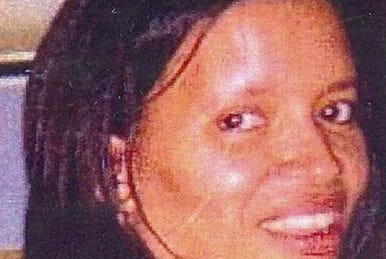
“Baton Rouge Jane Doe B” (Approx. age 15–25)
* Found near a drainage ditch close to the I-10 corridor
* Signs of homicide likely strangulation
* No match to any missing-person profile in Louisiana or surrounding states
* Forensic artists attempted multiple reconstructions
“Airline Highway Jane Doe” (Approx. age 25–40)
* Body discovered near Airline Highway, a known corridor where victims of other killers were dumped
* Clothing indicated she may have been passing through or transient
* No dental records matched any database
“River Road Jane Doe” (Age range widened: 17–40)
* Found near a riverbank area tied to several known violent offenders
* Inconsistent witness statements prevented investigators from defining timeline
All these women share the same core tragedy:
they were murdered, yet no one has reported them missing or no report matched their profiles.
Why They’re Unidentified
Baton Rouge in the late ’90s and early 2000s struggled with:
* Poor early forensic technology
* Incomplete missing-person databases
* Lack of cross-state communication
* Large transient populations
* Rampant serial offender activity
At least two serial killers and possibly a third were active during this era.
Some victims have been linked to known offenders, but others simply don’t fit
These Jane Does are believed to be:
* Runaways
* Unhoused or transient women
* Victims whose families might have assumed they left voluntarily
* Victims from out-of-state who were passing through
Their bodies were often found months or years after death, making identification difficult.
Major Theories
THEORY 1: Victims of Overlapping Serial Predators
Baton Rouge had multiple violent offenders overlapping in territory and method.
Some investigators believe the Jane Does belong to one or more of these offender cycles.
THEORY 2: Out-of-State Victims
Louisiana is a corridor state victims may have come from:
* Texas
* Mississippi
* Alabama
* Florida
* Arkansas
A missing-person report in Texas might never have been connected to a body found in Baton Rouge.
True Crime Weekly is a reader-supported publication. To receive new posts and support my work, consider becoming a free or paid subscriber.
HEORY 3: Victims of Human Trafficking Routes
Louisiana’s I-10 corridor has long been considered a trafficking route.
Some believe the Jane Does were brought in, exploited, and discarded.
THEORY 4: Victims with No Missing-Person Report Filed
It happens more than we’d like to think:
* Estranged families
* Runaways
* Youth with unstable home environments
* Women living in survival-mode circumstances
If no report exists, identification becomes nearly impossible.
These cases never gained national attention because each one lacked the one thing that makes headlines: a name. No family face for the cameras. No personal story to anchor the tragedy. But make no mistake these women mattered.
Their lives were taken violently. And their killers walked away.
Somebody knew them once.
Somebody remembers them.
And somebody knows how they died.
They deserve the dignity of a name.
 True Crime Weekly
Leave a comment