“The Serial Killer Who Never Existed And the DNA Blunder That Changed Forensics”
A Phantom That Haunted Europe
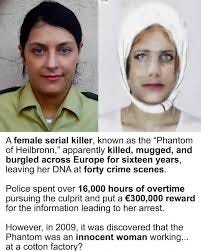
For years, police in Germany, Austria, and France thought they were tracking a single prolific female offender nicknamed the Phantom of Heilbronn or the “Woman Without a Face.”
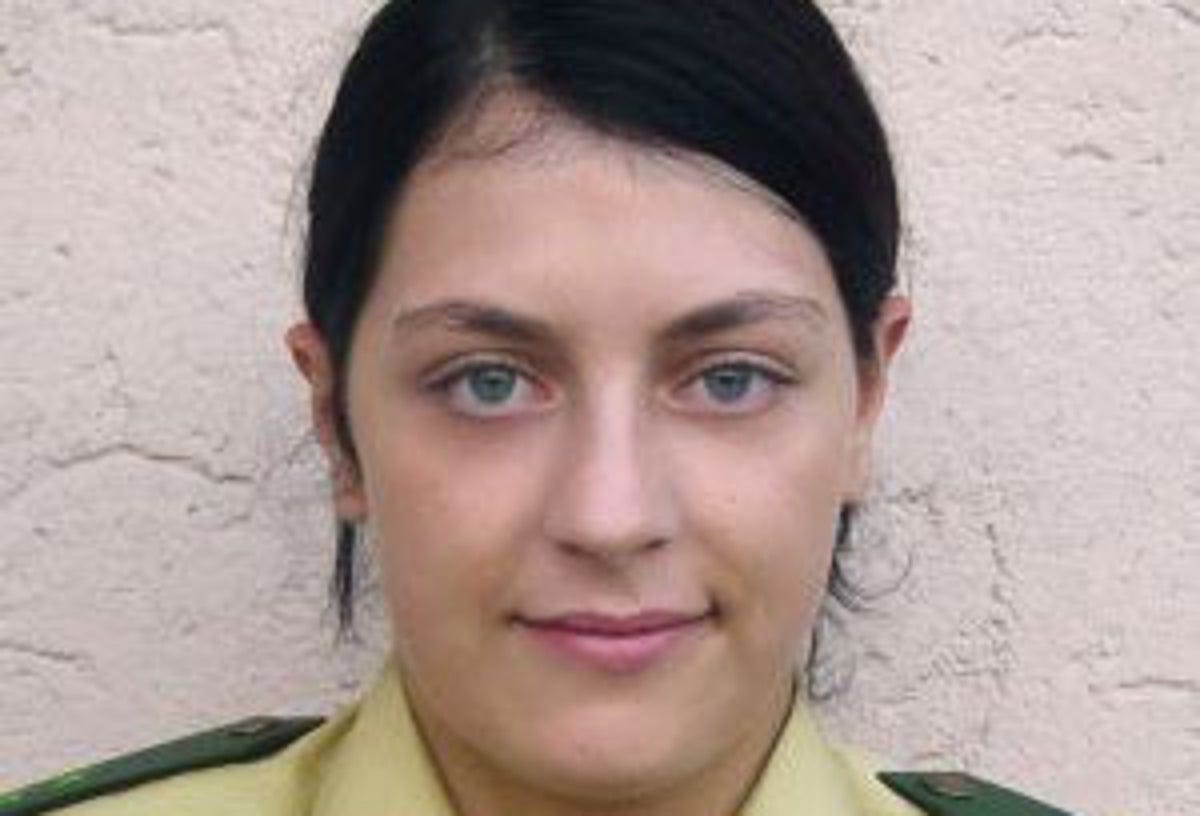
Investigators were convinced the same woman’s DNA appeared at up to 40 different crime scenes spanning murder, burglary, and assault.
The thread seemed simple: collect DNA at each crime scene, match to a profile, and build an offender pattern.
Except the premise was completely wrong.
The Breakthrough That Didn’t Lead to a Killer
In 2009, investigators made a stunning discovery: the DNA believed to link all these crimes didn’t come from a criminal at all it came from contaminated cotton swabs used to collect DNA evidence.
The swabs, reportedly produced in a factory in Austria, were sterile but not DNA-free, meaning the materials still carried human DNA.
The DNA profile appeared in samples because it originated with a woman working in the manufacturing facility, not because that woman had committed any of the crimes.
This revelation collapsed the entire premise of the Phantom. The same DNA had been recovered in cases across:
- Germany
- Austria
- France
Including scenes interpreted to involve murder, robbery, and burglary. But these recoveries were artifacts of contamination, not criminal traces.
The Misleading DNA
DNA profiling was one of the most transformative tools in modern forensics capable of identifying individuals with staggering precision.
But the Phantom of Heilbronn case is one of the most notorious examples of what happens when DNA collection is incomplete or contaminated.
German police had even offered a €300,000 reward for information that would lead to the Phantom’s capture.
But in truth, the entire “offender” was a phantom:
a figure constructed from flawed evidence rather than actual behavior.
The Real Crimes Behind the Phantom
It’s important to note:
- The individual criminal acts linked by the Phantom’s DNA were real crimes committed by real perpetrators.
- Those crimes included homicides, robberies, and burglaries across multiple jurisdictions.
- Only the linkage between them, via DNA, was invalidated.
In one prominent example, the apparent DNA link included the murder of Police Officer Michèle Kiesewetter in Heilbronn an event that intensified public fear and investigative pressure.
Once investigators began uncovering inconsistencies including DNA found on a male asylum seeker that matched the alleged Phantom skepticism rose, prompting deeper review that revealed contamination.
Forensics After Phantom: Systemic Change
The fallout from the Phantom’s exposure had impacts far beyond academic embarrassment. It reshaped international forensic standards.
One major consequence:
- Introduction of ISO 18385 (2016) setting strict requirements for forensic consumables to be DNA-free, not just sterile minimizing the risk of contamination during production.
This case shifted how law enforcement and forensic laboratories worldwide think about collection tools like cotton swabs, evidence bags, and handling protocols.
Unlike traditional true crime narratives, the Phantom of Heilbronn isn’t about a killer on the run it’s about a case built on false premises. It highlights the danger of overreliance on forensic technology without procedural safeguards.
Investigators were chasing a ghost, essentially because:
- DNA was assumed to be uncontaminated
- Evidence collection materials were not vetted for human DNA contamination
- The same batch of flawed swabs was used across jurisdictions
All of which led to 16 years of investigative confusion before the truth emerged.
Why This Case Still Matters
This case is a constant reminder that:
- Forensic science is powerful but fallible
- Evidence must be examined with context and caution
- Technology cannot replace rigorous methodology
In a world that often treats DNA as infallible, the Phantom of Heilbronn shows that even the strongest evidence can mislead if the foundations of its collection are unstable.
 True Crime Weekly
Leave a comment