For years, women vanished from Vancouver’s Downtown Eastside a neighborhood already battered by poverty, addiction, and neglect. Their disappearances were treated as expected outcomes of a “dangerous lifestyle.” Families reported them missing. Advocacy groups pleaded for action. Posters layered over posters on telephone poles.
And still, nothing changed.
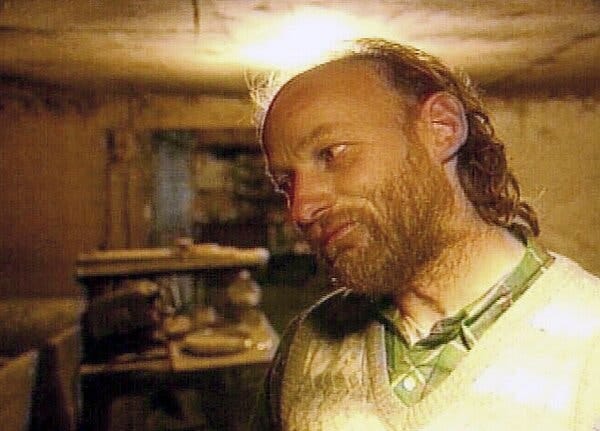
At the center of this growing tragedy was a ramshackle pig farm in Port Coquitlam, owned by a quiet, socially awkward man named Robert William Pickton a man who would later confess to murdering nearly 50 women.
What makes the Pickton case so horrifying isn’t just the brutality of the crimes it’s how avoidable they were.
Upgrade here to get all of the true crime cases I cover for a limited sale:
A Childhood Full of Neglect
Robert Pickton was born in 1949 and raised on the family farm under a mother who was notoriously abusive and controlling. She valued livestock more than her children, forcing them to live in filthy conditions and discouraging any social development. Robert grew into an isolated, emotionally stunted adult a man who struggled with hygiene, communication, and basic social norms.
Yet despite his oddness, Pickton blended in. He wasn’t threatening. He wasn’t flashy. He was invisible.
And that invisibility would become his greatest weapon.
Get this True Crime Story Book here:

The Downtown Eastside Disappearances
Beginning in the late 1980s and accelerating through the 1990s, women many of them sex workers began disappearing at alarming rates. They were daughters, sisters, mothers, and friends. But because they lived on society’s margins, their disappearances were not prioritized.
Police often assumed:
- They had moved
- They were avoiding family
- They were transient
- They would eventually return
They did not.
Many were last seen getting into vehicles near the Downtown Eastside vehicles that would take them to Pickton’s farm.
True Crime Weekly is a reader-supported publication. To receive new posts and support my work, consider becoming a free or paid subscriber.
Pickton’s property was notorious. Parties were held there. Drugs were exchanged. Sex workers came and went. The farm was chaotic, unsanitary, and lawless the perfect environment for crimes to go unnoticed.
Behind closed doors, Pickton was hunting.
Women were brought to the farm, restrained, assaulted, and murdered. Their remains were disposed of in ways almost too disturbing to comprehend:
- Some were fed to pigs
- Some were dismembered
- Some were mixed with animal remains
- Some were processed alongside meat
The implication that human remains may have entered the food supply horrified the public and permanently scarred Canada’s conscience.
Get The Ultimate Serial Killer Trivia Book:

The Missed Chance That Could Have Saved Lives
In 1997, a woman escaped Pickton’s farm after being brutally attacked. She reported him. Police obtained a warrant and searched the property in 1999.
They found:
- Firearms
- Handcuffs
- Women’s clothing
- Suspicious items
But they did not conduct a full forensic excavation.
Pickton walked free.
At least 20 more women are believed to have died after that search.
The Break That Came Too Late
In 2002, police returned this time on a firearms violation. What they found was overwhelming: personal belongings of missing women, DNA evidence everywhere, and human remains embedded across the property.
Pickton was arrested and eventually charged with 27 counts of first-degree murder.
During police interviews, he confessed to killing 49 women, stating bitterly that he was angry he hadn’t reached 50.
Trial, Conviction, and a Narrow Slice of Justice
In 2007, prosecutors chose to try Pickton for six murders, believing those cases were the strongest and most likely to result in convictions. He was found guilty on all counts and sentenced to life imprisonment without parole for 25 years.
Though officially linked to 26 victims, families believe many more will never be identified.
The Pickton case forced Canada to confront a painful truth:
This wasn’t just the story of a serial killer.
It was the story of systemic failure.
A public inquiry later concluded that:
- Police bias delayed action
- Sex workers were devalued
- Warnings were ignored
- Lives were lost unnecessarily
Pickton didn’t hide his crimes with brilliance.
He hid behind indifference.
 True Crime Weekly
Leave a comment