Robert Alan Durst (April 12, 1943 – January 10, 2022) was an American convicted murderer, suspected serial killer and real estate heir. The eldest son of New York City real estate magnate Seymour Durst, he garnered attention as a suspect in the unsolved 1982 disappearance of his first wife, Kathleen “Kathie” McCormack; the 2000 murder of his longtime friend, Susan Berman; and the 2001 killing of neighbor Morris Black.
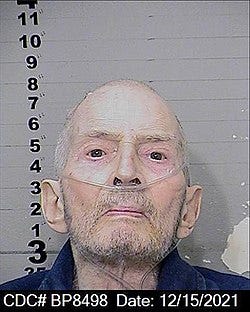
Acquitted of murdering Black in 2003, Durst did not face further legal action until his participation in the 2015 documentary miniseries The Jinx led to him being charged with Berman’s murder.
Get full access to True Crime Weekly and support my newsletter here:
Durst was convicted in 2021 and sentenced to life imprisonment without parole. He was also charged with McCormack’s murder shortly after his sentencing but died in 2022 before a trial could begin. Durst’s conviction for Berman’s murder was automatically vacated upon his death because his appeal was still pending.
When Durst was seven years old, his mother died by suicide after jumping from the roof of the family’s Scarsdale home.He later claimed to have witnessed the act, asserting that moments before her death, his father walked him to a window from which he could see her standing on the roof.
However, in a March 2015 New York Times interview, Durst’s brother Douglas denied that he had witnessed the suicide.As children, Robert and Douglas underwent counseling for sibling rivalry; a 1953 psychiatrist’s report on Durst, then ten years old, mentioned “personality decomposition and possibly even schizophrenia.”
Durst attended Scarsdale High School, where classmates described him as a loner. He earned a bachelor’s degree in economics in 1965 from Lehigh University, where he was a member of the varsity lacrosse team and the business manager of the student newspaper, The Brown and White.
Later that year, Durst enrolled in a doctoral program at the University of California, Los Angeles, where he met Susan Berman, but eventually withdrew from the school and returned to New York in 1969.

Durst opened a small health-food store in Vermont in the early 1970s. He closed the store in 1973, when his father convinced him to return to New York and work in the Durst Organization.
In 1992, due to Durst’s erratic conduct, his father broke with tradition and appointed his second son, Douglas, to take over the company. As the firstborn, Durst felt entitled to run the company despite his disdain for it and accused Douglas of stealing what was rightfully owed to him. This resulted in Robert’s estrangement from the rest of his family. He eventually sued for his share of the fortune, and was bought out of the family trust for $65 million in 2006.
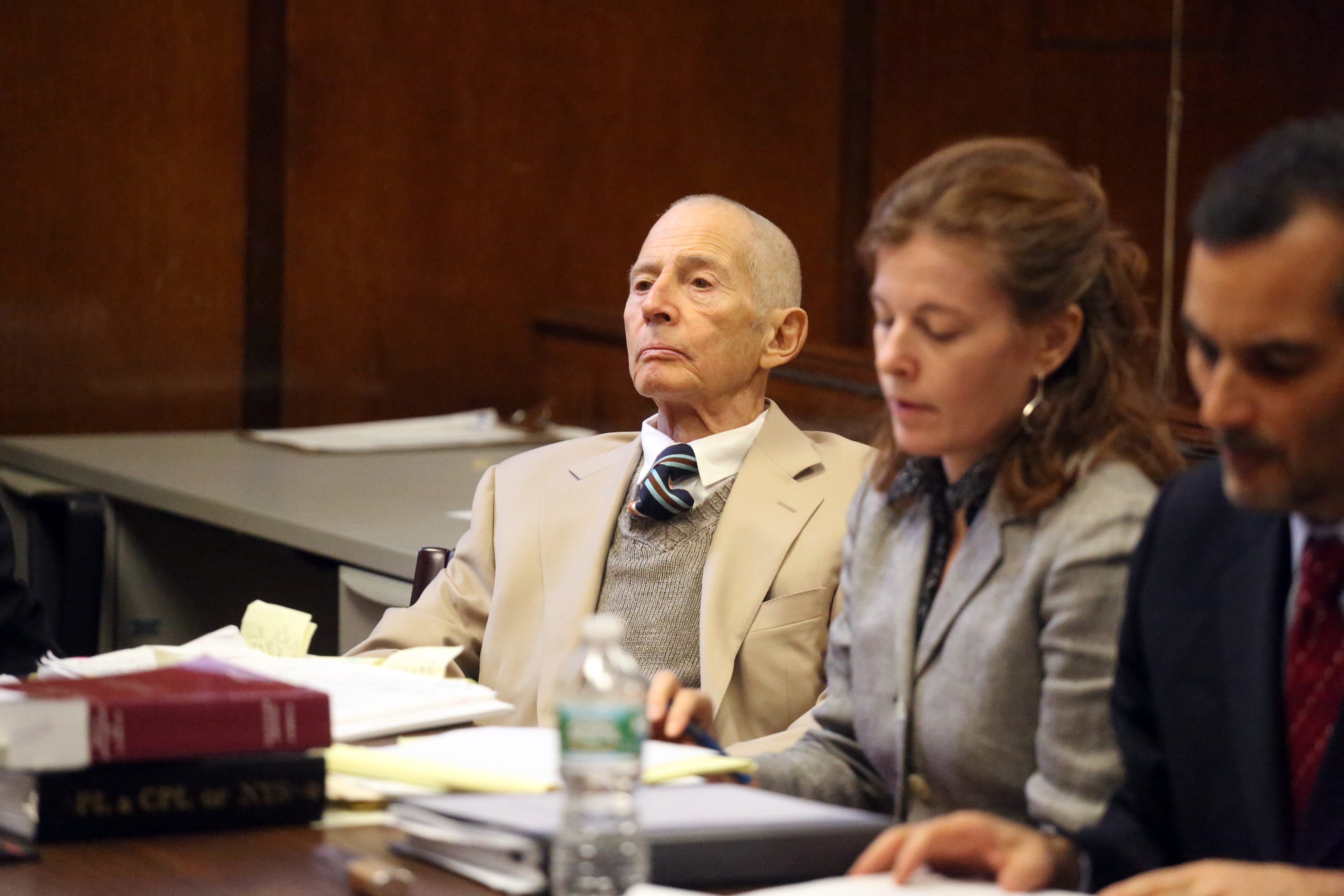
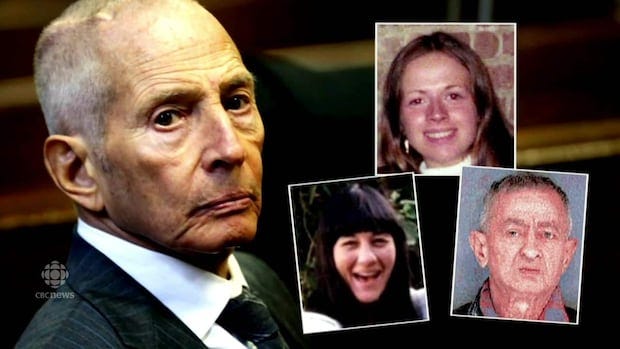
For almost his entire adult life, Durst was the subject of investigation and speculation concerning three alleged crimes: the 1982 disappearance of his wife, Kathleen “Kathie” McCormack; the 2000 murder of his longtime friend, Susan Berman; and the 2001 death of his neighbor, Morris Black. Durst was ultimately tried and acquitted for murder in the Black case but was later convicted in the Berman case.
The Disappearance of Kathleen McCormack Durst
The night she vanished, the story kept changing and the questions never stopped
Kathleen “Kathie” McCormack wasn’t someone who fit the profile of a person who just walks away. She was driven, close to finishing a medical degree, and building a future that was almost within reach. And yet, in early 1982, she disappeared into a fog of conflicting timelines, troubling red flags, and a marriage that appeared to be unraveling behind the scenes.
This is the case that has lived for decades in the shadows of bigger headlines until the name Robert Durst kept turning up again and again, in ways that made her disappearance feel less like a mystery… and more like a warning sign that was missed.
A whirlwind relationship that moved fast
Kathie met Robert Durst in 1971. She was a dental hygienist then young, smart, and seemingly pulled into a relationship that accelerated almost immediately. After only a couple of dates, he asked her to move in with him in Vermont. She did, relocating in early 1972.
Eventually, pressure from Robert’s family pushed him back toward New York and the family business, The Durst Organization. The couple moved to Manhattan and married on April 12, 1973.
On paper, it looked like a wealthy, connected life with stability.
But what people close to Kathie would later describe and what would surface over time suggested a relationship with fractures running underneath.
Who Kathie was when she disappeared
By 1982, Kathie was in her fourth and final year at Albert Einstein College of Medicine, working toward becoming a pediatrician. She was only months away from graduating.
That detail matters. Because disappearing doesn’t make sense when someone is that close to crossing the finish line especially someone who had invested years into building a career and identity separate from her husband’s world.
January 31, 1982: the last night she was clearly seen
The last confirmed sighting of Kathie by someone other than Durst happened on the evening of January 31, 1982, when she showed up unexpectedly at a dinner party hosted by her friend Gilberte Najamy in Newtown, Connecticut.
The friend noticed something that immediately stood out: Kathie seemed upset, and she was wearing red sweatpants unusual because she wasn’t someone who dressed casually in public like that. It gave off the feeling that she hadn’t planned to be out… or that she’d left somewhere in a hurry.
At some point that night, she received a phone call from her husband. After the call, she left and headed back toward her cottage in South Salem, New York.
That’s where the known timeline starts to collapse.
The story that wouldn’t hold steady
After Kathie vanished, Durst originally told police a neat, clean version of events: that he dropped her at a train station so she could take a commuter train into Manhattan, then he had a drink with a neighbor, and later spoke to her on the phone at their apartment.
Later, he admitted something that changes how you hear everything else: he essentially said he gave police that story because he hoped it would “make everything go away.”
Eventually, he acknowledged he just went home and went to bed.
That shift from confident, specific details to backtracking is one of the reasons this case never settles. When someone disappears, timelines matter. And when the timeline keeps changing, it doesn’t feel like confusion. It feels like control.
The next day: missed plans, growing panic
Kathie was scheduled to meet Najamy the next day at a Manhattan pub. She never showed. Her friend didn’t just shrug it off. Najamy reportedly called police again and again over the next several days because this wasn’t normal behavior for Kathie.
Durst eventually reported her missing later that week. But even that moment is clouded by confusion: there were claims that staff at the couple’s Riverside Drive building saw Kathie on February 1 (the day after the dinner party). One account said she was seen from behind and from a distance. Another later suggested the doorman may not even have been working that night or hadn’t actually seen her at all.
And then comes one of the most haunting details: only weeks after she was reported missing, some of Kathie’s possessions were found in the building’s trash compactor.
That isn’t the kind of detail that screams “she ran away.” That’s the kind of detail that screams “someone was cleaning up.”
Red flags before she vanished
Here’s where the story gets darker and more personal.
Just three weeks before she disappeared, Kathie had been treated for facial bruising at Jacobi Medical Center. She allegedly told a friend that Durst had beaten her, but she didn’t press charges.
Around the same time, she reportedly asked for a divorce settlement and then, according to accounts, her access to money began to tighten: a canceled credit card, her name removed from a joint bank account, and tuition support cut off.
Also hanging over this period: Durst was reportedly involved in another relationship and living separately.
All of this paints a picture of a marriage in crisis and a young woman trying to find footing, independence, and a way out.
And then she disappears.
The cottage: ransacked, unsettling, and wrong
When friends and family finally learned she had been reported missing, they went to Kathie’s cottage in South Salem. Hoping to find signs she was there.
Instead, they found it in a state that raised alarms: the place looked ransacked, her mail was unopened, and belongings appeared to have been tossed in the trash.
This is one of those moments in a case that hits like a gut punch, because it doesn’t read like someone calmly leaving. It reads like a life interrupted.
The investigation that kept resurfacing
Over the years, the case didn’t stay buried even when it felt like it was fading from the public eye.
Durst divorced Kathie years later, claiming abandonment. Decades after her disappearance, her family pushed for her to be declared legally dead. Her sister publicly maintained the belief that Durst killed her.
At various points, the case was reopened and reexamined by investigators, including a more serious turn in recent years when authorities stated the disappearance would be treated as a murder investigation and pursued accordingly.
And that’s where the story widens because Kathie’s disappearance doesn’t exist in a vacuum. Not anymore.
The shadow cases: why people keep circling back to Durst
Two other cases became permanently connected to the public’s understanding of Robert Durst:
1) The killing of Susan Berman
Berman was a longtime friend of Durst and was found murdered in her home in 2000. A letter sent to police included a startling word “cadaver” and a misspelling that later became a major point of scrutiny. Payments Durst had sent her shortly before her death only added to the questions.
2) The killing and dismemberment of Morris Black
In 2001, Durst was arrested after Black’s dismembered remains were found in Galveston Bay. Durst admitted to dismemberment, claimed self-defense for the shooting, and the case became one of the most surreal courtroom stories imaginable.
Those cases matter here for one reason: they changed how the public and law enforcement looked backward at Kathie’s disappearance. Because once a person is linked (rightly or wrongly) to multiple deaths, the “missing wife” narrative becomes harder to dismiss as just a troubled marriage with a sad ending.
The documentary effect and the moment everything exploded
Years later, the HBO series The Jinx: The Life and Deaths of Robert Durst brought the entire story back into the spotlight, including Kathie’s disappearance. The series didn’t just revive public interest it helped surface details and pressure that, ultimately, fueled real-world legal momentum.
And that’s what makes this case so maddening: it took decades, a media spotlight, and multiple connected investigations for Kathie’s disappearance to get the sustained attention many believe it deserved from the very beginning.
Durst died of cardiac arrest at the San Joaquin General Hospital in French Camp, California, on January 10, 2022, at age 78. He had been undergoing medical tests when he went into cardiac arrest and did not respond to resuscitation.
At the time of his death, Durst remained in the custody of the California Department of Corrections and Rehabilitation.
In January 2022, McCormack’s family filed a wrongful death suit against Durst’s estate. This was the fourth similar civil suit the family had filed since 2015, attempting to claim all or part of Durst’s assets. In response, a federal judge in the Southern District of New York froze the estate of his second wife and heir, Debrah Charatan, (worth $100 million).
The court documents say Charatan and/or her attorney must appear in court on March 25, 2022, and show cause why the order should not be issued. In March 2023, a federal court judge ruled the case of wrongful death filed by McCormack’s family against Durst’s estate could proceed.
In the ruling, the judge wrote that the lawsuit filed was not untimely because of Durst’s death. A conference was scheduled for April 2023.
As of August 2025, the suit remains in the pre-trial phase, with active motion practice and hearings taking place. No trial date has been set
 True Crime Weekly
Leave a comment