The Murder of Adam Walsh
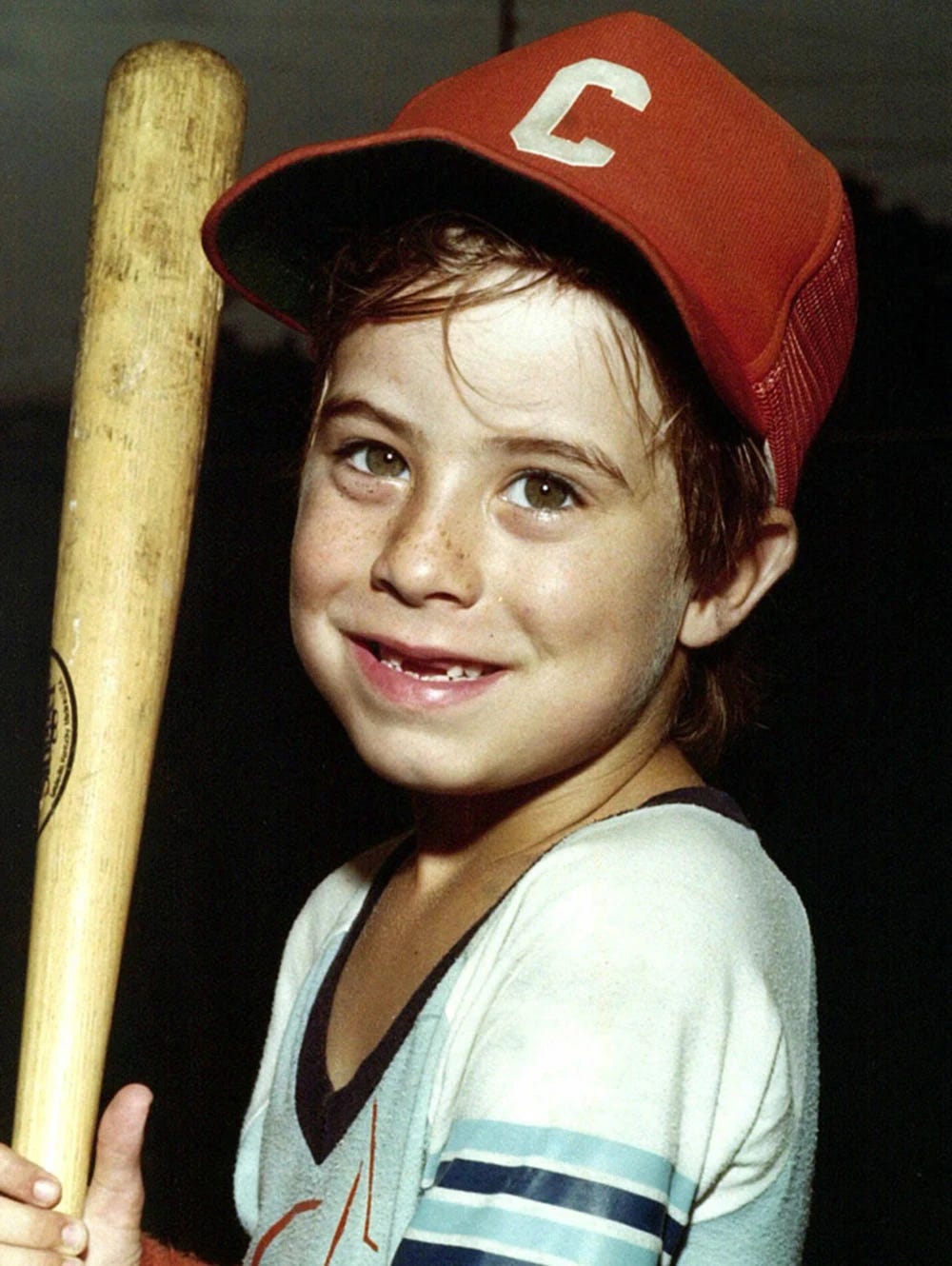
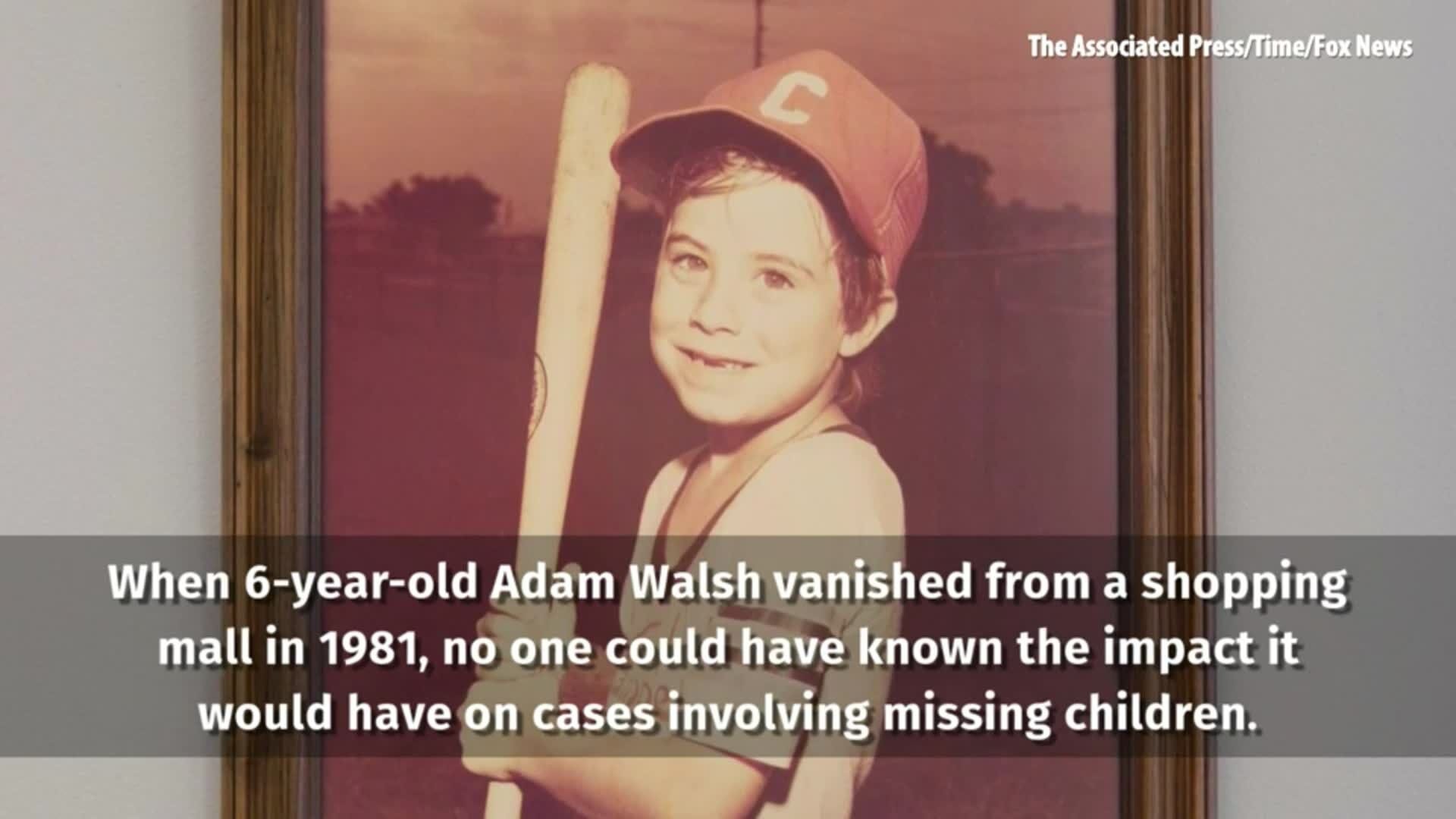
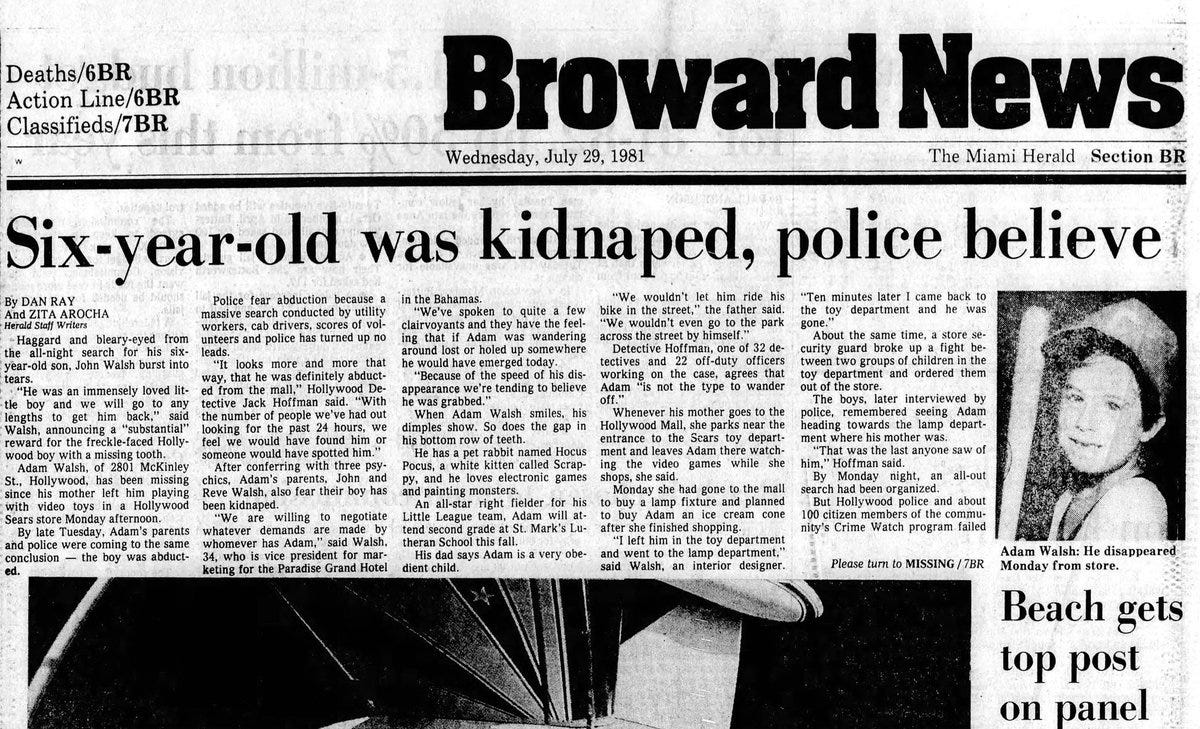
Image not found
A Normal Trip That Turned Into a Nightmare
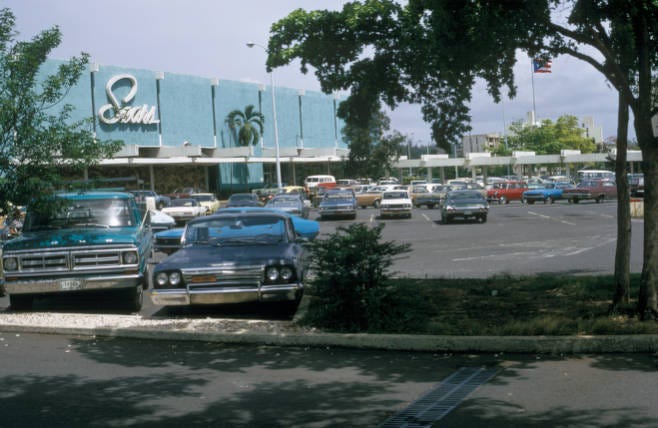
On the morning of July 27, 1981, six-year-old Adam Walsh went shopping with his mother, Revé Walsh, at a Sears department store in Hollywood, Florida.
It was the kind of outing millions of families make without a second thought.
Inside the store, Adam became fascinated with a display of video games in the toy department. Revé allowed him to stay there briefly while she walked a short distance away to look at lamps.
When she returned just minutes later, Adam was gone.
At first, it seemed like a simple case of a child wandering off.
But within minutes, panic set in.
And within hours, one of the most devastating child abduction cases in American history had begun.
Upgrade here if you enjoy my true crime newsletter:
The Last Known Moments
Store employees later reported that a group of older boys had been playing at the video game display.
A security guard, noticing a disturbance, asked the boys to leave.
Adam may have been mistaken for part of that group and removed from the area.
What happened next remains unclear.
But somewhere between that moment and his mother returning Adam disappeared.
No one saw who took him.
No one heard a struggle.
The Search for Adam
Police were called immediately.
Search efforts began that same day and quickly expanded:
- Officers combed the store and surrounding areas
- Volunteers searched neighborhoods and waterways
- Flyers were distributed across Florida
- National media began covering the case
But this was 1981 a time before Amber Alerts, widespread surveillance cameras, or coordinated national missing child systems.
Investigators had very little to work with.
Days turned into weeks.
And still, there was no sign of Adam.
True Crime Weekly is a reader-supported publication. To receive new posts and support my work, consider becoming a free or paid subscriber.
The Discovery
Two weeks later, on August 10, 1981, a fisherman made a horrifying discovery in a canal near Vero Beach, Florida over 100 miles from where Adam had disappeared.
The remains found were identified as Adam Walsh.
The cause of death was determined to be homicide.
The news devastated the nation.
What began as a missing child case had ended in unimaginable tragedy.
The Investigation and a Suspect Emerges
Over time, investigators focused on a man named Ottis Toole, a drifter and convicted serial killer.
Toole was known for:
- violent behavior
- traveling across multiple states
- confessing to numerous crimes
He eventually confessed to abducting and killing Adam Walsh.
However, the case was complicated.
Toole was known to give inconsistent confessions sometimes recanting or changing details.
Critical evidence had also been lost, including the vehicle Toole allegedly used.
Because of this, prosecutors never brought formal charges in Adam’s case.
Case Closure
In 2008, after decades of investigation, the Hollywood Police Department officially closed the case.
They concluded that Ottis Toole was responsible for Adam Walsh’s murder.
While some questions remained, authorities stated they were confident in the conclusion.
For Adam’s family, it brought a form of closure though not complete peace.
Laws and Systems That Exist Because of Adam
Adam Walsh’s case directly led to major changes in how the U.S. handles child abductions:
- Creation of the National Center for Missing & Exploited Children (NCMEC)
- Development of national missing child databases
- Improved coordination between law enforcement agencies
- The eventual creation of the AMBER Alert system
In 2006, the Adam Walsh Child Protection and Safety Act was passed, strengthening laws around sex offenders and child protection.
 True Crime Weekly
Leave a comment