By any measure, Teresita Basa was not the kind of person murder happened to.
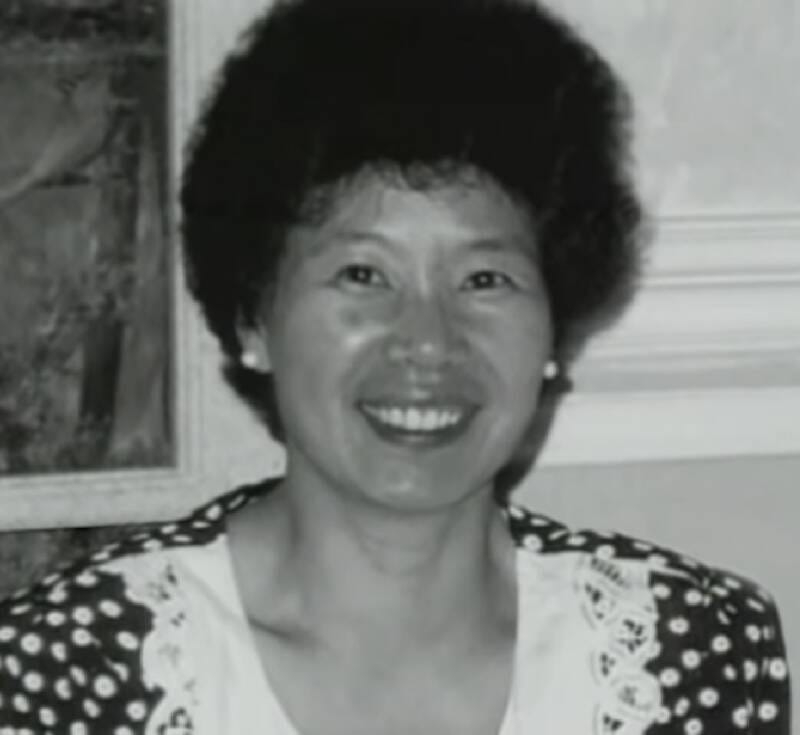
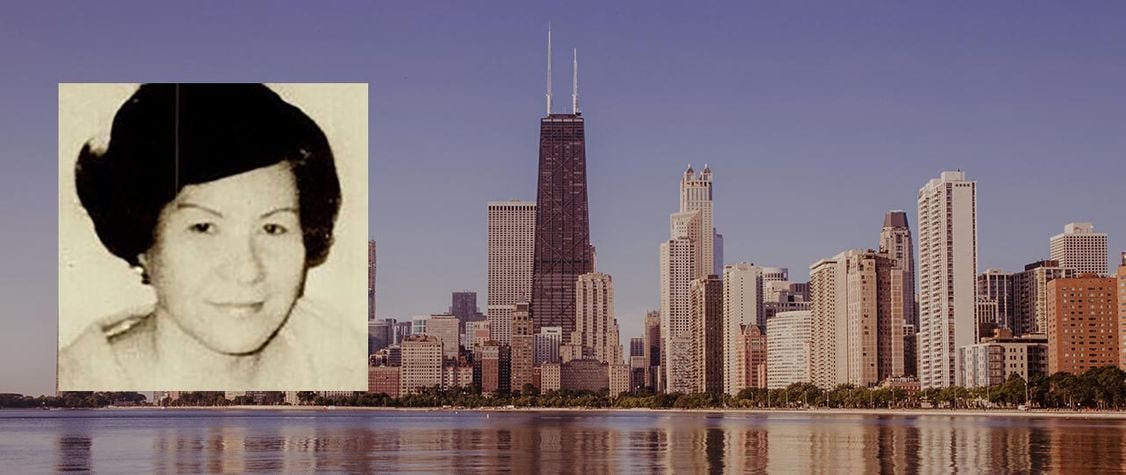
Born in 1929 in the Philippines to an aristocratic family, she was educated, refined, and deeply cultured. She had earned a master’s degree in music and carried herself with the quiet dignity of someone who had always known exactly who she was. In the 1960s, like many educated Filipinos of her generation, she made the long journey to the United States not fleeing anything, but moving toward something: a better livelihood, a wider world.
If you enjoy my True Crime newsletter please support my writing and work here:
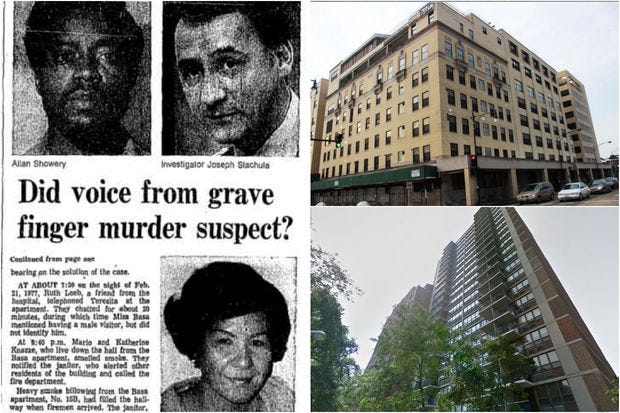
By the winter of 1977, she had built a steady, unassuming life in Chicago’s Lincoln Park neighborhood. She worked as a respiratory therapist at Edgewater Hospital on the city’s North Side, where she was known among colleagues as hardworking and kind. She lived alone on the 15th floor of a high-rise apartment at 2740 North Pine Grove Avenue a good address, a safe building, the kind of place where nothing bad was supposed to happen.
She was 47 years old. She had no known enemies. No one could imagine a reason anyone would want her dead.
The Night of February 21, 1977
It was a cold Monday evening in Chicago when Teresita finished her shift at Edgewater Hospital and returned home. She made dinner, settled in, and made two phone calls.
The first came in around 7:10 p.m. a casual conversation with a friend about selling tickets to an upcoming event. The second, at around 7:30 p.m., was with Ruth Loeb, a friend who would later testify at trial. That call lasted roughly twenty minutes. During it, Teresita mentioned something almost in passing: she was expecting a visitor that evening, a man who was coming to repair her television. She didn’t give a name.
Ruth Loeb hung up. It was the last time anyone who knew Teresita Basa heard her voice.
Less than ninety minutes later, neighbors on the 15th floor began noticing a smell thick, acrid, unmistakably smoke. A maintenance worker was alerted. At approximately 8:40 p.m., firefighters arrived at apartment 15B. Using a master key, the building janitor let them in.
True Crime Weekly is a reader-supported publication. To receive new posts and support my work, consider becoming a free or paid subscriber.
The bedroom was on fire. Flames were consuming a pile of clothing heaped on top of a mattress. When firefighters pulled the mattress away and kicked through the smoldering debris, they found Teresita Basa beneath it. She was naked. A butcher knife had been driven through the center of her chest. It was still there.
The scene had been staged with deliberate care. Teresita’s clothes had been removed and her body positioned to suggest sexual assault. The apartment showed signs of having been ransacked. But the medical examiner’s report would later confirm that she had not been sexually assaulted. The staging was a lie constructed, investigators concluded, to send police chasing a motive that didn’t exist.
The actual cause of death was the knife. The fire was meant to destroy evidence. And based on the timeline with Teresita still alive at 7:50 p.m. and firefighters arriving at 8:40 investigators estimated that her killer had fled the building perhaps ten minutes before the alarm was raised.
He had been efficient. He had been careful. And for the next five months, he would be invisible.
The investigation that followed was, by most measures, a frustrating dead end.
Detectives canvassed Edgewater Hospital. They interviewed Teresita’s friends, her colleagues, her boyfriend. They could find no one with a motive strong enough to act on it.
There were no witnesses who reported seeing a stranger in the building that night. No useful physical evidence had survived the fire. The note Teresita had written to herself found in her apartment during the search read simply: Get theatre tickets for A.S. The initials were noted and filed. They didn’t immediately lead anywhere.
Chicago in 1977 was a city already stretched thin by violent crime. Edgewater Hospital, where Teresita had worked, was later revealed to have been a place with its own shadowy undercurrents it would eventually be shut down by federal investigators for a fraud scheme. But in the winter of 1977, detectives simply had nothing to go on. The case of Teresita Basa grew colder with each passing week.
By summer, it had very nearly gone cold entirely.
The Possessions
In August 1977 roughly six months after Teresita’s murder Detective Joe Stachula received an unusual message through the Evanston, Illinois police department: a Dr. Jose Chua wanted to speak with him about the Basa case.
Stachula and his partner, Detective Lee Epplen, drove to Evanston and sat down with Dr. Chua and his wife, Remibias known as Remy. What they heard was unlike anything in either detective’s experience.
Remy Chua was a respiratory therapist who had briefly worked with Teresita at Edgewater Hospital. She was also, like Teresita, a native Filipino who spoke Tagalog. Dr. Chua was a physician. They were, by all accounts, a grounded and rational couple which made the story Dr. Chua told all the more difficult to process.
He explained that over the course of the summer, his wife had entered into trance states on at least three separate occasions, during which a voice that was not hers spoke through her. The voice claimed to be Teresita Basa.
The first incident had come during an afternoon nap. Dr. Chua had been reading nearby when his wife suddenly began speaking in a voice with a different quality than her own the rhythm and cadence distinct, carrying what he recognized as a Spanish accent characteristic of Teresita’s speech patterns. The voice spoke in Tagalog. It said: “Doctor, I would like to ask for your help. The man who murdered me is still at large.”
When Dr. Chua, shaken, asked who was speaking, the voice replied: “Ako’y Teresita Basa.” I am Teresita Basa.
He was, he told detectives, “surprised and scared.” But the voice reassured him: she had nothing to be scared of. She was pleading for help.
When Remy came out of the trance, she had no memory of what had occurred.
Dr. Chua had not gone to the police immediately. He was afraid, he said, of looking foolish. He waited.
A second possession followed. Then a third. Each time, the voice provided more detail. It named the man who had killed Teresita.
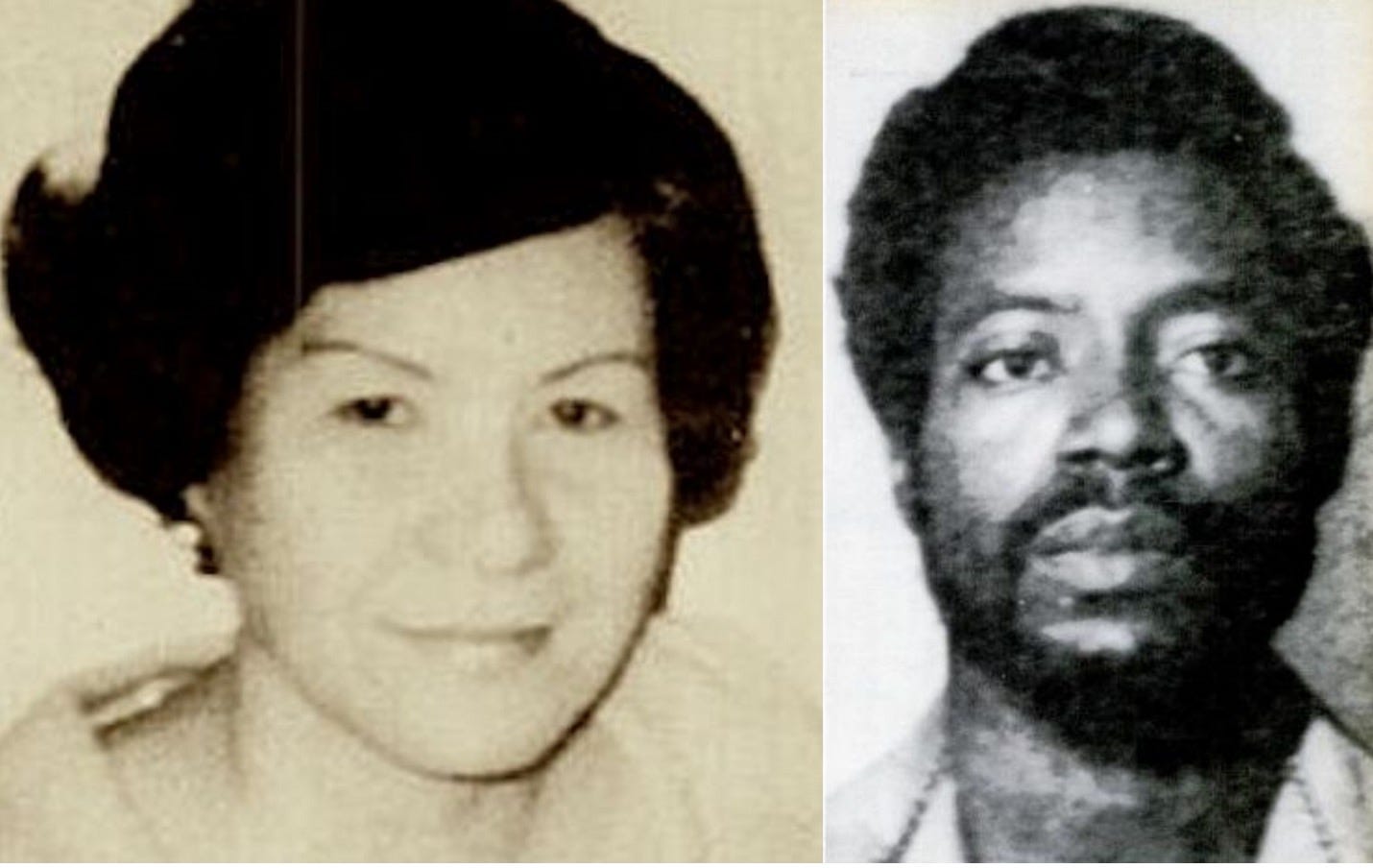
His name was Allan Showery. He was an orderly a therapy technician at Edgewater Hospital. He had come to her apartment that evening to repair her television. Once inside, he had attacked her. He had stolen jewelry from her apartment after the murder including a ring and other pieces that had once belonged to Teresita’s mother, purchased in France and had given the jewelry to his girlfriend.
The voice provided something else: the names and phone numbers of four people who could identify the stolen jewelry.
Dr. Chua had waited as long as he could stand to. He called the Evanston police. They contacted Stachula.
The Investigation Turns
Stachula was not, by temperament, a man inclined to believe in the supernatural. But he was a methodical detective, and what he had just been told contained specific, verifiable claims. He decided to verify them before dismissing anything.
The first thing he did was look up Allan Showery. Showery was real. He did work at Edgewater Hospital. A background check revealed something else: he lived close to Teresita Basa’s apartment building. That alone was not enough. But then Stachula remembered the note in Teresita’s apartment. Get theatre tickets for A.S. Those were Allan Showery’s initials.
When Stachula spoke with hospital colleagues, they confirmed something further: Showery had been known to help Teresita with errands and odd jobs around her apartment. She had tipped him generously for his help she knew he was having financial difficulties. Colleagues confirmed that Showery had planned to visit her apartment on the evening of February 21st to fix her television.
Stachula brought Showery in for questioning. Showery confirmed he had been to the apartment that evening, but said he had arrived without the right tools to fix the TV and left. He denied harming her.
Then Stachula contacted Showery’s girlfriend. He asked her a direct question: had Showery given her any jewelry recently?
She said yes.
She agreed to let Teresita’s friends and family examine the pieces. They confirmed it: the jewelry was Teresita’s. Some of it had belonged to her mother.
When Stachula confronted Showery with this, the story collapsed. Showery confessed.
The Confession
In a thirteen-page signed statement, Allan Showery described what had happened on the night of February 21st.
He had gone to Teresita’s apartment, he said, initially intending to fix the television. But by the time he arrived, he had another plan. He was behind on rent and was broke. He knew Teresita had jewelry. She had always been generous with him he had counted on her generosity, and now he intended to take what he needed.
He left the first time, pretending he lacked the tools for the repair job. Then he returned.
Teresita let him back in. When she turned to lock the door behind him, he grabbed her from behind. He attacked her. He killed her. He staged the scene to look like a sexual assault, stripped her of her clothing, covered her body with the mattress and piled her clothes on top. He set the fire.
He had found only thirty dollars in cash. He took her jewelry and fled.
He had been in and out of her apartment in perhaps forty minutes, leaving just before neighbors smelled smoke and called for help.
In his confession, he told investigators that Teresita had been generous to him in the past because she knew he struggled financially. He had repaid her by planning her murder on the walk back up to her door.
The Trial
What followed was one of the more unusual proceedings in the history of American criminal justice.
Showery confessed in August 1977. Then, inexplicably, he recanted telling police he had been “just kidding.” He retained attorneys and entered a plea of not guilty. The case went to trial at the Cook County Circuit Court in October 1978, and the circumstances surrounding the investigation made international headlines.
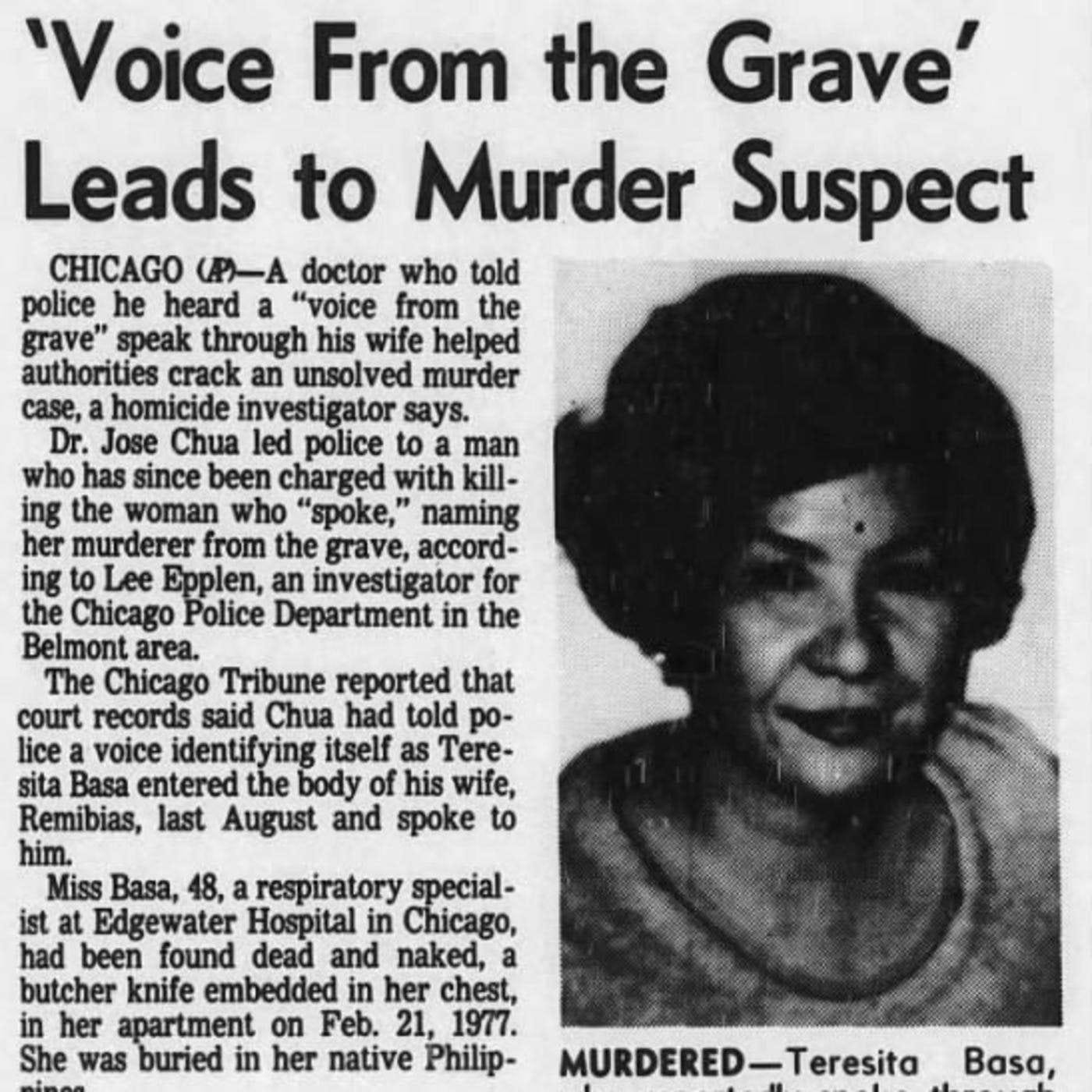
Newspapers across the country and around the world seized on the supernatural angle. Voice from grave names murderer, the Boston Globe proclaimed. The Chicago Tribune asked: Did voice from grave finger murder suspect? The Chronicle Telegram went straight to the point: Woman in trance nails killer.
Remy Chua testified. Dr. Jose Chua testified. Detective Stachula testified. The prosecution presented the jewelry, the confession, the corroborating timelines, the note with the initials.
The defense, which included a young Karen Thompson sister of Illinois Governor James Thompson tried to argue that Remy Chua had known details about the case through ordinary means: that she had had a prior connection to Showery (true, he had once filed a workplace complaint against her), that she had been to Teresita’s apartment before (also true), and that she had known Showery was supposed to fix the television (also true).
The implication being that Remy had pieced together a damning story from information she already possessed, and dressed it up in the language of possession to avoid having to explain how she knew.
The jury heard the testimony and couldn’t reach a verdict. A mistrial was declared.
What happened next was quiet, anticlimactic, and final: on February 23, 1979, Allan Showery pleaded guilty to the murder of Teresita Basa. He was sentenced to fourteen years in prison. He was released in 1983, having served five years.
What to Believe
The question that lingers the one that made this case famous and that no court ever formally answered is the question of Remy Chua.
The skeptical reading is coherent. Remy had worked at Edgewater Hospital. She knew Showery and had a reason to fear him; he had once filed a complaint against her. She had visited Teresita’s apartment. She knew Showery was supposed to go there the night of the murder. In the months following the killing, knowing what she suspected and being afraid to come forward, she may have constructed the trance narrative as a way of placing information before police without having to explain exactly how she came by it.
Under this reading, the possession was not supernatural it was a protective fiction. A woman who knew something, afraid of a killer, found the only way she could think of to tell the truth without exposing herself.
The other reading is harder to dismiss entirely, and not only because it’s more dramatic. The details Remy provided were specific in ways that went beyond what she demonstrably knew. She gave the names and phone numbers of four people who could identify the jewelry. She described the jewelry in detail — its origins in France, its connection to Teresita’s mother. She identified the motive correctly. She described the staging of the crime scene with accuracy.
Whether any of that is explainable through ordinary channels overheard conversations, workplace gossip, things Teresita may have mentioned to colleagues over time is genuinely unknown. The defense raised the possibility at trial. The jury was unable to agree.
What is certain is this: the information Remy Chua provided was correct. It led to a confession. It led to a conviction. And for whatever reason it came about supernatural or otherwise the case that had spent six months going nowhere was resolved in a matter of weeks once a soft-spoken doctor in Evanston finally decided not to worry about looking foolish.
The Aftermath
Teresita Basa’s remains were flown back to the Philippines for burial though researchers looking into the case have noted, with some unease, that the cemetery where she is said to be buried cannot be confirmed to exist.
Allan Showery was released from prison in 1983. His whereabouts after release are unknown.
Detective Joe Stachula gave interviews about the case for years afterward, never quite willing to say definitively what he believed had happened. He said that what mattered to him was that the case was solved. He preferred to leave the larger question open.
The case was profiled on Unsolved Mysteries, adapted into a made-for-television film called Voice from the Grave, and documented in two books: one by journalists John O’Brien and Edward Baumann, and another co-authored by the Chua family. It became a staple of paranormal literature, though the true crime angle is arguably more interesting than the ghost story.
Edgewater Hospital, where Teresita worked and where Showery and Remy Chua were also employed, was eventually shut down by federal investigators after a wide-ranging Medicare fraud scheme a separate story entirely, but one that adds a layer of institutional rot to the building where these three people’s lives became permanently entangled.
The note Teresita wrote to herself Get theatre tickets for A.S. was the kind of ordinary reminder that fills the notebooks of ordinary lives. She may have been doing Showery a favor, or doing a favor for herself. Either way, she left behind a thread that, months after her death, someone finally pulled.
Teresita Basa was 47 years old. She deserved a better sentence than fourteen years’ worth of justice. But she got justice, in the end and the story of how she got it remains one of the most genuinely strange chapters in Chicago criminal history.
 True Crime Weekly
Leave a comment