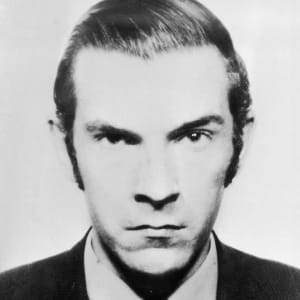
Graham Frederick Young was born on September 7, 1947, in Neasden, northwest London. His mother died of tuberculosis three months after his birth. His father, Fred, unable to care for a newborn alone, sent Graham to live with his maternal aunt and uncle Auntie Win and Uncle Jack in the same neighbourhood.
Graham would return to his father’s household in early childhood, after Fred remarried a woman named Molly, but the disruption of those first years seemed to settle into him in ways that didn’t resolve. By most accounts he was a quiet, interior child thoughtful, slightly apart from his peers, with no particular interest in sports or in the ordinary social rituals of boyhood.
What interested him, from a remarkably early age, was poison.
If you enjoy true crime please upgrade here to support my writing:
By the time Graham was eleven, he had moved past chemistry sets and into the kind of reading that his local library probably hadn’t expected an eleven-year-old to be requesting: toxicology texts, pharmacology manuals, histories of famous poisonings. He was drawn especially to the Victorian poisoners William Palmer, who killed with strychnine; Thomas Neill Cream; Crippen and to the science of how poisons worked on the human body. He was not, by his teachers’ accounts, particularly brilliant across the board. But in chemistry and forensic science, his knowledge was already operating at a level that would have been impressive in a university student.
At thirteen, he began lying to pharmacists.
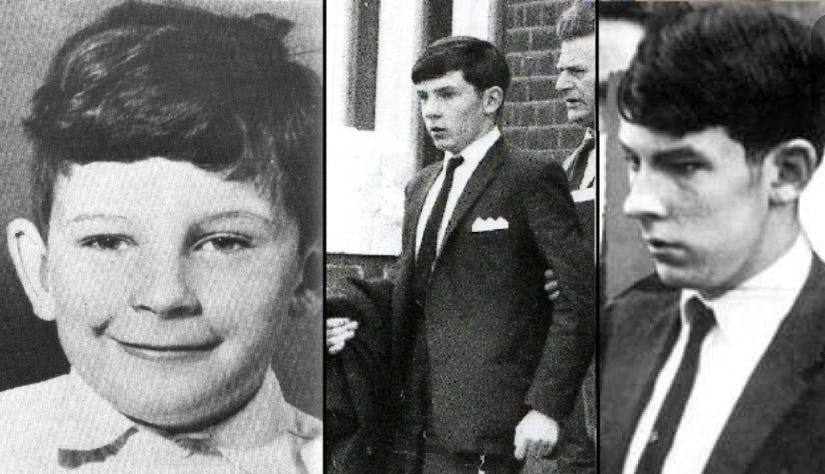
He was small for his age and young-looking, but he had a precocious confidence and a plausible manner, and he had memorized enough technical terminology to pass himself off as older. He visited multiple chemists around the Neasden area, presenting himself as seventeen, claiming the poisons he was purchasing antimony, digitalis, arsenic, and eventually thallium were for scientific study. They sold to him. He stockpiled what he needed.
Then he began to use it.
The Family as Laboratory
His first known victim was
a school friend, Christopher Williams, who suffered extended vomiting, cramps, and headaches after Graham administered a cocktail of poisons whose precise composition baffled the doctor who treated him. Williams survived, probably because Graham’s ability to monitor and adjust the dosage was limited when his subject was at home rather than nearby.
The solution, from Graham’s perspective, was to shift his experiments to subjects he had access to all the time. He turned to his family.
In 1961, the Youngs began experiencing intermittent illness. Fred Young, Graham’s father, developed recurring stomach cramps and nausea. His sister Winifred was admitted to hospital with symptoms that doctors eventually traced to belladonna she very nearly died. Molly, Graham’s stepmother, became progressively sicker over a longer period, her symptoms waxing and waning in ways that left her doctors puzzled.
Fred’s initial suspicion, when it came, was almost comically insufficient: he wondered whether Graham might be accidentally contaminating food through careless use of his chemistry set. He raised this possibility with his son. Graham denied it. The matter was dropped. The possibility that a fourteen-year-old was deliberately and systematically poisoning his family was genuinely beyond what Fred Young could bring himself to consider.
Graham, meanwhile, was keeping records. He maintained a diary clinical, precise, written in the detached language of a researcher logging experimental data in which he noted dosages, observed symptoms, and assessed results. He was, in his own understanding, conducting science. The fact that the subjects were his family appears to have registered as largely incidental.
What Graham was primarily using was antimony a heavy metal with poisoning symptoms similar to arsenic, producing vomiting, stomach pain, and progressive weakness. He administered it in Molly’s tea over an extended period, building up her exposure gradually. Molly developed a tolerance to antimony at a certain level of dosage, which meant Graham had to recalibrate. On the night before she died April 21, 1962 he switched to thallium, which acts faster and was less familiar to her system. Molly Young died the following day.
The official cause of death was recorded as progressive periarteritis of the nervous system a rare disorder, the correct diagnosis given what doctors then knew and were testing for. Because no one was looking for poisoning, they did not find it. Molly was cremated. The evidence went with her.
The Arrest at Fourteen
Graham was undone not by any medical investigation but by his aunt the Auntie Win who had raised him in infancy. She had always known about his obsession with poison, and it unsettled her in ways she could not quite articulate. After Molly’s death, she arranged for Graham to see a psychiatrist. It was that psychiatrist, examining the boy and listening to the things he said and the things he knew, who contacted the police.
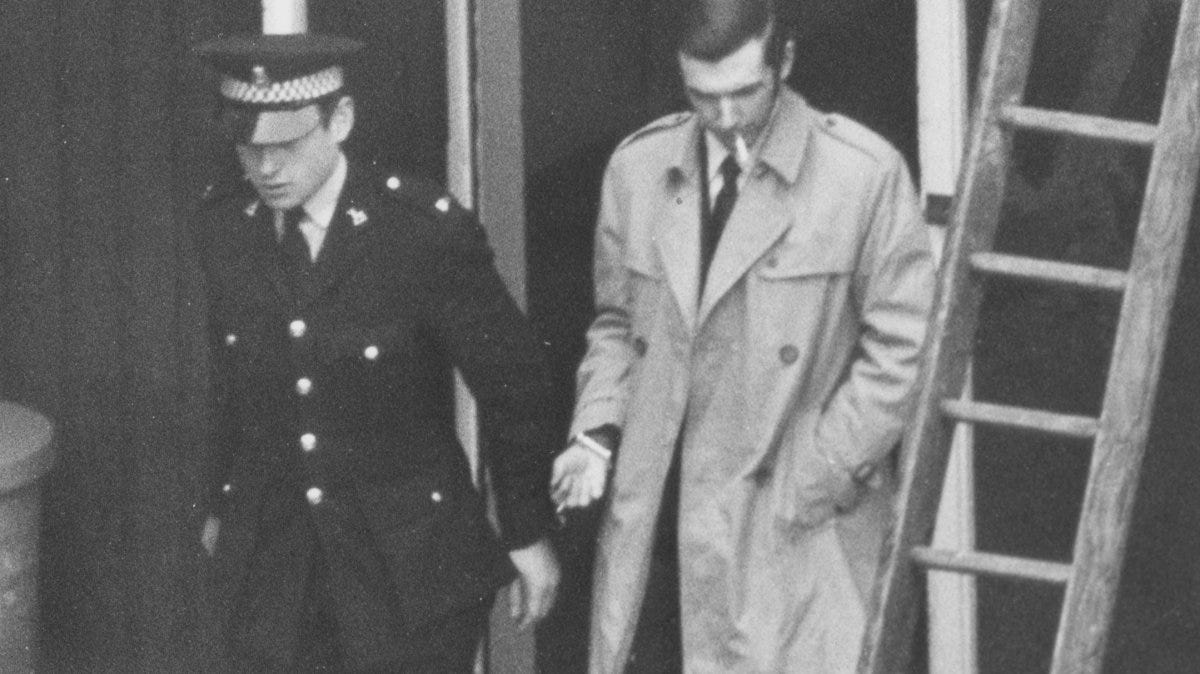
On May 23, 1962, Graham Young was arrested. He was fourteen years old.
He confessed to the poisoning of his father, his sister, and his school friend Christopher Williams. He confessed to the murder of his stepmother, though without a body to examine she had been cremated no murder charge could be brought. He was charged with three counts of non-fatal poisoning and committed to Broadmoor Hospital under the Mental Health Act.
He was Broadmoor’s youngest inmate since 1885.
It is worth pausing on what happened at Broadmoor, because it is at least as disturbing as anything Graham Young did before he arrived there.
Nine Years in Broadmoor
Broadmoor was and remains Britain’s most famous high-security psychiatric hospital, housing individuals considered too dangerous to be tried or imprisoned in ordinary circumstances. It housed, during Graham Young’s time there, some of the most dangerous people in Britain. Ian Brady, the Moors Murderer, was a fellow patient during part of Young’s residency.
Within weeks of his arrival, a fellow inmate named John Berridge died of cyanide poisoning. Young later claimed to have extracted cyanide from laurel bush leaves and administered it. His claim was not taken seriously. Berridge’s death was recorded as suicide. Young’s confession was dismissed as the fantasizing of a troubled adolescent, not the account of a boy who had already demonstrated the willingness and capability to kill.
On other occasions during his years at Broadmoor, drinks belonging to staff and other patients were found to have been tampered with. An abrasive compound was introduced into drinks at various points. The incidents were noted and investigated without sufficient urgency.
Graham Young spent nine years at Broadmoor reading toxicology. The hospital library gave him access to technical literature on poisons. He read, he took notes, he deepened his already extraordinary knowledge of how different substances worked on the human body at different dosages. He also did what he was required to do: he attended therapy, he engaged with the treatment program, he told the doctors and psychiatrists what they needed to hear in order to demonstrate progress.
By 1970, his psychiatrist declared him cured.
In 1971, one of the nursing staff noted in his file that Young had remarked, apparently in passing, that upon his release he intended to kill one person for every year he had spent in Broadmoor. The comment was recorded. It did not affect the decision to discharge him.
The Release and the Warning That Wasn’t Given
Graham Young was released from Broadmoor on February 4, 1971. He was twenty-three years old. He had spent nine years in a maximum-security psychiatric hospital for poisoning his family for the murder of his stepmother, though uncharged for that specifically and the decision-makers responsible for his release had apparently concluded that he was no longer a danger.
The decision itself might be viewed as defensible, given the limitations of psychiatric assessment in 1971. What is substantially harder to defend is what was not done.
Young was placed with a job rehabilitation scheme. His employers at John Hadland Laboratories in Bovingdon, Hertfordshire a company that manufactured thallium bromide-iodide lenses for military infrared equipment were informed that he was a recovering psychiatric patient who had suffered a breakdown following a bereavement. They were not told he was a convicted poisoner. They were not told that the poison he had used, that his family had been found with in their systems, was a substance closely related to one their company worked with.
No one told them.
When Graham Young arrived at John Hadland Laboratories and offered cheerfully to make tea and coffee for his colleagues, they were grateful.
Bovingdon
He started slowly, as he always had. His first target was Bob Egle, a fifty-nine-year-old storeroom manager who had survived Dunkirk and who often told Graham stories about the war. Egle began to fall ill in June 1971, weeks after Young’s arrival, with diarrhoea and stomach pains that his doctor attributed to a summer virus. He was admitted to hospital and placed on a drip. He recovered and returned to work.
Young administered more thallium. Egle deteriorated rapidly, losing sensation in his legs, his hair falling out in clumps the distinctive signature of thallium poisoning, though no one knew to look for it. Bob Egle died on July 7, 1971. The cause of death was recorded as bronchopneumonia and polyneuritis.
Other employees began falling ill. The symptoms were varied and strange: stomach cramps, nausea, numbness in the extremities, hair loss, progressive weakness. The company’s medical officer was called in. Specialists were consulted. The local health authority investigated the water supply. Someone suggested the problems might be caused by radioactivity from a disused wartime airfield nearby. The illness was nicknamed the Bovingdon Bug, and it became something of a dark local joke the mysterious affliction of Hadland’s staff.
Fred Biggs was a fifty-six-year-old local councillor who worked part-time at Hadland. Young poisoned him with antimony and then escalating doses of thallium. Biggs became progressively more ill through October and November 1971, eventually losing the ability to walk. He died on November 19, 1971, in hospital. The cause of death was given as polyneuritis.
Young also poisoned Jethro Batt, a colleague who gave him lifts home. He admitted later to having administered four grams of thallium to Batt in two doses a quantity sufficient to kill. Batt happened not to finish the poisoned coffee, finding it too strong. He survived but lost his hair and was left with lasting health problems. In his diary, Young wrote that he felt “rather ashamed” of having harmed Batt. The entry is one of the few in which anything resembling a moral scruple surfaces. It is also notable for the clinical precision of what surrounds it: dosages, observations, symptom progressions, projected outcomes.
The Question That Caught Him
In late November 1971, with two employees dead and several more severely ill, John Hadland Ltd arranged a meeting of all staff to address the Bovingdon Bug. A doctor addressed the assembled employees, attempting to rule out various causes. During the question-and-answer session, Graham Young raised his hand.
He asked why thallium poisoning hadn’t been considered as a possible cause.
The company doctor, Dr. Anderson, was startled. Thallium was not, in 1971, a substance that the general public was expected to know about. It had no common household application. The question revealed a knowledge of toxicology that had no ordinary explanation. Anderson sought Young out after the meeting and pressed him further. What emerged was a depth of technical expertise symptom progressions, lethal doses, detection thresholds that convinced Anderson something was very wrong.
Hadland reported the conversation to police. Investigators checked the background of all employees and found what they might have found before ever offering Young the job: that he was a convicted poisoner who had spent nine years in a maximum-security psychiatric hospital.
Graham Young was arrested on November 20, 1971, at his aunt and uncle’s home in Sheerness, Kent. As he was being led out, his aunt overheard him ask the arresting officers: “Which one is it you’re doing me for?”
When police searched his bedsit in Hemel Hempstead, they found a substantial stockpile of poisons: 434 milligrams of thallium and 32 grams of antimony the latter more than two hundred times a lethal dose. They also found his diary.
The Diary
The diary is among the most disturbing documents produced by any criminal case in British legal history not because it is bloodthirsty or sadistic in its language, but because it is so completely the opposite.
It reads like a laboratory notebook. Dates, dosages, observations: Subject administered 3mg thallium in morning tea. By afternoon exhibiting stomach pain and nausea. Continuing monitoring. The tone is scientific, detached, interested. There is no rage in it, no pleasure in suffering, nothing that reads as conventional malice. What there is, in abundance, is curiosity a researcher’s absorption in the progress of an experiment, combined with a total absence of any recognition of the subjects as people.
Bob Egle appears in it. Fred Biggs appears in it. They appear as cases, as data points. The entries recording their deaths are written in the same register as the entries recording their symptoms.
Young was charged at St Albans Crown Court in June 1972 with two counts of murder (Egle and Biggs) and two counts of attempted murder. He pleaded not guilty. The diary was read into the record.
He was convicted on all counts on June 29, 1972, and sentenced to life imprisonment. The judge, Mr Justice Eveleigh, recommended that he serve a minimum of twenty-five years. He was twenty-four years old.
The Final Experiment
Graham Young served the remainder of his life at Parkhurst Prison on the Isle of Wight. He kept to himself for the most part. Ian Brady, his former Broadmoor co-resident, was one of the few prisoners he was known to associate with. The other inmates, by most accounts, were deeply wary of him the man who had made tea for his colleagues was not a figure anyone wanted to accept a drink from.
He died on August 1, 1990, in his cell. He was forty-two years old. The official cause of death was a heart attack.
There has always been speculation around this conclusion. Young was known to have obtained poisons during his time in prison he was Graham Young, and some things apparently could not be entirely prevented and some investigators and writers have suggested he may have conducted a final experiment on himself, either from a sense of control or from exhaustion with the life imprisonment he had by then served for nearly two decades. The official position remains cardiac arrest. The question remains open.
After his death, his notoriety spread rather than diminished. The 1995 film The Young Poisoner’s Handbook dramatized his life in darkly comic terms. In 2005, a sixteen-year-old Japanese schoolgirl was arrested for poisoning her mother with thallium; she told investigators she had been fascinated by Young since seeing the film and had kept an online blog modelled on his diary, recording dosages and her mother’s reactions. Young’s case had introduced thallium as a poison to public awareness, and that knowledge radiated outward in ways he could not have anticipated.


Leave a comment