A Street in Notting Hill
Rillington Place was a short, narrow cul-de-sac in Notting Hill, west London a working-class pocket of the city in the years just after the Second World War, crowded and slightly shabby, the kind of street where people knew their neighbours by sight and sound through walls that didn’t muffle very much. In 1949, it was the kind of place young couples moved to when they couldn’t afford anything better.
If you enjoy my true crime coverage, please help me continue my newsletter by upgrading here:
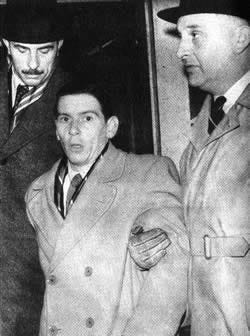
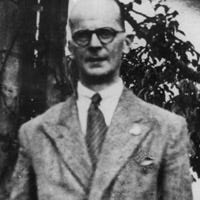
Number 10 was a three-storey terraced house divided into flats. On the ground floor lived John Reginald Halliday Christie and his wife Ethel. Christie was fifty years old, a meticulous, soft-spoken man who wore spectacles and spoke carefully and was known in the neighbourhood as a responsible sort a former Special Constable during the war, a man of orderly habits who kept his flat clean and his manner composed.
He had a criminal record from his younger years theft, assault, a conviction for malicious wounding but that was the past, and in the neighbourhood nobody particularly dwelled on it.
On the top floor lived Timothy John Evans, twenty-four years old, a lorry driver from Merthyr Tydfil in South Wales. Evans was not a man of impressive means or impressive abilities. He had grown up in poverty and had almost no formal education; he was functionally illiterate, though he concealed this from many people through sheer conversational agility.
He had a sharp sense of humour and a tendency to boastfulness his stories about himself were frequently embellished and he had a temper, though not a violent one by any account that survives. He was young and somewhat hapless, working hard and not quite managing to stay ahead of the debts that accumulated around him.
In September 1947 he had married Beryl Susanna Thorley, a nineteen-year-old from London. In October 1948 their daughter, Geraldine, was born. The three of them occupied the top-floor flat at 10 Rillington Place: one room used as a kitchen and sitting room, one bedroom, a landing. No bathroom. The toilet was shared with the other tenants. They were young and poor and muddling through, and the man downstairs the careful, helpful Mr Christie had known them for a year and a half.
The Pregnancy
By the autumn of 1949, Beryl Evans was pregnant again. She was twenty years old, already struggling to manage on Timothy’s lorry driver’s wages, and she did not want a second child. She told Timothy she wanted an abortion. Abortion was illegal in Britain in 1949, punishable by imprisonment for both the woman and whoever performed the procedure. It was also common. Backstreet abortions were a grim regular feature of working-class life in postwar Britain, conducted in secrecy with whatever equipment and whatever level of competence was available.
If you enjoy my true crime coverage, please help me continue my newsletter by upgrading here:
Timothy Evans didn’t know how to arrange one. He had no particular connections and no knowledge of where to turn. What he did have was a neighbour.
John Christie told Evans that he had medical knowledge. This was a lie, but it was a plausible one: Christie had worked as a clerk at a doctor’s office during the war and cultivated an impression of medical expertise that was convincing to people who had no way to verify it. He offered to perform the abortion himself. Evans was doubtful; Beryl, accounts suggest, was more open to the idea. They had no money and no other options readily apparent to them.
What happened in the days that followed is known only from the accounts of the one person who survived them, and that person was a serial killer.
Christie would later claim in one of his several inconsistent confessions that he had attempted a procedure on Beryl and that she had died as a result. This was probably not true in the sense he presented it. The pathological evidence, examined later, was consistent with manual strangulation, the method Christie used on all his victims. Beryl Evans was twenty years old when she died. The date was most likely November 8, 1949.
The Confessions
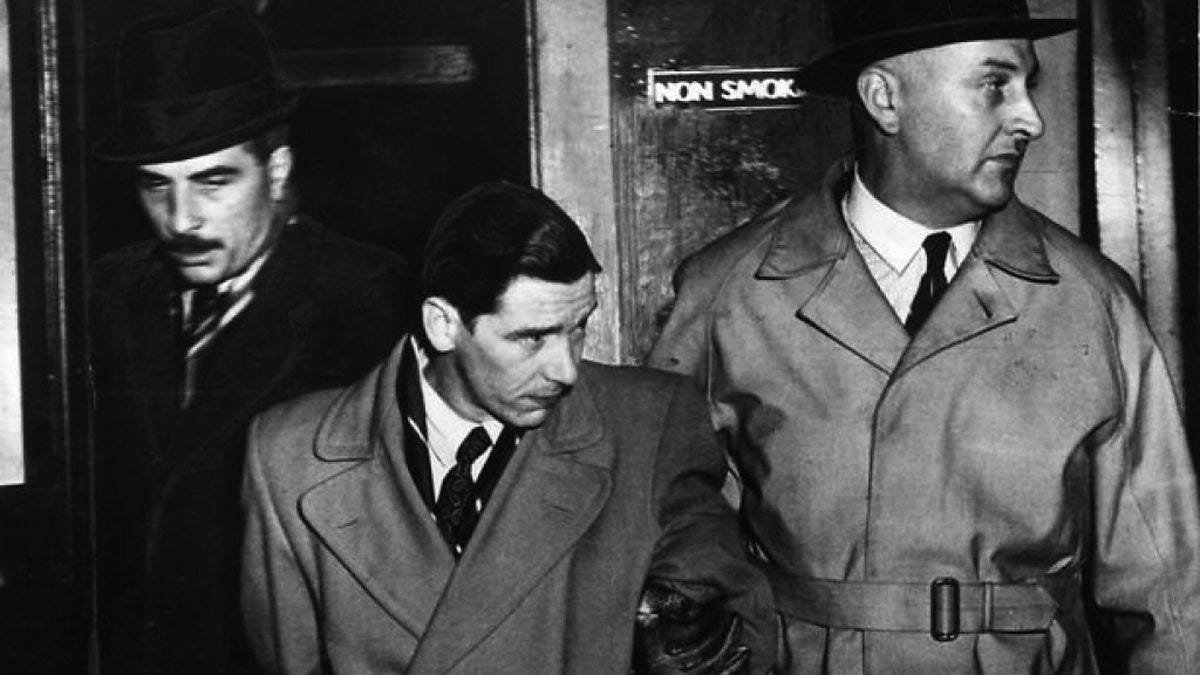
Timothy Evans came home from work on the evening of November 8 and was met by Christie, who told him that Beryl had died during the procedure. Christie told him the body had been disposed of. He told Evans that Geraldine thirteen months old was being looked after by a couple in Acton, and that arrangements could be made for her care.
What Evans did next has been analysed and debated for seventy years. He did not call the police. He did not call anyone. Over the following days, in a state of confusion and terror that contemporaries and later investigators described as consistent with a man in profound shock, he sold his furniture, gave notice at work, and went to stay with his aunt and uncle in Merthyr Tydfil in Wales, telling people that Beryl had gone to a hospital.
He held together this fiction for approximately two weeks. Then it fell apart. On November 30, 1949, Timothy Evans walked into Merthyr Tydfil police station and told the duty officer that he wanted to report something. He said his wife was dead. He said he had disposed of her body down a drain outside 10 Rillington Place.
This first statement was almost certainly a lie not an attempt to confess to murder, but a clumsy attempt to take responsibility for something in a way that kept Christie’s name out of it. Abortion being illegal, Evans was protecting the man he believed had tried to help his wife and accidentally killed her. The police found the drain. It took three officers to lift the manhole cover, and there was nothing inside it. The story didn’t hold.
A search of 10 Rillington Place followed. The bodies of Beryl Evans and Geraldine Evans were found in the wash-house in the back garden. Beryl had been strangled. Geraldine thirteen months old had been strangled with a necktie.
True Crime Weekly is a reader-supported publication. To receive new posts and support my work, consider becoming a free or paid subscriber.
Evans was brought back to London and interviewed. Under sustained pressure, over the course of several sessions, he gave a second and then a third statement. The third statement confessed to both murders. He described arguing with Beryl over her spending, losing his temper, and strangling her. He described disposing of Geraldine.
He retracted everything within hours, insisting that Christie had killed them both.
The police did not believe him. Why would they? Timothy Evans was an uneducated young man with a criminal record for minor offences, inconsistent stories, and a signed confession. John Christie was a former Special Constable a man who had served the law, a man of the right social bearing, a man who wore glasses and spoke carefully. When Christie was interviewed as a witness, he was composed, helpful, and entirely convincing.
He would, of course, had enormous practice at appearing normal.
The Trial
Timothy Evans went on trial at the Old Bailey on January 11, 1950, charged with the murder of his daughter Geraldine. Under British law at the time, he could only be tried for one murder; the prosecution chose Geraldine because the evidence was slightly cleaner.
The star witness for the prosecution was John Reginald Christie.
Christie took the stand and denied everything Evans had said about him. He described Evans as unstable, as a man given to wild stories. He was, by multiple accounts of those present, a credible and effective witness calm, precise, appropriately grieved. The jury appears to have found him entirely convincing.
Evans gave evidence in his own defence. He was not a good witness. He was frightened, semi-literate, inconsistent under cross-examination, and prone to the kind of embellishment that had characterised his speech all his life. The barrister defending him, Malcolm Morris, did his best with the limited resources he had been given the legal aid budget for capital cases at the time was meagre, and there had been insufficient time to investigate properly. Morris raised the possibility that Christie was the real killer. Nobody in the courtroom appears to have taken this very seriously.
The jury deliberated for forty minutes and returned a verdict of guilty.
Timothy Evans was sentenced to death.
He was twenty-five years old.
The Execution
In his cell at Pentonville Prison, Evans continued to insist that Christie was responsible. He wrote letters. He spoke to the prison chaplain, Father Francis, who believed him and advocated on his behalf. His solicitor applied for leave to appeal. The application was refused.
On the morning of March 9, 1950, Timothy John Evans was hanged at Pentonville Prison. He maintained his innocence until the end.
The Christies returned to 10 Rillington Place.
What Was in the Walls
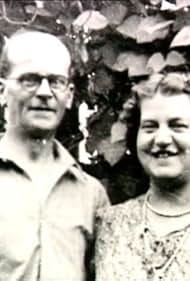
John Christie and his wife Ethel continued living at 10 Rillington Place for almost three more years. Then, in late 1952, something shifted. Christie strangled Ethel in their bed, apparently during the night of December 14, burying her beneath the floorboards of the front room.
In the first months of 1953, he killed three more women Kathleen Maloney, Rita Nelson, and Hectorina McLennan, all of them vulnerable women he had lured to the flat with various pretexts. He gassed them with domestic gas, strangled them, and positioned their bodies in a wallpapered alcove he had created by boarding up part of his kitchen. The three women were stacked there, covered with earth, bracketed by the wallpaper.
Christie left 10 Rillington Place in March 1953, subletting his flat without any authority to do so and taking what he could carry. New tenants moved in. On March 24, one of them, Beresford Brown, was attempting to fix a bracket to the kitchen wall and noticed that a section of the wallpaper was hollow. He pulled it back.
The alcove contained three bodies.
Further investigation found Ethel Christie under the floorboards of the front room. In the garden, dug up from beneath what had been Christie’s carefully tended flowerbeds, were two more sets of remains later identified as Ruth Fuerst and Muriel Eady, killed years earlier, in 1943 and 1944, during the war. Christie had been killing since before Timothy Evans ever moved into the building.
The Capture and the Confessions
Christie was found walking near Putney Bridge on March 31, 1953, ten days after the discovery at Rillington Place, by a police constable who recognised him from the description that had been circulating. He was arrested without resistance.
What followed was a series of confessions so variable and self-serving that they are almost impossible to use as a straightforward account of events. Christie confessed to six murders the women found in the alcove and garden, and Ethel. Then, in the statement that would matter most to history, he confessed to the murder of Beryl Evans.
He denied killing Geraldine.
This created a legal and moral problem of considerable dimensions. If Christie had killed Beryl Evans, then Timothy Evans’s conviction and execution predicated on the assumption that the same man had killed both his wife and daughter became an act of judicial murder. The state had hanged an innocent man. The star witness against him had been the actual killer.
Christie was tried in June 1953. The defence offered insanity. The jury rejected it in under two hours and convicted him of the murder of Ethel Christie alone legally, again, only one murder could be tried at a time. He was hanged on July 15, 1953, by the same executioner, Albert Pierrepoint, who had hanged Timothy Evans three years earlier.
Pierrepoint described Christie as the quietest man he had ever hanged.
The Inquiry and the Pardon
The immediate question had an innocent man been executed? was deflected by the British government with a swiftness that, in retrospect, has its own indicting quality.
A private inquiry was commissioned under John Scott Henderson, a Queen’s Counsel. His report, delivered in July 1953 with what critics noted was extraordinary speed, concluded that Timothy Evans had almost certainly killed both his wife and his daughter, and that Christie’s confession to killing Beryl was unreliable and self-serving. The report was condemned almost immediately by lawyers, journalists, and campaigners who examined its reasoning and found it wanting. It appeared constructed to reach a conclusion that the state had not killed an innocent man rather than to honestly examine the evidence.
The journalist and barrister Ludovic Kennedy spent years investigating the case and published a book, Ten Rillington Place, in 1961. It was a meticulous and devastating examination of everything that had gone wrong: the unreliable confessions, the inadequate defence, the failures of the police investigation, the credulous acceptance of Christie’s testimony, and the structural impossibility of justice for a man like Timothy Evans in the system as it then existed. Kennedy’s central argument that Evans was innocent and had been judicially murdered gained steadily wider acceptance.
In 1965, the Home Secretary, Frank Soskice, appointed a new inquiry under Mr Justice Brabin. Brabin’s report, delivered in October 1966, reached what remains one of the more peculiar conclusions in the history of British jurisprudence: that Evans had probably not killed Geraldine, but had probably killed Beryl. Since Evans had been convicted only of Geraldine’s murder, this meant he had been correctly convicted of a murder he almost certainly hadn’t committed, and not convicted of a murder he possibly had committed.
The logical contortions required to maintain this position reflected the institutional unwillingness to simply state what the evidence indicated: that John Christie had killed both Beryl and Geraldine Evans, and that the man hanged for those crimes was innocent of them.
On October 18, 1966, Timothy Evans was granted a posthumous free pardon. His remains were exhumed from Pentonville Prison and reburied at St Patrick’s Roman Catholic Cemetery.
A free pardon is not an exoneration. It does not constitute a legal finding of innocence. It means the Crown has decided not to pursue the conviction further. It is a legal face-saving measure. It was the best the British state was prepared to offer.
What It Changed
The case of Timothy Evans sits alongside those of Ruth Ellis and Derek Bentley as the cases most often cited in the movement that eventually led to the Murder (Abolition of Death Penalty) Act 1965. Ruth Ellis, hanged in 1955, was the last woman to be executed in Britain. Derek Bentley, hanged in 1953 for a murder committed by a sixteen-year-old accomplice while Bentley was in police custody, was posthumously pardoned in 1998. Evans was the most stark: a man of limited education, no resources, and no social standing, hanged for murders committed by the respectable man who testified against him.
Capital punishment was suspended in Britain in 1965 and abolished permanently in 1969. The Evans case was not the only reason, but it was the most powerful illustration of the argument’s central premise: that a justice system which kills cannot correct its mistakes.
The House
10 Rillington Place was demolished in 1970. The street was renamed Ruston Close shortly before demolition, in a belated attempt to detach a postal address from its associations. The street no longer exists.
The area around it has been transformed by development over the decades since. There is nothing on the site that marks what happened there, no plaque for Beryl Evans or Geraldine Evans or any of Christie’s other victims, no acknowledgment that on this ground the British state hanged a man for murders he did not commit and then spent sixteen years constructing arguments for why it couldn’t quite bring itself to say so plainly.
Timothy Evans
He was born November 20, 1924, in Merthyr Tydfil, South Wales. He moved to London as a young man and found work as a lorry driver. He married at twenty-two, became a father at twenty-three, and was dead at twenty-five.
He told the truth from the moment he retracted his confession to the morning he was hanged. He told it in a police station in Merthyr Tydfil, in interview rooms, in a courtroom at the Old Bailey, in letters from his cell, in conversations with the prison chaplain who believed him. Nobody who could act on it believed him until it was too late to matter.
The man who killed his wife and daughter testified against him, walked out of court, returned home, and killed three more women.
The apparatus of British justice the police, the prosecution, the judiciary, the government inquiry looked at all of this and spent sixteen years finding reasons not to say what it was.
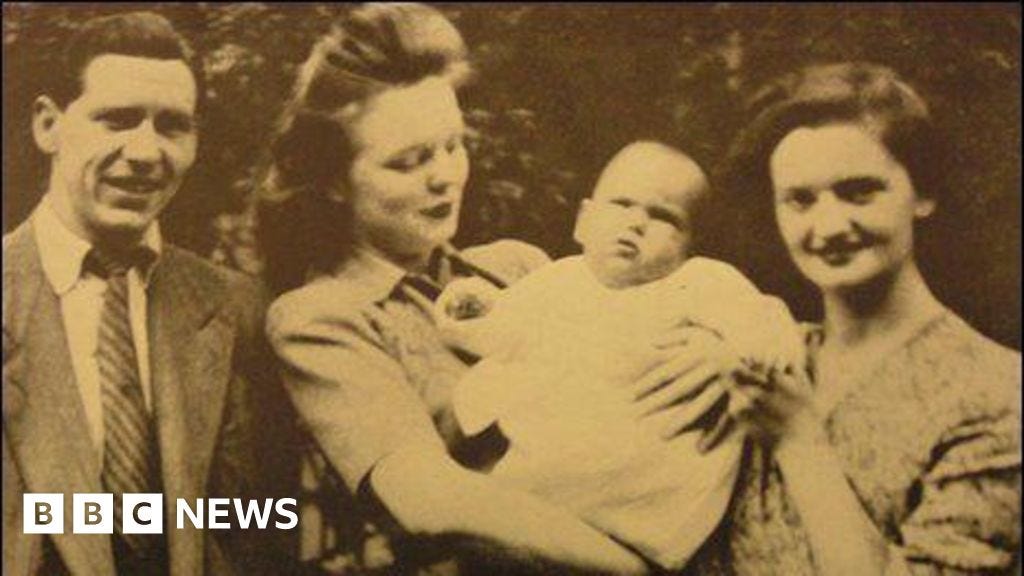
Timothy Evans was twenty-five years old. He is buried at St Patrick’s Roman Catholic Cemetery in Leytonstone, east London. His daughter Geraldine was thirteen months old.


Leave a comment