A Childhood in Nottingham
Harold Frederick Shipman was born on January 14, 1946, in Nottingham, into a working-class family his father a lorry driver, his mother a woman of fierce social ambition who communicated clearly to her son that he was better than his circumstances and destined for something greater. He was the second of four children, but by most accounts the favoured one: the one his mother had placed her expectations in, the one she believed would rise.
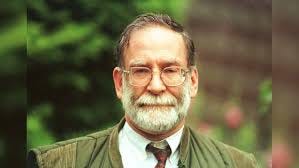
He was clever. That much is undisputed. He was academically capable in a way that distinguished him early from his peers, and he had the slightly apart quality of a boy who had already been told he was exceptional and had decided to believe it. He was not, by the recollections of those who knew him in Nottingham, especially warm or especially liked. He was quiet, precise, self-contained.
If you enjoy my true crime coverage, please help me continue my newsletter by upgrading here:
When Shipman was seventeen, his mother was diagnosed with cancer. She was forty-two years old.
What followed was the formative experience of his life, insofar as it is possible to trace one. He watched her die slowly. He came home from school every afternoon and sat with her, and he watched the visiting doctor administer injections of morphine to manage her pain watched the needle go in, watched the relief move through her face, watched the power that resided in that gesture. On June 21, 1963, Vera Shipman died.
He had never previously expressed any interest in medicine. Within a short time of his mother’s death, he announced that he intended to become a doctor.
The Making of a GP
He studied medicine at the University of Leeds, graduating in 1970. He was competent, thorough, not apparently remarkable to those who taught him. He married Primrose Oxtoby in 1966, while still a student; she was seventeen and pregnant. They had four children. He worked early in his career at Pontefract General Infirmary in West Yorkshire, and in 1974 took his first GP position at the Abraham Ormerod Medical Centre in Todmorden, a small mill town near the Lancashire border.
In Todmorden, he was liked. He made house calls. He was attentive to elderly patients in a way that marked him out. He had the quality consistently remarked on by patients across his entire career of making people feel that he was genuinely interested in them, that he had time for them, that he understood. He was brusque with colleagues, sometimes difficult, prone to a contemptuous manner with people he regarded as beneath his intelligence. But with patients, particularly elderly women who lived alone and appreciated a doctor who came to the house and sat and listened, he had a gift.
He was also, by 1975, addicted to pethidine.
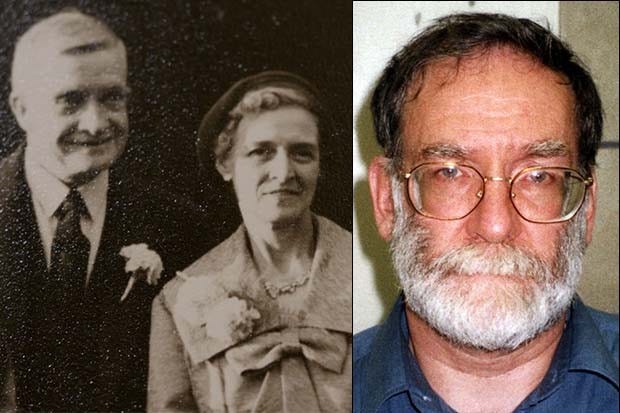
The addiction had been building quietly. He had been writing fraudulent prescriptions prescribing pethidine to patients who didn’t need it, pocketing the medication himself. When practice colleagues noticed the discrepancies and confronted him, the case went to the General Medical Council. He was fined £600. He was referred to a drug rehabilitation clinic near York. He was warned by the GMC.
He was not struck off.
In 1977, Harold Shipman joined a group practice at Donneybrook Medical Centre in Hyde, Greater Manchester.
If you enjoy my true crime coverage, please help me continue my newsletter by upgrading here:
Hyde was a small town on the eastern edge of Greater Manchester, former mill country, the kind of place that had contracted as the industries it had been built around contracted, and had settled into a quiet, slightly faded ordinariness. It had an elderly population, as many such towns did. Its residents were, in significant numbers, widows who had lived there all their lives and who, when they grew old and needed a doctor, wanted one who was part of the community who knew them, who came to the house, who understood.
Shipman was that doctor. For fifteen years at Donneybrook he built a reputation. He was difficult with colleagues his mood swings and contemptuous manner made the partnership increasingly uncomfortable but his patient list grew and his patients spoke well of him. He made house calls that other GPs declined to make. He took time with the elderly. He remembered details about people’s lives that made them feel seen.
In 1992, the professional tensions at Donneybrook having become untenable, he set up his own solo practice at 21 Market Street. This was the point, the subsequent inquiry found, at which the killing accelerated out of control.
The inquiry, chaired by Dame Janet Smith, concluded that Shipman had killed at least 215 patients between 1975 and 1998. The first victim identified with confidence was Eva Lyons, killed on March 17, 1975, the day before her seventy-first birthday, while Shipman was still at Todmorden. Seventy-one patients were murdered during his years at Donneybrook. The remaining 143 were murdered after 1992, in his single-handed practice on Market Street, at an escalating rate that if it had been tracked by anyone with the ability to see it whole would have been unmistakable.
The Method
The method was elegantly simple and enormously difficult to detect.
Shipman would visit a patient usually at home, occasionally at the surgery and administer a lethal overdose of diamorphine, the pharmaceutical grade of heroin, by injection. The patient would lose consciousness almost immediately and die within minutes. He would then compose himself, make the relevant phone calls, and sign the death certificate.
Because he was the patient’s own doctor, because he had attended the death, and because he was the one completing the paperwork, there was almost no mechanism to flag what he was doing. Death certificates signed by a GP who had been the attending physician did not require countersignature or independent verification. Cremation certificates which required a second doctor’s signature were sometimes obtained through colleagues who trusted him and asked no difficult questions. The bodies, once cremated, yielded no evidence.
He killed primarily elderly women. They tended to be found sitting in chairs or lying on sofas, apparently having died peacefully while he was present or just after a visit. He told relatives and neighbours that he had done what he could, that it was her time, that she had gone quietly. He was described repeatedly as kind and professional in these moments.
True Crime Weekly is a reader-supported publication. To receive new posts and support my work, consider becoming a free or paid subscriber.
His computer records which he controlled entirely, being a single-handed practitioner were falsified to support the medical history he wanted there to be. He was careful, when he needed to retrospectively explain a death, to alter records in ways that made the decline look gradual and the outcome inevitable. What he did not know, and what would eventually destroy him, was that computers preserve evidence of when entries are made and when they are altered.
The Warnings Nobody Acted On
There were warnings. There were multiple warnings, across multiple years, from multiple different directions. Each one was raised, considered, and allowed to dissipate without consequence.
As early as the late 1980s, colleagues in the medical community around Hyde had noted privately that Shipman’s elderly patients seemed to die at a statistically unusual rate. The conversations happened but didn’t go anywhere. The culture of the GP profession in that era was substantially self-regulating, and challenging a colleague’s clinical judgement especially one with Shipman’s reputation for dedication was not something that happened easily or often.
In 1997, a funeral director named Deborah Massey, who handled the deaths of many of Shipman’s patients, remarked to a colleague that she found it odd how often the doctor was present when his patients died. The pattern had registered in her professional practice, which dealt with death constantly and could therefore notice anomalies in it. She raised the concern with the funeral firm she worked for.
In March 1998, Dr Linda Reynolds, a GP at the Brooke Surgery in Hyde, acted on Massey’s concerns. She had been given data indicating that Shipman’s cremation referral rate for elderly female patients was significantly higher than that of other local GPs she had counted the forms she had been asked to countersign. She took her concerns to John Pollard, the South Manchester coroner, and recommended a police investigation.
The investigation was assigned to inexperienced officers. They reviewed a small number of cases and concluded that there was insufficient evidence to proceed. The subsequent inquiry specifically attributed blame for this failure to the decision to use inexperienced investigators. Between April 17, 1998 when the police closed their investigation and Shipman’s eventual arrest in September, he killed three more people.
Kathleen Grundy
His last victim was Kathleen Grundy, an eighty-one-year-old former mayoress of Hyde who was, by all accounts, a vigorous and active woman involved in local causes, healthy for her age, alert and engaged. She was found dead at her home on June 24, 1998, by friends who had come to collect her for a luncheon. Shipman was quickly on the scene. He completed the death certificate himself, recording the cause of death as old age.
Grundy’s daughter was a solicitor named Angela Woodruff. In the days after her mother’s death, Woodruff learned from a fellow solicitor that a will had apparently been filed a will she had never heard of, drawn up recently, excluding her entirely and leaving Grundy’s estate of approximately £386,000 to Dr Harold Shipman.
The will was crude. The typing was irregular. The witnesses named two of Grundy’s friends said they had been asked to sign a document without being told what it was. The signature attributed to Kathleen Grundy didn’t quite look right to people who knew it.
Angela Woodruff went to the police. This time, the detective assigned to the case was experienced. Detective Superintendent Bernard Postles ordered the exhumation of Kathleen Grundy’s body.
The post-mortem found a massive concentration of morphine diamorphine, injected shortly before death. Kathleen Grundy had not died of old age. She had been murdered.
The Arrest and the Evidence in the Computer
Harold Shipman was arrested on September 7, 1998 his fifty-first birthday.
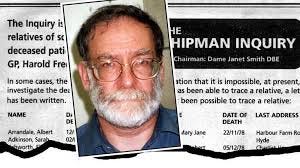
He was composed under questioning. He denied everything. He had an explanation for the morphine: Kathleen Grundy, he told investigators, had been a secret addict. He had noted this in her medical records. He produced the records to prove it.
When forensic computer analysts examined his machine, they found that the relevant entries had been made after Grundy’s death. The computer retained the metadata the timestamps of every entry, the evidence of retrospective alteration. He had created false records to cover a murder and had done so on a machine that recorded exactly when he had done it.
Investigators then exhumed more bodies. Each one they tested and they tested many contained the same evidence: lethal concentrations of diamorphine. The deaths that had been attributed to natural causes, to old age, to the ordinary end of ordinary lives, had each been the same act. An injection. A death. A falsified death certificate. A grieving family told that their mother, their grandmother, their wife, had gone peacefully, that he had done everything he could.
The Trial
Shipman was charged with fifteen counts of murder and one count of forgery. The fifteen victims had been chosen because the evidence was clearest: they were all elderly women, all from Hyde, all killed between 1995 and 1998, all showing lethal diamorphine at post-mortem examination.
The trial opened at Preston Crown Court on October 5, 1999. Shipman pleaded not guilty to all charges. He maintained his innocence with extraordinary composure throughout six weeks of devastating evidence. He offered, through his barrister, explanations for each case that required the jury to believe a series of remarkable coincidences. The jury did not believe them.
On January 31, 2000, after six days of deliberation, the jury found him guilty on all fifteen counts of murder and the count of forgery. Mr Justice Forbes sentenced him to life imprisonment on each murder count, recommending a whole life tariff meaning no possibility of release.
Eleven days after conviction, the General Medical Council struck him off the medical register.
The Inquiry
The scale of what Shipman had done the fifteen convicted murders representing a fraction of the real toll required a public inquiry of a kind with few precedents.
Dame Janet Smith, a High Court judge, chaired the Shipman Inquiry. It began in June 2000. It reviewed 888 deaths among Shipman’s former patients. It took over 3,500 witness statements. It examined his entire career from 1974 onward.
The inquiry’s first report, published in July 2002, concluded that Shipman had unlawfully killed 215 patients, with a real suspicion attaching to a further 45 deaths, and that in 38 more cases the evidence was troubling but inconclusive. The total potential victim count was higher than any previously confirmed serial killer in British history.
The inquiry’s subsequent reports examined how he had evaded detection for twenty-three years and what systemic changes were required to prevent the same from happening again. The findings were damning across multiple institutions and practices.
The mechanisms for monitoring GP prescribing of controlled drugs were inadequate. The coroner system was not equipped to identify patterns of death across a single doctor’s patient list. The requirement for a second signature on cremation certificates a safeguard that should have caught anomalies had been rendered functionally useless because colleagues signing those forms rarely had the information or the inclination to question a respected colleague. The GP profession’s culture of self-regulation created an environment in which raising concerns about a colleague required overcoming significant professional and personal reluctance.
At every point where a warning had been raised by the funeral director, by Dr Reynolds, by colleagues with private misgivings the system had found reasons not to act with the urgency the situation warranted.
The Death in Cell
Harold Shipman never cooperated with the inquiry. He refused to answer questions about his motives, refused to discuss the crimes he had been convicted of, refused to engage with the process that was trying to understand what he had done. He maintained his innocence in public and said nothing in private that clarified anything.
On January 13, 2004 the day before his fifty-eighth birthday he was found hanging in his cell at Wakefield Prison. He had used bed sheets tied to the window bars. The official finding was suicide.
His death foreclosed the only remaining possibility of learning, from his own mouth, why he had done it. The motive question remains, technically, unanswered. He never said.
What forensic psychiatrists and criminologists have assembled from the evidence of his life suggests several overlapping possibilities. The image of his mother receiving morphine the relief it brought, the power it represented, the intimacy of the moment appears significant to many analysts. He only became interested in medicine after her death. He became addicted to an opioid in the first years of his practice. He killed with opioids. The repetition has a compulsive quality that several analysts have described as a re-enactment of that formative experience, though what exactly he was re-enacting the comfort, the control, the presence at a deathbed cannot be stated with confidence.
There is also the question of what the killings gave him in more straightforward terms: the sense of absolute power over another person’s existence, compressed into the moment of an injection and a death, in the home of someone who trusted him completely. He was the doctor who came to the door. He was the one with the bag. He was the one who decided.
He forged Kathleen Grundy’s will for £386,000. He had a comfortable home, a stable income, a respected position in his community. He had no particular need for the money. The will may have been as Dame Janet Smith speculated a kind of subconscious sabotage, the act of a man who had been carrying an impossible secret for twenty-three years and at some level wanted to be stopped.
He was stopped. Too late for 215 people, and possibly more.
True Crime Weekly is a reader-supported publication. To receive new posts and support my work, consider becoming a free or paid subscriber.
What Remains
The Shipman Inquiry’s recommendations led to significant reforms in British medical practice. Prescribing of controlled drugs by GPs is now more stringently monitored. The death certification system has been reformed. Coroners have wider powers. Independent scrutiny of deaths in GP care has been strengthened.
The community of Hyde was left with something that has no institutional remedy. Shipman had been the trusted doctor of hundreds of families. Many of those families had thanked him after a death thanked him for being there, for being kind, for telling them that their loved one had gone peacefully. They had buried their grief and moved on. Then they learned what had happened, and the grief had to be found again and looked at differently.
Richard Lissack, QC, representing victims’ families at the inquiry, described what Shipman had done as having “moved unchecked through families, streets, and bit by bit murdered the heart of a community.”
That is one way to put it. Another is this: he was a doctor in a small town who made house calls and remembered how his patients took their tea and was trusted by elderly people who lived alone and who, when he came to the door, were glad to see him.
Eva Lyons was the first confirmed victim. She was killed on March 17, 1975, the day before her seventy-first birthday. She had been Shipman’s patient for two months. The last confirmed victim was Kathleen Grundy, killed June 24, 1998, the woman whose daughter was a solicitor who knew what a forged will looked like. Between them: 213 others, and possibly more, whose names are recorded in a 2,000-page report and who are otherwise largely unknown outside the families that lost them.


Leave a comment