He was not born Gerald Stano.
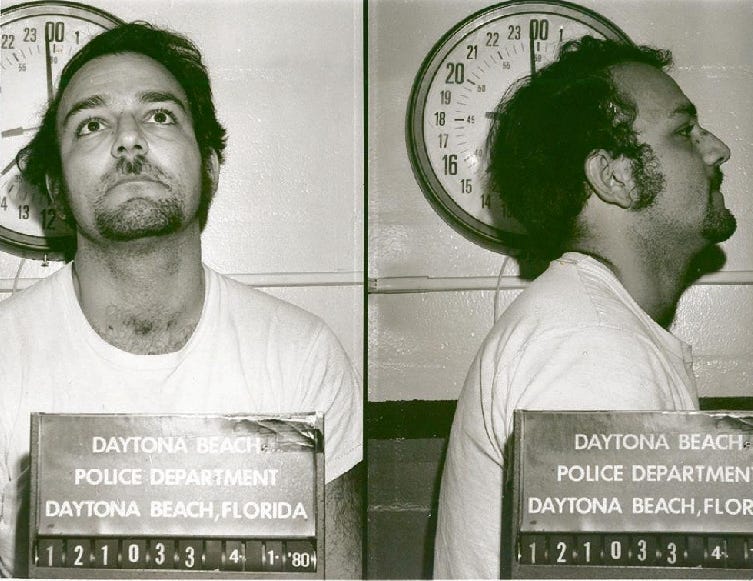
He was born Paul Zeininger on September 12, 1951, in Schenectady, New York, the fifth child of a woman who appears in the record only as someone who could not, or would not, care for the children she produced. Three of those children were given up for adoption. Paul was the third.
If you enjoy my true crime coverage, please help me continue my newsletter by upgrading here:
By the time county officials assessed him at six months old, the damage done in those first months was already severe enough to be clinical. Doctors noted that the infant was functioning, in their words, at “an animalistic level.” He was malnourished, developmentally delayed, and had been left in conditions so degraded that he had been eating his own feces to survive. The assessment concluded that he could not be adopted. He was, at six months old, considered too damaged to place with a family.
A nurse named Norma Stano disagreed. She and her husband Eugene adopted the boy, gave him their name, and spent the next two decades doing everything that parenting manuals and social workers and common love could suggest. They provided stability, medical care, patience, and a home. They meant it.
None of it reached whatever had been broken in that first half-year.
Gerald the name they gave him grew into a child who was difficult in ways his parents could not entirely explain or fix. He wet the bed until he was ten. He struggled academically across the board, managing only passing grades in most subjects, excelling only in music. He lied compulsively and in unnecessary ways, about small things as readily as large ones. He was bullied by peers and responded by seeking to purchase acceptance he stole money from his father’s wallet to bribe teammates on the track and field team to perform badly, so that he would not finish last.
At fourteen he was arrested for pulling a false fire alarm. Later for throwing rocks at cars from a highway overpass. These were not the crimes of a child who was unaware of consequences; they were the crimes of a child who had poor impulse control and who had learned, at some level, that consequences could be managed. His parents repeatedly shielded him from the full weight of what he’d done, paying restitution, smoothing things over, stepping between Gerald and the outcomes of his behaviour. They did it out of love. It taught him that actions did not necessarily have consequences.
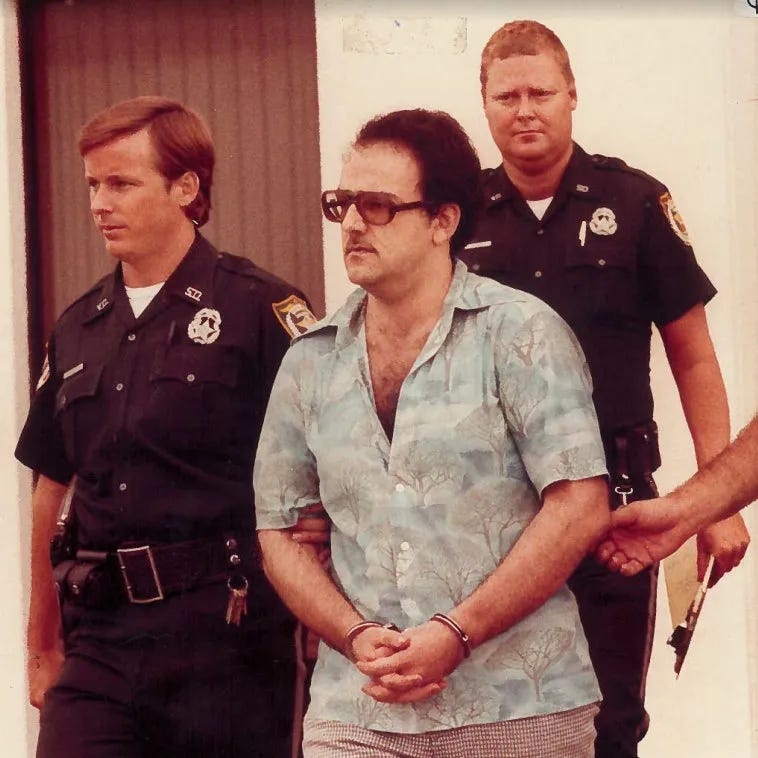
He did not finish high school until he was twenty-one. He pursued a course in computer technology afterward and briefly held a job at a hospital, from which he was dismissed for theft. He sexually assaulted a mentally disabled young woman; she became pregnant. His parents paid for her medical expenses, including an abortion, and the matter was quietly resolved. No charges were filed.
Around this time, Gerald Stano began killing.
Florida
In the early 1970s, the Stano family relocated to Florida. Gerald, now in his early twenties, moved with them to the Ormond Beach and Daytona Beach area on the Atlantic coast. He found a series of jobs waiter, short-order cook, various service industry positions and lost them with equal regularity, for the familiar reasons: theft, tardiness, unreliability. He lived, in the gaps between employment, in the transient way of someone who had never built anything permanent.
He drove a car he was proud of. This is a detail that matters. Gerald Stano was, by multiple accounts, obsessed with cars specifically with the muscle cars of the era, the large-engined American vehicles that signalled, in the culture of that time and place, a certain masculine status. He kept his car immaculate. He talked about it readily. It was one of the few things in his life about which he expressed consistent enthusiasm, and it was the primary mechanism through which he found his victims.
The women he killed were overwhelmingly young, overwhelmingly white, and overwhelmingly in circumstances that made them invisible. Hitchhikers. Sex workers. Runaways. Women who had recently moved to a new city and hadn’t yet built the networks that would notice their absence. Women whose relationship with their families was complicated enough that a period of non-contact might not immediately raise alarms. Women whose names, when reported missing, generated the kind of brief, formulaic response that was common at the time for women in those circumstances: a file opened, an inquiry made, a case left open when the inquiry went nowhere.
If you enjoy my true crime coverage, please help me continue my newsletter by upgrading here:
He picked them up. He drove. At some point over a dispute real or invented, over something they said or did or represented he killed them. He stabbed most of them. He strangled some. He posed certain bodies afterward, covering them with branches, arranging them with a deliberateness that investigators would later note suggested a kind of ritual or at least a preference for controlling what came after the death as well as the death itself.
He drove home. He went to work. He ate dinner.
The precise number of times he did this between the late 1960s and 1980 is one of the central unanswered questions of the case.
Donna Hensley
On March 25, 1980, a woman named Donna Hensley walked into a Daytona Beach police station and reported that she had been stabbed. She was a sex worker, and she told officers that a man had driven her to a hotel room and attacked her, stabbing her thirty times before she managed to get away. She had survived through sheer physical determination and the good fortune that he had been interrupted or distracted before he could finish.
She knew her attacker by name. He was known in the local community. His name was Gerald Stano.
Stano was arrested. He was placed in a cell and waited. He was calm. He showed no particular distress at his situation.
The detective assigned to investigate was Paul Crow a Daytona Beach police officer who had been working unsolved murders of young women in the area for years and who had developed both an instinct for the work and a particular technique in the interview room. Crow was patient. He had a gift for finding the register in which a given suspect was willing to talk, and he understood that some people needed to feel that they were in some sense directing the conversation, even when they were not. He began talking to Stano.
The Confessions Begin
Two college students found the decomposing body of twenty-year-old Mary Carol Maher near the Daytona Beach Broadwalk while Stano was in custody awaiting trial for the attack on Donna Hensley. Maher had been stabbed multiple times in the back, legs, and chest. She had last been seen in circumstances consistent with the pattern that Crow was coming to recognise.
Crow went to Stano with the case. Stano denied knowing anything about it.
Then something shifted. In ways that have been described differently by different people Crow as a skilled and patient interrogator who built trust across many conversations; Stano’s later defenders as a psychologically fragile man who was manipulated into confessions he fabricated Gerald Stano began to talk.
He admitted killing Mary Carol Maher. He provided details about how he had done it. The details matched the physical evidence in ways that investigators found compelling. Then he admitted another killing. And another.
Over the months that followed, Stano led investigators across Florida in what became, for Detective Crow, a bewildering and increasingly overwhelming accounting of murders committed across years and counties. He described picking up women who were hitchhiking, women he’d met at bars, women he encountered on the street. He described arguments sometimes real grievances, sometimes pretexts that escalated to violence. He described where he had left the bodies.
Some of those locations yielded remains. Some yielded evidence that corroborated what he said. Some led investigators to cases that had been open for years, with families who had been waiting for any word about what had happened to their daughters, their sisters, their friends.
Some confessions led nowhere. No body, no corroborating evidence, nothing to connect Gerald Stano to the case except Gerald Stano’s own account of it.
This was the problem that would define the case for decades.
The Problem of Forty-One
By the time the confessions stopped accumulating, Stano had admitted to forty-one murders. Police were able to definitively connect him to twenty-three of them through physical evidence, corroborated details, or the discovery of remains in locations he had described. He was convicted of nine murders specifically and received eight life sentences and three death sentences.
The gap between twenty-three and forty-one was never closed. And some investigators believed the real number was higher still as high as eighty-eight, based on patterns of unsolved female homicides in the areas where Stano had been active during the years in question.
That gap generated two very different interpretations, and both have been argued seriously.
The first interpretation: Stano told the truth to the best of his ability, and the cases that couldn’t be corroborated simply reflected the reality that evidence degrades, bodies decompose beyond identification, and the women he had killed were precisely the women most likely to have been inadequately documented in life and death alike. Under this reading, the twenty-three confirmed cases are a floor, not a ceiling.
The second interpretation: Stano, a compulsive liar from childhood, sitting in a jail cell with a police detective who had a particular style of questioning and a professional interest in closing cold cases, confessed to murders he had not committed. Under this reading, Paul Crow shaped and encouraged confessions that Stano psychologically pliable, approval-seeking, without robust legal representation in the early stages provided not because they were true but because providing them was what the situation seemed to call for. On the night before his execution in 1998, Stano himself made this argument explicitly, stating that he had been threatened, held without adequate legal counsel, and that the confessions were fabricated under pressure.
True Crime Weekly is a reader-supported publication. To receive new posts and support my work, consider becoming a free or paid subscriber.
The truth is probably somewhere in the territory between these poles, and that territory is genuinely uncomfortable. The women confirmed dead and confirmed killed by Stano are real. The women who may have been killed by Stano and whose cases remain open are real. The possibility that some confessions were false produced by a vulnerable man in a coercive environment is also real, and it is real in a way that implicates the justice system as well as the killer.
The Victims
The women confirmed killed by Gerald Stano span the years 1973 to 1980, concentrated in the Volusia County and Daytona Beach area, with cases in Pasco County, Brevard County, and what investigators believed were related cases in New Jersey and Pennsylvania from the years before he moved to Florida.
They were young. Most were between sixteen and twenty-five. Most were white, with two exceptions. Nearly all were in circumstances that the investigative culture of the 1970s classified as reducing the urgency of their cases: they were hitchhiking, or they were working as sex workers, or they were runaways, or they were young women whose movements were not closely tracked by people in positions to report concerns quickly.
Some names: Cathy Lee Scharf, seventeen years old, from Port Orange, last seen hitchhiking in December 1973, found stabbed in a ditch near Titusville in January 1974. Nancy Jean Heard, twenty-four, found near Bulow Creek Road, her body posed and covered with branches, last seen hitchhiking on Atlantic Avenue. Ramona Cheryl Neal, eighteen, found in Tomoka State Park with her body concealed under branches, from Georgia, had come to Florida looking for something. Susan Bickrest, twenty-four, an aspiring cosmetologist who had recently moved from Ohio to Daytona Beach, kidnapped from her workplace on December 20, 1975, found months later.
Each name represents a specific person who moved through the world, had plans and habits and relationships and a particular face, and who got into a car that was clean and well-maintained, driven by a man who was enthusiastic about muscle cars and willing to offer a ride.
One victim remained unidentified for over forty years. In 2024, forensic genealogy finally identified her: she had been found in 1980, and for forty-four years her case had been carried as a Jane Doe. The technology to name her did not exist when she was killed or when Stano confessed to her murder. It exists now, and investigators are still working through the cases that the original investigation left unresolved.
Ted Bundy
For a period at Florida State Prison, Gerald Stano and Ted Bundy were incarcerated simultaneously. They were aware of each other. Whether they interacted significantly is not well documented, but the juxtaposition is worth noting: Bundy, charismatic, educated, nationally famous, the subject of books and films and sustained cultural attention; Stano, unremarkable in appearance, limited in education, nationally obscure, the subject of local newspaper coverage that intensified briefly before his execution and then faded.
The disparity in attention between the two men is not simply a function of their relative importance as cases. It reflects something about which victims get counted and which killers get remembered. Bundy’s victims were largely college students, young women of middle-class backgrounds whose disappearances generated sustained media coverage and official investigation. Stano’s confirmed victims were disproportionately women in circumstances that the culture of the time treated as reducing the significance of their deaths hitchhikers, sex workers, women on the margins of the social structures that generated coverage and pressure.
The result is that a man who confessed to forty-one murders and was convicted of nine is substantially less famous than many killers with far smaller confirmed victim counts. This is not an accident of history. It is a record of which lives the culture decided were worth more sustained attention.
The Question of Paul Crow
Detective Paul Crow spent years on this case and built what he genuinely appears to have believed was a comprehensive accounting of Gerald Stano’s crimes. His methods patient, extended conversations, building rapport over time, returning repeatedly to cases where evidence existed were the standard practice of the era and produced results that held up in court for the confirmed murders.
The question of whether those same methods produced false confessions in the unconfirmed cases is genuinely unresolved. Psychological research on false confessions has advanced considerably since 1980. What we know now about the conditions that produce false confessions extended detention, limited legal representation, a psychologically vulnerable subject, an interrogator with a vested interest in confirmation applies at least partially to the circumstances of Stano’s interrogations.
Crow maintained until the end that Stano’s confessions were genuine. Stano, at the moment of his execution, maintained they were coerced. The families of the confirmed victims, some of whom witnessed the execution, believed the right man was dying.
All of these things can be simultaneously true and not fully reconcile.
The Execution
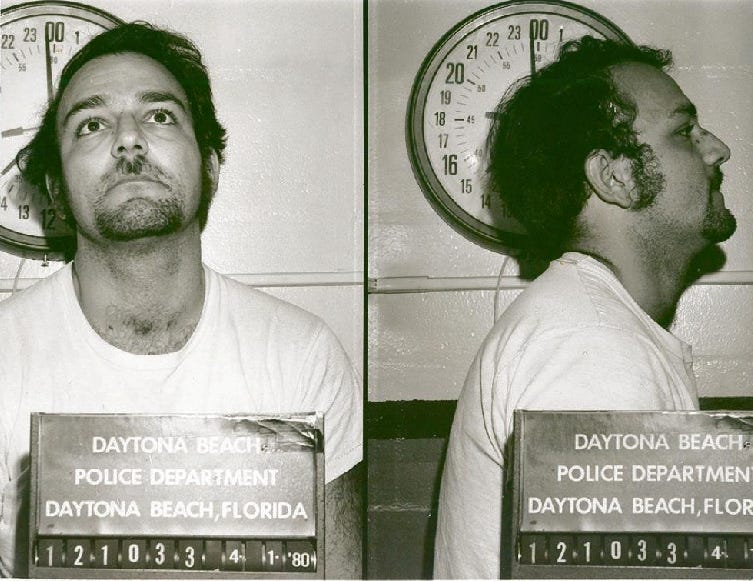
Gerald Stano was executed by electric chair at Florida State Prison on March 23, 1998. He was forty-six years old. He had spent seventeen years in prison.
His execution had been delayed multiple times stays, appeals, a malfunction in the electric chair during a previous execution that caused a twelve-inch flame to leap from the condemned man’s head and prompted a legal challenge to the method’s constitutionality. Stano had watched three death warrants signed against him, watched three scheduled execution dates come and go as appeals played out.
His final meal was a Delmonico steak, a baked potato with sour cream and bacon bits, a salad with blue cheese dressing, lima beans, half a gallon of mint chocolate-chip ice cream, and two litres of Pepsi.
His final statement blamed Paul Crow. It proclaimed his innocence. It expressed fear.
The families of two of his confirmed victims were present. They believed they were watching the right man die.
After his death, the unidentified cases remained open. The Jane Does linked to him remained unnamed. Some have since been identified through genealogical DNA technology, which did not exist in 1998. Others have not.
What Remains
The case of Gerald Stano is not a satisfying story. It does not have the narrative architecture of a case that reveals something and then closes. The confirmed murders are real. The unconfirmed confessions are probably a mixture of truth and fabrication in proportions that cannot now be established. The victims who were found and identified are real people with real families who spent decades with an open wound. The victims who may exist and have never been found or identified are a category of absence rather than a body of knowledge.
What the case does do, consistently and pointedly, is expose the machinery by which certain murders are treated as less urgent than others. The women Gerald Stano killed were not invisible because he was unusually clever at concealing them. They were invisible because the systems that track missing persons, that investigate suspicious deaths, that generate media attention and public pressure, were calibrated in the 1970s as they remain, in various ways, today to respond more slowly and less thoroughly to women in precarious circumstances than to women who fit a more legible template of victimhood.
Cathy Scharf was seventeen. She was hitchhiking. She had been missing for weeks before her remains were found. The case stayed open for years. The man who killed her was driving up and down Florida’s highways during those years, picking up women in a clean car, being the kind of man who knew about muscle cars and was willing to offer a ride.
Nobody stopped him until Donna Hensley walked into a police station with thirty stab wounds and the presence of mind to give a name.
Cathy Lee Scharf was seventeen years old. She was hitchhiking home. Her decomposed remains were found in a ditch near Titusville, Florida, in January 1974. She had been missing for weeks. Gerald Stano was executed for her murder twenty-four years later. Between her death and his, he killed at least twenty-two more women whose names we know, and an unknown number whose names we are still trying to recover.


Leave a comment