The Interstate as Crime Scene
In the 1970s and 1980s, the American interstate highway system was one of the great enablers of violent crime that nobody had thought to account for.
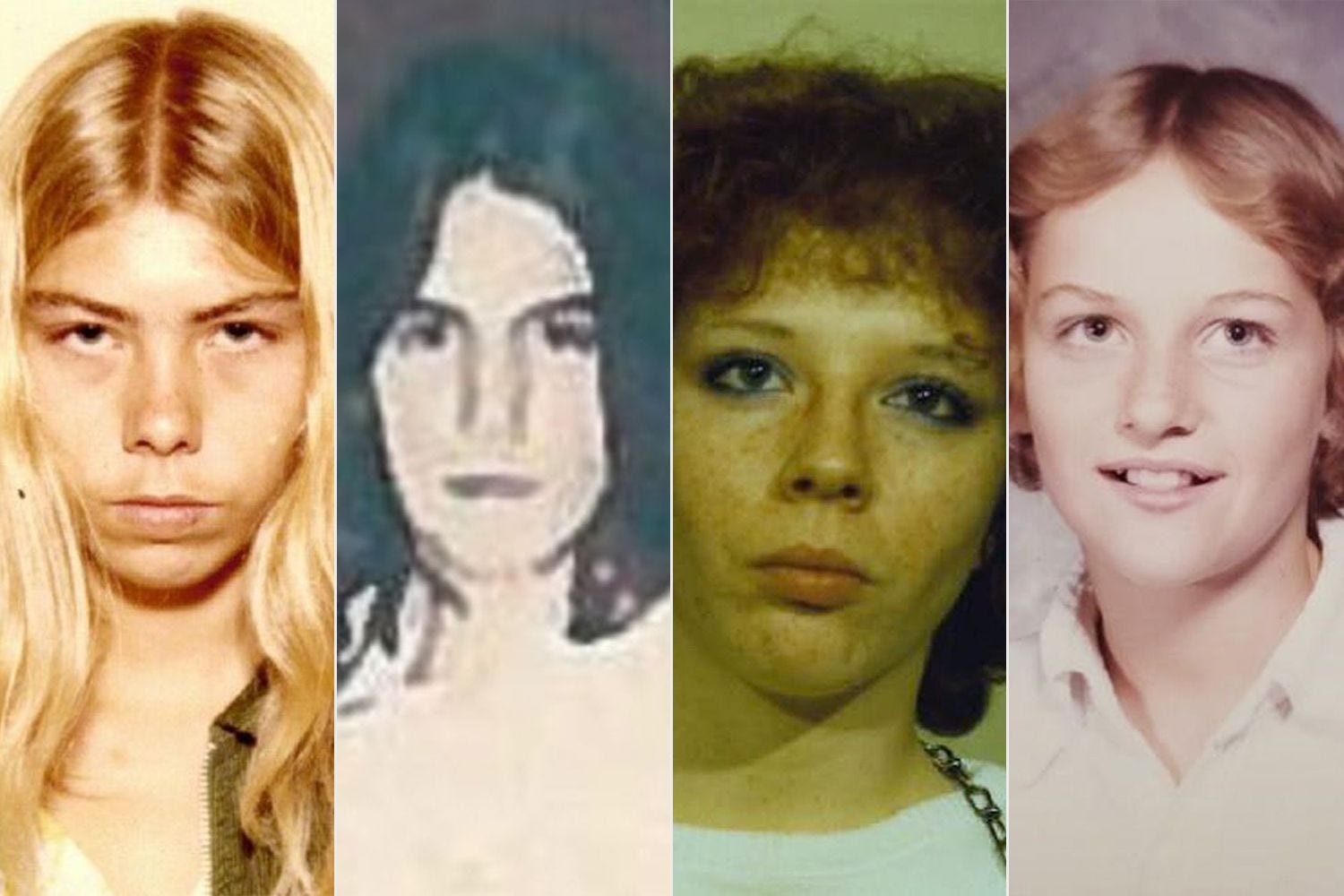
The system had been built for commerce and mobility to move goods and people across the country with unprecedented efficiency. What it also moved, without anyone designing this into the infrastructure, was a class of predator who had understood before law enforcement did that the interstate was a perfect operating environment.
If you enjoy my true crime coverage, please help me continue my newsletter by upgrading here:
A long-haul trucker could pick up a hitchhiker in Tennessee, kill her in Kentucky, and be in Ohio by morning. The body would be found by the state police of one jurisdiction. The suspect, if he was ever identified at all, would be in another jurisdiction entirely. The evidence would be logged in separate systems that didn’t communicate with each other. The missing persons report, if there was one, would be filed in a third state by family members who had no idea their daughter had been anywhere near where she was found.
The women killed in what became known as the Redhead Murders were killed in this system, by this system, in the sense that the conditions which made their murders possible and their cases cold were conditions the interstate highway network had created and law enforcement had not yet developed the tools to address.
They were found along I-75, I-81, I-40, I-59, I-95. They were found in Tennessee and Arkansas and Kentucky and West Virginia and Mississippi and Pennsylvania. They were found strangled, some bound, some naked, some clothed, mostly white, mostly between the ages of fifteen and forty, and they shared one physical characteristic that investigators would eventually use to name the pattern.
They all had red hair.
The First Body: October 1978
The earliest murder believed to be part of the series involved a young woman whose remains were recovered in 1985 but whose disappearance dated to 1978.
Tracy Sue Walker was fifteen years old when she was last seen at the Tippecanoe Mall in Lafayette, Indiana, sometime in late 1978. Her mother had twice reported her as a runaway, which was enough in the investigative culture of the time to categorise her as a voluntary absence rather than a victim. She was a teenager. She had a history of leaving. The framework for treating her as missing in the dangerous sense, rather than missing in the troubled-adolescent sense, was not applied.
Her skeletal remains were found in January 1985 in Campbell County, Tennessee, alongside Interstate 75. She had been in the ground for years. She was not identified for decades more. Isotope analysis of her bones eventually indicated she had been born in Florida or central Texas and had later lived in the Midwest, Rocky Mountain states, or Pacific Coast she was a person in motion, as many young women in precarious circumstances are, which made her harder to trace.

In August 2022, forensic DNA analysis by Othram Laboratories, working with the Tennessee Bureau of Investigation, finally confirmed her identity. She was matched to family members still living in Lafayette. Her mother had reported her missing. Nobody had found her.
She had been fifteen years old when she disappeared. She was fifteen when she died, somewhere on the road between Indiana and Tennessee, at the hands of someone who has never been conclusively identified for her specific murder.
The Pattern 1983–1985
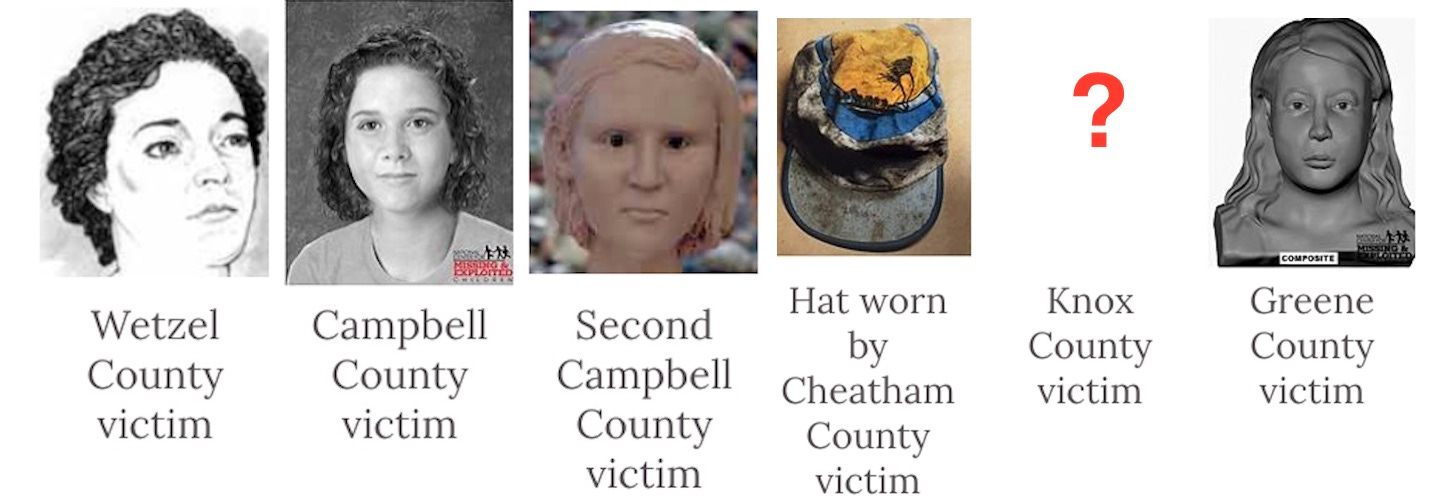
The murders that drew investigative attention and eventually a name began accumulating in visible ways in 1983, when a woman’s body was found along Route 250 near Littleton in Wetzel County, West Virginia. She was white, between thirty-five and forty-five years old, with auburn hair. Her cause of death was not officially determined, but foul play was suspected. She has never been identified.
In 1983, a body was found along a highway in Virginia. In 1984 and 1985, multiple bodies appeared in quick succession along the interstate corridors of Tennessee, Arkansas, Kentucky, and Mississippi. The pattern, once investigators began communicating across jurisdictions which happened slowly and imperfectly was clear enough: women with red or reddish hair, found along major highways, strangled or bound, often dumped in positions suggesting transport from elsewhere.
In Greene County, Tennessee, in April 1985, a man who had gone fishing found a young woman’s naked body face down in a field near Interstate 81 Exit 44. She had been dragged about fifty feet from the interstate ramp. She had been dead for at least two to three weeks. She was between fourteen and twenty years old, with strawberry blonde hair, and she was two months pregnant, having miscarried shortly before her death. A necklace with a penny was found on her body. DNA and fingerprint evidence was recovered at the scene. She has never been identified.
In Campbell County, Tennessee, on New Year’s Day 1985, a woman’s body was found bound and strangled alongside I-75. She was in her early twenties, with red hair. She would remain unidentified for over thirty years.
In 1985, after the Greene County discovery, the states of Pennsylvania, Tennessee, Arkansas, and Mississippi made a formal request to the FBI for assistance. A multi-state task force was convened. Investigators from multiple jurisdictions gathered to share what they had.
What they had was considerable evidence of a pattern and very little evidence of a perpetrator.
Tina Marie McKenney Farmer
The woman found on New Year’s Day 1985 along I-75 in Campbell County, Tennessee, was the case that eventually cracked, and she was cracked not by the multi-state task force but by twenty high school students in Elizabethton, Tennessee, working on a sociology assignment in 2018.
Her name was Tina Marie McKenney Farmer. She was twenty-one years old. She was from Indiana, where she had disappeared in the early 1980s. She had been bound and strangled, and her body had been dumped along the interstate in the first hours of 1985.
The Elizabethton High School class, assigned by sociology and history teacher Alex Campbell to investigate the cold cases, identified a blog post about McKenney Farmer that connected her description to the missing Indiana woman. The Tennessee Bureau of Investigation followed up, located a 1984 fingerprint card for Farmer, and confirmed the match. In 2018 thirty-three years after her body was found Tina Farmer had a name again.
The grand jury convened by Campbell County prosecutors in 2019 heard the evidence and concluded that if the man they believed responsible were alive, he would have been indicted for her murder. He was not alive. He had died in a Kentucky prison in 2015.
His name was Jerry Leon Johns.
Jerry Leon Johns
Jerry Leon Johns was a trucker from Cleveland, Tennessee, who drove the interstate corridors of the South and Midwest for work. He was thirty-seven years old at the time of the murders attributed to him and had a quality that multiple investigators who dealt with him would describe in similar terms: he was arrogant, condescending, and believed he was smarter than everyone around him.
He was not caught for murder. He was caught for attempted murder, and only because his victim survived.
On March 5, 1985, a few months after Tina Farmer was killed, Johns went to a strip club in Knox County, Tennessee, and approached a dancer named Linda Schacke, who had red hair. He tore a pair of $100 bills in half, gave her two halves, and promised the other halves in exchange for sex. She agreed to leave with him. Instead of paying her, Johns produced a weapon, ripped up her T-shirt, bound her with it, and drove her to a wooded area near Interstate 40. He strangled her until she lost consciousness.
Linda Schacke did not die. She came back to consciousness, escaped, and reported what had happened.
Johns was convicted in 1987 of attempted first-degree murder and began serving a prison sentence. When TBI investigators came to question him about the other murders, he refused to cooperate. Former TBI agent Dave Davenport, who interviewed him, described Johns as boastful about his knowledge of serial killers, contemptuous of investigators, and entirely unwilling to admit anything.
“He was very cocky and wouldn’t admit to anything,” Davenport recalled. “He acted like he was smarter than everyone else.”
DNA evidence eventually linked Johns to Tina Farmer’s murder. It was recovered from a blanket in which her body had been wrapped the killer had transported her wrapped in a blanket and had not known, or not cared, that the blanket retained biological material.
Johns died in Kentucky prison in 2015, four years before the grand jury indictment would have named him publicly. He never confessed. He never admitted a single murder. He took whatever he knew about whatever else he had done whether that was one victim or six or more to his grave with that cocky smirk his investigators always mentioned.
The Victims Named and Unnamed
What distinguishes the Redhead Murders from many other cases is the proportion of victims who went unidentified for decades, and the slow, painful process by which forensic technology has given them back their names.
Tracy Sue Walker, fifteen, from Lafayette, Indiana. Missing since 1978. Found in Tennessee in 1985. Identified in 2022.
Tina Marie McKenney Farmer, twenty-one, from Indiana. Missing in the early 1980s. Found in Campbell County, Tennessee, January 1, 1985. Identified in 2018.
Lisa Nichols, identified. Found in West Virginia in 1983. Her name recovered through forensic work.
Michelle Inman, identified. Found in Arkansas. Her identity eventually established.
Elizabeth Lamotte, identified. Found in the series’ geographic corridor. Her family eventually located.
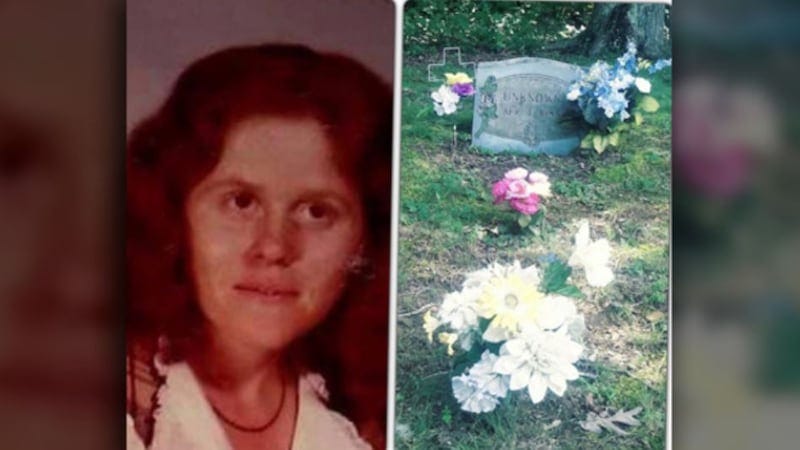
The Greene County Jane Doe the young woman found near Interstate 81 in Tennessee in April 1985, two months pregnant, with the penny necklace, strawberry blonde hair has not been identified as of this writing. Investigators have her DNA. She is in the national databases. No family has come forward. No match has been found. She was perhaps fourteen to twenty years old and she has been lying in a Tennessee grave for forty years with no name on the stone.
Investigators believe between six and fourteen women may be connected to the series. The true number depends on questions how many killers were involved, whether all the deaths attributed to the pattern are genuinely connected that have never been fully resolved.
The Multi-State Task Force and Its Limits
When the FBI joined the investigation in 1985, what they found was not a single coherent case but a collection of related tragedies that had been investigated separately, inconsistently, and with the jurisdictional fragmentation that the interstate highway made structurally inevitable.
Bodies had been found clothed and unclothed. Some victims showed evidence of sexual assault; some did not. Some had been transported significant distances from where they were killed; others had apparently been killed near where they were found. These variations complicated the question of whether all the cases shared a single perpetrator.
The task force concluded that the core cases the tightly clustered 1984–1985 murders along the I-40 and I-75 corridors were likely connected. The outliers, cases from years earlier or with significant deviations from the pattern, were ruled out in some instances and left ambiguous in others.
A suspect profile developed over the years, refined most publicly by the Elizabethton High School class in 2018: a male trucker, white or mixed race, in his thirties at the peak of the murders, familiar with the interstate corridors of the southeastern United States, likely operating out of Tennessee or a nearby state, with knowledge of how to move along the highways without attracting attention and how to dispose of victims in locations that would delay discovery and complicate jurisdiction. He was probably not a casual opportunist but a man who selected his victims according to some internal preference the red hair as a consistent feature suggesting deliberate targeting and who understood enough about investigation to know that women in vulnerable circumstances, found in the wrong jurisdictions, would take years to identify.
He was right. It took decades.
Henry “Hoss” Wise
In 2022, a second killer was identified in connection with one of the possible series victims.
Stacey Lyn Chahorski was nineteen years old from Michigan. In December 1988, her remains were found in Dade County, Georgia, near a highway, strangled. She was identified in March 2022 through genetic genealogy by Othram Laboratories working with the Georgia Bureau of Investigation. The identification confirmed she fit the modus operandi of the series: young woman, reddish hair, strangled, dumped near a highway.
In September 2022, further DNA analysis identified her killer as Henry Frederick “Hoss” Wise a thirty-four-year-old trucker and stunt driver who worked for Western Carolina trucking and commonly drove routes through Chattanooga and Nashville, Tennessee, and Birmingham, Alabama. His routes intersected with the geographic corridor of the murders.
He had a criminal history spanning three states: theft, assault, obstruction of a police officer. He had never been charged with murder.
He could not be charged with Chahorski’s murder or any other, because he had died in 1999 burned to death in a car accident at Myrtle Beach Speedway in South Carolina during a stunt driving event. He had been forty-five years old.
Former TBI agent Brandon Elkins, who had worked the Farmer case for years, described the moment of identifying Hoss Wise with characteristic precision: “It was a surreal moment to discover after all those years that we had identified who this killer was, but it was deflating to know he had died just shortly before the discovery of this DNA.”
Whether Wise was connected to any of the other Redhead Murder cases beyond Chahorski’s has not been established. His routes matched. The timeline matched. The method matched. Nothing has been proven.
What the High School Students Did
In 2018, sociology and history teacher Alex Campbell at Elizabethton High School in Tennessee gave his class of twenty students an assignment: investigate the Redhead Murders.
They approached it as researchers. They spent months on it. They identified at least six victims they believed were connected to a single killer a man they called the “Bible Belt Strangler” and developed a twenty-one-point profile covering appearance, occupation, family background, and likely psychological characteristics. They identified the I-40 corridor as the primary operational geography. They shared their findings with law enforcement, with a podcast investigator named Shane Waters who had been following the case independently, and with the media.
Their work directly contributed to the identification of Tina Farmer they connected her to the Campbell County Jane Doe in a way that led TBI investigators to the fingerprint card and the DNA match. A high school sociology class did what thirty-three years of professional investigation had not.
Teacher Campbell, asked about his students, said: “My students have never, ever disappointed me. When they know they’re helping people, they work very hard.”
Waters, the investigative journalist who had planted red crosses at the locations where bodies were found, framed the significance of the students’ work in terms that cut to the core of why the case had stalled for so long: “I think the world forgot about these women because they were deemed as throwaways.”
The Ongoing Mystery
The central question whether the Redhead Murders are the work of one killer or several has never been definitively answered.
Jerry Johns is the strongest confirmed suspect in at least the Tina Farmer case, and the circumstantial evidence linking him to other cases is substantial. He was on the right roads, at the right times, with the right methodology and the right victim preference. His conviction for strangling Linda Schacke a red-haired woman, a near-victim who survived placed him exactly in the pattern at exactly the right moment.
But investigators are careful about the claim that Johns was the sole perpetrator. TBI Special Agent Elkins, speaking in 2020: “Could he be involved in other cases? I think it’s possible. Are we going to get there? I don’t know, but we’re not going to stop trying.”
Henry “Hoss” Wise represents a second killer with a confirmed connection to at least one case. The possibility that the highway network enabled multiple predators operating in overlapping geographies, killing women with similar characteristics in ways that investigators from different jurisdictions interpreted as a single pattern, cannot be dismissed.
The Greene County Jane Doe remains unidentified. The Wetzel County woman remains unidentified. Others remain unnamed. Their families, if they have families, have been waiting for decades without knowing where their daughters are or what happened to them.
Forensic genealogy has already cracked two of these cases in the last several years. The technology continues to improve. The databases continue to grow. The probability that more of these women will eventually have names increases with every passing year.
Their killers are a different question. Jerry Johns died in prison in 2015. Hoss Wise died at a racetrack in 1999. If there are others, they are in their seventies or eighties now, living ordinary lives somewhere off an interstate, in a house with a bath rug that shed green fibres, or a truck cab that’s been through twenty years of washes since the last relevant drive.
The Greene County Jane Doe was found in April 1985. She was between fourteen and twenty years old. She was two months pregnant. She wore a necklace with a penny on it. She has been in a Tennessee grave for forty years without a name. Somewhere, she has family. Somewhere, someone knew her. She is waiting to be found again.


Leave a comment