Kansas and Missouri, 1984–2000 a con man who spent thirty years reinventing himself, who discovered the internet before most people knew what it was, and who killed eight women while living as a churchgoing suburban grandfather
Cicero, Illinois, 1943
If you enjoy my true crime coverage, please help me continue my newsletter by upgrading here:
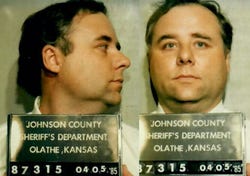
John Edward Robinson was born on December 27, 1943, in Cicero, Illinois, the third of five children in a working-class Catholic family. He was, by the accounts of those who knew him young, a confident and charming boy an Eagle Scout, a choirboy, a teenager who sang for Queen Elizabeth II during a performance tour of London at seventeen and came home with the kind of story that made him the most interesting person in any room he entered.
He was also, from very early on, a liar.
Not a casual or defensive liar the kind who embellishes or omits to avoid embarrassment but a systematic one, a liar whose fabrications were elaborate and purposeful and designed to construct a version of himself that bore only passing resemblance to reality. The gap between the John Robinson he presented and the John Robinson he was would widen across sixty years until it was vast enough to conceal eight murders, a stolen baby, and the bodies of five women stored in chemical drums on a farm in rural Kansas.
The machinery that produced this gap was assembled gradually, over decades, through a series of frauds and forgeries and small criminal enterprises that left behind them a pattern so clear that anyone examining it in retrospect can see exactly what was coming. Nobody examining it at the time, apparently, could.
A Career in Fraud
Robinson studied veterinary medicine at a Chicago college without completing the degree, then moved to Kansas City and obtained work as an X-ray technician at a medical practice, where he was placed in a position of trust and promptly embezzled $33,000 from his employer. He was convicted in 1969. He received probation. He did not pay back the money.
What followed was a sequence of fraudulent enterprises that is almost tedious in its repetitiveness: shell companies incorporated and dissolved, investors defrauded, employers embezzled, cheques forged, schemes launched and collapsed with Robinson moving on before consequences fully caught up.
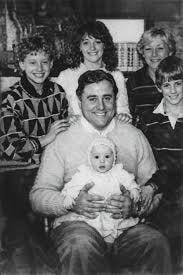
He was convicted repeatedly fraud, theft, embezzlement and repeatedly received probation or minimal custodial sentences that he served and emerged from apparently unchanged. Between convictions he presented himself as a successful businessman, a family man, a churchgoing suburbanite living in a comfortable house in Johnson County, Kansas with his wife Nancy and their four children.
In 1982, while on probation for one fraud conviction, he was charged with multiple new counts of embezzlement and check forgery. He served sixty days. He formed new bogus companies immediately upon release. He named one of them Equi-Plus and another Equi-2, and through them he made promises to investors and potential employees that he had no intention of keeping.
What changed in 1984 was not his methods but their consequences.
True Crime Weekly is a reader-supported publication. To receive new posts and support my work, consider becoming a free or paid subscriber.
Paula Godfrey, 19
In the summer of 1984, Robinson placed a help-wanted advertisement for a sales representative position at one of his shell companies. Paula Godfrey was nineteen years old and interested in a business career. She was hired. Robinson told her she would be traveling to San Antonio, Texas, for training at a specialist course. He drove her to the airport on September 1, 1984.
She was never seen again.
When Paula’s father filed a missing persons report and confronted Robinson directly, Robinson denied all knowledge of his daughter’s whereabouts. Then, several days later, Paula’s parents received a letter. It was signed in Paula Godfrey’s name. It said she was fine and did not wish to see her family. Her father flew to San Antonio to search for her. She had never checked into the hotel Robinson had supposedly arranged.
Robinson’s response to continued questioning was the response of an innocent man wrongly suspected: calm, composed, cooperative in tone, uninformative in substance. The investigation went nowhere. Paula Godfrey remained missing.
Although Robinson later pleaded guilty to Paula’s murder in 2003, her remains have never been found. She was the first. And the technique the forged letter from the victim, written in advance, designed to redirect the concern of family members and close off missing persons investigations before they developed momentum was one he would use again.

The Kansas City Outreach Program
Around Christmas 1984, three months after Paula Godfrey vanished, Robinson invented a new organisation: the Kansas City Outreach Program, ostensibly dedicated to helping women in difficult circumstances find employment and stability.
It did not exist in any functional sense. It had no staff, no funding, no office, no programme. What it had was Robinson, presenting himself as a philanthropist and social entrepreneur, and the power of a letterhead and a business card to convey legitimacy to people who had no reason to be suspicious of a well-dressed man offering help.
In January 1985, Robinson encountered Lisa Stasi through this fiction.
If you enjoy my true crime coverage, please help me continue my newsletter by upgrading here:
Lisa Stasi and the Baby
Lisa Stasi was nineteen years old, recently separated from her husband, living with her four-month-old daughter Tiffany at a battered women’s shelter in Kansas City. She was young, alone, broke, and vulnerable in precisely the ways that Robinson had learned to identify and exploit. He offered her housing and a job through the Kansas City Outreach Program. He put her up at the Rodeway Inn in Overland Park.
One evening Lisa Stasi’s mother-in-law Betty Stasi received a strange call from her. “She just called, and she was hysterical. She was crying hard,” Betty Stasi said. Stasi told her that she was being forced to sign pieces of paper. That was the last anyone ever heard from Lisa Stasi.
She had been forced to sign several blank pieces of paper. Robinson then typed letters over her signature letters to her family, to her estranged husband, to social services stating that she had decided to start a new life and was voluntarily breaking contact with everyone she knew. The letters were designed to foreclose the question before it was asked. A woman who had left of her own accord was not a missing person. She was simply gone.
What Robinson did with Tiffany Stasi four months old, now motherless was the element of the case that investigators would later describe as among the most chilling they had encountered in decades of work.
After killing Lisa, Robinson illegally adopted Tiffany out to his brother Donald Robinson and his sister-in-law, who had been struggling to adopt a baby through legal channels. Robinson forged documents to make the arrangement appear legal. He named the fee he charged his own brother for the child at approximately $5,000.
Donald and Helen Robinson were not criminals. The evidence indicated they had no knowledge of where the baby had come from or what had been done to obtain her. They renamed her Heather Tiffany Robinson and raised her as their own. She grew up in Illinois knowing her uncle John knowing him as a family member she saw at gatherings, a man with a slightly unsettling quality she would later describe as feeling stalked by, a malevolent presence at the edges of ordinary family life.
It wasn’t until Robinson’s arrest in 2000 that the truth came to light. DNA tests confirmed Heather Robinson was Lisa Stasi’s missing daughter. She had been fifteen years old when her uncle was arrested and her world was reconstructed from its foundations. Her biological mother’s remains have never been found.
True Crime Weekly is a reader-supported publication. To receive new posts and support my work, consider becoming a free or paid subscriber.
The Mid-Decade Victims
Between 1985 and 1987, Robinson killed at least two more women through variations of the same methods.
Catherine Clampitt, twenty-seven, responded to a Robinson job advertisement in 1987 and vanished after taking what she believed was employment with one of his companies. Her remains have never been recovered.
Sheila Faith, forty-five, and her daughter Debbie Faith, fifteen Debbie had cerebral palsy and was confined to a wheelchair came into Robinson’s orbit in 1994 when he promised Sheila financial assistance and help accessing specialist treatment for Debbie’s condition. Both vanished.
Further investigations led to a storage unit in Missouri, where three more barrels were discovered, containing the bodies of Beverly Bonner and Sheila Faith. Debbie Faith’s remains were in a barrel alongside her mother’s.
Beverly Bonner had been the librarian at the prison facility Robinson had attended on a theft conviction in the late 1980s. She became involved with him romantically during his incarceration a circumstance that raises its own disturbing questions about the dynamics of that relationship and maintained contact after his release. She disappeared in 1994. Her family continued to receive checks from her bank account for years. Robinson had obtained her financial information and was cashing her Social Security payments, mailing updates to her family in her name, maintaining the fiction of a living woman who had simply moved on.
He was doing this simultaneously with multiple victims. Managing the correspondence of the dead the forged letters, the occasional phone calls, the redirected cheques had become a significant administrative operation running alongside his legitimate-seeming business activities.
Prison, 1987–1993
In 1987, Robinson was convicted of theft and sentenced to prison. He served his time at a facility in Kansas and was released in 1993. During his imprisonment, he had discovered something about himself: he was not someone who stopped.
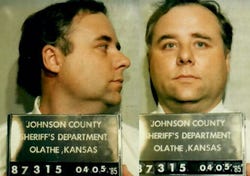
He had been convicted repeatedly. He had served time repeatedly. Nothing had changed, except that the stakes of his crimes were escalating in ways that no rehabilitative programme had been designed to address, because no rehabilitative programme had been designed for someone who had killed multiple people while presenting himself as a businessman and community figure.
He came home in 1993 to a world that had changed.
The internet had arrived.
Slavemaster
In 1993 and 1994, the commercial internet was in its earliest phase. Compuserve and America Online were the dominant platforms. Chat rooms text-based forums where strangers could find each other by interest were a new and largely unmonitored social space. The user base was overwhelmingly male, overwhelmingly technically oriented, and largely unfamiliar with the possibilities for deception that the medium enabled.
Robinson found the BDSM communities almost immediately.
BDSM bondage, dominance, submission, masochism had existed as a subculture long before the internet, but the internet gave it visibility and community in new ways. The early chat rooms allowed people to find partners, discuss practices, and engage in the kinds of relationships dominant and submissive, master and slave that had previously required either significant social navigation or personal connections to specialised communities. The internet made it straightforward. It also made it anonymous, or at least apparently so.
Robinson created the persona “Slavemaster.” He presented himself as a wealthy, sophisticated dominant male a man of substantial resources who was looking for women to enter into total-power-exchange relationships, living as his full-time submissive in exchange for financial support and care. He wrote well. He understood the language of the community. He was patient and attentive in the early stages of correspondence, building trust and intimacy over weeks and months before moving toward any concrete arrangement.
He was simultaneously maintaining his suburban family life in Johnson County attending church, going to his grandchildren’s events, being the person his neighbors described after his arrest as “a wonderful man,” the kind of man you would never suspect of anything.
True Crime Weekly is a reader-supported publication. To receive new posts and support my work, consider becoming a free or paid subscriber.
Izabela Lewicka, 21
Izabela Lewicka was a twenty-one-year-old Polish immigrant studying in Indiana when she encountered Robinson online in 1997. She was intelligent, adventurous, drawn to the lifestyle Robinson presented, and she made the decision that seemed reasonable given everything he had told her: she moved to Kansas to be with him.
Robinson rented an apartment for her. He had her sign a “slave contract” a formal document, typed on his letterhead, establishing the terms of their relationship. The contract required her total obedience. It required her to keep the relationship secret from her family. It provided Robinson with a documented instrument of control and, functionally, with a cover story: a woman who had voluntarily entered a private and secret arrangement would not be missed immediately, and her silence could be explained as the terms of the contract.
Izabela Lewicka disappeared in 1999. Robinson continued to use her identity online, sending emails to her family to cover his tracks. Her family received correspondence. They believed she was alive and simply engaged in a relationship she had chosen not to discuss with them.
Her body was in a barrel on Robinson’s farm in La Cygne, Kansas.
Suzette Trouten, 27
Suzette Trouten was twenty-seven years old, from Michigan, when she met Robinson online in 1999. She was a nurse’s aide who cared for elderly patients, and Robinson offered her what appeared to be a dream opportunity: a position as a live-in carer for his elderly father, with extensive travel, a generous salary, and the additional arrangement of a master-slave relationship. She left Michigan for Kansas in early 2000.
She was dead within days of arriving.
Her family continued to search persistently for her after her disappearance, and their sustained inquiry contributed significantly to the investigation that eventually caught Robinson. Suzette had dogs she adored. Robinson, operating with his characteristic thoroughness, arranged for the dogs to be shipped to a kennel to maintain the illusion that she had travelled rather than vanished. He sent emails from her account. He maintained her apparent existence in the digital space in the same way he had maintained the apparent existence of victims before the internet existed through correspondence, through the routine administrative signals of a continuing life.
What he did not account for was how persistent Suzette Trouten’s family would be, and how well they knew her patterns.
The Arrest
By 1999, Robinson’s name had begun appearing in multiple missing persons investigations in Kansas and Missouri. Investigators from the Lenexa Police Department had been building a picture gradually, constrained by the same jurisdictional fragmentation that hampered so many multi-state cases. Over time, Robinson became increasingly careless, and did a progressively poorer job of covering his tracks.
The immediate cause of his arrest was almost comically small.
Robinson was arrested in June 2000 at his farm near La Cygne, Kansas, after a woman filed a sexual battery complaint against him and another charged him with stealing her sex toys. The theft charge, in particular, finally gave investigators the probable cause they needed to obtain search warrants.
A man who had evaded detection for sixteen years, who had killed eight people, who had forged documents and stolen a baby and maintained a correspondence of the dead across two decades, was finally brought down in part because he had stolen another woman’s sex toys and she had reported it.
On the farm, a task force found the decaying bodies of two women, later identified as Izabela Lewicka and Suzette Trouten, in two 85-pound chemical drums. Across the state line in Missouri, other members found three more barrels containing the bodies of Beverly Bonner, Sheila Faith, and Debbie Faith.
Five bodies in barrels. Two on the farm. Three in a storage unit he rented across the state line, the storage unit where he had also kept the bodies of women whose Social Security cheques he continued cashing after their deaths.
The Trial
Robinson was tried in Kansas in 2002 and convicted of capital murder. The trial was the longest in Kansas history at that point. He received the death penalty for three murders committed in Kansas. The following year, as part of a plea agreement negotiated to locate missing bodies a negotiation in which Robinson declined to cooperate meaningfully he pleaded guilty to five additional murders in Missouri and received multiple life sentences without parole.
Robinson thought he was smarter than law enforcement and believed he could actually win the case. He fired his defence team. He was wrong about his ability to win and right that he had been smarter than law enforcement for a very long time just not quite long enough.
Paula Godfrey’s remains have never been found. Lisa Stasi’s remains have never been found. Catherine Clampitt’s remains have never been found.
Robinson, now eighty-two years old, sits on death row at the El Dorado Correctional Facility in Kansas. Kansas has not executed a prisoner since 1965, which means Robinson has been waiting for a death sentence to be carried out in a state that has not carried one out in six decades. He has appealed repeatedly.
Heather
The most extraordinary thread running through the Robinson case is the one that ended in a teenage girl’s bedroom in Illinois in the summer of 2000.
Heather Robinson had grown up knowing her uncle John. She had spent holidays with him. She had felt something wrong about him that quality of being watched, of something not quite right beneath the surface and had never been able to articulate it. She was fifteen years old when investigators came to her parents’ door with a DNA kit and a question about her birth.
She learned that she and her biological mother Lisa Stasi had vanished in 1985 when she was just four months old, and that their family had presumed both were dead. But in reality, John Robinson had given Heather to his brother Don Robinson and his wife, who did not know the true circumstances at the time they took the baby in.
Her name had been Tiffany Stasi. Her mother had been forced to sign blank pieces of paper in a hotel room in Overland Park. Her mother’s body has never been found.
Heather Robinson has spoken publicly about her experience the process of reconstructing an identity built on a murder, of understanding that the man at family gatherings was the man who killed her mother and sold her to his brother for $5,000, of finding a way to continue existing in a world that had been built on those facts. She has campaigned for victims’ rights. She has told her story.
The story itself is one of the most genuinely staggering in American true crime: a man so thorough in his control of information and appearances that he murdered a mother, stole the baby, arranged the adoption to his own family, attended family events for fifteen years with both the brother he had sold the baby to and the child whose mother he had killed, and was never caught by any of it caught only because he stole someone’s sex toys and that someone called the police.
What Robinson Understood
What John Edward Robinson understood, and what makes him genuinely significant beyond the horror of the crimes themselves, is that he had identified the mechanism of trust before the internet existed and then found, in the internet, its perfect amplification.
The women he killed before 1993 were lured through newspaper advertisements, through fake programmes, through face-to-face charm and fabricated credentials. The women he killed after 1993 were lured through chatrooms, through sustained online correspondence, through the intimacy of extended digital interaction with a persona constructed entirely to produce the desired result.
He understood that vulnerability plus the appearance of care produces trust. He understood that people in difficult circumstances young, broke, isolated, wanting something better would extend that trust faster and further than people who had more security. He understood that the dead could be managed through correspondence if you were meticulous about it, and that the living would accept forged letters and redirected cheques as proof of life if they had no reason to look harder.
None of this required the internet. What the internet gave him was scale, speed, and the appearance of anonymity the ability to be Slavemaster to dozens of women simultaneously, to filter for the most vulnerable, to move a woman from Michigan to Kansas based on months of carefully constructed correspondence without ever meeting her in person until she arrived.
He was not, in any meaningful sense, a product of the internet. He was a con man who had been operating for forty years when the internet arrived. What the internet gave him was a larger room, and he knew immediately what to do in it.
Paula Godfrey was nineteen years old. Lisa Stasi was nineteen years old. Her daughter Tiffany was four months old. They are the beginning of a list of eight, and possibly more. Robinson has never said where Paula or Lisa or Catherine Clampitt are buried. He almost certainly never will.


Leave a Reply