The last person to speak to Laci Peterson before she disappeared was her mother.
Sharon Rocha called her daughter on the evening of December 23, 2002. They spoke for a while, the way mothers and daughters do, about ordinary things. Laci was eight months pregnant. The baby was due in February. They had decided to name him Conner. Sharon Rocha would later say that Laci sounded fine, happy, in the comfortable final stretch of a pregnancy she and her husband Scott had been planning for.
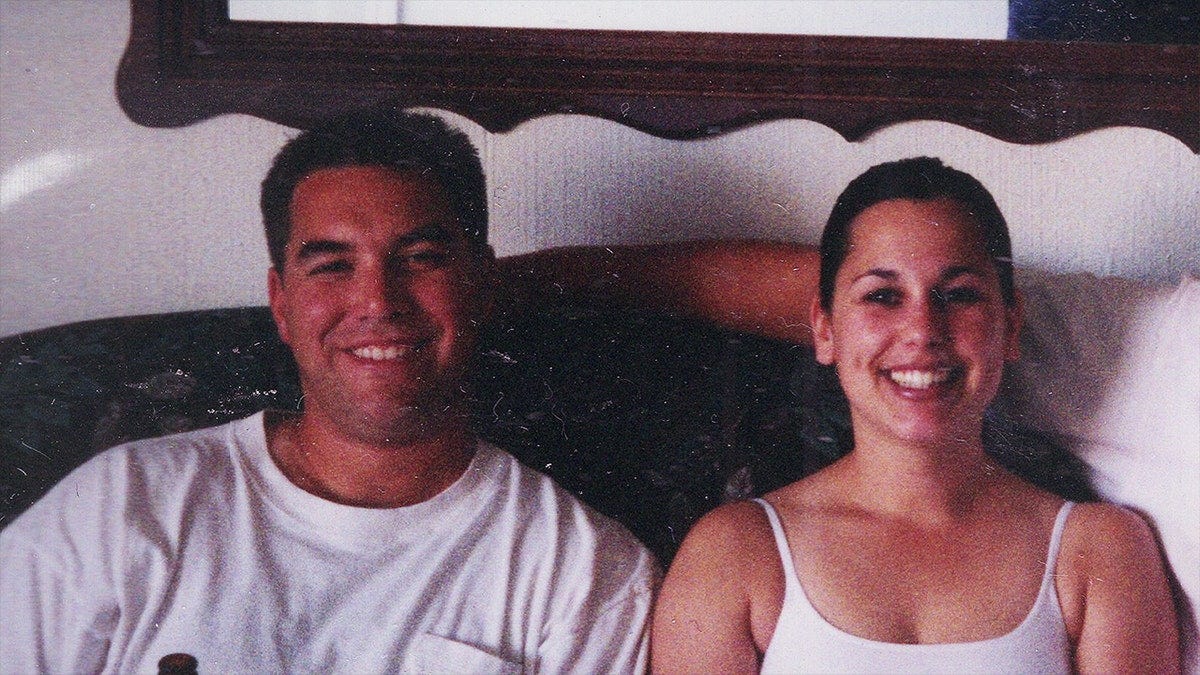
The next morning, Christmas Eve, Scott Peterson told investigators he had left the house around 9:30 a.m. to go fishing. He drove ninety miles to the Berkeley Marina, launched a fourteen-foot aluminum boat that his family had never seen before and hadn’t known he owned, and went out on San Francisco Bay. He returned home in the early evening to find the house empty and his golden retriever McKenzie in the backyard, leash still attached, as if he had been walked and returned but the person who walked him had not come back inside.
Scott called his mother-in-law. Sharon Rocha called the police.
Laci Peterson was never seen alive again.
If you enjoy my true crime coverage, please help me continue my newsletter by upgrading here:
Who They Were
Scott Lee Peterson was born in 1972 in San Diego, the adopted son of Lee Peterson, a packing crate manufacturer, and Jackie Peterson. He was handsome in a clean, uncomplicated way the kind of handsome that registers as trustworthy without demanding attention. He played golf. He was charming in social situations, easy to talk to, the kind of man who remembered your name and asked follow-up questions. He sold fertilizer for a living, which was less glamorous than his manner suggested, but he had ambitions for more.
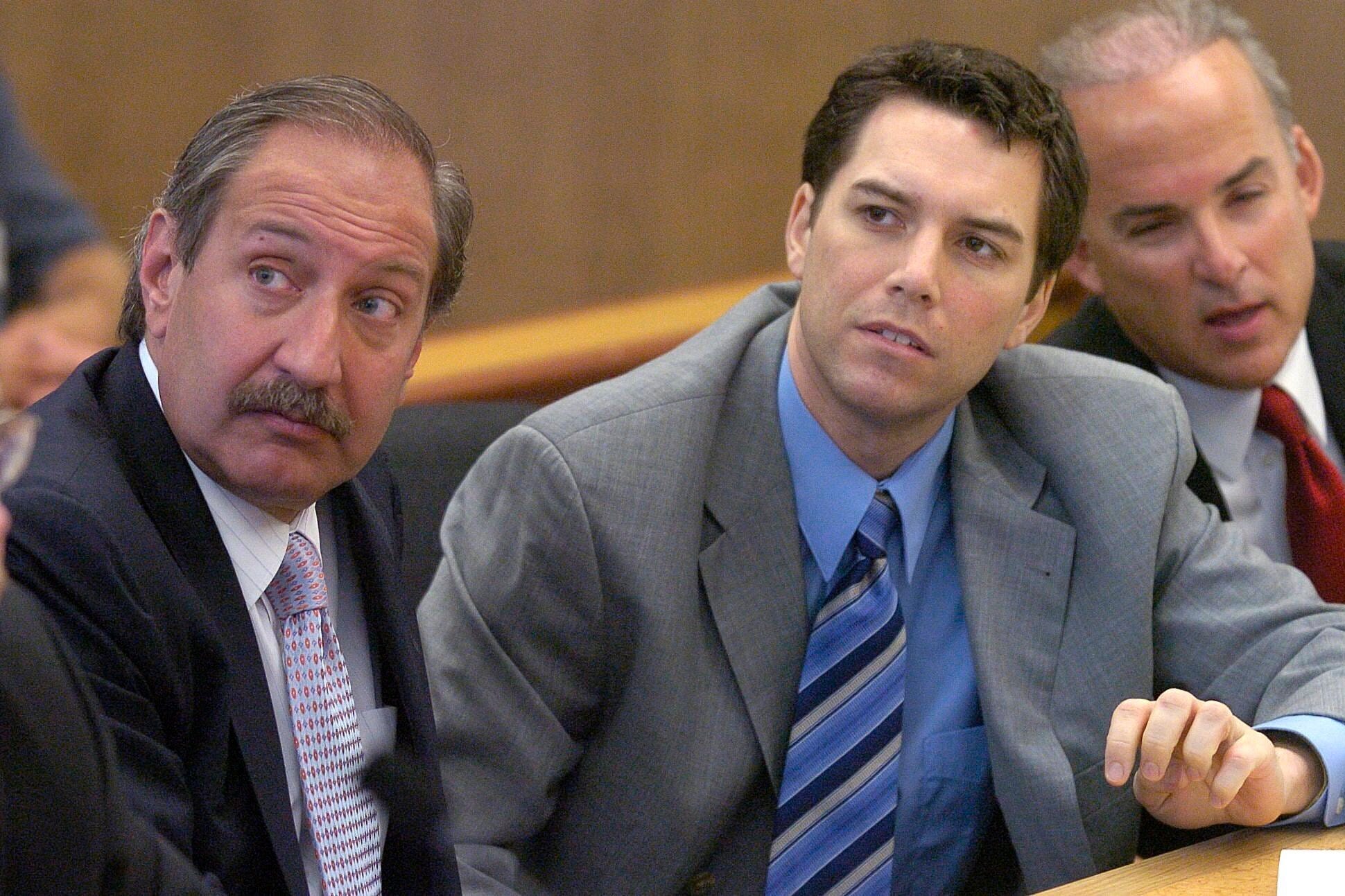
He met Laci Denise Rocha at California Polytechnic State University, where both were students. Laci was the kind of person that everyone who knew her describes in terms that, while genuine, have the quality of memorial language joyful, warm, the person who made every room brighter. She loved to cook. She was planning a career in horticulture. She had a directness and an energy that people responded to.
They married in 1997. They settled in Modesto, California a flat, agricultural Central Valley city not particularly known for anything. They bought a house. They got the dog. By 2002 they were expecting Conner, their first child, and by all external appearances living the kind of ordinary, comfortable early-married life that looks, from the outside, like contentment.
What was happening inside it was another matter.
The Secret
Six weeks before Laci disappeared, in mid-November 2002, Scott Peterson went on a blind date arranged by a mutual friend. The woman was Amber Frey, a thirty-year-old massage therapist and single mother from Fresno. She was warm and attractive and, she would later tell police and then the world, she had fallen genuinely in love with him.
Scott had told her he was not married.
He told her, specifically, that he had lost his wife. That she had died. That this would be his first Christmas alone. He told her this on December 9, 2002, approximately two weeks before Laci Peterson disappeared which means that before he killed his wife, if he killed his wife, he had already invented the cover story that her death would require.
Amber Frey did not know about any of this when the news broke about Laci Peterson’s disappearance. She put together the pieces herself, watching television, looking at photographs of the missing woman’s husband. She called the Modesto police on December 30, five days after Laci was reported missing.
She agreed to cooperate. She agreed to record her phone calls with Scott.
What followed was one of the most extraordinary pieces of evidence ever played in an American murder trial.
The Calls
While the search for his pregnant wife was ongoing while her family was holding vigils, while police were combing the neighborhood, while volunteers were handing out flyers with Laci’s photograph Scott Peterson was calling Amber Frey and lying to her.
On New Year’s Eve, five days after his wife had vanished, he called Amber and told her he was in Paris. The New Year’s celebration near the Eiffel Tower was unreal, he said. The crowd was huge.
He was at a candlelight vigil for Laci in Modesto. He called from the vigil. Investigators could place him there. The people at the vigil were weeping for his wife, and he was on his phone telling his girlfriend he was in Paris.
He called Amber again and again. He told her Laci was his wife, once she had pushed, but insisted he had nothing to do with her disappearance. He expressed, in these calls played for the jury, listened to in silence in the courtroom a degree of emotional disconnection from the disappearance of his pregnant wife that no one who heard them could entirely explain.
The calls were not evidence of murder in any direct sense. They were evidence of something, and what they were evidence of was a man whose internal life bore no relationship to the grief and terror he was performing in public.
The Investigation
The Modesto Police Department investigation of Scott Peterson is sometimes criticized as having been too focused on him from too early a stage a criticism that has gained new force with the appeals work of the Los Angeles Innocence Project. But in the weeks and months after Laci’s disappearance, the investigators’ attention to him was not unreasonable.
He had no alibi that could be confirmed. His claimed destination a solo fishing trip to the Berkeley Marina, ninety miles from his home, on Christmas Eve, in a boat nobody knew he had, to fish in waters he had little documented history of fishing was peculiar in ways that multiplied under examination. Witnesses at his workplace testified at trial that he told them he planned to go golfing that day, not fishing. He had given Amber a false account of his marital status and had specifically told her, two weeks before Laci disappeared, that his wife had died.
He was calm in the immediate aftermath of Laci’s disappearance in ways that struck investigators and family members as wrong not the catatonic calm of traumatic shock but something more functional and controlled. In the days after Laci vanished, he took steps to sell her car. He made inquiries about selling the house.
When police searched the Peterson home, they found brown hair and pliers in the boat Scott had used on Christmas Eve. They found receipts for the concrete he had poured in his office in the weeks before Laci disappeared concrete that investigators argued he had used to make anchors to weigh down her body. They found pornography and melatonin on the nightstand on Laci’s side of the bed, which the prosecution would argue Scott had used to sedate her.
No murder weapon was ever found. No blood was found in the house. No direct physical evidence placing Scott Peterson as the cause of his wife’s death was ever produced.
The Bodies
On April 13, 2003, a man walking along Brooks Island in the San Francisco Bay spotted an infant’s body. Conner Peterson the baby who would have been born in February had washed up on the shore, still partially enclosed in the placenta, the umbilical cord still attached. He was found less than a mile from where Scott said he had been fishing.
The next day, April 14, Laci Peterson’s torso washed up on a nearby shore. She was found without her head, her arms, or her legs. The manner in which the body had decomposed, and the presence of the baby still partially enclosed in the placenta, led forensic specialists to conclude that Conner had been delivered from the womb after Laci’s death, likely through decomposition, rather than being born alive and then killed. This conclusion placed the time of death before Christmas Eve, consistent with the prosecution’s theory.
The location of the bodies in the San Francisco Bay, within miles of the marina where Scott said he had spent Christmas Eve in his fishing boat was, in the prosecution’s framing, the most direct evidence the jury would hear.
The bodies were so decomposed that no cause of death could be established for either Laci or Conner.
The prosecution argued Scott Peterson had strangled or smothered his wife in their home on the night of December 23rd or the early morning of December 24th, transported her body in his boat, and dumped it in the bay weighted with the concrete anchors he had made in his office. He had been operating on the assumption that the bay’s currents would carry the body away from the marina and that it would never surface. He had miscalculated, or the currents had behaved differently than he expected.
Scott Peterson was arrested on April 18, 2003, at a golf course in San Diego, near the Mexican border. In his car, police found $15,000 in cash, multiple cell phones, his brother’s ID card, camping equipment, and his hair dyed a different colour than its natural shade. He appeared, in other words, to be preparing to run.
He was taken into custody. The crowd outside the courthouse cheered.
The Trial
The trial of Scott Peterson began in June 2004 in Redwood City, San Mateo County moved from Modesto because the judge determined he could not receive a fair trial in the place where his wife’s disappearance had defined eighteen months of community life.
It was one of the most watched trials in American history to that point. Cameras in the courtroom. Daily cable news coverage. Crowds outside. The kind of sustained public attention that places a trial in the cultural record in ways that legal proceedings rarely achieve.
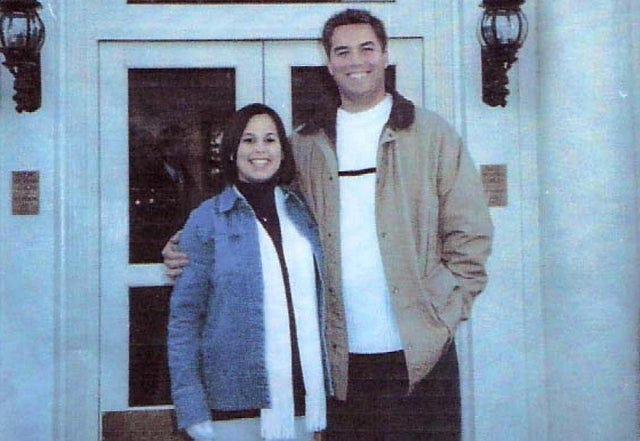
The defence was led by Mark Geragos, one of the most prominent criminal defence attorneys in the country, who had also represented Michael Jackson. Geragos hammered the absence of physical evidence no blood, no murder weapon, no forensic trace connecting Scott to the act of killing. He pointed to the neighbours’ house across the street from the Petersons, the Medina home, which had been burglarised around the time Laci disappeared. He argued that Laci had been alive when Scott left for the marina and had been killed by strangers, perhaps people connected to the burglary, who had seen her walking the dog.
Geragos also pointed to witnesses who said they had seen a woman matching Laci’s description walking in the neighbourhood after the time Scott said he had left. If true, Scott could not have killed Laci before leaving for the marina.
The prosecution’s star witness was Amber Frey, who took the stand in August 2004 and testified for eight days. Her recordings of Scott’s phone calls were played for the jury. The calls in which he told her he was in Paris. The calls in which he wept for his missing wife and then, moments later, made plans to see Amber. The calls that were not, in themselves, proof of murder but that were proof, irrefutable and audible, of a man performing grief he did not feel and love he did not have.
On November 12, 2004, the jury found Scott Peterson guilty of first-degree murder in Laci’s death and second-degree murder in the death of Conner. He was sentenced to death in March 2005. The jury foreperson described the verdict afterward with a sentence that entered the case’s permanent record: Peterson was a “jerk.” San Quentin, another juror told reporters, was his new home.
Twenty Years On: The New Fight
Scott Peterson’s death sentence was overturned by the California Supreme Court in August 2020, after the court found that the original trial judge had made errors during jury selection specifically that too many pro-death-penalty jurors had been seated, producing what Peterson’s supporters characterized as a stacked jury. He was resentenced to life in prison without the possibility of parole in December 2021.
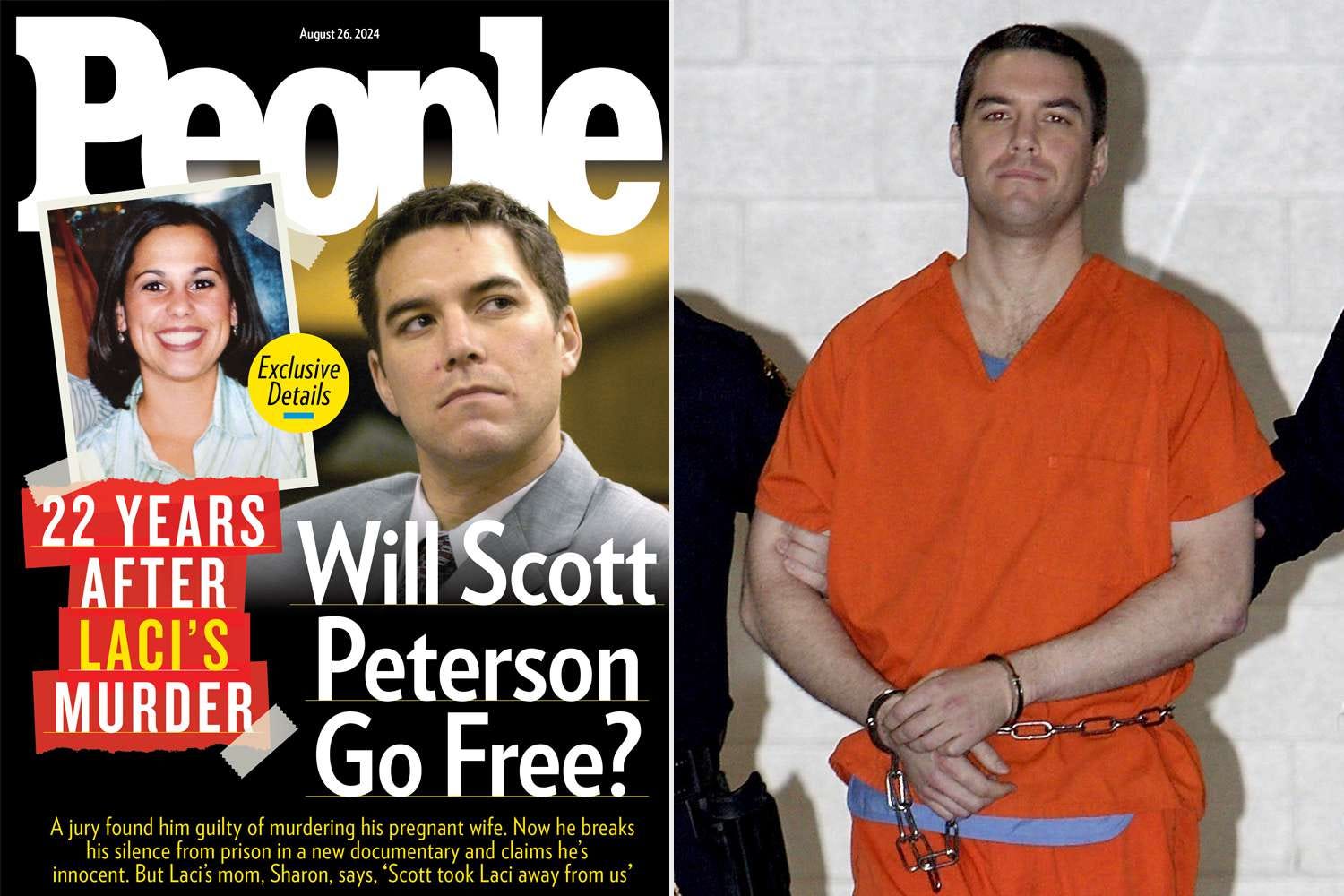
He broke his silence from prison in 2024, speaking publicly for the first time in roughly two decades in a Peacock documentary. In the same month, Netflix released a new documentary series, American Murder: Laci Peterson, featuring interviews with Laci’s mother Sharon Rocha and Amber Frey.
In January 2024, the Los Angeles Innocence Project announced it was taking over as lead counsel for Peterson, citing what the organisation described as new evidence. The Innocence Project, which has exonerated numerous wrongfully convicted people across its history, is a credible organisation that takes cases seriously before committing resources to them. Its involvement generated significant media attention and renewed public debate about the conviction.
In April 2025, the Los Angeles Innocence Project filed an 854-page petition for writ of habeas corpus, seeking to overturn Peterson’s conviction. The petition is comprehensive and detailed, and its central claims are worth understanding.
The New Evidence Claims
The petition’s most significant argument concerns the burglary at the Medina home across the street from the Petersons on Christmas Eve 2002.
At trial, the jury was told the burglary occurred on December 26 two days after Laci disappeared. The defence had raised the burglary as a possible alternative theory but could not develop it fully because the timing, as presented to the jury, made a connection to Laci’s disappearance difficult to establish. Peterson’s alibi that he was fishing when she was taken only works if she was alive after he left. A burglary two days after she vanished is irrelevant to his guilt or innocence.
The petition claims new evidence shows the Medina burglary actually occurred on December 24 the same day Laci disappeared. It further claims there is a witness who reportedly overheard burglars talking about Laci seeing and confronting them, which would place her alive and in the neighbourhood after Scott had left for the marina. The petition also alleges that police intentionally destroyed evidence that could have linked the burglary to Laci’s disappearance and murder.
The petition argues that the gestational age determination used at trial which placed Conner’s death on December 23, the same night Scott and Laci were home alone together was based on outdated 1984 ultrasound research. New technology, the petition claims, shows Conner was likely killed sometime after December 23, meaning Laci was alive after the date of her alleged murder, and that other people had access to her.
The prosecution has responded to these claims in a 337-page filing describing the evidence against Peterson as “overwhelming” and calling the new claims either inaccurate or already known to the original defence.
The Argument That Doesn’t Go Away
The Scott Peterson case has a quality shared by a small number of high-profile American murder cases the O.J. Simpson acquittal, the Guildford Four, the West Memphis Three of having become something more than a legal proceeding. It has become a cultural object, a Rorschach test, a site where people’s beliefs about guilt and innocence intersect with their beliefs about police competence, media fairness, prosecutorial ethics, and the reliability of circumstantial evidence.
The argument for his guilt is straightforward: a man with a secret mistress to whom he had described himself as a widower, who went fishing alone on Christmas Eve ninety miles from home in a boat nobody knew he had, whose pregnant wife’s body washed up within miles of where he fished, who attempted to flee the country when he was about to be arrested, who displayed no genuine grief at any point in the investigation, who called his girlfriend from his wife’s candlelight vigil and told her he was in Paris. No murder weapon, no blood, no direct physical evidence but a circumstantial case that, when assembled, pointed in one direction with a force that twelve jurors found convincing.
The argument for his innocence, as now articulated by the Innocence Project, runs like this: the prosecution suppressed the correct date of the Medina burglary, destroying the most plausible alternative theory of the crime before the defence could develop it. The forensic determination of Conner’s date of death was based on outdated science. The investigation was tunnelled toward Scott from the beginning, closing off avenues that might have led elsewhere. No physical evidence was ever found. A man who is guilty of murdering his pregnant wife does not simply dispose of her in the same body of water he tells police he was fishing in.
Both of these arguments have internal coherence. Both have weaknesses.
What is certain: Laci Peterson is dead. Conner Peterson is dead. They were killed by someone. Whether that someone is Scott Peterson, who has been in prison for over twenty years and continues to insist he is innocent, or someone else the burglars, a stranger, a person whose identity the investigation missed is a question that the courts are still being asked to answer.
Sharon Rocha
Amid all the documentary series and the appeals and the media cycles, the person whose presence gives the case its moral weight is Laci’s mother, Sharon Rocha, who has spoken publicly and consistently about her daughter’s murder and her belief in Scott Peterson’s guilt.
She has attended hearings. She has made statements. She participated in the Netflix documentary. She has watched two decades of legal manoeuvring and media attention and cultural debate about a case that is, for her, not a debate but a fact: her daughter is dead, her grandson is dead, and the man who killed them is in prison.
Her grief is not a legal argument. It is not evidence. But it is the thing that the case is actually about, beneath the appeals and the habeas petitions and the arguments about ultrasound technology from 1984 a woman who went to make her mother Christmas dinner and never came home, a baby who was born into death and found on a shore.
“I’m very sorry for Laci’s family and the pain that this has caused them,” Amber Frey said at her press conference in January 2003, when she went public with the affair.
She had no idea then how long the pain would last.
Where It Stands
As of 2025, Scott Peterson is serving life without parole at a California prison. The Los Angeles Innocence Project’s 854-page petition is working through the California Court of Appeals. DNA testing has been ordered on certain pieces of evidence, including a piece of duct tape found on Laci’s leg and a mattress found in a burned car near the Peterson home. The prosecution has argued in a 337-page response that the evidence against Peterson remains overwhelming.
A decision on whether Peterson will be granted a new trial is pending.
He has been in prison for over twenty years. Laci Peterson has been dead for over twenty years. Conner Peterson, who would have been twenty-two years old, has been dead for over twenty years.
The case that generated the phone call from the Eiffel Tower from a man standing at his wife’s candlelight vigil, telling his girlfriend he was watching fireworks in Paris has not finished with the courts, or the courts with it.
Sharon Rocha is still watching.
Laci Peterson was twenty-seven years old. She was eight months pregnant. She was last seen alive by her mother, on the phone, on the evening of December 23, 2002. Her body washed up on the shore of the San Francisco Bay on April 14, 2003, three and a half months later. She was identified by dental records because there was too little left of her to identify any other way.
 True Crime Weekly
Leave a comment