Massachusetts and Montana, 2010–2025 while New England panicked about a phantom killer in 2025, an actual serial killer was being quietly indicted in the same region, targeting the people the community had already decided not to see
A Campfire in Lowell
November 2010. A homeless encampment under a bridge in Lowell, Massachusetts a former mill city on the Merrimack River, post-industrial, struggling, the kind of place where people end up when they have nowhere else to go and the winters are survivable if you can find a fire.
If you enjoy my true crime coverage, please help me continue my newsletter by upgrading here:
Gary Melanson was fifty-two years old. He was unhoused, living in the encampment, and he had developed the habit of lighting small fires to keep himself warm on cold nights. It was a reasonable thing to do. It was the kind of reasonable thing a person does when staying warm requires improvisation.
Kevin Lino didn’t like the fires.
Lino was twenty-three years old, also unhoused, living in the same stretch of Lowell that Melanson called home. His objection to the fires was practical and cold-blooded: he worried the light would attract police attention and disrupt whatever arrangement the camp had achieved with the surrounding environment. He warned Melanson. He told him to stop.
Melanson didn’t stop.
What happened next was documented, years later, in a letter Lino wrote to his father from prison, a letter that investigators obtained and which was entered into court records. The letter described, in Lino’s own words, what he did to Gary Melanson:
“I beat him with a baseball bat, put out his fire, [and threw] him half inside his tent… and broke the tent to make it seem like he fell just in case he died.”
He also, the letter noted, urinated on Melanson after the attack an act of ritual humiliation that prosecutors would later describe in those precise terms in court filings.
Melanson’s death was recorded as having an undetermined manner. No foul play was suspected. A man found dead at a homeless encampment in Lowell in 2010 was, within the investigative culture of the time and place, a man whose death fell into an already-existing category: the kind of death that happened to people in those circumstances.
Kevin Lino walked away from the campfire he had put out permanently and got on with his life.
Cambridge, 2012
Two years later, Lino was living among a different group of unhoused people near the Harvard Square MBTA station in Cambridge an improbable juxtaposition, the most prestigious university in the United States and the encampment below the subway entrance where people sheltered between trains.
He had developed, by this point, a personal ideology about the camp and its residents. He was particularly hostile to heroin users, whom he believed drew police attention and degraded the conditions of the shared space. He made it his mission, in the parlance of the court documents, to drive heroin users out of the group. His methods included direct assault.
Douglas Leon Clarke was thirty years old, also unhoused, also a resident of the Harvard Square encampment. He used heroin. He and Lino had a confrontation accounts describe Lino spending much of a particular day assaulting various members of the group and Clarke refused to submit to whatever Lino demanded of him.
Lino resolved to punish him.
He gave Clarke heroin. Not ordinary heroin. He gave him what investigators would later call a “hot shot” a deliberately lethal dose, calibrated to kill. The heroin was laced with a quantity of the drug that Lino knew, from whatever knowledge he possessed about pharmacology or simply from experience, would be fatal.
Clarke died.
His death was ruled an accidental overdose. No foul play was suspected. A man found dead from heroin at a homeless encampment in Cambridge was, to the investigative apparatus that encountered him, a man whose death was explained by the circumstances of his life.
Lino walked away from the Harvard Square station and got on with his life.
Charlestown, 2012 and Boston
That same year, 2012, Lino killed again. Normand Varieur was sixty-one years old, also homeless. Lino shot him multiple times with a .45 calibre handgun in Charlestown, Boston, during a dispute related to drugs. This death was investigated differently a shooting is harder to explain away than a death from apparent overdose or blunt trauma in a tent and Lino was convicted of second-degree murder in 2013 and sentenced to life in prison with parole eligibility after fifteen years.
He had killed three people. He was in prison for one of them.
Missoula, Montana, 2014
From prison, the story should have been finished. It was not.
In August 2014, Lino was somehow involved in events in Missoula, Montana, that resulted in the death of Jack Gilbert Berry, a twenty-seven-year-old man living in a transient camp under a bridge. The details of how someone serving a life sentence in Massachusetts was involved in a murder in Montana are not fully addressed in the public record of the case, but the outcome is documented: Lino and an accomplice attacked Berry at the transient camp. Lino carved gang symbols into Berry’s body. He placed lit cigarettes in Berry’s nose. He shot him in the head. The body was dumped in a river.
Lino pleaded guilty to deliberate homicide in Montana in 2015 and received a fifty-year sentence to run concurrently with his Massachusetts life sentence.
He had now killed four people across at least two states. He was in prison for two of them.
The Letter
In 2018, during an unrelated investigation, Massachusetts State Police came across something that changed the accounting. The letter Lino had written to his father the one describing what he had done to Gary Melanson, the campfire, the baseball bat, the tent surfaced in a way that directed investigators toward the 2010 killing they had not previously connected to anyone.
The Melanson case was linked to Lino through this evidence. Investigators began reexamining the Cambridge case involving Douglas Clarke as well, concluding that the death originally classified as accidental overdose was in fact homicide by deliberate poisoning.
Seven years had passed since Melanson’s death. Twelve years had passed since Clarke’s.
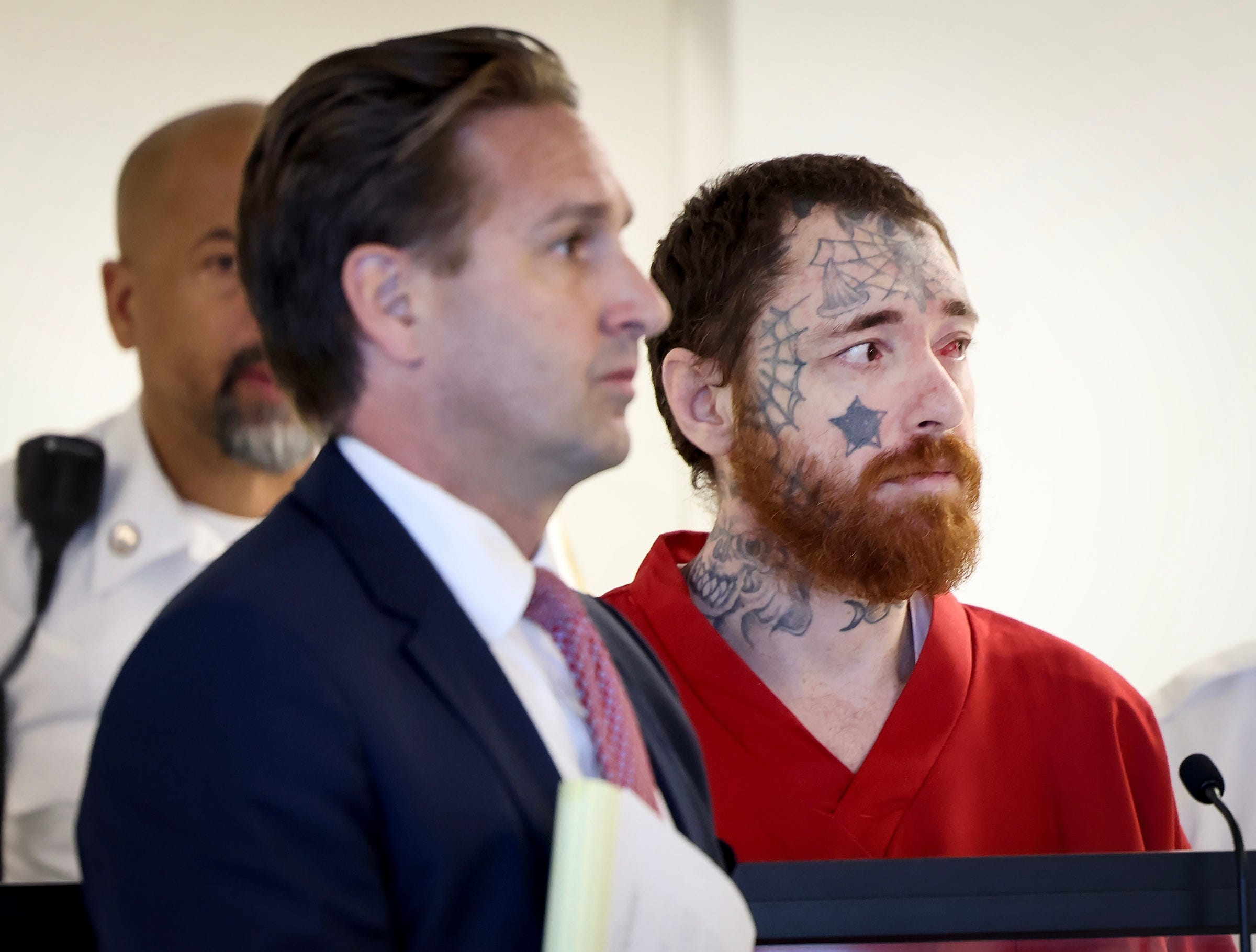
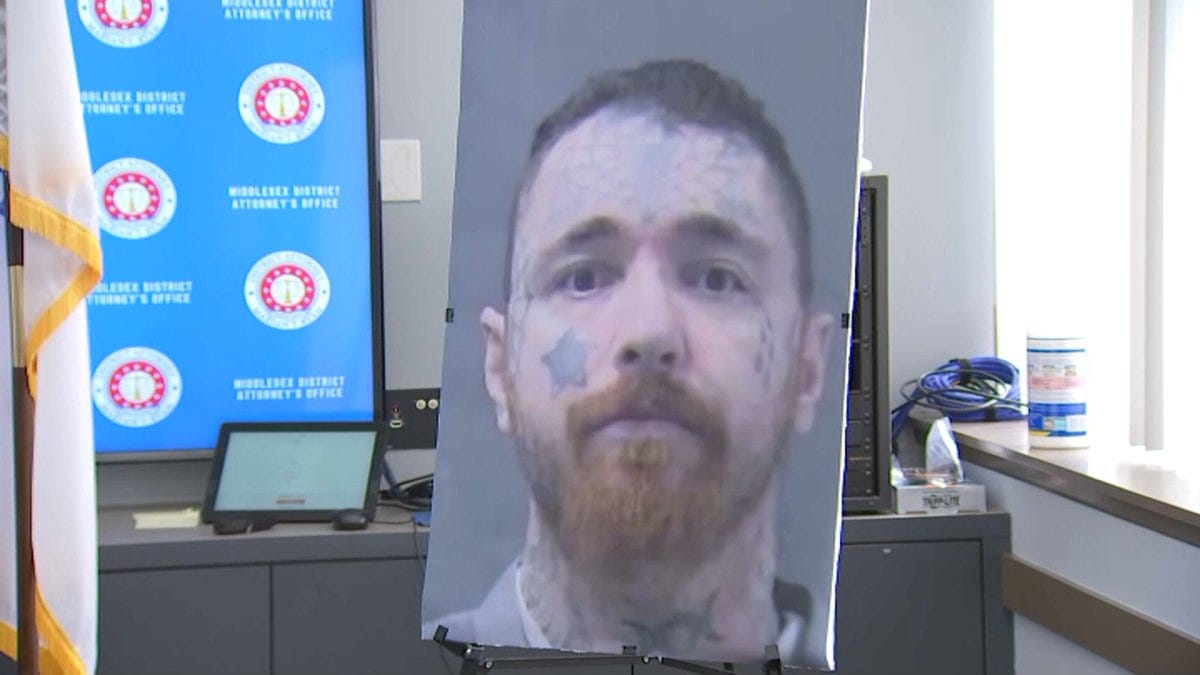
On August 5, 2025, Lino by then thirty-eight years old, already serving a life sentence was indicted on two additional counts of first-degree murder in Middlesex County, Massachusetts. He was arraigned on August 27, 2025, and pleaded not guilty.
Middlesex County District Attorney Marian Ryan was asked directly: is Kevin Lino a serial killer?
Her answer was direct: “Mr. Lino is a serial killer. The Department of Justice defines a serial killer as someone who has taken the life of two individuals in separate situations. In this case we have already convictions in two. We’ve now brought charges in two more.”
She added: “This defendant is alleged to repeatedly and deliberately victimize some of the most vulnerable members of our communities, unhoused individuals. The actions alleged in these cases were not only violent and cruel, but inhumane.”
Investigators believe there may be more victims.
The month that Kevin Lino was indicted August 2025 the New England region was in the grip of a sustained public panic about a different killer: a hypothetical serial predator theorised to be responsible for thirteen bodies found across Massachusetts, Connecticut, Rhode Island, and Maine since March 2025.
Facebook groups with tens of thousands of members were speculating about this phantom. Cable news was running nightly segments. Amateur investigators were mapping the discoveries and drawing lines between unconnected cases.
The actual Massachusetts serial killer identified, named, already in prison, now facing two additional murder charges received a fraction of that attention.
The disparity is not complicated to explain. The thirteen bodies that generated the panic were, in their media framing, a mystery unknown victims, unknown perpetrator, maximum narrative uncertainty, maximum opportunity for speculation. Kevin Lino’s victims were unhoused people in homeless encampments in Lowell and Cambridge and a transient camp in Montana. Their deaths had not generated missing persons reports sufficient to survive in public memory. Their cases had been closed as undetermined or accidental. They had lived in the category of people whose deaths are explained rather than investigated.
Gary Melanson lit fires to keep warm. Douglas Clarke used heroin. Normand Varieur was involved in a drug dispute. Jack Berry was living under a bridge.
These facts were treated, by the systems that encountered their deaths, as explanations rather than as the circumstances of vulnerable people who deserved the same investigative attention as anyone else.
Kevin Lino understood this. The letter he wrote to his father about the Melanson killing in which he described destroying the tent to make it look like an accident “in case he died” suggests a man who had understood very clearly that certain deaths were unlikely to be examined closely. He was right. It took eight years, a different investigation, and a letter he had written to his own father to bring the Melanson case to anyone’s attention.
He is currently awaiting trial on the two additional murder charges. He is doing so from inside a prison where he has been serving a life sentence since 2013. The outcome of the additional charges will not change the duration of his imprisonment. What it changes is the record the official accounting of what happened to Gary Melanson and Douglas Clarke, which for years said nothing, and which now says the truth.
Gary Melanson was fifty-two years old. He lit fires to keep warm. Douglas Clarke was thirty years old. He lived near the Harvard Square subway stop. Both men were unhoused. Both men were killed by the same person. Neither death was recognised as murder for years. They are remembered here.
 True Crime Weekly
Leave a comment