United States, 1970–2005 the most prolific serial killer in American history killed for thirty-five years without a murder conviction, because the women he chose to kill were women the system had already decided not to count
If you enjoy my true crime coverage, please help me continue my newsletter by upgrading here:
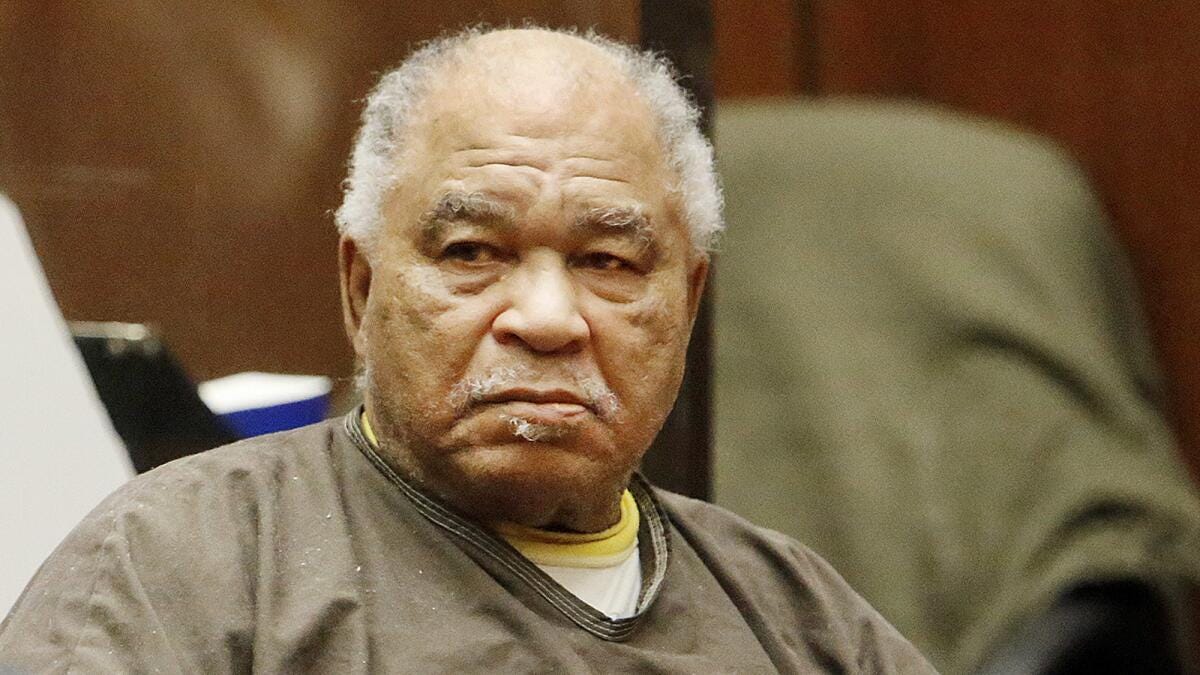
Samuel Little had a long acquaintance with American law enforcement before anyone charged him with murder.
Between 1956 and 2012, he was arrested over twenty times. The charges accumulated across multiple states and multiple decades: assault, theft, armed robbery, rape, attempted rape. He served time. He was released. He moved. The pattern repeated in a different city, a different state, with a different set of investigating officers who had no mechanism for seeing what the complete record looked like.
In 2012, Little was arrested at a homeless shelter in Louisville, Kentucky, on a narcotics charge and extradited to California. Routine DNA sampling in custody connected him to three unsolved homicides from the 1980s. He was convicted in 2014 and sentenced to three consecutive life terms.
That was supposed to be the end. He was in prison. He was eighty years old give or take, the record of his birth in 1940 in Reynolds, Georgia, carrying with it the usual uncertainties of a birth in rural Depression-era Georgia. The cases were closed.
Then a Texas Ranger named James Holland began visiting him.
James Holland and the Confessions
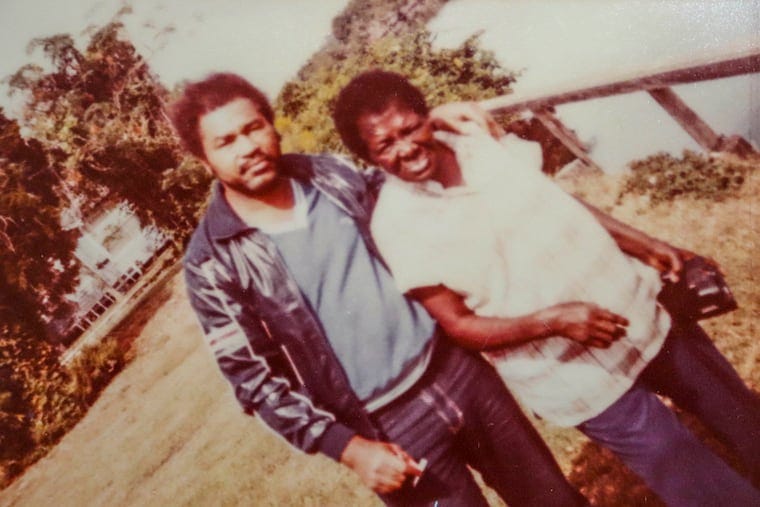
James Holland has described what happened in those interview sessions in terms that have made him one of the most unusual figures in American true crime history. He wasn’t confrontational. He wasn’t transactional. He talked to Little about boxing Little had been a professional boxer in his youth, a heavyweight who had trained seriously and competed across the country. He talked about food, about music, about the things Little had seen across thirty-five years of movement through American cities. He built something, slowly and over many sessions, that resembled rapport.
And Little began to talk.
What emerged over approximately eighteen months of interviews beginning in 2018 and continuing until Little’s health made sustained conversation difficult was a confession to ninety-three murders. Committed between 1970 and 2005. Across nineteen states and thirty-five years. Nearly all women. All by strangulation.
Little had precise memories. He remembered faces. He was an accomplished portrait artist, and at Holland’s prompting he began drawing his victims from memory in coloured pencil haunting, detailed portraits of women whose names he often didn’t know, whose deaths had often not been recorded as murders, whose cases had been closed or never opened. The FBI published the portraits on a dedicated website alongside video clips of Little describing his recollections of each death.
Families recognised faces. Investigators matched descriptions to cases in their files. Cold cases, some of them decades old, began resolving one by one.
How He Did It, and Why He Got Away
Samuel Little was six feet three inches tall and weighed around 230 pounds. He had enormous hands. He had the upper body strength of a former heavyweight boxer. He strangled his victims manually no ligature, no weapon which meant no murder weapon to find, and which meant that the marks left on a victim’s neck could be attributed to other causes.
This was not incidental. Little had learned, probably through experience rather than planning, that strangulation produced deaths that were difficult to distinguish from other causes of death, particularly in women who were in poor health, who used drugs, who were found in circumstances that suggested other explanations.
He chose women who were already invisible to the investigative systems that would encounter their deaths. Black women in disproportionate numbers. Women who used drugs. Women who worked in sex work. Women who were homeless or housing-insecure, women who moved frequently, women who existed in social circumstances where their absence might not generate an immediate report and their deaths might not generate a thorough investigation.
FBI crime analyst Christie Palazzolo, who worked the case for years, put it plainly: “For many years, Samuel Little believed he would not be caught because he thought no one was accounting for his victims.”
He was right. For thirty-five years, no one was.
The deaths that should have been connected to him were instead attributed to drug overdoses, to cardiac events, to accidents, to undetermined causes. In multiple cases across multiple states, women who had been strangled were recorded as having died from natural causes or drug use because the investigation stopped at the most available explanation. Little’s signature the manual strangulation, the specific pattern of petechial hemorrhage in the eyes was present but not recognised as a signature because nobody was looking for it across jurisdictions.
Nineteen States, Thirty-Five Years
The geographic range of Little’s confirmed and suspected killings is almost impossible to visualise without a map. He moved constantly driving, hitchhiking, finding work, moving on. Florida, California, Ohio, Texas, Louisiana, Georgia, Arizona, Nevada, Mississippi, Kentucky, Missouri, Maryland, New Jersey, New Mexico, Illinois, Arkansas, South Carolina, Tennessee, North Carolina. The arc of his travels traces the interstate highway system of the latter half of the twentieth century, the truck stops and motels and cities where a large Black man could find work, find women in vulnerable circumstances, and move on before anyone noticed what he had left behind.
He was in Los Angeles in the 1980s. He was in Cleveland. He was in Miami. He was in cities whose police departments had no way of knowing that an open case in their files matched an open case in a different state, because the systems for cross-referencing such information barely existed and when they did, cases like Little’s victims fell through the gaps in them.
His first confirmed killing, under the accounting the FBI has been able to verify, was 1970. His last was 2005. Thirty-five years. More than three decades of women found dead and recorded as something other than murdered.
The Women He Drew
The portraits Little drew in prison are among the most unusual documentary artifacts in the history of American true crime.
They are good. Not technically flawless, but vividly characterised women with specific faces, specific expressions, specific qualities that suggest someone who had looked at them with genuine attention. The FBI published thirty of them alongside videos in which Little describes, in a conversational tone that has no affect of guilt or remorse, where he met each woman, what she was wearing, what he remembers about her face.
He describes rolling one woman’s body down a slope on a desolate road. “I heard a secondary road noise and that meant she was still rolling,” he said, with the tone of someone recounting a practical detail from a job.
Some of the portraits have been identified. Families have seen a drawing and recognised a grandmother, a sister, a daughter who had been missing since a particular year. For these families, the portrait is simultaneously a horror it was drawn by the man who killed her, from memory and the only image that proves their loss was seen, that their person was registered somewhere in someone’s attention.
Many of the portraits remain unidentified. The women in them are still, in the official record, women whose deaths are attributed to something other than Samuel Little.
The Final Accounting
The FBI confirmed Little as America’s most prolific serial killer in October 2019, surpassing Ted Bundy’s thirty confirmed homicides and John Wayne Gacy’s thirty-three. His death toll ninety-three confessed, sixty confirmed, the remainder credible according to FBI analysts exceeded the combined totals of the most famous American serial killers and had gone unrecognized for decades.
Samuel Little died in custody in California on December 30, 2020, at the age of eighty. He had been in declining health for years. He died as a convicted murderer, sentenced to life, having given investigators a partial accounting of thirty-five years of killing that they are still working to complete.
As of his death, dozens of his confessions remained unverified cases in which investigators had a detailed description from Little, a location, a face he had drawn, but no body, or a body never identified, or a death recorded as something other than homicide. The work of closing those cases is ongoing. Some will be resolved. Some will not.
The question that the case poses and that nobody in law enforcement has answered publicly with the candor the question deserves is a simple one: How did a man murder ninety-three women across thirty-five years without a single murder conviction until age seventy-three?
The answer is also simple, and it is not about Little’s cleverness or the limitations of forensic technology or the jurisdictional challenges of a mobile perpetrator, though all of those factors contributed.
The answer is that the women he chose were women the system had decided, through decades of institutional practice, to treat as self-explanatory. Their deaths arrived pre-labelled. The label said: not our problem. The label said: these things happen to women like this. The label said: undetermined.
Samuel Little understood this. He used it as infrastructure.
Of the sixty confirmed victims, many remain identified only as Jane Doe followed by a location and a year. Some have names now. Some do not. The work of giving them names continues. This is what justice looks like, forty years late.
 True Crime Weekly
Leave a comment