Indiana and Tennessee, 1978–2022 a fifteen-year-old girl disappeared from a Midwestern city and turned up as skeletal remains in the mountains of Tennessee seven years later, where she remained nameless for thirty-seven more years before forensic science finally gave her back to her family

If you enjoy my true crime coverage, please help me continue my newsletter by upgrading here:
Lafayette, Indiana, 1978
Tracy Sue Walker was born on June 2, 1963, in Lafayette, Indiana a mid-sized university city in the flat agricultural centre of the state, home to Purdue University, bounded by the Wabash River, the kind of place where people live entire lives without moving far. She was fifteen years old in 1978, old enough to have a presence in the world but young enough that her presence was still largely contained within the geography of family and school and the immediate neighbourhood.
The specific circumstances of her disappearance in 1978 are not fully documented in the public record. What is known is that at some point in 1978, Tracy Sue Walker left Lafayette and did not come back. Whether she left voluntarily or was taken, whether she was running toward something or from something or simply in motion in the way that fifteen-year-olds sometimes are, is not established. What is established is that she was gone, and the people who should have known where she was did not.
A missing persons report was filed. It exists in records. It did not generate sufficient traction to locate her.
Tracy Sue Walker, fifteen years old, from Lafayette, Indiana, became a missing person.
She remained a missing person until 1985, when she became something else.
The Big Wheel Gap, Elk Valley, Tennessee, 1985
The Elk Valley area of Campbell County, Tennessee, sits in the ridge-and-valley terrain of the Cumberland Mountains, approximately fifty miles north of Knoxville, close to the Kentucky border. It is remote in the way of the southern Appalachian foothills not inaccessible, but not on the way to anywhere in particular, the kind of landscape where old strip mines leave clearings in the second-growth timber and the roads run through hollows that don’t see much traffic.
On April 3, 1985, someone hunting for pokeweed in the Big Wheel Gap area found a skull in the woods near an old strip mine clearing.
Tennessee investigators were called. They searched the area. They found more: high-top sneakers. A plastic puka-style necklace. Finger bones. Ribs. Pieces of cloth.
The remains, forensic anthropologists determined, belonged to a white female, probably between ten and fifteen years old. The condition of the bones indicated she had been there for some time not seven years, perhaps, but a significant period. The bones were consistent with a death that had occurred years before their discovery, not weeks.
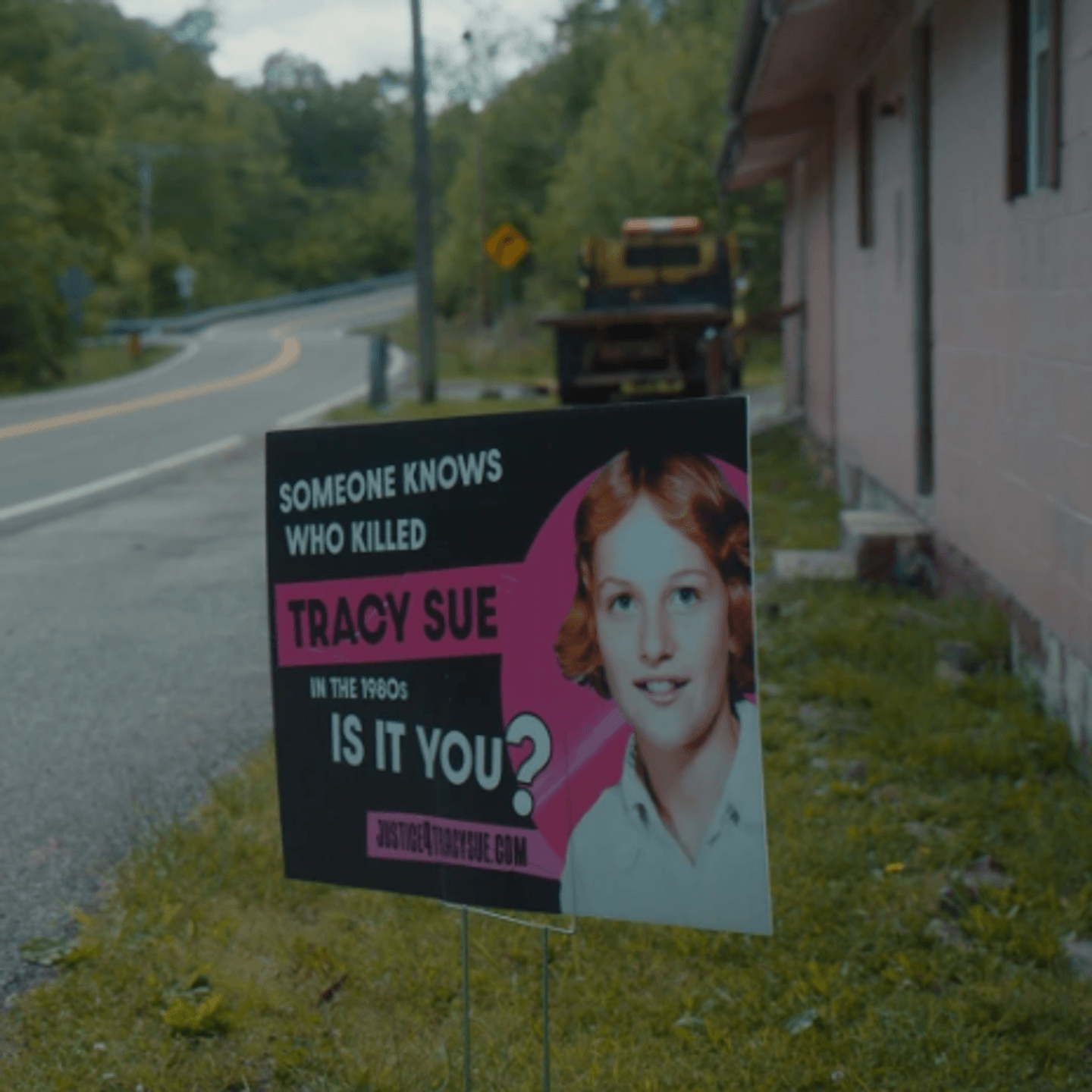
How she had died could not be established from what remained. How she had come to be in Elk Valley, Tennessee nearly four hundred miles southeast of Lafayette, Indiana could not be established either.
She had no identification. No one reported a missing girl matching her description. Investigators had a set of remains, a rough age range, a sex, and nothing else.
They named her Baby Girl.
Thirty-Seven Years
Baby Girl is a name that carries a particular quality the diminutive, the affection embedded in the generic, the attempt to give personality to someone the investigators had never met and could not name. Tennessee Bureau of Investigation agents who worked the case over the decades have described the name with a combination of tenderness and professional frustration: you call her something because you cannot call her nothing, but calling her something that isn’t her name is its own form of incompleteness.
The TBI kept the case open. This is worth saying directly: they kept it open for thirty-seven years. The case was never closed. It was transferred between investigators as careers ended and new agents came in. It accumulated paperwork and exhausted leads and dead ends and renewed efforts and more dead ends.
In 2007, the first significant modern forensic effort: a sample of Baby Girl’s remains was submitted to the University of North Texas Center for Human Identification. A DNA profile was developed. It was entered into CODIS, the national DNA index, and the National Missing and Unidentified Persons System.
No match came back.
A TBI agent and intelligence analyst revisited the case in 2013, looking for new angles. They found none that opened into resolution.
The remains sat in evidence. The case sat open. The name Baby Girl, for lack of another accumulated years.
2022 and Othram
In early 2022, the TBI made a decision that had become available through developments in forensic science that had not existed when Baby Girl’s remains were found: they would submit a sample to Othram Laboratories in The Woodlands, Texas, for forensic genetic genealogy analysis.
The University of Tennessee Anthropology Department helped prepare the sample extracting usable DNA from bones that were now thirty-seven years old required careful technique. The sample was sent to Othram.
Othram’s laboratory produced something the standard database searches had not: a genealogical profile built from the degraded material, traced through ancestry databases populated by millions of people who had submitted their DNA for family history research. The profile pointed toward a family connection in Indiana.
In June 2022, Othram provided the TBI with a possible relative connected to Baby Girl who was living in Indiana.
A TBI intelligence analyst located potential family members in the Lafayette area nearly four hundred miles from Campbell County. A TBI agent made contact with those individuals. They confirmed: yes, they had a family member who had gone missing from the Lafayette area in 1978.
With the assistance of the Lafayette Police Department, the TBI obtained DNA samples from possible siblings of the missing girl and submitted them for comparison.
The match was confirmed in late August 2022. Baby Girl was Tracy Sue Walker, born June 2, 1963, Lafayette, Indiana. She had been fifteen years old when she disappeared. She had been in a Tennessee grave, without her name, for thirty-seven years.
The announcement was made publicly on August 30, 2022.

What Is Still Unknown
Tracy Sue Walker has her name back. That is what is known.
What is not known is almost everything else.
How she got from Lafayette, Indiana, to a remote clearing in the mountains of Campbell County, Tennessee, is unknown. The journey of nearly four hundred miles, made by a fifteen-year-old girl sometime between 1978 and whenever she died, has no documented record. She was not reported in Tennessee. She was not identified as a runaway in Tennessee, or as a missing person from another state, or as any category that would have brought official attention to her presence there before her bones were found.
How she died is unknown. The remains, by the time investigators found them in 1985, had been exposed to the elements long enough that the cause of death could not be established from what was left. She may have been killed. She may have died from other causes. What can be said is that a fifteen-year-old girl from Indiana did not make her way to a remote clearing in the Tennessee mountains without something having gone significantly and irreparably wrong.
Who she was with, where she went before her death, how she came to be in the Elk Valley area all of this is unknown. The TBI has asked for public assistance: anyone who knew Tracy Sue Walker in 1978, who knew she was traveling, who knew who she might have been with, who has any information about how she ended up in Campbell County.
Her killer has not been identified. No suspect has been named. The case that has now been open under her name for forty-four years under her actual name, for two years; under no name, for the thirty-seven years before that remains unsolved in all the ways that matter to anyone wanting to know what happened.
The Technology and What It Means
The identification of Tracy Sue Walker was accomplished through a technology that did not exist when she was killed, or when her remains were found, or when her DNA was first entered into CODIS, or for most of the subsequent decades of investigation.
Forensic genetic genealogy the construction of family trees from DNA profiles extracted from crime scene material or unidentified remains became publicly known through a series of high-profile identifications beginning in 2018. It has since been applied to hundreds of cold cases, identifying both unknown victims and unknown perpetrators in cases that had resisted resolution for decades.
Tracy’s case represents something specific within this history: a child who disappeared in 1978, whose remains were found in 1985, who spent thirty-seven years as Baby Girl, and who needed every forensic tool developed in the intervening four decades before she could be called by her own name.
The private laboratory Othram, whose work has cracked dozens of cold cases across the country, processed her sample and produced the genealogical lead that gave her back to her family. Without that technology, the case would still be open under a nickname. The family in Lafayette would still not know what had happened to their missing girl.
With it, they know. Not everything. Not the important things, the things that would constitute justice. But they know where she is. They know she has been found. They know her name is on the case now, and that the people looking for the answer to what happened are looking for Tracy Sue Walker, not Baby Girl.
That is something. It is a form of return, partial and inadequate and forty-four years late.
The Necklace
Among the items found near Tracy Sue Walker’s remains in the Big Wheel Gap clearing in 1985 was a plastic puka-style necklace. It was catalogued, preserved, kept in evidence through all the years and all the database submissions and all the investigative revisits.
Puka shell necklaces were fashionable in the 1970s among teenagers. They were sold in mall kiosks, given as gifts, worn as an ordinary accessory by ordinary fifteen-year-old girls across the country. Tracy Sue Walker was fifteen years old in 1978. She was wearing her necklace when she died.
The necklace has her name on it now. She has her name back.
Someone knows what happened to her. The TBI is still asking.
Tracy Sue Walker was fifteen years old. She was born on June 2, 1963, in Lafayette, Indiana. She disappeared in 1978. Her remains were found on April 3, 1985, in the mountains of Campbell County, Tennessee, nearly four hundred miles from home. For thirty-seven years she was called Baby Girl. In August 2022, she was called Tracy again. Her case is still open. Her killer has not been found.


Leave a comment