Grosse Pointe Farms, Michigan, January 2010 a devout Catholic mother vanished after a church prayer service, her body surfaced thirty-five miles away seventy days later, and for fifteen years her family has been trying to get someone to investigate what they believe was murder

St. Paul on the Lake, January 12, 2010
St. Paul on the Lake Catholic Church sits on Lake Shore Road in Grosse Pointe Farms, Michigan, a name that says almost everything about what kind of place it is. A prosperous suburb east of Detroit on the shore of Lake St. Clair, Grosse Pointe Farms is old money in the Midwestern sense understated, civic, the kind of community where families have lived for three and four generations and where a woman who has attended the same church her entire life is known by the priest, the congregation, and the neighboring families who share her pews.
If you enjoy my true crime coverage, please help me continue my newsletter by upgrading here:
JoAnn Matouk Romain was fifty-five years old, a divorced mother of three who had lived in Grosse Pointe her entire life. She worked part-time at a clothing store. She volunteered. She was a woman of what everyone who knew her described as deep and unperformative faith daily prayer, regular mass, the kind of Catholicism that is less about institution than about an internalized relationship with God that structured her days.
On the evening of January 12, 2010, she attended a prayer service at St. Paul on the Lake one of several she attended weekly. The service ended sometime around seven or seven-thirty in the evening. She left with the other congregants.
She was never seen alive again.
What happened in the hours that followed is the centre of a dispute that has been running for fifteen years, that has produced a Netflix documentary, multiple civil lawsuits, an Unsolved Mysteries episode, private investigator reports, depositions, forensic analyses, court rulings, and a formal request to the Michigan Attorney General and that remains officially unresolved in every way that matters.

The Discovery of the Car
At approximately nine-thirty in the evening, Grosse Pointe Farms police officers noticed a vehicle parked near the church after the prayer service had ended. The lot was otherwise empty. The officers approached, looked inside, and found a purse later identified as JoAnn Romain’s on the driver’s seat.
True Crime Weekly is a reader-supported publication. To receive new posts and support my work, consider becoming a free or paid subscriber.
The family’s first question, and the question that has never been satisfactorily answered, concerns timing: how did the police know, before running the plate, that this was JoAnn Romain’s vehicle?
The Lexus was registered not to JoAnn Romain but to her daughter Michelle. The family subsequently learned, through the discovery process of their civil lawsuit against the police department, that officers had contacted JoAnn’s family to report her missing before they had run the plate on the vehicle. The sequence of events, as established through those legal proceedings, suggested that the police had prior knowledge of whose car it was or prior knowledge of something.
The police have never provided a satisfying explanation for this sequencing issue. Their position has been that the investigation followed normal procedures.
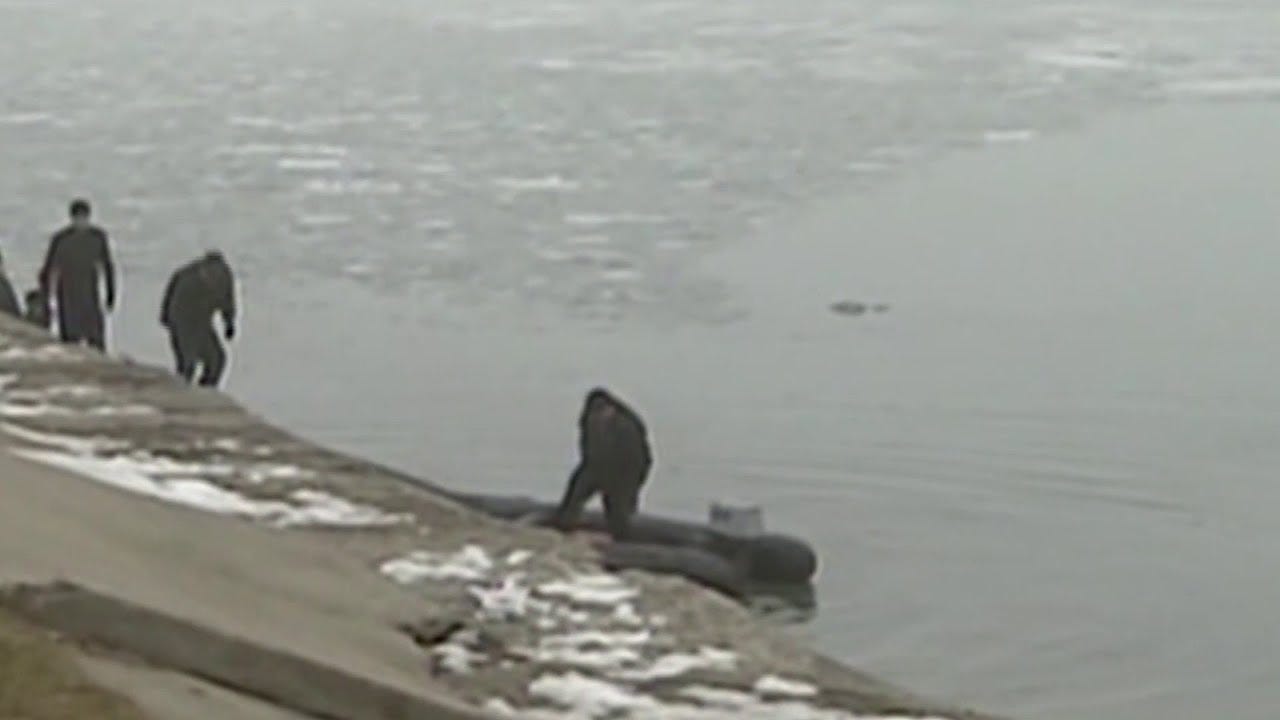
From the parking lot, officers traced footprints in the snow. The footprints led from the parking lot toward the shore of Lake St. Clair, directly across the street from the church. The footprints went toward the water. A hole in the ice, consistent with someone having gone through it, was visible. No footprints returned from the water.
The Grosse Pointe Farms Police Department concluded, with what the family characterised as suspicious speed, that JoAnn Romain had walked across the street from the church, descended a steep embankment to the lake’s edge, and entered the icy water.
They concluded she had committed suicide.
Seventy Days
The dive teams searched Lake St. Clair. They found nothing.
JoAnn Romain’s body was not in Lake St. Clair. For seventy days she was simply missing the question of whether she was in the lake or somewhere else, alive or dead, remained open in the excruciating way of such cases.
On March 24, 2010, her body was found by fishermen near Boblo Island in a channel of the Detroit River, on the Canadian side, approximately thirty to thirty-five miles from where she had last been seen.
The Grosse Pointe Farms Police Department maintained their conclusion: she had walked into Lake St. Clair and drowned, and her body had travelled via water currents to the Detroit River and come to rest near the Canadian shore.
The family found this explanation inadequate in ways that became more detailed and more specific over the years of investigation they subsequently undertook.
What the Family Found Wrong
The objections to the suicide ruling are numerous, and some are more compelling than others. Taken together, they form a picture that the family, their private investigators, their forensic experts, and ultimately a federal judge described as genuinely disturbing not conclusively indicative of murder, but inconsistent with a thorough and unbiased investigation.
The currents. Lake St. Clair drains into the Detroit River, which flows south into Lake Erie. The distance from the church to Boblo Island is thirty-five miles. Hydrological experts retained by the family concluded that the water currents of Lake St. Clair and the Detroit River in January were not consistent with a body travelling that distance in seventy days under natural conditions. A body entering the lake at the point the footprints indicated would, under the prevailing winter current patterns, have been expected to be found much closer to the entry point or in a different location entirely.
The condition of the body. JoAnn’s body was found with bruising that the family and their experts argued was inconsistent with a simple drowning bruising that suggested physical contact, grabbing, force. The family has consistently stated that the autopsy found no water in her lungs, which would be highly unusual if she had drowned. The police and medical examiner have disputed the family’s characterisation of the autopsy findings, and the formal cause of death has never been changed.
The footprints. The family retained experts who examined the photographs of the footprints in the snow and raised questions about whether they were consistent with JoAnn’s footwear she had been wearing heeled boots, which experts argued would have made it extremely difficult to descend the steep, icy embankment to the water’s edge in the manner the suicide theory required. The police investigated and maintained the footprints were consistent with her having walked to the water.
The car keys. JoAnn’s car key was later found on her body when it was recovered in March. But the day after her disappearance, the police somehow had a key to her Lexus a spare key, the family would later establish, that had gone missing from their home approximately six weeks before JoAnn’s disappearance. How the police came to possess a key to a missing woman’s vehicle, before her body or her keys were found, has never been explained to the family’s satisfaction.
The mystery witness. Through the discovery process of their civil lawsuit, the family learned that a witness named Paul Hawk had come forward to tell police and later the FBI that he had seen two vehicles parked illegally near the lake on the night of JoAnn’s disappearance, with what appeared to be at least two men nearby. When Hawk was shown photographs, he identified one of the men as Tim Matouk JoAnn’s first cousin and, as the family would tell investigators, the person JoAnn had specifically told her daughter to look to if something happened to her. The Unsolved Mysteries episode about the case did not mention Hawk’s statement or his identification. The police initially characterised Hawk as an unreliable witness.
The evidence handling. A veteran detective hired by the family, with twenty-five years of experience in law enforcement, reviewed the investigation and described the handling of evidence as so far outside standard procedure as to be suspicious in itself. The Lexus was brought into the police station’s garage and fingerprint dust was applied in ways the detective characterised as effectively useless the corrugated leather and vinyl surfaces requiring a different technique entirely. No DNA work was done on the car. And a black scarf, reportedly seen on a man running strangely near the lake that night and taken into evidence by an officer, was released from the property system in November 2010 while the case was still open and donated. It no longer exists as evidence.
The Inheritance and the Estrangements
The family context that investigators were required to explore and that the Unsolved Mysteries episode brought to national attention in 2020 is a story of wealth, family fracture, and the particular bitterness that inheritance disputes generate.
JoAnn Matouk Romain was one of five children of Louise Matouk, who died in 1994 leaving an estate valued at approximately twenty million dollars. Louise’s son Bill was the executor. In the years after Louise’s death, JoAnn and her brother John alleged that Bill and another sibling, Rosemary, had misappropriated their shares of the estate. The resulting dispute had estranged JoAnn from Bill for years before her death.
Tim Matouk JoAnn’s first cousin and, at the time of her disappearance, a Harper Woods police officer was connected to this dispute in ways that the family characterized as creating motive. The specifics of Tim’s alleged grievance against JoAnn involved, in Michelle Romain’s account, JoAnn having told people that her brother John’s financial problems were linked to Tim. Tim denied this characterization of their relationship in a deposition included in the Unsolved Mysteries episode.
What Michelle Romain has consistently testified, and what she testified to in court, is that the last time JoAnn and Tim spoke in October 2009, approximately three months before her death the conversation ended with Tim screaming at her mother over the phone. After she hung up, JoAnn told Michelle directly: “If something happens to me, look to Tim.”
She also told a paralegal named Nancy Barich, some time before her disappearance, that Tim had threatened her specifically, saying that “if someone wanted to get rid of you they could do it and you would never be found.”
JoAnn had hired a private security company in the weeks before her disappearance. This detail has been interpreted in two directions: by the family, as evidence that she was genuinely afraid of someone and taking steps to protect herself; by those who accept the suicide theory, as evidence of anxiety that may have contributed to a deteriorating mental state.
The other family member whose circumstances drew investigation was JoAnn’s brother John, who by his own admission was in serious financial difficulty in 2009 and 2010, having accumulated significant real estate liabilities during the economic collapse. John has stated publicly and did so in the Unsolved Mysteries episode that he believes it is possible someone with whom he had dealings killed JoAnn to send him a message. He has also said, with evident grief, that if so, he is sorry and wishes they had killed him instead.
Tim Matouk has consistently and firmly denied any involvement in JoAnn’s death. He maintained in his deposition that he had a corroborated alibi for the night of her disappearance he was working on an active narcotics investigation with the Michigan State Police, an assignment from which he could not leave, corroborated by phone records and other officers’ testimony. He has not been charged with anything. He now works as an investigator for the Wayne County Prosecutor’s Office.

The Civil Lawsuit and the Federal Judge
In 2014, JoAnn’s daughters Michelle and Kellie filed a $100 million federal lawsuit against the cities of Grosse Pointe Woods and Grosse Pointe Farms, alleging that the police departments had conspired to cover up their mother’s murder. The lawsuit provided a mechanism the discovery process for the family to access police documents they had not previously been able to obtain, including the existence of Paul Hawk’s witness statement and Tim Matouk’s identification.
The lawsuit was dismissed in 2018. Federal Judge Linda Parker’s ruling is itself a document worth reading carefully, because it does not dismiss the family’s concerns. She wrote: “There are disputed facts in this matter that are very disturbing and to this day remain unresolved.”
She determined, however, that the evidence fell short of establishing the specific legal threshold for a conspiracy claim against the police departments. Disputed facts that are very disturbing are not, in the law, the same as provable conspiracy.
Michelle attempted to appeal the dismissal in 2019. The appeal was also dismissed.
Unsolved Mysteries and the Public Response
In October 2020, Netflix’s revival of Unsolved Mysteries devoted an episode titled “Lady in the Lake” to the Romain case. The episode brought the story to a global audience that would otherwise never have encountered it. Within days of the episode’s release, the case was being discussed extensively online, and a $200,000 reward was announced for information leading to resolution.
The episode was not a complete account. It did not mention Paul Hawk’s witness statement or his identification of Tim Matouk. It did not fully develop the car key anomaly. It presented the case as a genuine mystery without clearly establishing the full weight of what the family had uncovered through years of independent investigation.
The public response generated tips. None, as far as can be established from public records, led to charges or to any significant official development.
The planes that had been flying banners over Grosse Pointe before the episode aired bearing the message “Tim and Bill Matouk, wait until the public finds out who you really are” had represented the family’s frustration made literally visible, a form of advocacy that was at once legally careful and unmistakably accusatory.
2025: The Attorney General Declines
In March 2025, fifteen years after JoAnn Romain disappeared from a church parking lot on Lake Shore Road, her family made a formal request to the Michigan Attorney General’s Office to reopen the investigation. Their attorney, Steve Haney, submitted the petition alongside what the family described as new DNA evidence: a forensic investigation of a vehicle they believed might be connected to JoAnn’s abduction and murder, involving fingerprinting and DNA analysis that they argued warranted official review.
On March 27, 2025, the Michigan Attorney General’s Office declined.
Their statement explained that the department does not accept case referrals from private attorneys or from the families of victims, and that it cannot serve as an appellate review agency for charging decisions made by county prosecutors.
The statement was legally accurate. It was also, from the perspective of a family that has been trying for fifteen years to get a thorough investigation of their mother’s death, the latest in a series of closed doors.
Michelle Romain’s response was direct: “This is not just about my mom being murdered, this is about what is going on behind the scenes. We will not stop until we get justice.”
What the Case Actually Is
The case of JoAnn Matouk Romain is genuinely ambiguous, and a responsible account of it requires holding that ambiguity without either resolving it artificially or dismissing it.
The official position that she walked into Lake St. Clair and drowned is not inherently implausible. Suicide is underdiagnosed, underreported, and often shocking to the people closest to the victim.
The family’s characterisation of JoAnn as a deeply faithful Catholic who would never take her own life is sincere, but it is also the kind of characterisation that, in the experience of crisis counsellors and suicide researchers, frequently precedes the discovery that a loved one did exactly that. People hide suffering. Faith does not prevent suicide.
But the anomalies in the investigation are real. The car key that appeared at the police station the day after she disappeared. The witness statement about two men near the lake that was characterised as unreliable and not shared with the family until the civil lawsuit forced disclosure. The evidence released and donated while the case was open. The hydrological questions about currents and distance. The fingerprint processing described by a veteran detective as effectively useless. The bruising on a body pulled from the water.
A federal judge looked at all of this and said the disputed facts were very disturbing and remained unresolved.
That is where the case still sits.
JoAnn Romain told her daughter that if something happened to her, to look to Tim. Tim Matouk denies any involvement. He has a corroborated alibi. He has never been charged with anything. He continues to work in law enforcement.
The case is officially open but inactive.
The Church Is Still There
St. Paul on the Lake Catholic Church still sits on Lake Shore Road in Grosse Pointe Farms, across the street from Lake St. Clair. Evening prayer services still take place there.
JoAnn Romain attended one of them on January 12, 2010, and left it at some point in the early evening. What happened between that moment and the discovery of her body in the Detroit River seventy days later is the question that nobody with the authority to answer it has been required to fully address.
Her daughters have spent fifteen years asking. They have not been answered. They say they will not stop.
The lake doesn’t give up its secrets easily. In this case, it may be that the lake has no secrets to give that what happened was what the police concluded, a solitary woman in a moment of crisis, the dark water, the silence. It may be that the lake is only part of the story, and that the part it doesn’t hold is held somewhere else, in a police file in Grosse Pointe or a memory in the Matouk family or a car that may now be the subject of DNA analysis.
Fifteen years on, nobody knows for certain. That, too, is a kind of answer just not the one the family needed.
JoAnn Matouk Romain was fifty-five years old. She was a mother of three. She was a devout Catholic who attended prayer services at her church multiple times a week. She told her daughter, three months before she disappeared: “If something happens to me, look to Tim.” She was last seen on January 12, 2010. She has not received justice. Her family is still looking.


Leave a comment