Memphis, Tennessee, September 2022 a kindergarten teacher abducted before dawn on a morning run, a killer who had been released eighteen months earlier, and a city left demanding answers about who was supposed to be protected and from whom
Central Gardens, Memphis, 4 a.m.
The Central Gardens neighborhood of Memphis is one of the city’s oldest and most beautiful residential areas wide streets, historic homes built in the early twentieth century, mature trees arching over sidewalks that feel, at any reasonable hour, like the kind of place where nothing bad happens.
If you enjoy my true crime coverage, please help me continue my newsletter by upgrading here:
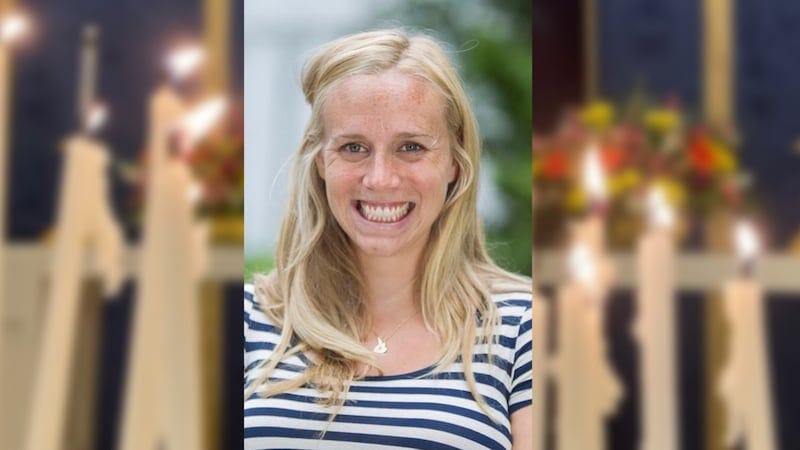
Eliza Fletcher ran those streets before dawn. She had been doing it for years. An early riser by habit and disposition, she rose before the rest of the house before her husband Richie, before their two young sons laced up her running shoes, and went out into the dark city for the kind of solitary early-morning run that regular runners know as one of the purest pleasures of the practice: the streets emptied of traffic, the air cool, the city still belonging to you.

On the morning of Friday, September 2, 2022, she left her house on Belvedere Boulevard and ran east, away from Central Gardens and toward the University of Memphis campus approximately a mile and a half away.
The neighborhood through which she ran transitioned, as Memphis neighborhoods do with the abruptness characteristic of American cities shaped by decades of racial segregation and disinvestment, from the prosperous quiet of Central Gardens to a different Memphis poorer, less maintained, with different histories and different dangers.
At approximately 4:20 a.m., she reached the 3800 block of Central Avenue, near the University of Memphis campus. A black 2013 GMC Terrain SUV passed her going in one direction, then circled back. The vehicle sat idling in a nearby parking lot.
True Crime Weekly is a reader-supported publication. To receive new posts and support my work, consider becoming a free or paid subscriber.
Surveillance footage from a camera mounted on a nearby building captured what happened next. A man emerged from the vehicle and ran aggressively toward the woman jogging on the sidewalk. There was a struggle, brief and violent. She fought back investigators found evidence of that in the physical evidence later analyzed. The man forced her into the passenger side of the SUV.
The vehicle sat in the parking lot for approximately four minutes.
Then it drove away.
Those four minutes during which Eliza Fletcher was alive inside a vehicle with the man who would kill her, while the city of Memphis slept around them became the central image of a case that gripped Memphis and, within days, the country.
Who Eliza Fletcher Was
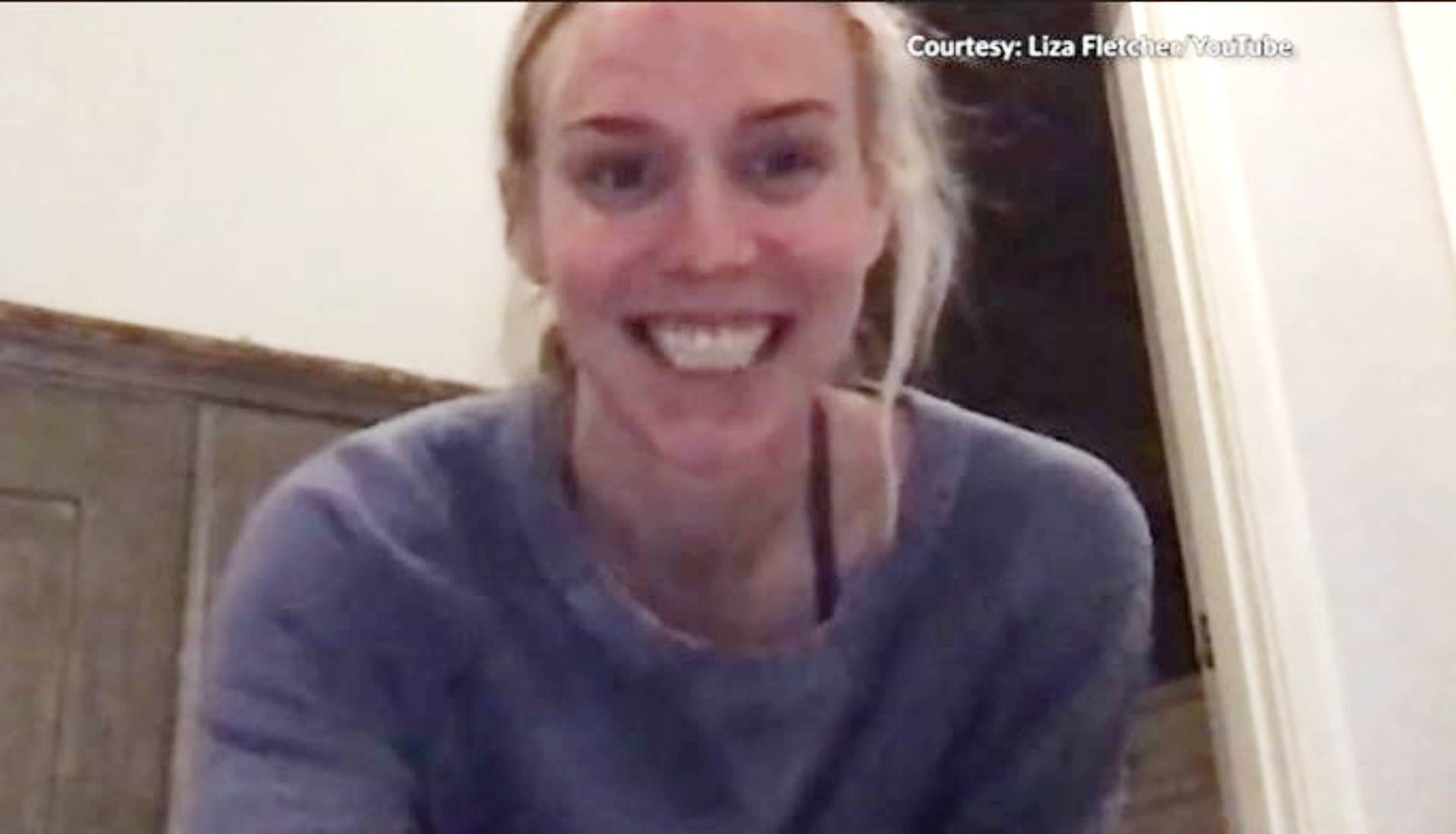
Elizabeth Daube Fletcher was thirty-four years old. She was known to everyone who loved her as Liza.
She had grown up in Memphis, the granddaughter of Joseph “Joe” Orgill III, the longtime president and chairman of Orgill Inc., a hardware distribution company founded in Memphis in 1847 that had grown, under Joe Orgill’s leadership, into the largest independent hardware distributor in the United States, with revenues of approximately $3.2 billion at the time of his death in 2018.
The Orgill family was Memphis royalty in the understated, civic-minded way of old Southern philanthropic wealth rooted in the city, invested in its institutions, known as much for what they gave back as what they had accumulated.
Eliza Fletcher was the inheritor of that legacy in the most literal sense, but what distinguished her in the accounts of everyone who knew her was not her family background but the use she made of it. She taught kindergarten first at Promise Academy in Nashville, where she also coached children’s soccer, then at St. Mary’s Episcopal School in Memphis.
She was, by the accounts of parents, colleagues, and students, exactly the kind of teacher people mean when they say a teacher changed their life. She was present. She was engaged. She got down on the floor with children who were struggling. She remembered what they told her about their weekends and their families and their fears.
She was eight months into the school year at St. Mary’s when she was abducted. Her class of kindergartners would come back from Labor Day weekend to a teacher who was gone.
She and Richie Fletcher had two sons. The family attended Second Presbyterian Church in Memphis. They were, in the ordinary sense of the word, pillars of a community the kind of family around which a neighborhoods social life organizes itself.
She ran before dawn because the day was too full otherwise. She had been running those streets for years. She knew them the way runners know their routes by feel, by rhythm, by the particular quality of the light at particular corners.
Cleotha Abston: The Record
The man who killed Eliza Fletcher had been known to Memphis law enforcement since he was eleven years old.

Cleotha Abston, who also used the name Cleotha Henderson and the nickname “Pookie,” was thirty-eight years old in September 2022. He had entered the Shelby County Juvenile Court system in June 1995, at age eleven, on a charge of theft. From that point until the night he killed Eliza Fletcher, his contact with law enforcement was nearly continuous.
Between 1995 and 2000, the juvenile court records reviewed by investigators documented sixteen detentions on charges ranging from theft to aggravated assault to rape. He was convicted of rape as a juvenile his victim was male. He was placed in the custody of the Shelby County Youth Services Bureau.
His file noted, in language that prosecutors would cite years later, that he was considered one hundred percent violent. He had no diagnosed mental illness, no suicidal history, no medical problems. He was simply, in the clinical language of a juvenile court file, fully and completely violent.
In May 2000, at the age of sixteen, Abston committed the crime that would define the next twenty years of his life and that would resonate in devastating ways when the second kidnapping came to light. Kemper Durand was a prominent Memphis defence attorney who had spent a career fighting for the rights of the wrongfully convicted. He was walking to his car in the early morning hours of May 25, 2000, after attending a celebration of the Handy Music Awards on Beale Street, when Abston approached him from behind, produced a weapon, took his wallet, and forced him into the trunk of his own 1992 Mercedes-Benz.
Durand spent approximately two hours in the trunk. Abston drove, at one point picking up friends, before eventually taking Durand to a Mapco gas station on the pretext of forcing him to withdraw money from the ATM. At the station, a uniformed Memphis Housing Authority guard walked in. Durand yelled that he had been kidnapped. Abston ran. He was found and arrested.
In his victim impact statement, Durand wrote: “I was extremely lucky that I was able to escape from the custody of Cleotha Abston. It is quite likely that I would have been killed had I not escaped.”
He wrote that Abston had shown absolutely no remorse.
Abston was tried as an adult despite being sixteen. He pleaded guilty in 2001 to especially aggravated kidnapping and aggravated robbery and received a twenty-four-year sentence.
There is a detail in the Eliza Fletcher story that underscores the particular cruelty of coincidence: Kemper Durand, the attorney whom Abston kidnapped in 2000, worked at the same law firm as Eliza Fletcher’s uncle, Mike Keeney. The two crimes, separated by twenty-two years, were connected not only by the perpetrator but by the family of the victim.
Durand died in 2013, seven years before Abston’s release. He never learned what Abston would do next.
The Release
Abston was released from Trousdale Turner Correctional Facility in November 2020. He had served twenty years of his twenty-four-year sentence, receiving credit for time served before sentencing and for participation in prison work programmes he had worked in the kitchen, the laundry, and as a cleaner.
The mathematics of that release generated immediate political controversy after Eliza Fletcher’s murder. Tennessee’s Lieutenant Governor Randy McNally tweeted that had Abston served his full sentence, Eliza Fletcher would still be alive. The Shelby County District Attorney, Steve Mulroy, responded more cautiously, noting that he generally favoured rehabilitation over longer sentences.
Both positions missed something that the full record made clear: the issue was not the length of the sentence but what the sentence had done, which was nothing measurable. The juvenile record, the adult conviction, the victim impact statement that described a complete absence of remorse these were the indicators of what Abston was. Twenty years of incarceration had not changed what the indicators pointed to. He walked out of prison in November 2020 and within two years had committed a kidnapping and rape and then a kidnapping and murder.
There was also, in the months before Eliza Fletcher’s murder, a rape case that the criminal justice system had failed to prosecute with appropriate speed.
In September 2021 ten months after his release, nine months before he abducted Eliza Fletcher Abston kidnapped a woman named Alicia Franklin at gunpoint, held her captive, and raped her. He was charged in that case. The charge languished. The sexual assault kit taken as evidence was not processed with urgency part of a documented backlog in rape kit testing in Memphis cases that advocates had been highlighting for years. The Alicia Franklin case did not result in a conviction until April 2024, when a jury found Abston guilty of aggravated rape, aggravated kidnapping, and unlawful possession of a firearm. He was sentenced to eighty years.
Had the Franklin case been prosecuted promptly after his September 2021 arrest, Abston would have been in custody in September 2022. Eliza Fletcher would have gone for her run and come home.
The Search
Eliza Fletcher’s husband Richie reported her missing when she failed to return from her run on the morning of September 2nd. The family offered a $50,000 reward through CrimeStoppers almost immediately. Memphis police launched a search that expanded rapidly as the day went on federal agencies were involved within hours.
The surveillance footage from the camera near the University of Memphis was recovered and reviewed. The black GMC Terrain was visible. Its occupants were not clearly visible, but the vehicle could be identified and traced.

Investigators identified the vehicle through statements from Abston’s employer. He had been working for a cleaning service, and the GMC Terrain belonged to a woman associated with his address. Cell phone records placed Abston in the area of the abduction at the time it occurred. Then came the detail that sealed the identification: footage recovered from a local theatre the day before Fletcher’s disappearance showed Abston wearing a pair of Champion slide sandals. Those same sandals or sandals consistent with them were found near the location where Fletcher was abducted. His DNA was on them.
US Marshals arrested Cleotha Abston on September 3, 2022 one day after the abduction. He attempted to flee when they located him.
A witness and Abston’s brother told investigators that after the abduction, Abston had returned to his brother’s house and cleaned the interior of his SUV and washed his clothes in the sink. He was behaving strangely. Even after this cleaning, investigators recovered blood and other physical evidence from inside the vehicle.
The search for Eliza Fletcher continued through the weekend and into Monday. Then, on the evening of September 5th, three days after she was taken, a police officer searching near East Person Avenue noticed something: high grass disturbed to the south of a vacant residence, vehicle tracks through the grass, and a smell that experienced officers recognize without needing to be told what it means.
Behind the vacant duplex at 1591 South Orleans Street, approximately four miles from where Eliza Fletcher had been abducted, the officer found her.
She was lying on the ground, unresponsive. Her purple Lululemon shorts the ones she had been wearing when she was taken were in a discarded trash bag approximately a hundred feet away.
The autopsy revealed she had died from a gunshot wound to the head. She also had injuries to her right leg and jaw fractures. She had been alive for some portion of the four days between her abduction and her body’s discovery. How long, and in what conditions, are details that investigators documented and that the family has not chosen to share publicly.
She was thirty-four years old.
The Legal Proceedings
Abston was initially charged with especially aggravated kidnapping and tampering with evidence. First-degree murder charges were added when Eliza Fletcher’s body was identified.
The case moved slowly through the courts, complicated by changes in his legal representation. His original public defender withdrew due to a conflict of interest. New lawyers were appointed. They sought time to review evidence. A trial date was set for February 2025.
Meanwhile, in April 2024, the Alicia Franklin case went to trial. The jury convicted Abston in two days of testimony. In May 2024, he was sentenced to eighty years in prison for raping and kidnapping Alicia Franklin.
Then, in October 2024, Abston’s attorney in the Fletcher case, Juni Ganguli, told reporters the calculus was clear: “We had been meeting with him regularly for the past few months and had been telling him that we need to settle this case, that we cannot go forward with a trial and expect to succeed.”
On October 28, 2024, Cleotha Abston pleaded guilty to first-degree murder, especially aggravated kidnapping, and tampering with evidence in the death of Eliza Fletcher. He was sentenced to life in prison without the possibility of parole, to run consecutively with the eighty years he was already serving in the Franklin case.
In court, the District Attorney read a statement from Eliza Fletcher’s family directed at Abston:
“We have no idea what happened to you to turn you into someone so filled with a desire to hurt people. Whatever it was, it does not excuse or explain what you have done. You have changed our lives forever, and nothing will ever be the same. Your actions were evil. There is no other word for it. You murdered Liza, even though she did nothing to deserve it. She did not hurt you.”
The Deputy District Attorney, Paul Hagerman, had a shorter statement for the press: “Now this guy can be forgotten, because he’s going to prison to die.”
The Questions That Remain
Abston will die in prison. That is settled. The questions his case leaves open are about systems rather than individuals, and they are harder to resolve.
The rape kit backlog that allowed Alicia Franklin’s case to sit unprocessed while Abston was free is a documented, ongoing problem in Memphis and in jurisdictions across the country. The National Sexual Violence Resource Center has repeatedly documented that hundreds of thousands of rape kits sit unanalysed in evidence rooms. The delay in the Franklin case is not an anomaly. It is the ordinary condition of a system that has not chosen to prioritise the processing of evidence in sexual violence cases. Had ordinary prioritisation been applied to Alicia Franklin’s kit in September 2021, Abston would have been arrested and charged that autumn a year before he killed Eliza Fletcher.
The early release from his 2001 sentence is a more complex question. The circumstances of his release were consistent with Tennessee law and the policies of the corrections system. Whether those policies adequately account for the specific profile of someone like Abston someone whose juvenile and adult record documented sustained, serious violence with no indication of rehabilitation is a genuine policy question without an easy answer.
What is not a policy question is what the facts show: Abston kidnapped a man in 2000 and spent two hours with him in a car trunk. He was convicted and served twenty years. He was released. Eleven months later he kidnapped and raped another woman. The system did not respond to that case fast enough to prevent what happened next. And what happened next was Eliza Fletcher, four minutes in a parking lot at 4:20 in the morning, and three days in a vacant lot in South Memphis, and a family that will never be the same.
The Run
In the days after Eliza Fletcher’s murder, runners in Memphis gathered for an event called “Finish Liza’s Run” completing the route she had been running when she was taken. The event drew hundreds. It has been held every year on the anniversary of her abduction.
The act of running her route is not justice. It is grief expressed through motion, through doing the thing she loved in the place she loved doing it, through refusing to let a dark parking lot on a Friday morning before dawn be the definition of what Central Avenue near the University of Memphis is.
She was a kindergarten teacher. She was up before everyone else so she could run before the day asked everything of her. She had been doing it for years, on those streets, in that neighbourhood, in that particular before-dawn Memphis quiet that runners know.
She did not get to finish the run.
Eliza Fletcher was thirty-four years old. She had two sons and a husband. She taught kindergarten at St. Mary’s Episcopal School in Memphis. She is survived by her family. She is remembered by the runners who go out before dawn, in her city, on her streets, every anniversary of the morning she did not come home.


Leave a comment