THE CASE IN ONE SENTENCE: A twenty-three-year-old Alaskan student picked up a hitchhiker on a remote Canadian highway, was murdered, and his killer stole his identity so thoroughly driving his car, sleeping in strangers’ homes, introducing himself as Philip Fraser that thirty-seven years later, nobody knows who the hitchhiker was.
If you enjoy my true crime coverage, please help me continue my newsletter by upgrading here:
Anchorage to Olympia: A Road Trip That Should Have Taken a Week
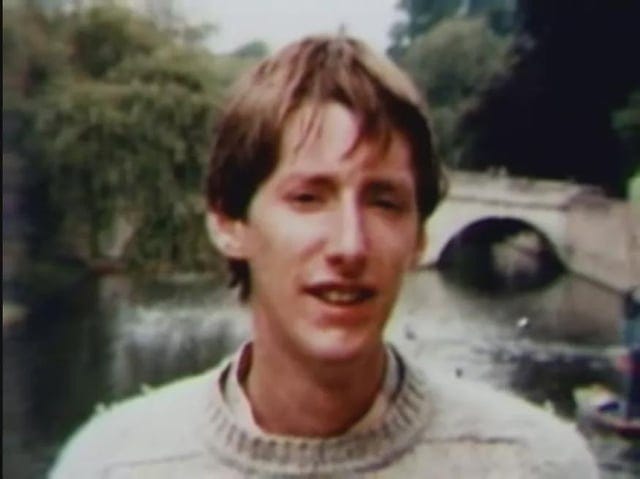
Philip Innes Fraser was born on January 3, 1963, in Anchorage, Alaska, the son of two prominent physicians. Dr. Robert Fraser served as the Director of Tuberculosis Control for the State of Alaska Department of Public Health. Philip had attended Western Maryland College, come home to Alaska, and decided to restart his life by enrolling in pre-med courses at Evergreen State College in Olympia, Washington a 2,300-mile road trip south through Canada along some of the most remote highways in North America.
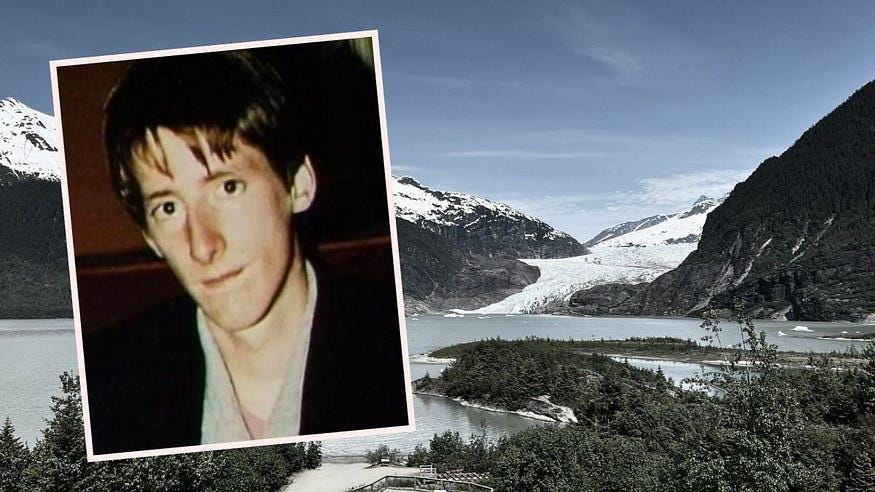
Philip loaded his black Volkswagen Jetta with his most prized possessions, including two handguns, and set off in mid-June 1988.
He was independent, outdoorsy, comfortable in wilderness. His parents weren’t worried. He had done this kind of thing before.
His car broke down before he could cross into Canada, forcing him to camp in the tiny town of Tok, Alaska for two days. Despite his parents’ worries, Philip assured them he was fine. On June 17, he finally crossed the border.
At the Alcan-Beaver Creek Border Crossing in Yukon, Canadian customs officers confiscated his two firearms it was illegal for Americans to bring guns into Canada.
He drove on without them. South toward British Columbia. Toward Olympia. Toward his new life. He would never get there.
The Forty Mile Flat Café
Early on the morning of June 18, 1988, Philip stopped for gas and food at the Forty Mile Flat Café in northern British Columbia a remote roadside stop on a long stretch of near-empty highway. He was approximately 600 miles south of the border.
Inside the café, owner Gaye Frocklage and her daughter Tina noticed a heavy-set man acting so strangely they thought he had escaped from a mental institution. He was talking to himself, behaving erratically, making the café staff deeply uneasy.
When Philip returned to his Jetta and began searching for something in his car, the hitchhiker paid for his meal, left the café, and asked Philip for a ride. Philip refused at first. The hitchhiker began running after his car. Philip, perhaps out of sympathy or perhaps intimidated, decided to give him a ride.
This was the last time Philip Fraser was seen alive.
The Olson Farm
About 200 miles south of the café, near the small community of Kitwanga, the hitchhiker flagged down a farm couple Eddie and Pauline Olson claiming he was having car trouble.
He was clearly nervous, but the Olsons assumed he was simply afraid of being stranded alone in the wilderness.
They agreed to tow him back to their home. They let him spend the night in the basement.
The next morning, the hitchhiker told the Olsons his name was Philip Fraser. He said his parents were doctors in Anchorage, Alaska. He said he was going to college in Washington State to study medicine.
Every detail was true about the real Philip Fraser, who was dead.
The Olsons agreed to fix his car’s fan belt. Early the next morning, the man drove off in the Jetta, leaving the Olsons stunned when they later learned the real Philip Fraser was missing.
The hitchhiker had spent the night in a farmhouse, eaten a family’s food, been helped by a kind couple, and was now driving south in a dead man’s car with a dead man’s name.
The Burned Car and the Body
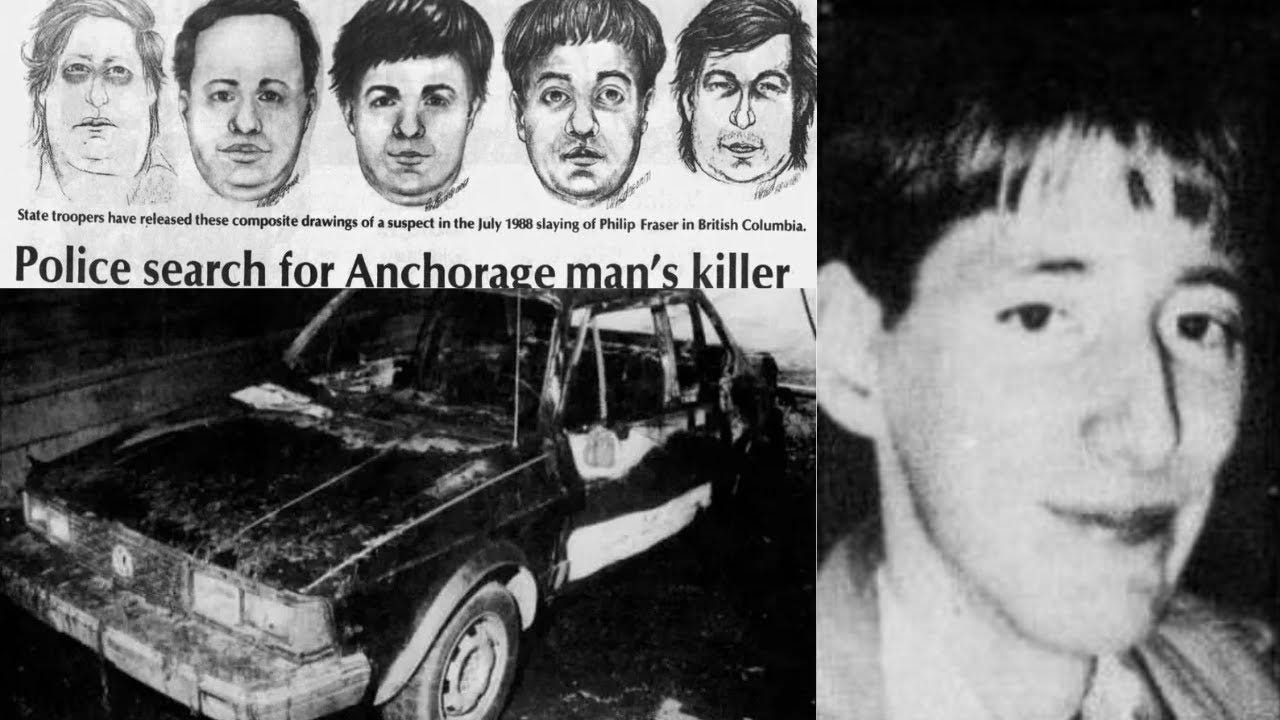
Twelve hours after the hitchhiker left the Olson farm, local workers found the burned-out Jetta at a car wash in Prince George, approximately 300 miles south of Kitwanga. The fire had destroyed everything inside Philip’s camping gear, his personal papers, all of his belongings. No fingerprints remained.
The Royal Canadian Mounted Police opened a homicide investigation. They retraced Philip’s known route and established that he had crossed the Canadian border on June 17th. From the border to the café was 600 miles. From the café to the Olson farm was 200 miles. From the farm to Prince George, where the car was burned, was another 300 miles.
The hitchhiker had driven over 500 miles in Philip’s car while using Philip’s identity.
The extensive search for Philip went on for nearly six weeks. On July 27, 1988, a man stopped his car to walk his dog at a gravel turnaround off Highway 37 the Glacier Highway about 70 miles from the Olson home. When the dog began pulling toward thick shrubs, the man discovered human remains.
Two days later, on July 29, dental records confirmed the remains were those of Philip Fraser. His cause of death was multiple gunshot wounds from a handgun.
The hitchhiker had killed him somewhere along those first 200 miles likely not long after Philip gave him the ride and had then driven his car, slept in a stranger’s house, eaten their food, and told them all about his life in Alaska and his plans for medical school.
The Man Nobody Can Find
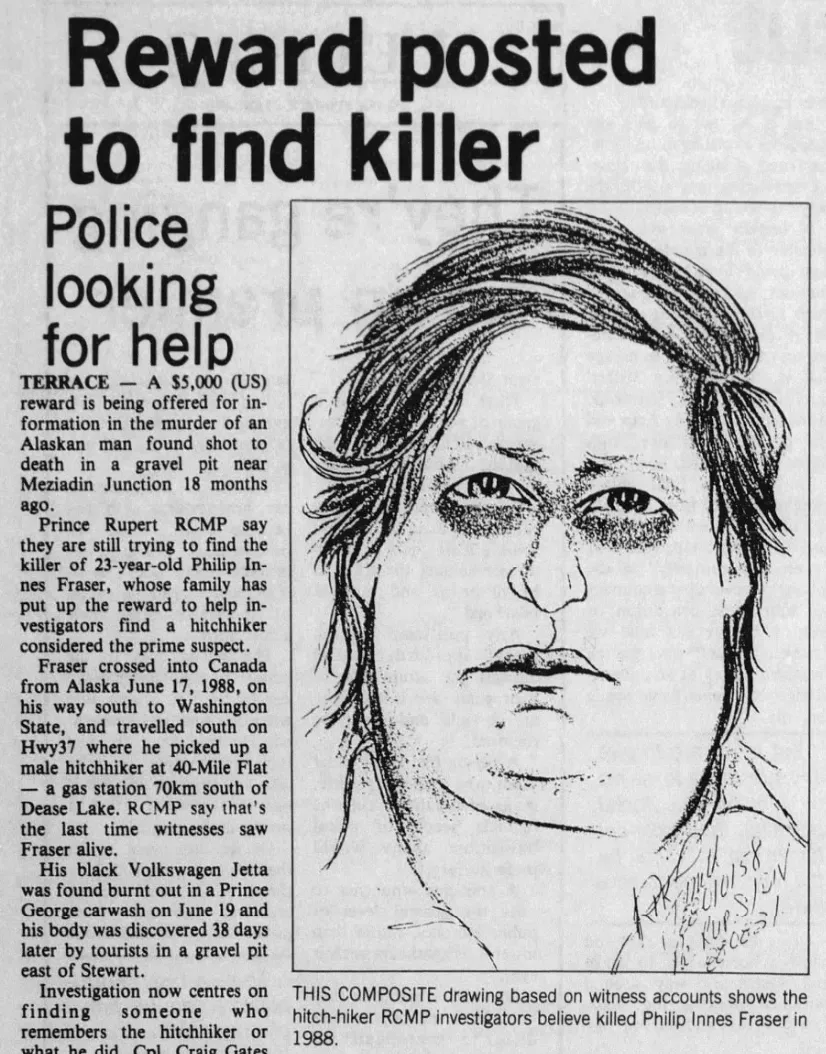
Using witness accounts from the café staff and the Olsons, the RCMP created a composite sketch of the hitchhiker. He was described as a white male, approximately 5’9” tall, weighing 220 to 230 pounds, with brown hair and bad teeth. He spoke slowly and seemed nervous.
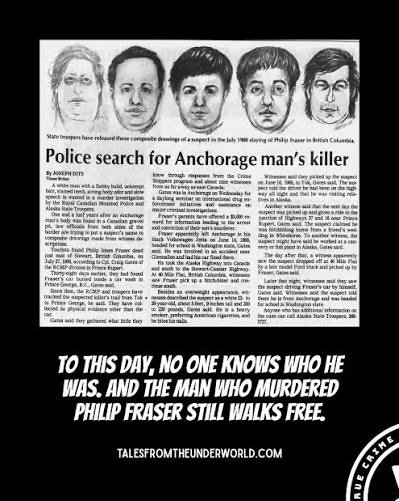
Investigators believe the hitchhiker learned everything he could about Philip during the drive, then killed him and used his identity afterward. He may still have Philip’s credit cards, checkbook, passport, and birth certificate which have never been found.
The area he was last traced to Prince George had an airport, which could have provided an easy means of escape following the murder.
Over the years, one name surfaced repeatedly as a possible suspect: Michael McGray, a Canadian serial killer who confessed to murdering over a dozen people including hitchhikers, who matched the physical description, and whose crimes overlapped with the time and geography of Philip’s murder.
However, the RCMP has ruled McGray out as a suspect and records show that at the time of Philip’s death, McGray was serving a five-year prison sentence for a 1987 robbery.
Philip’s case connects to a darker chapter of British Columbia history: Highway 16, the road he was travelling, is now infamously known as the “Highway of Tears” a stretch of remote road where at least eighteen women and girls have been murdered or disappeared since 1969, with many cases still unsolved.
Philip Fraser was twenty-three years old. He stopped to help a man who was running after his car. He was probably intimidated into giving the ride rather than offering it freely the café staff saw the hitchhiker approach him, saw Philip initially refuse.
He was trying to do the decent thing, or he was afraid not to.
Either way, he drove south with a stranger who would kill him, and that stranger then slept in a kind family’s basement, ate their food, told them all about his life as Philip Fraser, fixed the car’s fan belt, and drove away toward Prince George and into thirty-seven years of anonymity.
Philip’s father Robert Fraser died in 2014, never knowing who killed his son.
The composite sketch exists. The RCMP kept the case open for years. The General Investigation Section stated in 2008 that there had been no significant developments since the original Unsolved Mysteries broadcast in 1992.
The hitchhiker is either very old now, or dead, or living somewhere with a name that isn’t Philip Fraser’s. He spent one night as Philip Fraser, drove his car, burned it to ash at a car wash, and disappeared as completely as if he had never existed.
Philip Fraser’s body was found in a gravel turnaround off a highway in British Columbia. His killer has never been named.
The case remains open. The RCMP continues to encourage tips.
TIPS: RCMP Prince George if you have information, contact local RCMP or Crime Stoppers Canada at 1-800-222-TIPS


Leave a comment