Houston, Texas, 1970–1973 a candy factory worker who murdered at least twenty-nine boys and young men with the help of two teenage accomplices, whose crimes were hidden in plain sight by a police department that kept writing “runaway” on missing persons reports while a community’s children disappeared
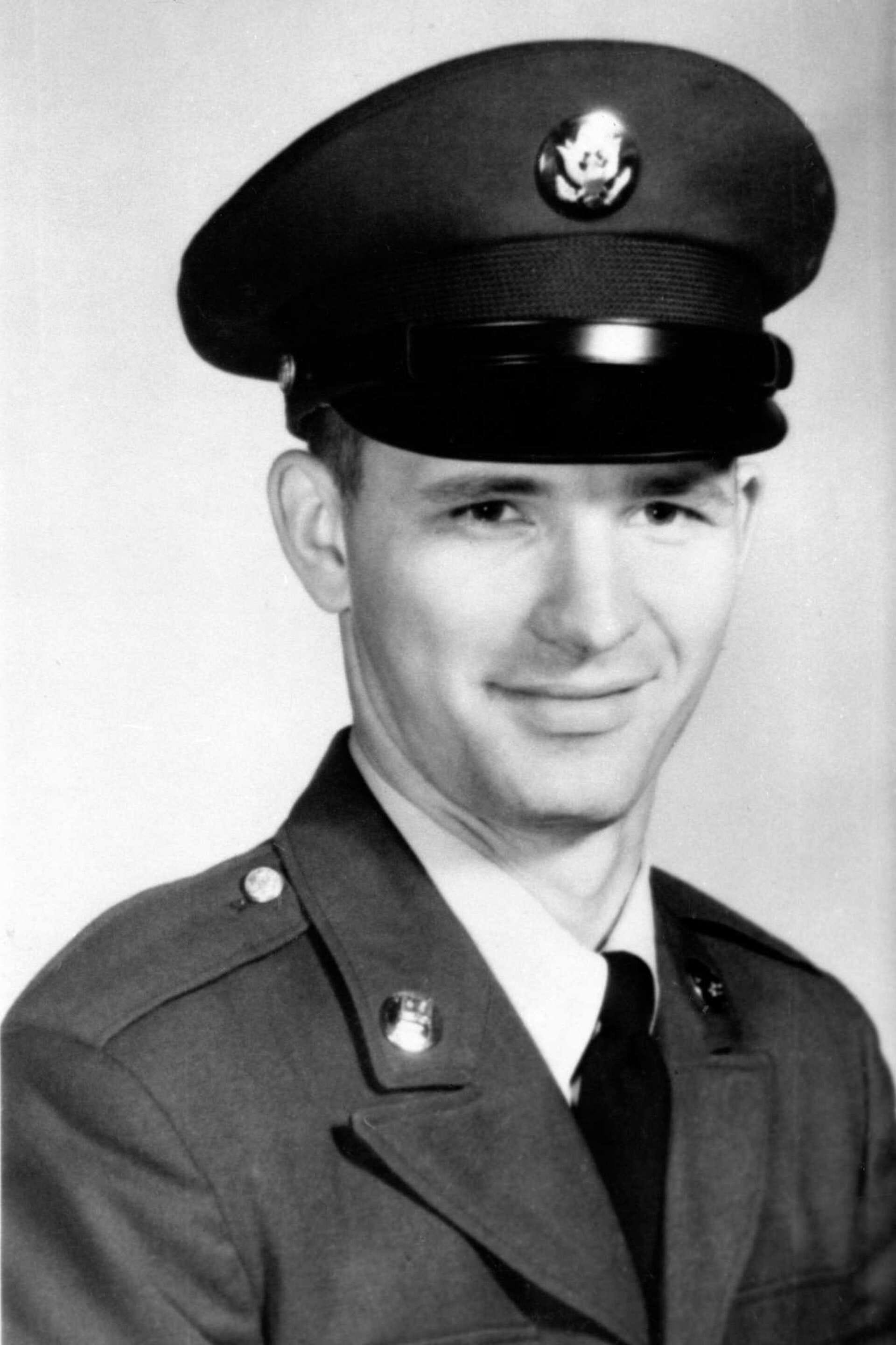
Houston Heights, 1970
Houston Heights was a working-class neighborhood on the near northwest side of Houston a community of modest houses and small yards and families who had been there for generations. It had the quality of neighborhoods that take care of their own, where people knew each other’s business and looked out for each other’s children and where, in 1970, things were supposed to be safe.
If you enjoy my true crime coverage, please help me continue my newsletter by upgrading here for only $5 a month:
The Corll Candy Company had operated in the neighbourhood for years. Dean Arnold Corll’s mother, Mary, ran the business with the energy and focus of a woman who had built something from nothing, and Dean her eldest son, born December 24, 1939, in Fort Wayne, Indiana, a Christmas Eve child had grown up in and around the candy operation. When the family relocated the business to a facility near Houston Heights in the 1960s, Dean came with it.
He was, by every account available from the period, a likeable young man. He had served in the Army. He worked hard. He was known in the neighborhood as a generous figure the man at the candy company who gave free samples to the local children, who let kids come into the factory and watch the candy being made, who remembered names and faces and had a smile for everyone.
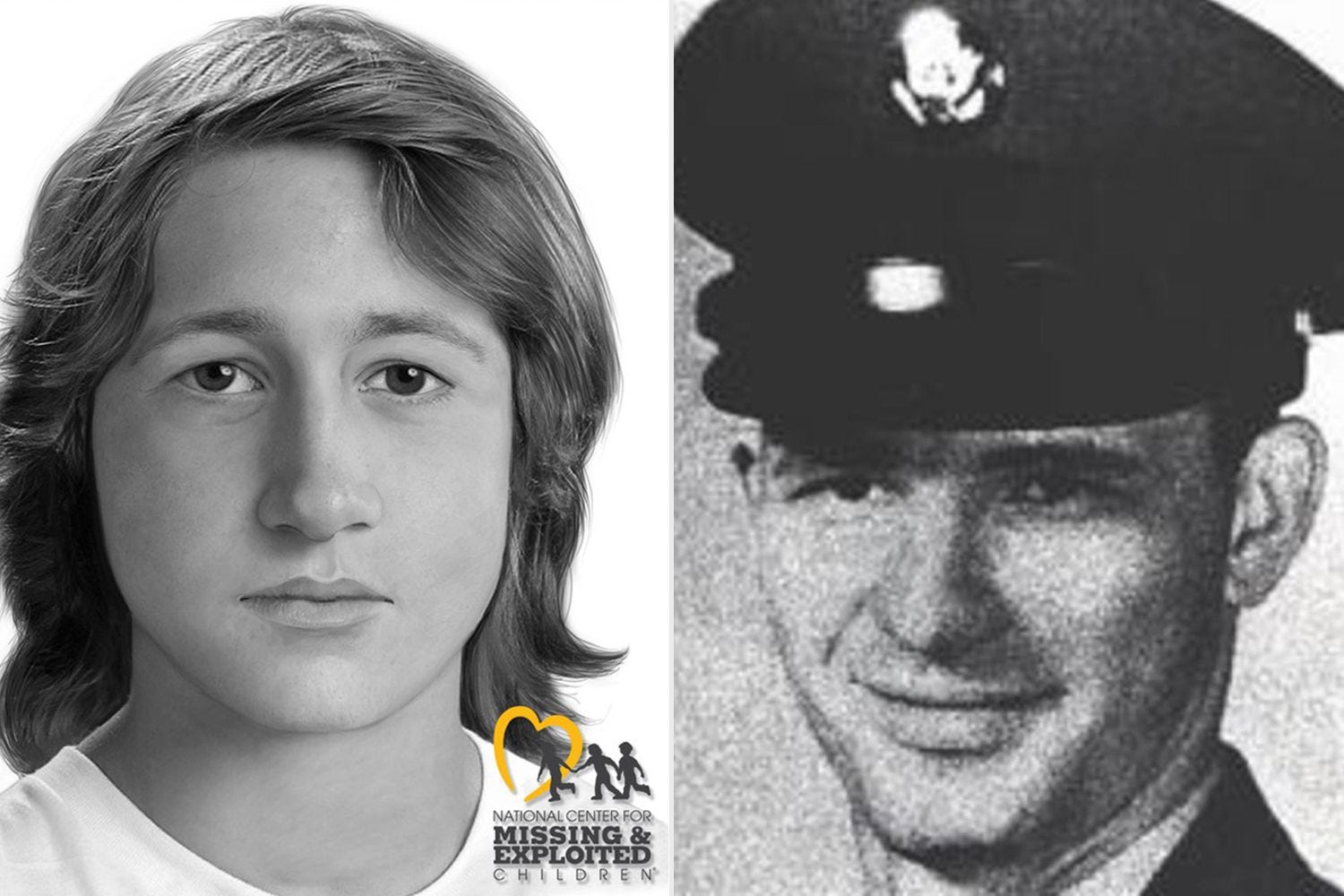
The neighborhood children called him the Candy Man. He encouraged it.
What nobody in Houston Heights knew what nobody who encountered Dean Corll between 1970 and 1973 knew, including the parents of the boys who went missing was that the generosity and the candy and the friendly manner were infrastructure. They were the architecture of access to children that Corll had been constructing, methodically and patiently, for years before the first confirmed murder.
The Accomplices
Understanding how Corll operated requires understanding the specific mechanism by which he identified and obtained victims a mechanism that was, in its way, one of the most disturbing aspects of a case full of disturbing aspects.
He did not hunt alone.
David Owen Brooks was twelve years old when he first came to Corll’s attention in the mid-1960s. Corll cultivated his friendship over years, giving Brooks money, gifts, and attention of the kind that a boy from a difficult home background found meaningful. Brooks has said he was sexually abused by Corll beginning in his early adolescence. By the time the murders began, Brooks was a teenager who had been groomed so thoroughly and for so long that his involvement in what Corll was doing felt, to him, like loyalty rather than crime.
Elmer Wayne Henley Jr. was drawn into Corll’s orbit through Brooks. Henley was fifteen years old in 1970, the eldest son in a family struggling after his parents’ divorce. He had dropped out of school to help support his mother and younger siblings. When Brooks introduced him to Corll a man who had money, who threw parties, who was generous with teenagers who needed something to do and somewhere to go Henley found what appeared to be a benefactor.
The arrangement that developed was explicit and financial. Corll paid them $200 for each victim they brought him. The teenagers were lured with promises of parties, alcohol, and money. They were, in Corll’s framing, helping him have fun. The reality of what happened to the boys they lured was something Henley and Brooks came to understand gradually and then completely, and yet neither stopped.
What Brooks and Henley provided was essential to Corll’s operation: they were trusted members of the community of teenage boys in Houston Heights. When they invited a friend to a party or suggested coming over to hang out, there was no warning signal for the invited boy. These were people he knew. They were his age, or close to it. The invitation came with the texture of ordinary teenage social life.
That was the trap.
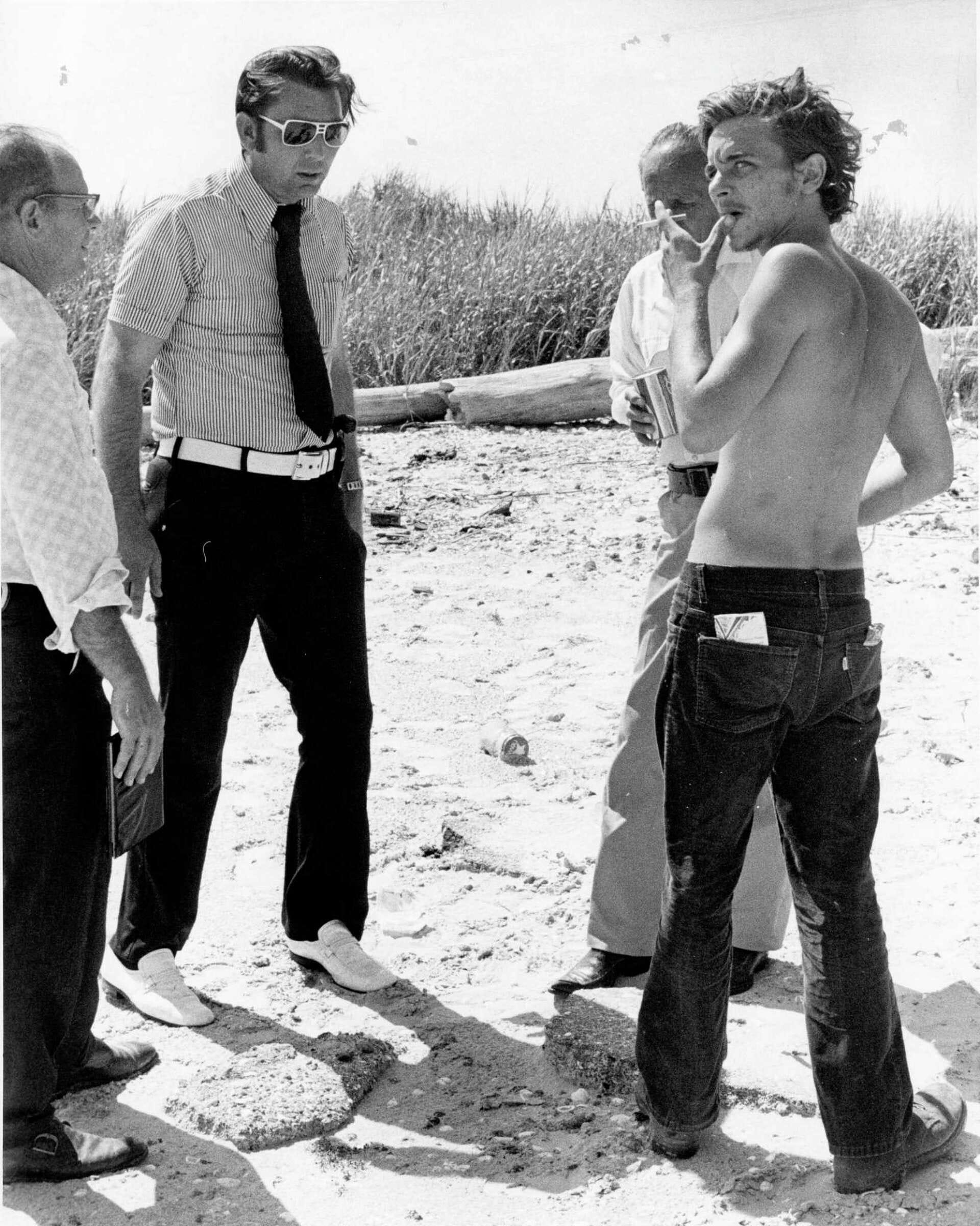
The Murders
The victims were taken to locations Corll controlled. For a period he used his own home. Later he rented a boat storage shed at 2020 Silver Bell Road in southwest Houston a facility that would eventually become one of the most significant crime scenes in American history.
What happened in these locations is documented in the confessions of Henley and Brooks, in the physical evidence recovered at the time of the investigation, and in the forensic analysis of the remains that were exhumed across three separate sites in August 1973.
Victims were restrained on a purpose-built board fitted with handcuffs at the wrists and ankles. They were subjected to extended periods of sexual torture before death. Corll strangled most of them. Some were shot. The remains were buried in the boat shed’s dirt floor, at a beach site at High Island on the Gulf Coast, and in woods near Lake Sam Rayburn in East Texas.
The boys ranged in age from thirteen to twenty. Many were from Houston Heights and the surrounding area boys who had grown up in the same neighborhood as the Corll candy factory, who had in many cases accepted candy from Dean Corll as children, who knew Brooks or Henley as friends or acquaintances. Some were from outside the area, passing through Houston or living in other parts of the city.
Their names and there are at least twenty-nine of them are: James Glass, Danny Yates, Donald Waldrop, Jerry Waldrop, David Hilligiest, Gregory Malley Winkle, Randell Harvey, Frank Aguirre, Mark Scott, Johnny Delome, Billy Baulch, Michael Baulch, Wally Jay Simoneaux, Richard Hembree, Joseph Lyles, Charles Cobble, Marty Ray Jones, John Sellars, Anthony Baulch, Roy Bunton, Homer Garcia, Richard Kepner, Steven Sickman, James Dreymala, Timothy Kerley, Billy Lawrence, Raymond Blackburn, William Ridinger, and Rhonda Louise Williams who, uniquely among the intended victims, survived.
Several of those names share surnames. The Waldrop brothers, Donald and Jerry, were among those killed. The Baulch family lost three sons Billy, Michael, and Anthony at different times, all murdered by the same man, in the same boat shed, within the same three-year period. The parents of Billy Baulch, Billy Sr. and Clemmie, reported all three sons as runaways.
The police agreed that they were runaways.
The Missing Boys of Houston Heights
Between 1970 and 1973, an extraordinary number of boys and young men disappeared from Houston Heights and surrounding neighborhoods. Dozens of teenage boys and young men were disappearing in Houston. Police often dismissed these cases as runaways
This is the institutional failure at the centre of the Corll case the failure that enabled the killings to continue for three years without producing a serious organized investigation. When a boy in Houston Heights went missing in the early 1970s, the mechanism of that disappearance looked, from the outside, like a runaway situation. He was a teenager. He had been seen with other teenagers. He had last been going to a party or hanging out with friends. There was no body. There was no evidence of violence. There was nothing that, in the investigative framework of the time, demanded that it be treated as anything other than a young person who had decided to leave.
The cultural context of the early 1970s reinforced this. American society had spent the preceding decade watching young people leave their families for the counterculture, for communes, for the road. Runaway teenagers were not unusual. Police departments across the country were accustomed to treating missing teenagers as voluntary absences rather than victims.
In Houston Heights specifically, the concentration of disappearances in a single neighbourhood over three years should, in retrospect, have generated questions. Why were so many boys running away from the same area? Why were none of them making contact with their families in the weeks and months that followed? Where were they going?
These questions were not asked with the urgency they deserved. The files accumulated. The runaways mounted. The boys did not come home.
The parents knew something was wrong. Several of them had gone to police, had pushed for more investigation, had refused to accept the runaway characterisation. They were not believed, or they were heard politely and nothing changed. One mother, Mildred Cooke, went to the police multiple times about her missing son David Hilligiest and was told he was a runaway. She remained convinced something terrible had happened. She was right.
The Baulch parents lost three sons and three times were told they had run away.
The investigation that should have existed did not exist. The investigation that did exist was not looking for Dean Corll.
August 8, 1973
The specific events of August 8, 1973, are documented in detail because one of the people present that night was eventually willing to describe them, and because what happened in that house on Lamar Street in Pasadena ended the killings in the most direct way possible.
Elmer Wayne Henley had brought two friends to Corll’s home that night Timothy Cordell Kerley, twenty, and fifteen-year-old Rhonda Louise Williams. They had arrived around 3 a.m. and had passed out after drinking.
When they came to consciousness, all three Henley, Kerley, and Williams found themselves handcuffed. Corll was furious at Henley for bringing a girl. He told Henley that he was going to kill all three of them.
One of those victims, Timothy Cordell Kerley, would later testify that he felt enormous gratitude towards Henley for saving his life and the life of fifteen-year-old Rhonda Louise Williams.
What happened next, in the account Henley gave to investigators, is that Corll began to uncuff him, perhaps as a preliminary to involving him in what was going to happen to the other two. Henley talked. He told Corll he would participate. He told him he would help with Kerley and Williams. Corll, apparently convinced, continued to release him.
Henley found Corll’s gun.
He shot Dean Corll six times. Three times in the chest, once in the back, twice in the shoulder and through the lung. Corll fell. He died from the wounds.
Henley called the police. When officers arrived at 2020 Lamar Street and found a seventeen-year-old with a gun standing over the body of a thirty-three-year-old man, they assumed they understood the situation. Then Henley told them what was underneath it.
This killing was never going to stop until Elmer Wayne Henley killed him,” said Pasadena Police Sergeant James Anderson.
What the Ground Held
Henley and Brooks led investigators to three locations.
The boat storage shed at Silver Bell Road in southwest Houston. The beach at High Island on the Gulf Coast, approximately seventy miles from the city. The woods near Lake Sam Rayburn in East Texas.
In total, the remains of 27 victims were found in August 1973.
Following Corll’s death, Henley and Brooks led authorities to mass graves at three sites: a beach at High Island, woods near Lake Sam Rayburn, and a boat storage facility in southwest Houston where 17 bodies were found.
The process of excavating the sites was, for the investigators and for the community, an extended and harrowing experience. Parents who had been told their sons were runaways came forward and were asked to provide dental records. Identifications were made one by one across weeks.
The families who had spent months or years believing their sons had chosen to leave not wanting to go, but having no other framework for what had happened had their worst alternative fear confirmed. The runaways had not run away. They had been taken.
The boat shed’s dirt floor was dug up. Seventeen sets of remains were recovered from that single location. The physical condition of the remains and the materials found with them documented, in ways that did not require interpretation, what had happened in that shed.
At the time of its discovery, were considered the worst example of serial murder in the history of the United States.
The record stood for nearly a decade, until the John Wayne Gacy case emerged in Illinois in 1978.
Why It Was Invisible
The Corll case raises questions about multiple overlapping failures, and it is worth separating them rather than collapsing them into a single indictment.
The police failure is real and documented. The pattern of disappearances in Houston Heights was not investigated as a pattern. Individual cases were handled individually and classified as runaways. The absence of bodies for three years, no remains surfaced meant there was no crime scene, no forensic evidence, nothing that required the machinery of a murder investigation to engage. The missing persons reports accumulated in filing cabinets.
The community failure is more complicated and more painful. Dean Corll was known and liked in Houston Heights. The candy, the friendliness, the generosity these had built a reservoir of goodwill that made it genuinely difficult for parents to entertain the possibility that the Candy Man was responsible for their children’s disappearance. Even as the disappearances mounted, the framework through which the neighbourhood understood them was the runaway framework, reinforced by police, by the cultural moment, and by the cognitive difficulty of imagining that the man who had given their children candy was torturing them in a boat shed.
Brooks and Henley constitute a specific and particularly disturbing dimension of the failure. Both were minors when they were first involved with Corll, and both were, in different ways and to different degrees, victims of his grooming before they became participants in his crimes. That they became participants that they lured boys they knew as friends to their deaths is not erased by the fact of their own exploitation. The moral weight of what they did is real. The psychological context in which they did it is also real. The case resists the comfort of simple categories.
The Trials and the Legal Anomaly
Elmer Wayne Henley and David Brooks were both tried and convicted of multiple counts of murder. Henley and Brooks were convicted during a time the death penalty was on hold in the United States, and Texas had not yet passed life without parole as a punishment in capital murder cases.
This created a legal situation with no clean resolution. Both men received life sentences, but those sentences carried parole eligibility under the law as it existed when they were convicted. This created a cycle for families of victims periodically preparing for, and fighting against, Henley’s and Brooks’ release.
David Brooks died in 2020 while serving six life sentences. He was sixty-six years old and had spent the last four decades of his life in prison.
Elmer Wayne Henley, now seventy years old, remains incarcerated and has repeatedly come before parole boards. Parents fight against the release of Houston serial killer’s accomplice this headline appeared in Houston media in June 2025. The families of victims have attended parole hearings for decades, arguing that Henley’s participation in the murders, whatever its psychological context, disqualifies him from release. The boards have agreed, repeatedly. Henley remains in prison.
The specific legal status of Dean Corll himself is, given that he was killed before any arrest, that of an uncharged perpetrator. He was never tried. He was never convicted. He was, in the formal record, a murder victim the man Henley shot on August 8, 1973. Everything else about what he was and what he did exists in the confessions of his accomplices, the forensic record of three excavation sites, and the identified remains of twenty-nine boys and young men.
The Numbers That Don’t Add Up
Twenty-nine is the confirmed victim count. It is probably not the actual victim count.
Corll himself, in the final months of his life, told Brooks and Henley that the total number of his victims was higher than either of them knew. He made oblique references to killings they had not been present for, to victims from periods before their involvement, to a history of violence that predated the systematic operation in Houston Heights.
Investigators in 1973 were overwhelmed by the scale of what they had found. The resources required to excavate three sites and identify twenty-seven sets of remains while simultaneously conducting interviews and building cases against Henley and Brooks were substantial. The question of what lay beyond those twenty-nine names whether Corll had killed before the Houston Heights period, whether there were victims in other locations was never answered.
The true number is unknown. It may always be.
Watergate and the Missing Boys
The Houston Mass Murders were discovered in August 1973. The Watergate hearings were dominating American news. The Senate Select Committee on Presidential Campaign Activities had been conducting televised hearings since May. Richard Nixon’s administration was unravelling in real time on every television in the country.
The discovery of twenty-nine bodies in Houston the largest confirmed serial murder case in American history at that time received national coverage. It was not the dominant news story. Watergate was the dominant news story. The murders were covered and reported and then, in the compressed attention economy of the national media, somewhat overshadowed by the political drama that consumed the country for the rest of 1973 and into 1974.
The families of the victims have noted, in interviews given over the decades since, that the relative obscurity of the case relative to its scale, relative to what it represented has always felt like an additional injustice. Twenty-nine boys, from a working-class neighbourhood, whose disappearances had been classified as runaways for three years, finally received the acknowledgment that something terrible had been done to them, and that acknowledgment was partly buried under the news cycle.
The case has received renewed attention in recent years through podcasts, documentary series, and a 2022 book by investigative journalist Lise Olsen, The Scientist and the Serial Killer, which examined the case through the lens of forensic science and the ongoing work to identify victims whose remains had gone unidentified for decades. As recently as 2023, the National Centre for Missing and Exploited Children was working to identify a possible additional victim known only as Angie, a young woman connected to the case through her association with one of the identified victims.
The Lost Boys
The collective name given to Corll’s victims by those who have documented the case is the Lost Boys. It captures something specific about them the way they vanished not into death, initially, but into a category that denied them the status of victims. Runaways are not lost in the way that murder victims are lost. Runaways chose to go. Runaways can come back.
The boys of Houston Heights did not choose to go. They were taken by a man who had built his access to them over years, who had used candy and friendliness and a warm reputation to construct a community identity that functioned as camouflage. They were taken by the intermediary action of teenagers who had themselves been manipulated and exploited, who knew these boys as friends, who delivered them to their deaths for two hundred dollars each.
They ranged in age from thirteen to twenty. The youngest confirmed victim, James Dreymala, was thirteen years old. Several were brothers. Three were from the same family.
Their parents lived for years with the specific grief of not knowing with the hope, however implausible it became over time, that the runaway classification might be correct, that somewhere out there their son had simply decided to make a different life and had not yet found his way back. The excavation in August 1973 ended that hope for the parents of twenty-seven of them, definitively and at once. The remaining two were identified over the following weeks.
The grief that followed was the grief of learning that the hope itself had been the hardest part that the three years of not knowing had been three years of the truth being available and being denied to them by a police department that wrote runaway on the forms and moved on.
Dean Arnold Corll was thirty-three years old when Elmer Wayne Henley shot him on August 8, 1973. He is buried in Fort Wayne, Indiana. He was never tried, never convicted, never sentenced. The boys he killed range in age from thirteen to twenty. The youngest, James Dreymala, was thirteen years old. Three members of the Baulch family are among the dead. The true total of his victims is unknown.


Leave a comment