America’s most prolific convicted serial killer killed for nearly twenty years while living an ordinary suburban life, passing two polygraph tests, and evading a task force that had his name from the beginning
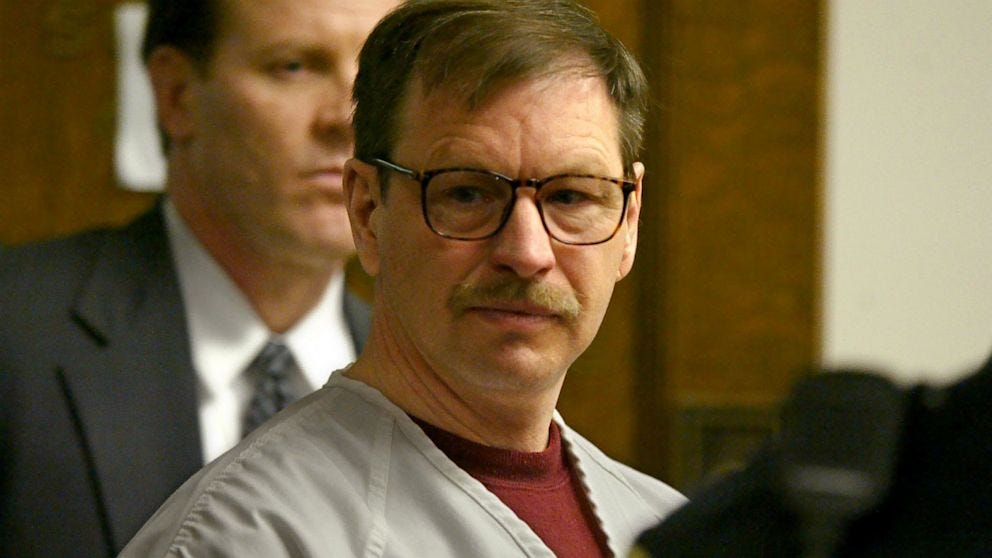
Kent, Washington
Gary Leon Ridgway was born on February 18, 1949, in Salt Lake City, Utah, the second of three sons in a family that would eventually settle in the Seattle suburbs of Washington State. His childhood was, by most accounts, dysfunctional in the particular way of families where the dysfunction is never dramatic enough to generate official attention but is corrosive enough to do lasting damage.
If you enjoy my true crime coverage, please help me continue my newsletter by upgrading here for only $5 a month:
His mother, Mary, was domineering and controlling. His father, Tom, was passive. The marriage was turbulent and the household anxious. Gary wet the bed until he was thirteen years old an age at which the problem generates significant shame and his mother’s response, by his own account in later interviews, was to wash him herself in ways he experienced as both humiliating and confusingly intimate. He has described the relationship with his mother in terms that forensic psychologists who reviewed the case found consistent with the foundations of a deeply disordered attachment to women.
He was not academically gifted. He read at a third-grade level as an adult. He struggled throughout school. What he was, however, was persistent and patient and capable of maintaining a functional exterior across decades of hidden violence qualities that, in a different configuration, might have made him a remarkable employee. In this configuration, they made him one of the most difficult serial killers in American history to catch.
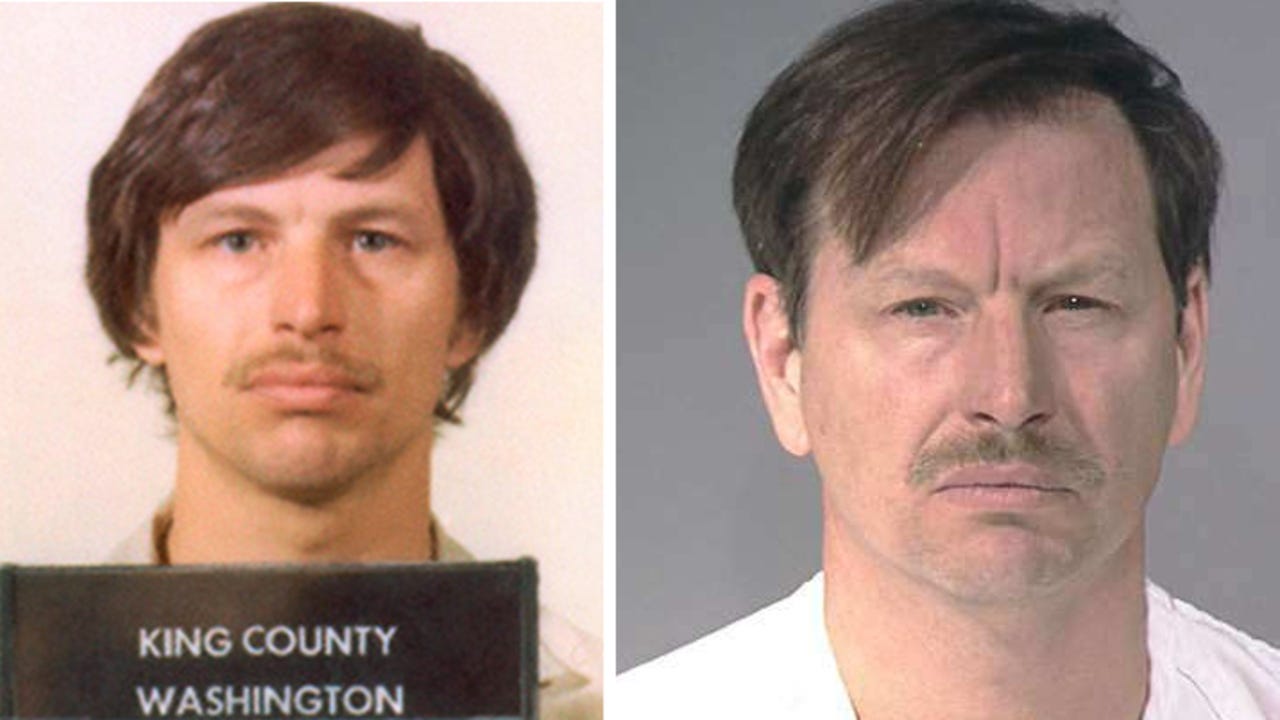
After high school he served in the Navy, seeing action off the coast of Vietnam. He married three times. His first two marriages ended in divorce. His third wife, Judith Lynch, whom he married in 1988, would describe herself after his arrest as completely unaware of anything wrong. He had a son from his first marriage. He carried a photograph of the boy in his wallet.
He used that photograph to lure victims.
The Kenworth Plant
For most of his adult life, Gary Ridgway worked as a truck painter at the Kenworth Truck plant in Renton, Washington a manufacturing facility that produced heavy commercial trucks. He had worked there for years before the killings began, and he continued working there throughout them, and he was still working there when he was arrested in 2001.
He was, by the accounts of colleagues, a reliable and unremarkable employee. He showed up. He did his job. He did not draw attention to himself. He was the kind of person who occupies the background of a workplace present enough to be recognized, unremarkable enough not to be remembered specifically.
The spray paint he used at Kenworth would eventually become one of the first physical links between him and his victims, when investigators found traces of a proprietary paint compound on several sets of remains. At the time of the killings, this evidence did not exist in a form that could be used. By the time the technology existed to analyse it meaningfully, nearly two decades had passed.
The Green River
The Green River runs through the south King County area of Washington State through Kent and Auburn and Tukwila and the industrial flatlands between Seattle and Tacoma. It is not a scenic river in any postcard sense. It flows through landscape defined by warehouses and light manufacturing and strip development, the kind of geography that accumulates in the spaces between cities and where the roads are wide and largely empty after dark.
On July 15, 1982, two teenage boys fishing near the river near the Kent-Tukwila border found a body in the water. The body was that of Wendy Lee Coffield, sixteen years old.
She had been strangled. She was the first.
She was not the last. Within weeks, more bodies appeared in and along the river. After the King County Sheriff’s Office set up the Green River Task Force to investigate the killings, the body count rose, as more victims were discovered along the river and in the area around the Seattle-Tacoma International Airport.
By the end of 1982, five women had been found in or near the Green River. The task force had a name for the killer before the year was out. They called him the Green River Killer, and the name would become the most famous unsolved serial murder case in American history for the next nineteen years.
The Victims
The women Gary Ridgway killed were overwhelmingly young. They were overwhelmingly women who worked in the sex trade, or who were runaways, or who were both. They congregated along Pacific Highway South a corridor of motels, truck stops, and fast-food restaurants running between Seattle and Tacoma that was, in the early 1980s, a well-known area for street prostitution.
Over the next two years, the Green River Killer sexually assaulted and murdered more than 40 other women.
The pace of killing in 1982 and 1983 was extraordinary Ridgway later told investigators he was killing as many as he possibly could during this period, sometimes multiple women in a single week.
His method was consistent. He picked up women along Pacific Highway South, presenting himself as a client. He often showed them the photograph of his son, which he kept in his wallet an instinctive technique for establishing trust, for presenting himself as a family man rather than a threat. He drove them to secluded areas, strangled them, and engaged in post-mortem sexual acts. He then disposed of the bodies in clusters returning to locations he had used before, leaving multiple victims in the same areas, sometimes returning to the remains later.
He disposed of some victims’ jewellery and belongings along airport runways and near truck stops, a deliberate attempt to confuse investigators about the geography of the crimes. He buried some remains and left others on the surface. He scattered victims across King County in patterns designed to overwhelm a task force that was already, by the mid-1980s, managing one of the most complex crime scene networks in Pacific Northwest history.
He was also leaving victims in Oregon, a detail that was not fully understood until after his arrest.
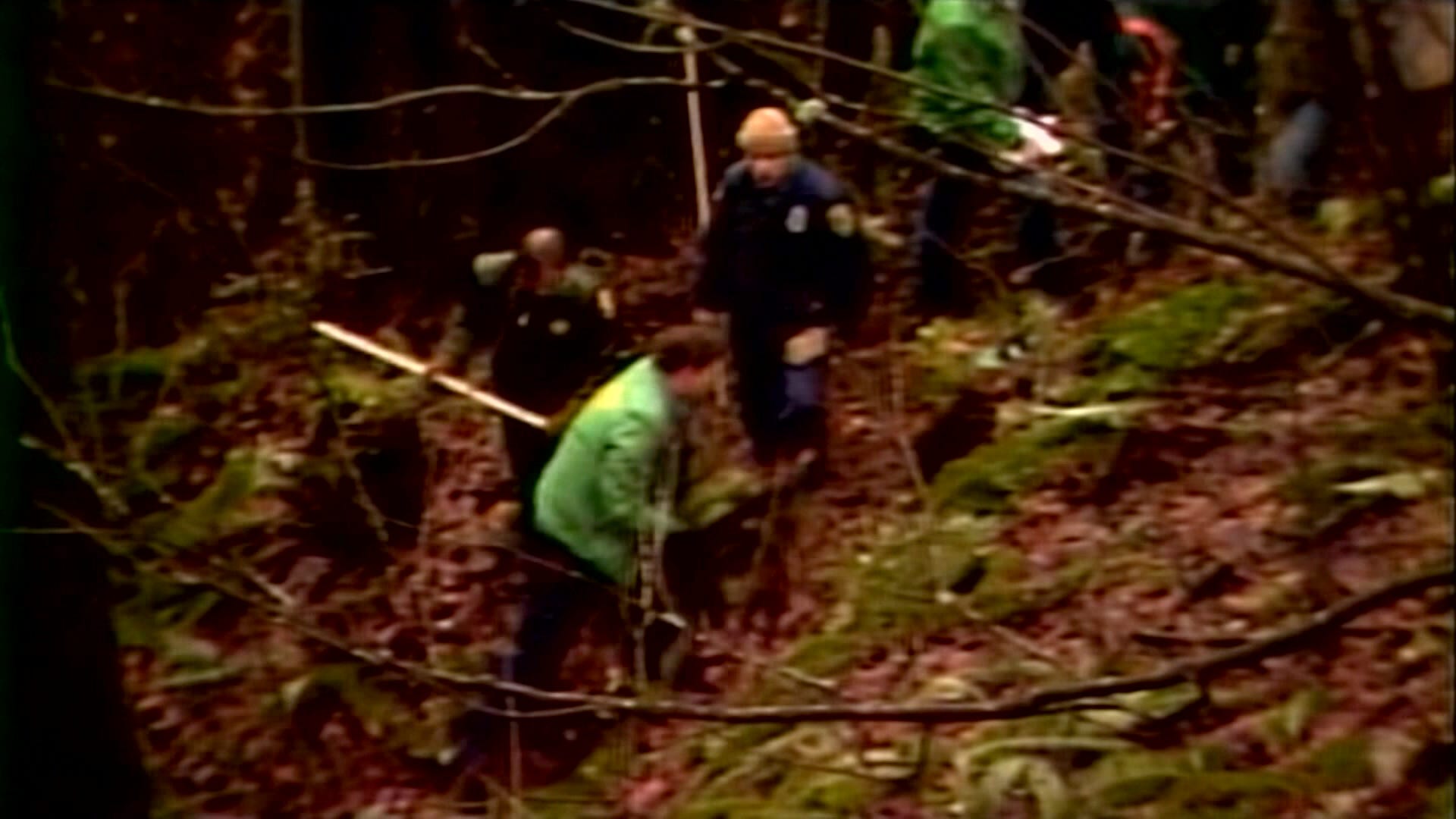
The women he killed ranged in age from fifteen to thirty-six. Many of them had families who had been searching for them. Many had been reported missing and had cases in the system cases that, in the investigative culture of the early 1980s, were not treated with the urgency that would have been applied to women in different circumstances.
Investigators believe that, throughout his murderous spree, the seemingly mild-mannered Ridgway never spoke to anyone of his killings or kept trophies of the grisly crimes. All the while, he maintained his longtime job as a truck painter at the Kenworth Truck plant in Renton and married for the third time.
He went home every night. He ate dinner. He watched television. He went to work in the morning.
The Task Force and the Name They Already Had
The Green River Task Force was formed in 1982 and would eventually grow to include dozens of detectives, making it one of the largest serial killer investigations in American history at the time. Among the names on their suspect list from early in the investigation was Gary Leon Ridgway.
He had been identified as a person of interest because he was a known patron of women who worked along Pacific Highway South. Gary Ridgway was a truck painter from Kent who made the list of suspects because he patronized prostitutes who frequented Pacific Highway South in unincorporated King County.
In 1983, an eighteen-year-old woman named Marie Malvar disappeared after being seen by her boyfriend getting into a paint-patched pickup truck driven by a dark-haired man. A description of the driver matched Ridgway. Her boyfriend led police to Ridgway’s house. Officers questioned him. He denied knowing her. They left.
In 1985, a woman accused him of grabbing her in a choke-hold in 1982. He was investigated. Nothing came of it.
In 1984, an unlikely figure contacted the Green River Task Force with an offer of help.
Ted Bundy, who was on death row in Florida at the time, contacted the Green River Task Force and offered his personal insights on the case and the area. Bundy had lived in the Seattle area and understood the geography and the psychology of the crimes from a particular vantage point. He was interviewed. His insights were noted. Nothing useful in terms of identifying Ridgway came from the conversations, though Bundy correctly suggested the killer was organized, methodical, and almost certainly living an outwardly normal life in the community.
Ridgway was living three miles from where some of the task force detectives were working.
In 1987, investigators made a significant move. Police collected a sample of his DNA. This was 1987. DNA forensics was in its earliest stages as an investigative tool. The sample was logged and stored. Investigators could not connect Ridgway with the victims other than one eyewitness account of a victim getting into his vehicle.
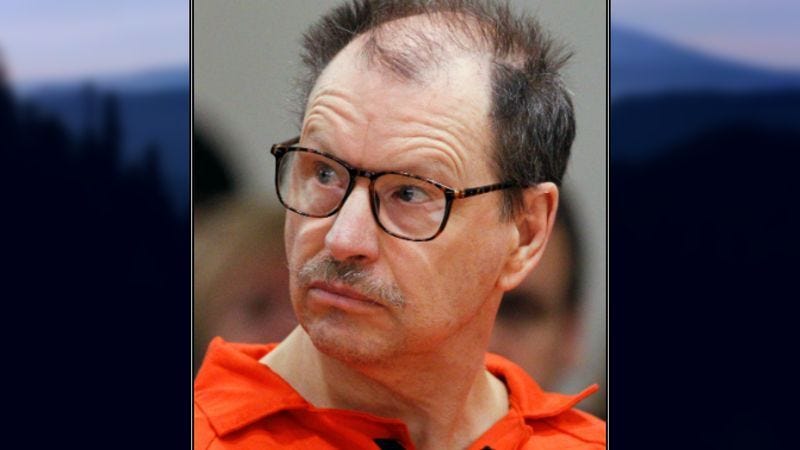
He passed a polygraph examination. He passed a second one. In 1986, he passed a polygraph administered by one of the most experienced polygraph operators in the Pacific Northwest. The results showed no deception.
The task force moved on. Not entirely Ridgway’s name never fully left the file but the active investigative focus shifted elsewhere, toward other suspects, other theories, other avenues that seemed more immediately promising.
Gary Ridgway continued killing.
The Mid-Period: 1984–1998
The concentrated burst of killings in 1982 and 1983 gave way to a longer, slower period of violence that stretched across the following decade and a half. Ridgway was not killing at the pace of 1982 and 1983, but he did not stop.
He later told investigators and the court-appointed psychologist who evaluated him that he had attempted to stop at various points that he had gone through periods of relative abstinence, that the killings were not constant. What is certain is that women continued to disappear from the Pacific Highway South corridor and surrounding areas through the 1980s and into the 1990s, and that many of those disappearances were eventually linked to him.
During this period he married Judith Lynch. He attended church with her. He was, by her account and the accounts of neighbors and colleagues, a normal suburban husband. He mowed the lawn. He maintained the house. He was known in the neighborhood as Gary, the truck painter, whose wife worked with him in the garden on weekends.
He was also, at intervals he could not fully control or explain, driving to secluded locations in King County and killing women.
The last murder attributed to him occurred in 1998, fourteen years after the task force had been formed, sixteen years after Wendy Coffield’s body was found in the river.
In 2001, he was finally arrested after DNA evidence a technology not available when he began committing his crimes connected him to some of the killings.
The DNA Match
A DNA comparison of semen found on the victims’ bodies and the samples taken from Ridgway in 1987 was made using more recent technology and came back a match
The same DNA that had been collected in 1987, that had been logged and stored while the case went in other directions and the years accumulated and the victims’ families aged and the task force investigators retired and were replaced that DNA, run through the improved technology of 2001, matched the samples taken from the bodies of Opal Mills, Marcia Chapman, Carol Christensen, and Cynthia Hinds.
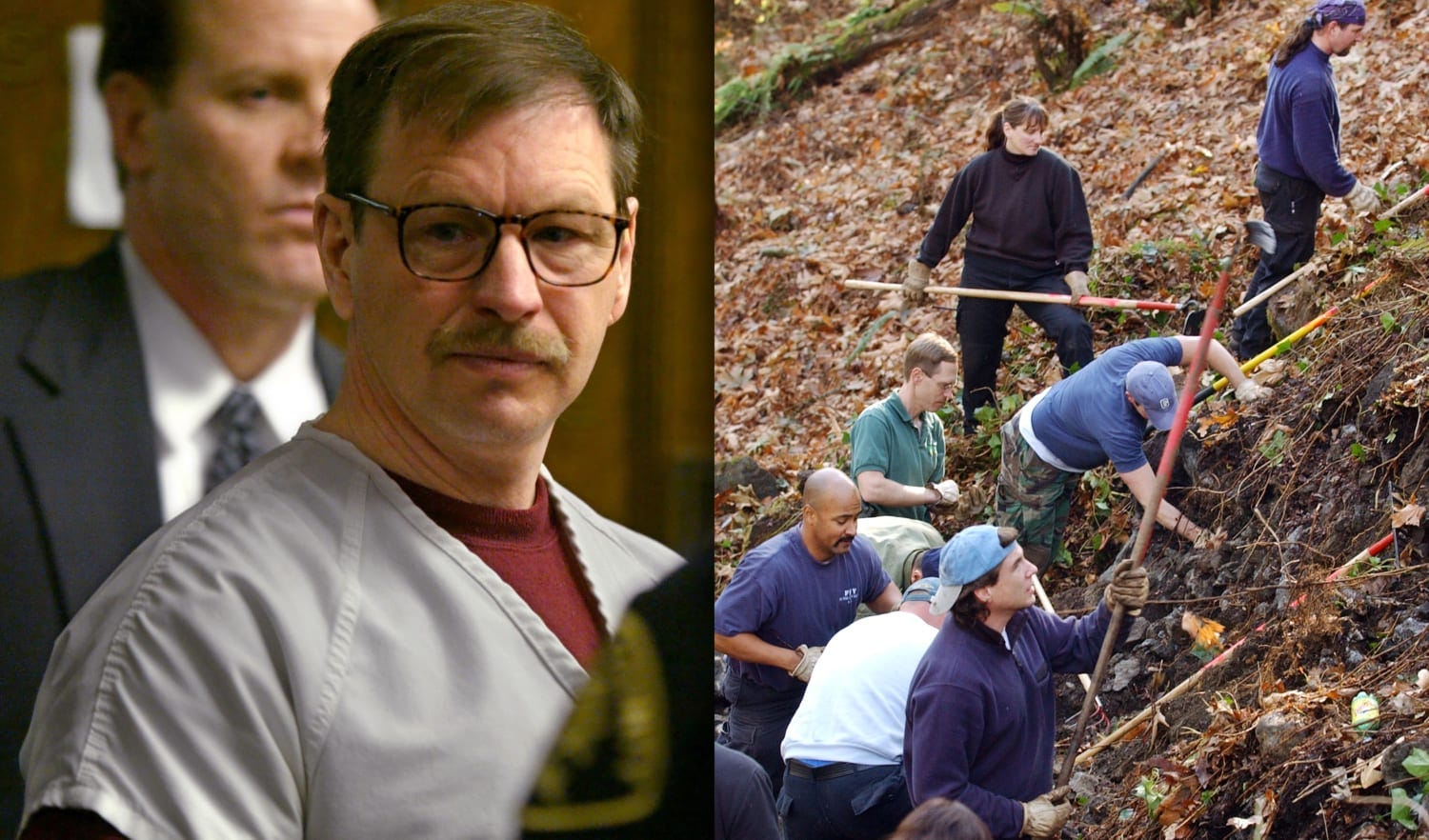
On November 30, 2001, as he was leaving the Renton factory where he worked, he was arrested and charged with the murders of seven women. Additional charges connected to the spray paint found on remains were added. He was taken into custody.
For the first time in twenty years, Gary Ridgway was in a position where he could not simply deny knowing any of the women and walk away.
The Plea Agreement
The decision made by King County Prosecutor Norm Maleng in 2003 was controversial and remains so.
The prosecution forwent the death penalty in exchange for a complete accounting of the murders and a sentence of life imprisonment without parole. The cooperation enabled victims’ families to finally learn the fate of the women, most of whom were prostitutes.
The deal was explicit: Ridgway would confess to every murder he had committed, would assist investigators in locating remains that had not yet been found, and would submit to extensive interviews about his methods, his victims, and the geography of the crimes. In exchange, he would not be executed.
The victims’ families were divided. Some felt the deal was a betrayal that a man who had killed their daughters and sisters deserved death rather than the opportunity to negotiate. Others wanted the information more than they wanted the execution. They wanted to know where their daughters were. They wanted remains to bury. They wanted answers that only Ridgway could provide and that a death sentence, once carried out, would make permanently unavailable.
On November 5, 2003, Gary Leon Ridgway pleaded guilty to murdering 48 women in King County between 1982 and 1998.
He stood in court and, in the flat, affectless tone that would characterise all of his public statements, acknowledged each killing. He described victims’ names and approximate locations. He walked investigators to sites where remains had not been found. He answered questions for hours and days and weeks about the mechanics of what he had done.
He admitted killing 42 women whom police had attributed to the Green River Killer plus six more whose deaths they were either unaware of or had not connected to the serial killings.
In His Own Words
What emerged from the extensive interviews Ridgway gave to investigators, to prosecutors, to the psychologist who evaluated him was not revelation in the way the families might have hoped. He was factual. He was cooperative. He was also, in the estimation of every professional who dealt with him, entirely without affect describing the deaths of forty-nine women with the same emotional register a person might use to describe a route to work.
He explained his victim selection with a directness that was itself disturbing: women who worked in street prostitution were his targets because they were, in his calculation, unlikely to be reported missing promptly, unlikely to generate sustained investigative attention, and unlikely to have social networks robust enough to produce witnesses. He had understood, at some functional level, that the system would help him by treating his victims as less urgent than they were.
He explained his method of returning to dispose sites. He explained the photograph of his son, and how it worked. He explained the clustering of victims in particular locations. He was, in his cooperation with investigators, comprehensive and cold.
He could not explain, in any way that satisfied the psychologist or the investigators or the families, why. He said he hated prostitutes. He said he enjoyed the control. He said the killings made him feel powerful. None of these explanations are adequate to the scale of what he did, and he appeared not to expect them to be.
The Forty-Ninth
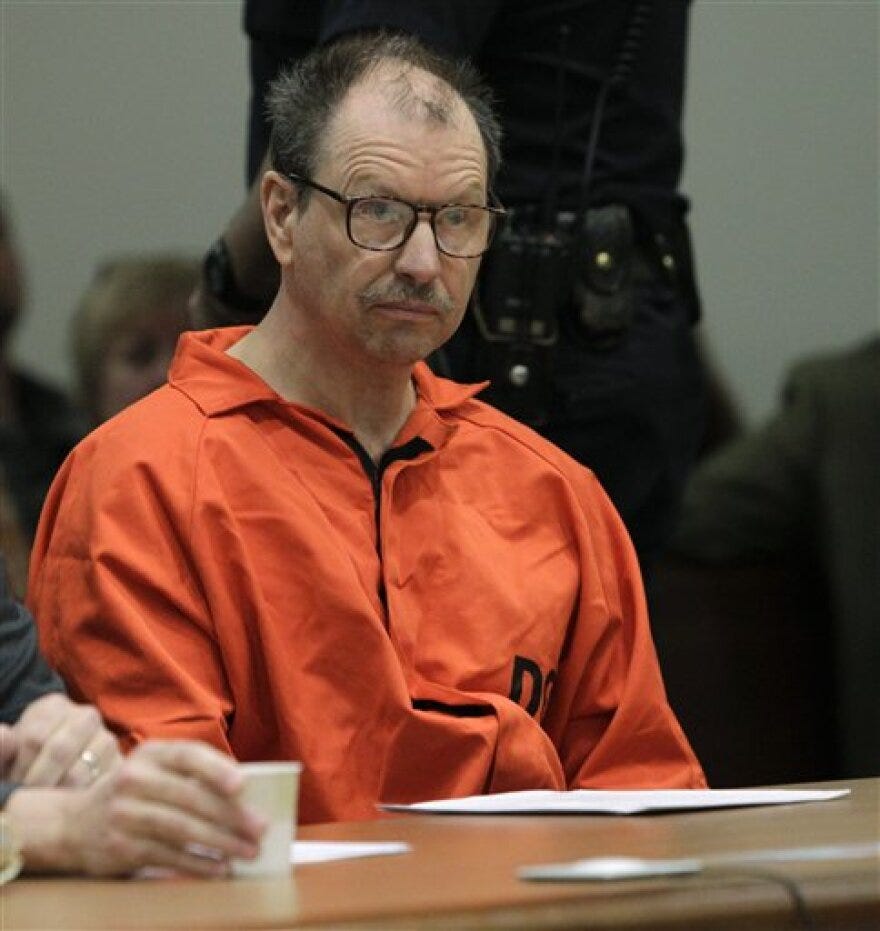
On February 18, 2011, in a Kent, Washington, courtroom, Gary Leon Ridgway pleaded guilty to the 1982 aggravated, first-degree murder of his 49th victim, twenty-year-old Rebecca Marrero.
Her remains had been found in December 2010, decades after her murder, in a ravine near Auburn, Washington.
After entering his guilty plea, the 62-year-old Ridgway received his 49th life sentence without the possibility of parole.
Rebecca Marrero was twenty years old when she died. Her remains were in the ground for nearly thirty years before they were found.
What Was Never Found
Ridgway told investigators during the plea negotiations that he believed he had killed approximately seventy to eighty women a number significantly higher than the forty-nine for which sufficient evidence was found.
Ridgway reportedly claimed to have murdered more than 60 women in King County, although authorities at the time could only find sufficient evidence to link him to the 48 slayings; later he was convicted of a 49th.
The gap between forty-nine and eighty is not an abstract statistical discrepancy. It represents women who have not been found, whose families do not know what happened to them, whose remains may still be in the ravines and wooded areas and river corridors of King County.
King County’s official case file remains open in a specific sense: there is still a person of interest in the disappearance of a woman known only as Angie, an associate of Green River victim Tammie Liles, last seen in downtown Seattle in the summer of 1983. She has never been identified. She may be among Ridgway’s unaccounted victims, or she may not. She has no last name in any official record.
The case documentation runs to tens of thousands of pages. Ridgway has continued, from prison, to offer occasional additional information. Some has led to remains. Some has not led anywhere.
The Families
The sentencing hearing in December 2003 was the most unusual such proceeding in Washington State history. The families of victims were given the opportunity to address Ridgway directly. Some chose to speak. Some chose not to. The range of what they said covered the full spectrum of human responses to unimaginable loss.
Robert Rule, whose daughter Linda Rule was among the victims, addressed Ridgway in terms that became widely reported and that have been cited in discussions of restorative justice and victim impact statements ever since. He told Ridgway that he forgave him. He said this not as absolution but as a statement about himself that he refused to carry hatred for the rest of his life. The courtroom fell silent. Ridgway appeared unaffected.
Other family members were not forgiving, and had no obligation to be. They described lives permanently altered by loss the siblings who had grown up without sisters, the parents who had aged around an absence, the children who had never known their mothers. They directed their words at a man who sat in the courtroom and registered their grief with the same flat affect he brought to everything.
He received forty-nine consecutive life sentences without the possibility of parole.
Gary Ridgway Today
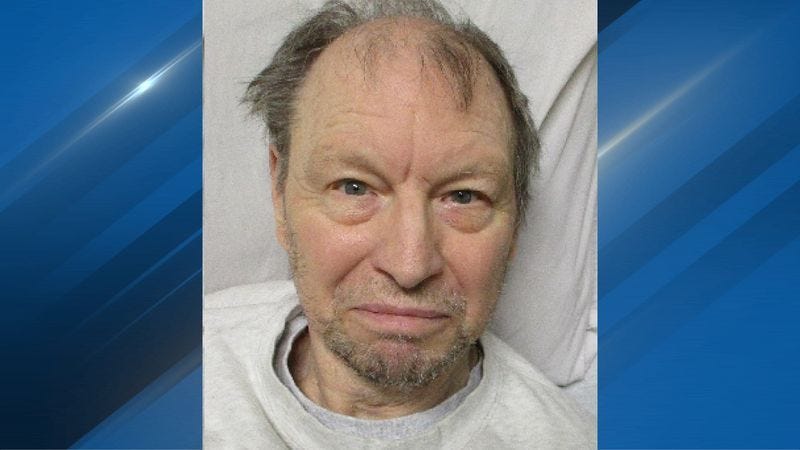
As of 2026, Gary Ridgway, aged 75, continues to serve his sentence at the Washington State Penitentiary in Walla Walla. He will die there.
In September 2024, Ridgway was briefly transferred from Walla Walla to King County Jail in Seattle on an institutional hold a measure used to facilitate investigations or other administrative purposes before being returned to the penitentiary. The nature of the investigation requiring his transfer was not publicly disclosed.
The Green River case changed forensic investigation in the United States in ways that outlast the specific crimes. It was among the first major cases to demonstrate the long-term value of DNA sample banking the 1987 saliva sample that sat in storage for fourteen years and then closed the case. It established protocols for cross-jurisdictional task forces in serial murder investigations. It informed the FBI’s development of the VICAP database, designed to connect violent crimes across jurisdictions.
It also like the Samuel Little case, like the cases of every killer who operated primarily against women in marginalized circumstances raised questions about victim prioritization that have never been satisfactorily answered. Ridgway targeted sex workers because he understood that their disappearances would not generate the same urgent response as other women. That understanding was, as the record shows, correct.
The Green River Task Force existed for years. It had his name. It took his DNA. It watched him pass two polygraph examinations and moved on. Forty-nine confirmed victims accumulated across the years between when his name first appeared in the file and when the DNA match was finally made.
The question of how many more that would have been, had the technology existed to match the 1987 sample in 1987, is one that has no answer only the arithmetic of years and the names of women who are not here.
Wendy Lee Coffield was sixteen years old. She was the first confirmed victim found in the Green River on July 15, 1982. Rebecca Marrero was twenty years old. She was the forty-ninth, identified in December 2010. Between them, and possibly beyond them, forty-seven other women and girls whose families have been waiting since the 1980s for the kind of answer that a forty-nine-count guilty plea provides and simultaneously does not provide at all.


Leave a Reply