Spanish Fork, Utah, January 16, 2014 a police officer everyone called a teddy bear shot his wife, two children, and mother-in-law with his service weapon, then lay down beside them and turned the gun on himself. What investigators found afterward a numbered list of secrets, videotaped rapes, a text message that read “raped” five times revealed a man whose entire public life had been a construction
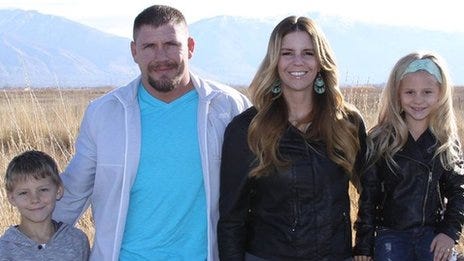
What the Co-Workers Knew
If you enjoy my true crime coverage, please help me continue my newsletter and keep it free for others, by upgrading here for only $5 a month:
Joshua Boren had worked for the Lindon Police Department for only three months when the murder-suicide occurred. Before that, he had spent seven years as a Utah County sheriff’s deputy a career built carefully, brick by brick, on the image of a man who was dependable, professional, and well-liked.
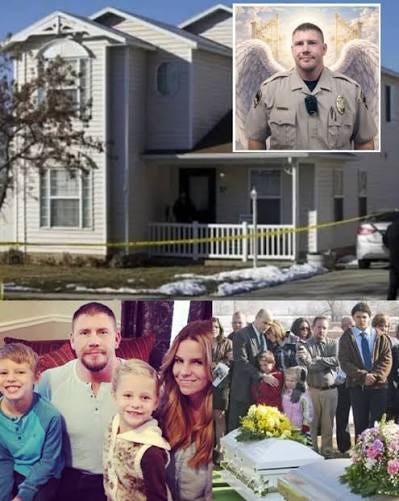
He was considered a “teddy bear” by those who knew him. Co-workers described him as upbeat. He appeared upbeat and didn’t show signs of distress before the killings. On the evening of January 16, 2014, Joshua Boren was expected to report for his night shift at the Lindon Police Department. When he didn’t show, his co-workers called. No answer. They sent officers to his home at 37 North 630 West in Spanish Fork, a small city in Utah County about fifty miles south of Salt Lake City.
Spanish Fork police say they went to Joshua Boren’s house about 11 p.m. Thursday after he didn’t show up to his night shift at the Lindon Police Department. That’s when they found Boren’s 55-year-old mother-in-law Marie King dead in a bedroom, and Joshua Boren’s immediate family dead in the bedroom next door.
The bodies of officer Joshua Boren, 34, Kelly Boren, 32, Joshua Jaden Boren, 7, Haley Boren, 5, and Marie King, 55, were found inside the house at 37 N. 630 West where they all lived.
The report confirms that Joshua Boren used his police-issued handgun to shoot and kill his wife, two children, and mother-in-law. Joshua Boren then placed the bodies of his wife and children on his bed, lying side by side, lay down next to them and took his own life.
He had arranged them. He had killed them and then moved their bodies onto the bed and placed them beside each other and beside himself. The deliberateness of that arrangement the hours it must have taken, the state of mind it required was the first thing that told investigators this was not an impulsive act.
The Family
Kelly Boren was thirty-two years old. She and Joshua had been married for eight years and had two children together: Joshua “Jaden” Boren, seven years old, and Haley Boren, five.
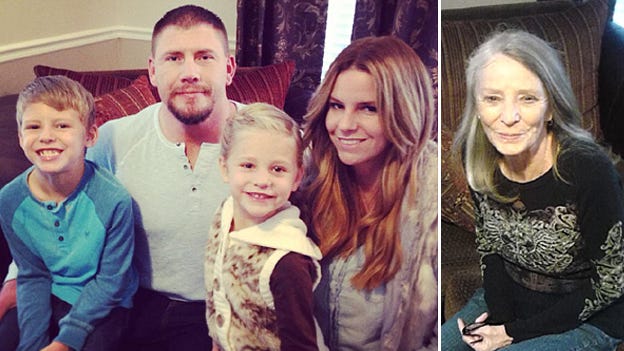
Kelly and Joshua were both bodybuilders. They worked out at the same gym, and by the time of the killings that shared interest had taken on a particular significance: Kelly Boren’s friends said she was involved with another man at the gym at the time of the killings. The man she was having an affair with told police that the two had exchanged more than 13,000 text messages in the days leading up to the murders.
The phone number of her affair partner was saved in her phone under the name “Jana.”
The marriage had been deteriorating for some time. The couple were separated and considering divorce. Boren had been living in an apartment in Spanish Fork for several months. Both families knew something was wrong. Friends knew. The therapist Joshua had been seeing since the fall of 2013 knew. What nobody fully understood what would only become clear after investigators worked through 145 pages of interviews, text records, and the contents of a green notebook was how wrong, and for how long, and in what specific ways.
Kelly’s mother, Marie King, had come to stay with her daughter and grandchildren. She was fifty-five years old. She was in a bedroom when Joshua Boren came home that night.
She was the first one shot.
The Night Before
The events of January 15 and the morning of January 16 are documented in the text messages that passed between Joshua and Kelly Boren in the hours before the killings.
The couple got into a heated argument via text message the night before the murders. The content of those messages preserved in court records and reported by the Deseret News through a Government Records Access and Management Act request is among the most disturbing elements of a case full of disturbing elements.
“You (expletive) drugged and raped me,” Kelly Boren wrote, followed by four more texts repeating only the word “raped.”
“I hate my life because (of) you. You killed a part of me.”
Joshua’s response, according to reporting by the Daily Herald: “I did this but you won’t let us support each other threw it. Can you not listen.”
The argument continued. Kelly told him their marriage was over. She told him she was leaving. She told him, according to the investigative report, that she was going to take the children.
“Josh Boren feared he would lose his children in the divorce,” investigators concluded. “I think it all unraveled and he realized he was going to lose his family because of his actions,” said Lindon Police Chief Cody Cullimore.
The following morning January 16 the text argument continued, but the two eventually reached some kind of temporary agreement, according to the investigative report. Joshua was supposed to come and pick up the children for a visit. He came home instead.
Please help me continue my newsletter and keep it free for others, by upgrading here for only $5 a month:
The Rapes
The words Kelly typed into her phone the night before she was killed were not, as it turned out, a revelation to the few people who had been inside the Borens’ private world. They had been a reality for at least two years.
Several friends of Joshua Boren and his wife, including the officer’s therapist whom he had been seeing since the fall of 2013 to try to deal with his failing marriage, reported to investigators that Joshua Boren had drugged his wife with Ambien, causing her to pass out, and raped her while videotaping the event. He did this four or five times over the past two years, several people told police.
Josh Boren’s therapist told investigators Josh crushed Ambien and put it in his wife’s protein shakes.
Kelly Boren learned of the assaults when she discovered the tapes in 2013. She told a few close friends. She did not go to the police. She told the therapist, according to the report, that she didn’t want to report the drugging and rape allegations to police because she didn’t want to ruin her estranged husband’s law enforcement career.
She discovered that the man she had been married to for eight years had been drugging her protein shakes with a sleeping medication, waiting for her to lose consciousness, raping her, and filming it and she protected his career.
The tapes themselves were never found. Spanish Fork police said no videotapes were ever found in connection with the investigation. Whether Boren destroyed them at some point, or concealed them somewhere investigators did not look, or whether their existence was reported by multiple witnesses who had been told about them but misremembered or fabricated the detail none of these questions can be definitively answered. Multiple people, including his own therapist, independently reported the same information. The tapes’ absence does not make the acts less documented; it makes them less provable in a court that will now never hear the case.
Detectives noted in the conclusion of their report: “Word was starting to get out about Josh drugging and raping Kelly, and he may have felt like he was about to be reported, which would have resulted in loss of his job and incarceration.”
He had, in other words, a motive beyond the text messages. The marriage was ending. His children might be taken. His secret the one that could destroy his career and put him in prison was spreading. He was a police officer with a service weapon and a therapist who had told investigators what he had done.
He used the weapon on his family.
The Green Notebook
Among the items investigators found in Joshua Boren’s bedroom after the killings was a green notebook. He had been keeping it as part of his therapy his therapist had asked him to write things down as part of the process of working through whatever was wrong in his life.
What he wrote was a numbered list of secrets.
In a green notebook police found in his bedroom in his Spanish Fork home in the days after he shot and killed his family and then himself, he numbered them:
“Secret 1. I live the typical normal person’s life.”
The list goes on. “Secret 6. I’ve always hated sex offenders and their behaviors. I’ve publicly humiliated them.” “Secret 7. I have been sexually abusing my wife for several years.”
Secret Six and Secret Seven, placed next to each other on the same page: I hate sex offenders. I have been sexually abusing my wife for several years.
The cognitive dissonance required to hold those two things simultaneously the public persona of a police officer who despised predators, the private reality of a man who was one is the central psychological fact of the Joshua Boren case. He had not merely committed sexual violence against his wife. He had built a professional identity around the prosecution of exactly the kind of person he was. He had, as the notebook entry noted, publicly humiliated sex offenders. He had worked on cases involving them. He had been, in the eyes of his community, someone who stood against what he was doing in the privacy of his own home.
The notebook entry did not express remorse. It expressed a categorization a private accounting, delivered in the same numbered-list format he might have used for a briefing document, that placed his abuse of his wife alongside his public life as two facts of equal standing about who he was.
The Childhood
The investigation did not stop at what Boren had done. It went back further, because the investigators found material in his writings and in interviews with people who had known him for years that suggested a specific origin for at least some of what he had become.
He had been abused physically, sexually and emotionally as a child, and was still upset with his mother for not protecting him from the abuse.
He had been sexually abused by his mother’s boyfriend as a child. This was not, investigators were careful to note, an explanation for what he did the abuse of a child does not cause that child to become an abuser, and the vast majority of people who suffer childhood abuse do not go on to perpetrate it. But it was part of the specific biographical architecture of a man who had, apparently, never received effective treatment for what had been done to him.
His therapist described him to investigators as a “3-year-old boy stuck in a big man’s body.”
Buck Bufton, who met Joshua Boren through the Utah County SWAT team, told investigators that he urged Joshua Boren to seek professional help. “Buck advised that Josh Boren needed help 20 years ago,” an investigator wrote. “With whatever happened to him as a kid, he needed help 20 years ago. Buck said Josh was able to fool a lot of us. Buck said Josh was a good officer and deputy. Buck said he knew Josh had problems, [but] he never imagined it was this horrible and that Josh was so far gone.”
Boren admitted to using acid, cocaine, marijuana, meth and mushrooms in his law enforcement job applications but said he hadn’t used any drugs since 2000. The applications also revealed that Boren had a juvenile history that included arrests for shoplifting, assault, burglary of a vehicle, possession of alcohol, receiving stolen property and possession of drug paraphernalia.
A juvenile record of that extent. A history of hard drug use disclosed on the application. And he had been hired anyway first as a sheriff’s deputy, then as a police officer because none of it disqualified him under the standards as applied, and because he presented well, and because the people who hired him saw a teddy bear.
The Testosterone and the Toxicology
Almost immediately after the killings, people who knew the couple both of whom were serious bodybuilders raised the possibility of steroid-related rage as a contributing factor. Several have questioned whether “roid rage” may have been a factor in Joshua Boren’s actions.
True Crime Weekly is a reader-supported publication. To receive new posts and support my work, consider becoming a free or paid subscriber.
Investigators also noted in the report that “vials of prescription testosterone” were found under the dresser in Boren’s house. The testosterone was there. The question was whether it had been a factor on the night of the killings.
Toxicology tests reveal the absence of any drugs or alcohol in the bodies of the victims or Joshua Boren. No substances were in his system when he killed his family. Whatever was driving him on the night of January 16 was not pharmacological. It was the text messages. The awareness that he was losing his children. The knowledge that his secrets were spreading. The calculation if it was a calculation that the life he had built, which was crumbling, was preferable to whatever came next.
He was sober. He killed them sober, arranged their bodies sober, and lay down beside them sober.
The Vetting Question
After the 145-page investigative report was released in July 2014, the question that received sustained public attention was not only about Joshua Boren himself but about the institutions that had employed him.
He had a juvenile record involving violence and drug offences. He had disclosed illegal drug use on his applications. He had, apparently, a history of personal difficulties serious enough that close friends had believed for years he needed help help he had not been getting.
He had passed the vetting process. He had been given a badge, a service weapon, and the authority of a law enforcement officer. He had used that service weapon to kill his family.
Joshua Boren had no history of violence or mental illness recorded in official channels. The juvenile record was there, the drug history was disclosed, but neither had been sufficient to prevent his hiring. The internal life he was living the rapes, the filming, the green notebook was not visible to the systems designed to screen for exactly this kind of risk.
Neither the Lindon Police Department nor the Utah County Sheriff’s Office, where Boren had previously served, has been subject to successful civil litigation in connection with the killings. The family of Kelly and Marie King lost everyone. Kelly’s father, who called the deaths “unimaginable” and said he’s angry “like you wouldn’t believe” at his son-in-law, was left to grieve without any institutional accounting.
What the Report Said About Motive
Spanish Fork Police Lt. Matt Johnson told reporters after the report’s release that the investigation had been unable to determine Joshua Boren’s exact motive. This is technically accurate and practically frustrating, because the report itself contains considerable material that illuminates what was happening in the hours before the killings.
The text messages established that Kelly had confronted him directly about the rapes. The therapist had told investigators about the drugging. Word was spreading among the couple’s social circle. Divorce was imminent. Loss of his children was a real possibility. Loss of his career and his freedom was, based on what the therapist knew and had disclosed, a genuine and near-term risk.
Kelly’s last texts to him were timestamped. Her last text to her affair partner was logged. His response texts were logged. By the time he came home on January 16, the architecture of the life he had built the teddy bear persona, the respected law enforcement career, the family unit was collapsing from every direction simultaneously.
He had one service weapon and a decision to make.
Jaden and Haley
Jaden Boren was seven years old. He was in second grade. Haley Boren was five years old. She had not yet started school.
They are not described in detail in the investigative report because there is very little to describe. They were children. They were in their home. They were killed by their father with a police-issued handgun, moved to the master bedroom, and laid on the bed beside their mother. The medical examiner’s findings about the specific manner and sequence of the killings have not been publicly released in detail.
They did not send text messages. They did not keep notebooks. They were seven and five, and whatever they knew or didn’t know about the state of their parents’ marriage was the knowledge of small children who understood that something was wrong without having the language for what it was.
Kelly Boren’s father lost his daughter, his grandchildren, and his former wife on the same night. He said the killings were “unimaginable.” He said he was angry like you wouldn’t believe.
He is still alive. He has had to find a way to continue existing in a world that took everyone from him in one evening.
The Teddy Bear
The detail that frames the entire case the detail that investigators and colleagues kept returning to is that everyone who knew Joshua Boren described him as a good man. A teddy bear. An upbeat presence. A good father, by external appearances. A respected officer.
None of it was false in the sense that it was performed. He had, apparently, genuine warmth, genuine professional competence, genuine capability for the ordinary social interactions of a functioning adult. Those qualities coexisted with the secret list in the green notebook, the crushed Ambien in the protein shakes, the filmed rapes, and the service weapon turned on his family.
The case does not produce the reassurance that such cases are sometimes supposed to produce the reassurance that people like this are visibly different, that the danger is legible if you look closely enough. Buck Bufton, who knew him for years and had urged him to seek help, said: “Josh was able to fool a lot of us.”
He was a police officer. He had a badge and a weapon and an authority position in a community that trusted him. He used that badge to approach an eleven-year-old girl at a Circle K but that is a different case. In this case, he used the service weapon the one issued to him by the department that had hired him despite the juvenile record and the drug disclosure to kill four people who loved him, arranged their bodies on a bed, and lay down beside them.
Nobody saw it coming. Buck Bufton, who had known him for years, had suspected something was wrong for two decades. He had not imagined it was this.
Nobody had.
Kelly Boren was thirty-two years old. Joshua “Jaden” Boren was seven. Haley Boren was five. Marie King was fifty-five. They were killed on January 16, 2014, in Spanish Fork, Utah. No civil or criminal proceedings remain. The investigation is closed. The green notebook is in an evidence room somewhere in Utah County.


Leave a comment