San Antonio, Texas, August 15, 2015 a twenty-five-year-old woman died of cystic fibrosis after a lifetime of fighting it. Her family held a service. They planned a cremation. They said their goodbyes. The next morning the casket was empty, and more than a decade later Julie Mott’s remains have never been found

A Life Built Around the Fight
If you enjoy my true crime coverage, please help me continue my newsletter and keep it free for others, by upgrading here for only $5 a month:
Julie Nicole Mott was diagnosed with cystic fibrosis at the age of two.
Cystic fibrosis is a progressive, hereditary disease that attacks the lungs and digestive system producing thick, sticky mucus that clogs the airways and makes breathing increasingly difficult over time. There is no cure. It is managed, not beaten, and the management requires daily treatments, regular hospitalisation, and a relationship with your own body’s limitations that most people never have to develop. The median survival age has improved significantly in recent decades, but it remains a disease that most of its sufferers will not outlive into old age.
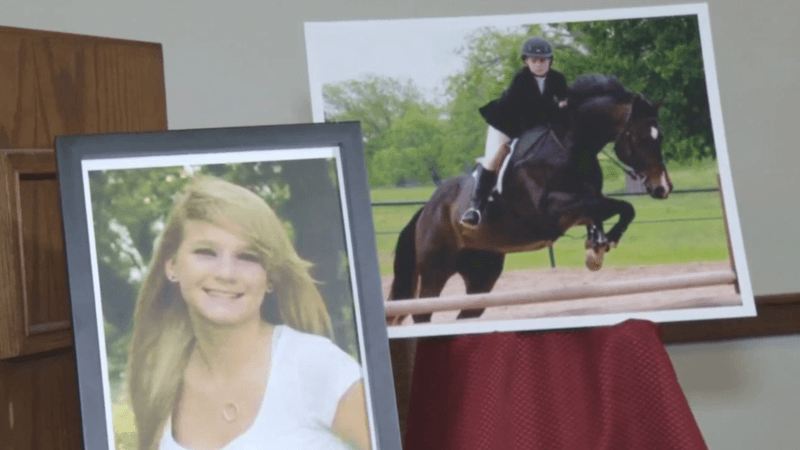
Julie Mott outlived her diagnosis by twenty-three years and she spent those years, by the accounts of everyone who loved her, refusing to let it define her. Her obituary described her as vibrant and passionate. She had started English riding lessons at the age of nine a physical, demanding pursuit for a child with compromised lung function and had gone on to compete in horse shows and show jumping. She competed. She showed up. She did the thing that her body made harder than it should have been and she did it anyway.
She was twenty-five years old when the disease finally took what it had been slowly taking for her entire life. She died on August 8, 2015, at a San Antonio hospital.
She had been born on August 15, 1989. Her funeral was held on August 15, 2015. It was what would have been her twenty-sixth birthday.
Mission Park Funeral Chapel North
Mission Park Funeral Chapels and Cemeteries is a San Antonio institution a family business founded more than a hundred years earlier, operated across five generations by the Tips family. Robert “Dick” Tips Jr., the owner at the time, was a personal friend of the Mott family. He knew them. He had known Julie. When her parents, Sharlotte and Timothy Mott, contracted with Mission Park for their daughter’s funeral, they were placing her in the hands of people who cared about them personally.
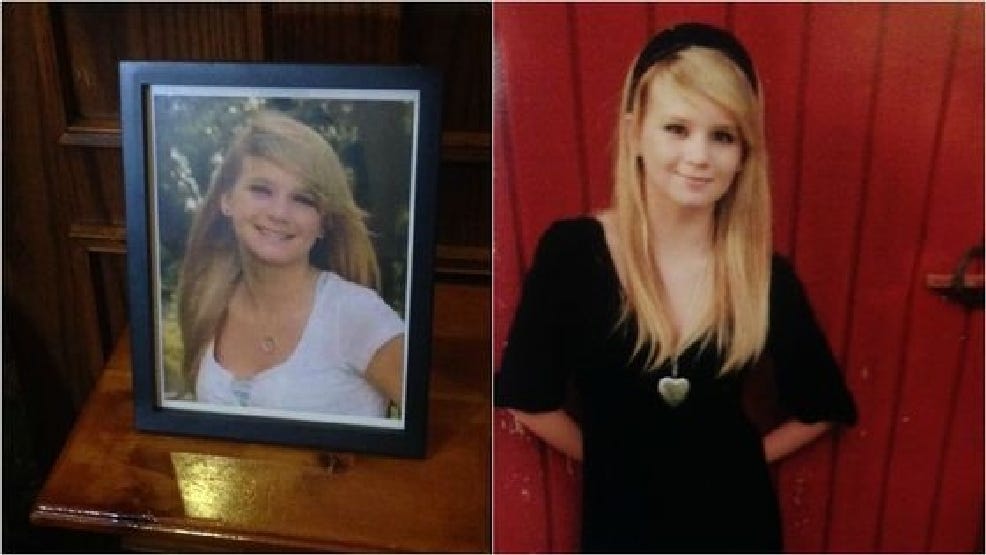
The service was held on August 15 at Mission Park’s North Side chapel. It ended at approximately 1:30 in the afternoon. After the service concluded, Julie’s remains were moved from the main chapel to a private visitation suite in the back of the building a common practice, providing a space for mourners to spend time with the deceased before the next stage of arrangements. The family planned to have Julie cremated on Monday, August 17. They had said their goodbyes. The service was over. Everything from that point was supposed to be straightforward.
The funeral home locked up at approximately 4:30 in the afternoon.
The following morning, August 16, employees arrived and made a discovery that Robert Tips would later describe as incomprehensible after more than a century of operation: the casket Julie Mott had been in for her service was empty. Her remains had been removed.
San Antonio Police Sergeant Javier Salazar told reporters that day: “I have never in twenty-two years in law enforcement ever heard of anything like this.”
There were no signs of forced entry. The alarm at the facility had not been triggered overnight. Police concluded that whoever had removed Julie’s body had done so in the afternoon window between the service ending and the building being locked between approximately 1:30 and 4:30 p.m. in broad daylight, through two locked doors leading to the private visitation suite, without leaving any trace of how they got in or how they got out carrying a body.
True Crime Weekly is a reader-supported publication. To receive new posts and support my work, consider becoming a free or paid subscriber.
The Man Who Stayed Longest
In the immediate aftermath of the discovery, police moved quickly to canvas everyone who had attended the service. What they found, noted in a preliminary incident report later obtained and reported by several outlets, was that one attendee stood out.
A man in his twenties who had been invited to the service was identified in the police report as the last person to leave the funeral home that afternoon. The report described him as having been “obsessed with calling and texting” Julie Mott. His name was redacted from the version of the report released to media, because at that point no arrest had been made and no formal suspect had been named. Police confirmed only that the person was male and that he had been among the service’s attendees.
The funeral home’s owner, Dick Tips, told reporters he believed the person responsible may have objected to the cremation that someone “who didn’t believe in the cremation process versus a traditional burial process” might have taken her body to prevent it from being destroyed. This theory would prove significant as more about the man of interest became known.
His name was Bill Wilburn. He was Julie’s ex-boyfriend.
Bill Wilburn: The Person of Interest
In the weeks after Julie’s body disappeared, Bill Wilburn’s name began circulating through the investigation and, eventually, through public reporting.
He was in his late twenties. He and Julie had been in a relationship at some point before her death. By the time she died, it is clear from subsequent reporting that the relationship had not ended on clean terms that Wilburn’s connection to Julie was one he had difficulty letting go of, and that his feelings about her death and about the planned cremation of her remains were intense enough to draw the attention of investigators within days of the body’s disappearance.
Wilburn told a reporter for KSAT 12 by telephone the following year that he was no longer a person of interest. The San Antonio Police Department repeatedly and consistently denied this. He remained, in SAPD’s description, a person of interest throughout the investigation.
In September 2015 within weeks of Julie’s body going missing Mission Park Funeral Home issued Wilburn a formal criminal trespass notice, banning him from the premises. The funeral home had not previously had security cameras. After the trespass notice was issued, they installed surveillance cameras.
Those cameras captured what they were installed to capture.
Surveillance, Trespassing, and GPS
On June 26, 2016 ten months after being banned from the property Bill Wilburn returned to Mission Park North. Three employees recognised him. He fled when identified. He came back again on June 29. The surveillance footage captured both visits clearly.
He was also, around the same period, flooding the funeral home’s phone lines. According to reporting on the case, Wilburn called the funeral home hundreds of times in a single day.
In February 2017, he was arrested and charged with two counts of criminal trespassing. He was released on bond. His next court appearance was scheduled for March.
Before that court date, he was back at Mission Park again. Prosecutors told the court on March 6 that surveillance cameras had captured him at the property on February 20, despite the eighteen months of trespass notices. A judge ordered Wilburn to wear a GPS monitoring device. He was also placed under partial house arrest after police reported finding him at a hotel directly across the street from the funeral home.
In a CNN interview during the civil trial period, Wilburn sat down and addressed the accusations directly. He denied taking Julie’s body. He acknowledged that he had returned to the funeral home after her disappearance, describing it as a kind of compulsion he compared it to driving repeatedly past the house of the drunk driver who had killed a family member, a way of processing unresolvable grief. He said that knowing Julie was going to die and actually losing her were two different things, and that he had not been able to prepare himself for the second even though he had been watching the first approach for a long time.
He described the assertion that he was still a person of interest as the funeral home looking for a scapegoat.
He was convicted of criminal trespassing in April 2018 and sentenced to two days in Bexar County Jail.
A judge signed a warrant allowing investigators to collect a DNA sample from Wilburn during the proceedings. What the DNA testing produced whether it connected him to the theft or excluded him has not been publicly disclosed. The criminal trespassing conviction is the only charge that has ever been brought against him in connection with any aspect of this case.
Julie’s remains have never been found.
The Lawsuit: $8 Million for What Cannot Be Undone
The Mott family filed a civil lawsuit against Mission Park Funeral Chapels in January 2016, seeking more than one million dollars in damages for what they characterised as gross negligence. The suit argued that the funeral home’s failure to adequately secure the premises no security cameras, no system capable of preventing or detecting an unauthorized entry during the afternoon window had directly enabled the theft of their daughter’s body.
The civil trial was heard over three weeks. On February 13, 2018, the jury found that Mission Park had been negligent and returned a verdict in the Mott family’s favour.
Sharlotte and Timothy Mott were each awarded $1.5 million for mental anguish already suffered, and an additional $2.5 million each for the mental anguish they would continue to suffer going forward. The total award was $8 million.
The verdict did not locate Julie’s remains. It did not identify who had taken them. It did not provide the closure that her father had described simply and specifically when he spoke to reporters in the immediate aftermath of the disappearance: “We just want our daughter’s remains returned so that we can have some closure to our grief.”
The money could compensate for the negligence. It could not compensate for the loss of the ability to lay a daughter to rest.
The Mechanics of the Crime
True Crime Weekly is a reader-supported publication. To receive new posts and support my work, consider becoming a free or paid subscriber.
One of the details that investigators found most difficult to account for was the logistics of what had actually been done.
Julie Mott’s body had been moved after her service into a private visitation suite accessed through two locked doors at the back of Mission Park North. To remove her body, someone would have needed to access those locked areas, move an adult human body in some fashion, in some container, through some method out of the building without triggering the alarm or leaving signs of forced entry, and do all of this in a roughly three-hour window on a Saturday afternoon in San Antonio.
This is not a simple thing to do. It requires either a key, knowledge of how to defeat the locks, or the cooperation of someone with access. It requires a vehicle. It requires a willingness to be seen, because the funeral home was open to the public and the immediate surrounding area is not isolated.
Police investigated every angle. They never publicly identified how the entry and removal had been accomplished. The case was investigated, as SAPD described it at the time, literally around the clock. The intelligence unit worked it hard. They had a person of interest. They got his DNA. They got surveillance footage of him returning to the scene repeatedly after being banned. They could not get what they needed to charge him with the body theft itself.
The funeral home, for its part, has acknowledged that the facility’s security arrangements at the time of the theft were inadequate. The installation of cameras after the trespass notice which then captured Wilburn’s returns was an implicit acknowledgment that the absence of cameras during the service and afterward had been a significant gap. The civil jury agreed.
What Happened to Julie Mott
This is the question to which there is still no answer.
If Wilburn took her body and he has never been charged with doing so, and denies it the question of what he did with it follows immediately. Cystic fibrosis produces no changes to a body that would make it identifiably different from any other set of remains after a period of time. Whatever was done with Julie after she was taken from that casket on a Saturday afternoon has not been discovered by any search, any tip, any forensic analysis, any development in the decade since.
The theory that the person who took her opposed cremation that she was taken to be preserved in some other way, buried somewhere rather than incinerated is the most commonly offered explanation. It is consistent with what we know about Wilburn: his fixation on her, his repeated returns to the funeral home even after being banned, his presence at the building as recently as directly across the street while under GPS monitoring. Whether that fixation produced the act, and whether the act produced a specific outcome for Julie’s remains, is unknown.
She has been missing for ten years. If she was buried somewhere, she has been in the ground for ten years. If she was preserved in some other manner, that manner has sustained itself across a decade without discovery. The $20,000 reward offered by Mission Park has never been claimed. No tip has led to her location. No deathbed confession has emerged. No witness has come forward with a location.
The Family
Tim and Sharlotte Mott lost their daughter to a disease she had been fighting since infancy. Then they lost their ability to bury her.
The specific cruelty of this the way it compounds grief upon grief is something Tim Mott articulated early and has returned to consistently across ten years of interviews and public statements. Grief requires somewhere to go. It requires a grave, an urn, a specific place in the world where a person’s physical remains can be acknowledged and honoured. When that place does not exist because someone took it away, grief cannot complete its ordinary work.
The $8 million verdict acknowledged this in financial terms. It acknowledged that Mission Park had made the situation possible through negligence, and that the Motts had suffered and would continue to suffer. Money cannot buy back what was taken from them, and the family and their attorneys have been clear about this throughout.
What they have wanted since August 16, 2015, is the same thing Tim Mott described to reporters the morning the empty casket was discovered: their daughter’s remains returned so they can put her to rest.
They have not received this. More than a decade has passed.
The Horse Shows
Julie Mott’s obituary described her as a young woman who refused to let her disease define her life. The detail that lodges the one that makes her more than a case file is the horse shows.
She started riding at nine years old. English riding, which requires balance, coordination, core strength, and significant lung capacity from horse and rider alike. Show jumping, specifically the discipline that involves clearing obstacles on a course, demanding precision and trust between rider and animal. She competed. For a child who had been managing a progressive lung disease since the age of two, who required daily treatments to maintain the lung function most people never think about, the choice to do something as physically demanding as competitive equestrian sport is a statement about who she was.
She did not want to be her diagnosis. She wanted to be someone who rode horses and competed and showed up and did the difficult thing. She was twenty-five years old and she had been doing the difficult thing her entire life.
She died on August 8, 2015. Her funeral was held on her twenty-sixth birthday. Her casket was empty the next morning.
Somewhere in San Antonio or somewhere beyond it, Julie Mott’s remains have been for ten years in the ground, or not; in a place that matters to someone, or not; somewhere that her family has not been told about and cannot find.
The reward is still active. The case is still open.
Her family is still waiting.
Julie Nicole Mott was born August 15, 1989, in San Antonio, Texas. She died August 8, 2015, from complications of cystic fibrosis. She was twenty-five years old. Her remains were stolen from Mission Park Funeral Chapel North on August 15, 2015 what would have been her twenty-sixth birthday. Her remains have never been found.
If you have any information: San Antonio Police Department (210) 207-7273. Crime Stoppers (210) 224-STOP


Leave a comment