Ozark, Alabama, July 31–August 1, 1999 two seventeen-year-old best friends got lost on the way home from a party, stopped at a gas station for directions, drove away into the Alabama night, and were found the next morning shot in the head in the trunk of their car. Twenty-four years later, a man who had become a preacher was convicted by DNA that a home ancestry kit helped identify
If you enjoy my true crime coverage, please help me continue my newsletter and keep it free for others, by upgrading here for only $5 a month:
Dothan
The Wiregrass region of southern Alabama gets its name from the tough, wiry grass that grows across its flat red clay terrain a landscape of peanut farms and pine woods and small cities where people tend to know their neighbors and where the summers are long and hot and full of the particular social density of places where there isn’t much distance between people.
Dothan is the largest city in the Wiregrass, a city of approximately sixty-five thousand people in Houston County, about twenty miles from the Florida border and twenty miles from the Alabama-Georgia line. It is a place with its own particular character civic-minded, church-going, close-knit in the way of communities that haven’t grown so large that strangers don’t eventually become neighbors.
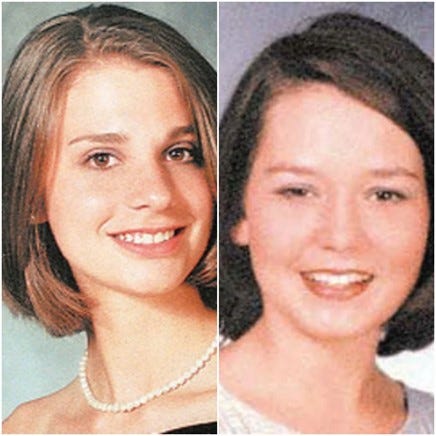
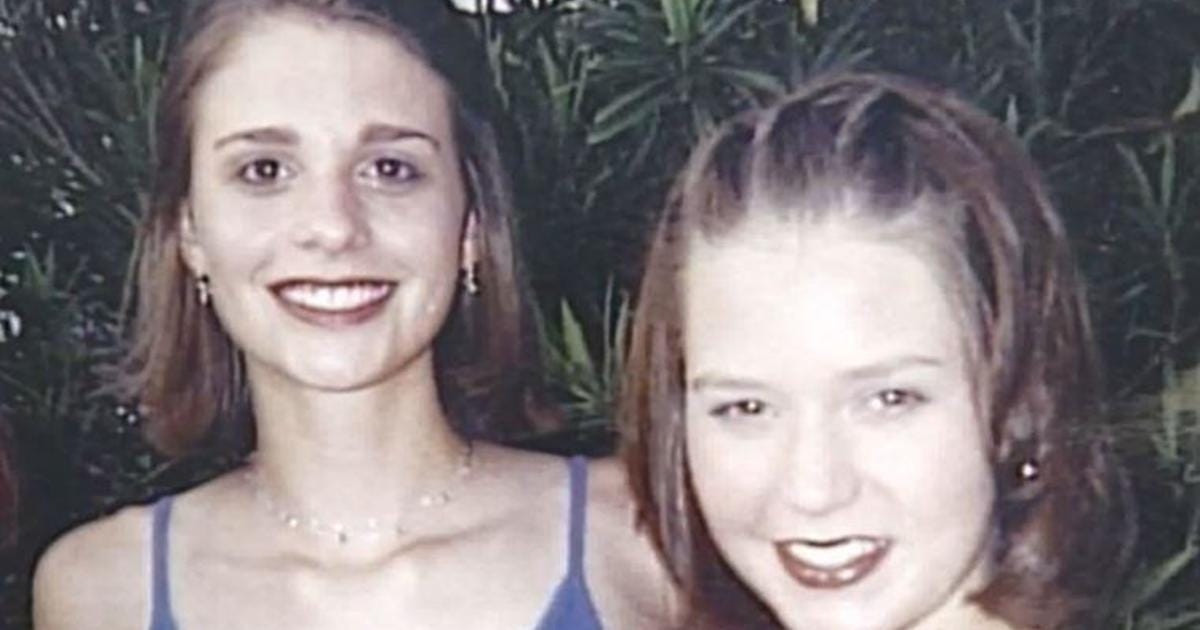
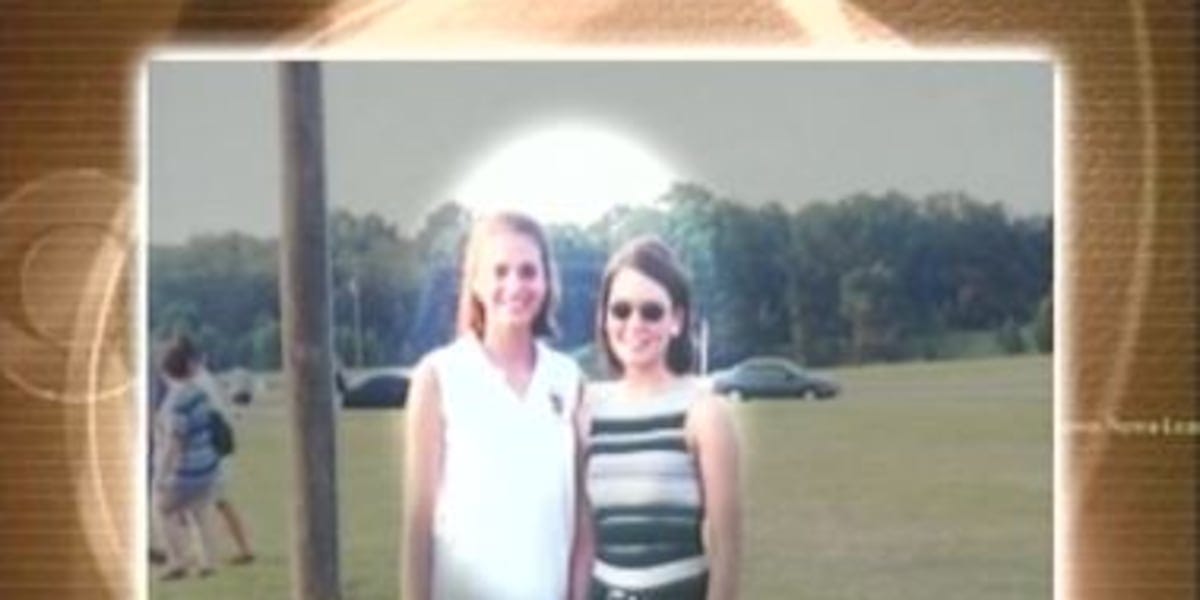
J.B. Beasley and Tracie Hawlett were both seventeen years old, both seniors at Northview High School in Dothan, and best friends in the particular way that teenage best friends are the kind of friendship that has its own grammar, its own shorthand, its own internal world that other people can see from the outside but cannot fully enter.
J.B. her full name was Jennifer Ayers Beasley, but nobody called her that was a senior looking forward to whatever came after high school. She was, by the accounts of her mother Cheryl Burgoon, a beautiful gift a phrase that carries more weight than cliché when it comes from a mother speaking at a trial twenty-four years after losing her daughter. Tracie Hawlett was the daughter of Carol Roberts, who would spend the next two and a half decades waiting for someone to be held accountable for what happened to her child.
On the night of July 31, 1999, it was J.B.’s birthday. She and Tracie were going to celebrate by attending a party in Dothan. They got into J.B.’s black Mazda sedan and headed out into the warm Alabama summer night.
They got lost.
The Gas Station
The party they were trying to reach was somewhere in the Dothan area, but the directions they had were either wrong or they had misread them, and at some point on the night of July 31 they found themselves on roads they didn’t recognise, approximately twenty miles northwest of where they meant to be in Ozark, a small city in Dale County that neither of them had intended to visit.
True Crime Weekly is a reader-supported publication. To receive new posts and support my work, consider becoming a free or paid subscriber.
They stopped at a convenience store to ask for directions. It was late, late enough that the night had a particular quiet to it, the kind of quiet that settles over small southern cities when the heat has finally eased a little and the highway traffic has thinned out. A woman who worked at the store Marilyn Merritt gave them directions back toward the main highway and watched them drive out of the parking lot.
Tracie had called her mother earlier in the evening. She told Carol Roberts that they had gotten lost and ended up in Ozark, but that they were getting directions and would be home soon.
That was the last time anyone who loved them spoke to either of them.
Marilyn Merritt would later tell police that she had seen the girls drive away from the gas station. She had watched them go. After she heard news reports the following morning about two teenagers found murdered near Ozark, she came to the police and told them what she had seen. She was the last confirmed witness to see J.B. Beasley and Tracie Hawlett alive.
323 Herring Avenue
Early on the morning of August 1, 1999 J.B.’s birthday had ticked past midnight while they were on the road Tracie Hawlett’s mother Carol Roberts called police. Her daughter hadn’t come home. J.B. hadn’t come home. She had spoken to Tracie earlier in the evening and been told they were getting directions. That was hours ago now. Something was wrong.
By 9:00 a.m., investigators had found J.B.’s black Mazda parked along a secluded stretch of road at 323 Herring Avenue in Ozark. At first glance, the car appeared undisturbed. There were no visible signs of a struggle around the vehicle. One of the girls’ purses was on the front seat with all of its cash and credit cards inside, untouched. This detail immediately told investigators what the motive was not: it was not robbery.
They opened the trunk.
J.B. Beasley and Tracie Hawlett were inside, shot once each in the head. The medical examination would later establish that they had also been sexually assaulted before they were killed.
Alabama Bureau of Investigation Special Agent Barry Tucker, speaking years later on the Oxygen network’s documentary about the case, described it simply: “They had been both shot in the head and brutally murdered.” Retired Dothan Police Chief John White said he still could not shake the image.
The theory investigators developed from the physical evidence was that someone had forced his way into the car after the girls left the gas station getting in at gunpoint, compelling them to drive to the secluded location on Herring Avenue, assaulting them there, and then killing them and placing their bodies in the trunk before driving away. The car was found where the killer had left it, with two seventeen-year-olds inside who had driven out of a gas station parking lot with someone else now in the car and had never been able to get help.
The First Investigation
The Ozark Police Department and the Alabama Bureau of Investigation launched what became one of the longest-running investigations in the history of the Wiregrass region. For the first twenty years of that investigation, it produced almost nothing.
There was DNA from the crime scene biological material that had been carefully collected and preserved from J.B.’s clothing. This was 1999, a moment when forensic DNA analysis existed and was becoming established in criminal investigation, but when the databases that could make such evidence actionable were far less comprehensive than they would become. The DNA was there. The person it belonged to was not in the system. The sample sat in storage.
Suspects were developed and investigated over the years. Tips came in. The case appeared on crime shows. It was the subject of sustained local attention in the Wiregrass, where the community had been deeply shaken a double murder of two teenage girls who had simply gotten lost on the way home from a party was not something that Dothan or Ozark processed and moved on from. Rumours circulated. Theories accumulated online as the internet matured and people who remembered the case found each other in forums and on social media.
None of it produced an arrest. The DNA sat in storage.
Then, in April 2018, a retired police officer in California named Joseph James DeAngelo was identified as the Golden State Killer using a technique that investigators across the country immediately recognised as transformative: forensic genetic genealogy, in which a crime scene DNA profile is run through publicly accessible genealogy databases, a family tree is built outward from partial matches, and a suspect is eventually identified through their relatives’ voluntary DNA contributions to ancestry sites.
Ozark Police Chief Marlos Walker saw the news about DeAngelo’s arrest and understood its implications immediately. The following week, he started making phone calls.
Parabon and the Family Tree
In 2018, Walker sent the preserved DNA from J.B. Beasley’s clothing to Parabon NanoLabs, a Reston, Virginia laboratory that provided forensic DNA services including the genealogical analysis that had caught DeAngelo. Parabon built a profile from the DNA, uploaded it to ancestry databases, and began building family trees from the partial matches that came back.
The process is painstaking. Distant relatives of the unknown subject people who have taken at-home ancestry tests and uploaded their results to sites like GEDmatch appear as partial matches. From those partial matches, genealogists trace forward and backward through family trees, progressively narrowing the pool of candidates until they reach living individuals who fit the age range, the geography, and the opportunity of the specific crime. It is genealogical detective work of a particular kind, requiring both technical expertise and investigative knowledge of the case being solved.
If you enjoy my true crime coverage, please help me continue my newsletter and keep it free for others, by upgrading here for only $5 a month:
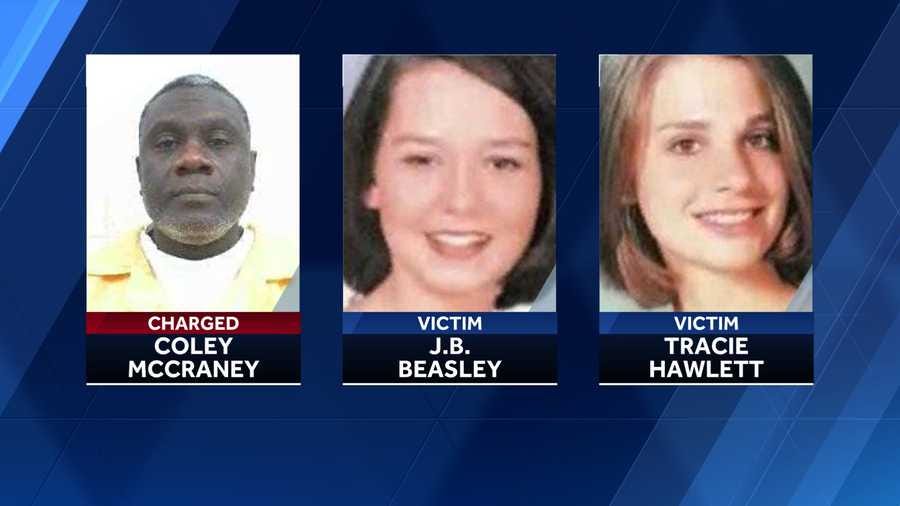
What came back from the analysis pointed to Coley McCraney, a resident of Dothan, Alabama.
Coley McCraney was forty-five years old in 2019. He had been twenty-five years old on the night of July 31, 1999. He had no criminal record. He had not been a suspect at any point during the twenty-year investigation. He had, in the years between the murders and his arrest, built a life that looked nothing like the life of a man being sought for a double murder: he had been married for years to a woman who was his girlfriend at the time of the killings. He had children. He had become an ordained minister and had pastored a church.
He was not in the DNA database. He was in someone else’s, because a relative had submitted their genetic material to an ancestry site and Coley McCraney’s DNA, through the biological connections of family, had been partially visible in that database without his knowledge or consent.
On March 16, 2019, Coley McCraney was arrested at his home in Dothan. He was charged with capital murder and rape.
The Defense He Offered
The case against McCraney was, from the prosecution’s perspective, built on a foundation as solid as forensic science could provide: his DNA was on J.B. Beasley’s body in the form of semen. His DNA matched. The match had been identified through genealogical analysis and confirmed through direct comparison.
McCraney’s defence acknowledged the DNA but offered an explanation that did not involve murder.
When initially arrested and questioned, McCraney told investigators he had never met J.B. Beasley or Tracie Hawlett. He maintained this position through his arrest and the months that followed. Then, at trial in April 2023, he changed his account.
Taking the stand in his own defence, McCraney testified that he had met J.B. Beasley at a mall in Dothan a few months before her death, in the summer of 1999. She had told him her name was Jennifer, he said. They had exchanged numbers. They had arranged to meet on the night of July 31, in Ozark. He said they had consensual sex in the back of his truck after which he returned home, unaware of anything that happened to her afterward.
The prosecution’s response to this account was methodical and devastating. The judge, in his verdict, noted what was perhaps the most straightforward element of the rebuttal: a mother and a sister would almost certainly not mistake their son and brother as the murderer. On the 911 call that the family had placed from inside the house on the night of the murders, a voice says “Shawn, don’t” before a shot is heard.
Wait that is the other case in this document.
For the McCraney case: the prosecution noted that he had told investigators, when first questioned, that he had never met either girl. He had maintained this position until the DNA evidence made it impossible to maintain. He had changed his story only when the alternative was to offer no explanation at all. The jury considered the change and what it signalled.
Prosecutors also argued the timeline. The girls had been at the gas station in Ozark late in the evening. They had driven away. Someone had gotten into their car or gotten them to stop and had assaulted and murdered them. McCraney was from Ozark, had lived in Dothan, knew the roads between the two cities. His account of a consensual encounter could not explain how J.B. Beasley ended up in the trunk of her own car with a bullet in her head.
The Trial and the Verdict
The trial began in April 2023 twenty-three years and eight months after J.B. and Tracie were found in that trunk. Coley McCraney was forty-nine years old. He had been married to the same woman for the entirety of the intervening period. He had pastored a church. He had, in the way of these cases that only resolve through technological breakthroughs that simply did not exist at the time of the crime, lived an ordinary life in the same general geography as the crime, for twenty-four years, while the families of his victims buried their grief next to the investigation that couldn’t reach him.
After one day of deliberations, the jury convicted Coley McCraney on four counts of capital murder and the rape of J.B. Beasley.
The following day, the jury recommended sentencing. Two jurors voted for the death penalty on the capital murder-rape conviction. The jury as a whole recommended life without the possibility of parole, which Judge William Filmore confirmed at formal sentencing on June 15, 2023.
McCraney maintained his innocence in an exclusive phone interview with ABC News conducted from prison. “They can call me a cheat, they can call me a dog,” he said. “They can call me a lot of things at that time, but they cannot call me a killer.”
His attorneys filed for a new trial, citing jury misconduct: at least three jurors had reportedly posted about the case on social media during the proceedings, and one had been seen on a smartwatch. The motion was denied. His attorneys appealed to the Alabama Court of Criminal Appeals. The conviction was upheld. In December 2024, the Alabama Supreme Court refused to hear his further appeal.
He is currently serving his sentences at William E. Donaldson Correctional Facility.
The Mothers
Carol Roberts, Tracie’s mother, had spent twenty-four years with angel figurines around her home small objects that served, as she explained, as reminders of her daughter. She had spoken publicly about the case over the years, had kept Tracie’s name in local memory, had waited.
When the verdict was read in April 2023, she told reporters: “I was in shock. We’d waited 24 years for this, and finally somebody’s going to be held accountable.”
Cheryl Burgoon, J.B.’s mother, described her reaction to the verdict from the courtroom: “When they read, ‘Guilty,’ I fell forward and tears just streamed down my face.”
Alabama Attorney General Steve Marshall, who had taken over as lead prosecutor, spoke at a press conference after sentencing with both mothers present. He described J.B. and Tracie in terms that cut through the twenty-four years of investigation and legal proceedings to the specific human reality of what had been lost: “They were on the precipice of being able to begin their lives. They were daughters. They were best friends. They were pillars of their own clique and group of people. They were daughters. They were siblings of brothers and sisters. They were who we are as a community.”
What the DNA Did
The J.B. Beasley and Tracie Hawlett case is, in the record of forensic genetic genealogy’s application to cold cases, one of the earlier and more significant examples of the technique doing what it was built to do.
The Golden State Killer’s arrest in April 2018 demonstrated the method. Ozark Police Chief Marlos Walker watched the news that week and made phone calls the next. Within months, the DNA from a 1999 crime scene had been submitted to a lab in Virginia. Within a year, a man who had never been in any criminal DNA database had been identified, arrested, and charged.
The intermediary element the relative who had submitted their genetic material to an ancestry site without knowing that this act would eventually surface their relative’s involvement in a twenty-four-year-old double murder is one of the more ethically complex dimensions of this technology. The person who submitted the DNA did nothing wrong. They participated in a consumer genetic service. The information their participation contributed to the database was used by law enforcement to identify a killer. Whether users of ancestry sites understand and consent to this potential use of their genetic information is a policy question that the McCraney case, like the DeAngelo case before it, brought into sharp focus.
The technology will only expand. The databases will only grow. The cold cases that can be reached by this method, given sufficient biological evidence from crime scenes, will continue to be solved in ways that were simply impossible in 1999, when two seventeen-year-old girls were found in the trunk of a car and the DNA on one of them went into storage because the person it belonged to wasn’t in the system.
He is in the system now.
J.B. Beasley was seventeen years old. It was her birthday. Tracie Hawlett was seventeen years old and her best friend. They got lost on the way to a party in Dothan, Alabama, stopped for directions in Ozark, drove away, and were found shot in the trunk of J.B.’s car the next morning. Coley McCraney is serving life without parole. He maintains his innocence.


Leave a comment