Bonaparte, Iowa, October 14, 2006 a 911 call from inside a farmhouse captured a sister’s voice, a shot, a scream, and silence. When police arrived, five members of the same family were dead. The son who stood to inherit everything was sixty miles away
If you enjoy my true crime coverage, please help me continue my newsletter and keep it free for others, by upgrading here for only $5 a month:
Bonaparte, Iowa
Bonaparte is a small town fewer than five hundred people in Van Buren County in the far southeastern corner of Iowa, pressed up against the Missouri border where the Des Moines River curves through limestone bluffs and old mill country. It is the kind of place where families have been in the same trade for generations, where everyone knows the family that owns the grain elevator, where news travels between neighbours faster than it appears in any newspaper.
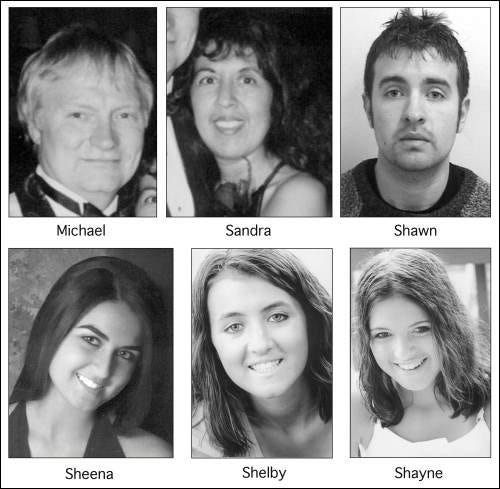
The Bentler family was that kind of family in Bonaparte. Michael and Sandra Bentler owned and operated a grain elevator and a lumberyard agricultural businesses of the kind that anchor small rural communities, that employ local people, that represent something more than commerce when they’ve been in a family long enough. The businesses were successful. The family was known. They had three daughters: Sheena, seventeen; Shelby, fifteen; and Shayne, fourteen. Their eldest child, Shawn, was twenty-two years old and lived sixty miles away in Quincy, Illinois, across the Mississippi River.
In the early hours of October 14, 2006, the Van Buren County Sheriff’s Office received a 911 call from the Bentler home.
What the dispatcher heard on that call has been described by everyone who has listened to it as among the most chilling things in the record of this case: a woman’s voice in the background Sandra Bentler shouting. A teenager’s voice Shayne, the youngest daughter saying her brother was “going to do something.” Another voice, quieter, saying: “Shawn, don’t.” A gunshot. Shayne screaming “Shawn, no!” The line going dead.
The dispatcher called back. No answer. A second call came in simultaneously from Sandra Bentler’s cell phone and went unanswered. The dispatcher called that number back too. No one picked up.
When police arrived at the Bentler home in rural Bonaparte minutes later, they found Michael Bentler, Sandra Bentler, Sheena Bentler, Shelby Bentler, and Shayne Bentler. All five were dead. Spent shell casings were scattered throughout the house. They had been shot with a .22 calibre rifle.
Shawn Bentler was not there. Shawn Bentler was sixty miles away in Quincy, Illinois.

The Arrest
On the morning of October 14, 2006, a few hours after the 911 call had gone dead and police had found five bodies in the farmhouse in Bonaparte, Shawn Bentler was stopped by Quincy police on an unrelated charge: driving without a valid licence and on an outstanding arrest warrant for possession of drug paraphernalia. He was taken into custody.
Iowa law enforcement officers drove to Quincy to interview him. The Quincy officers did not tell Shawn, when they stopped him, about the murders of his family in Iowa. Iowa investigators interviewed him and then, through standard booking procedures at the Quincy jail, his clothes and personal effects were seized and placed in sealed bags. He was charged with five counts of first-degree murder.
The picture that emerged from the investigation was of a young man whose life had been sliding sideways for some time. He was twenty-two years old, unemployed, the father of a nineteen-month-old daughter, behind on child support. His ex-girlfriend Lexie Leslie the mother of his daughter would testify that in the weeks before the murders, she had pushed him to find a job. He had responded to that pressure with a specific kind of comment: he told her he wouldn’t have to worry about money anymore if his parents were dead.
A week before the murders, he had asked Leslie whether she would allow him to see his daughter or continue a relationship with her if he murdered someone.
These were not idle comments. They were, the prosecution would argue, a man speaking his plan out loud in the way that people sometimes do when they cannot quite close the distance between thinking and doing, testing the idea against the reality of consequences before committing to it.
The Bentlers’ businesses were successful. The family estate was worth approximately three million dollars. Shawn Bentler was the eldest child. Had his parents died without specific provisions to the contrary, he stood to inherit a significant portion of that estate.
The Trial: A Judge, Not a Jury
Shawn Bentler was twenty-three years old when his trial began in May 2007, in Keosauqua, Iowa, the county seat of Van Buren County. He had exercised his right to opt for a bench trial a trial decided by a judge rather than a jury. This decision, often made when a defendant believes the emotional weight of a case will prejudice a lay jury beyond the reach of evidence, placed the verdict in the hands of Van Buren County District Judge Michael Mullins.
The prosecution’s case was built around several interlocking elements.
The 911 call was the most powerful. The voice saying “Shawn, don’t.” The voice saying “Shawn, no.” A court will sometimes treat a dying person’s identification of their killer with particular weight not a formal legal principle in all jurisdictions, but a recognition that a person in the moment of violent confrontation does not typically mistake their attacker’s identity. Judge Mullins said this directly in his verdict: a mother and a sister would almost certainly not mistake their son and brother as the murderer.
Shawn Bentler’s cell phone was found at the Bentler home in Bonaparte. How it came to be there how an object that should have been with him in Quincy was instead at a crime scene sixty miles away in Iowa was a question the defence could not fully answer and that the prosecution used to argue he had been at the house.
DNA evidence included the critical find: two small spots of Sandra Bentler’s blood on a pair of Shawn’s socks. The amount was small. The significance was not. His mother’s blood on his socks, in the circumstances of five dead family members in a farmhouse, was not easily explained away. The defence pointed out that no blood or DNA was found on his shoes or any other clothing, and that no DNA or fingerprints were found on the murder weapon. They argued the sock evidence was minimal and potentially contaminated or transferred.
True Crime Weekly is a reader-supported publication. To receive new posts and support my work, consider becoming a free or paid subscriber.
A tyre track found at the base of the Bentler driveway was matched by a state fingerprint expert to the rear driver’s side tyre of a car belonging to a man named Travis Holder a car that prosecutors argued Bentler had borrowed to drive from Quincy to Bonaparte and back on the night of the murders. The defence noted that 56,000 similar tyres had been sold, meaning any car with that tyre type could have made the track. The expert had not established that only Holder’s specific tyre matched.
The defenses central argument was geographic and temporal. Shawn Bentler had been spotted by witnesses in Quincy at 1:00 a.m. and again at 7:00 a.m. on the morning of October 14. The 911 call from the Bentler home had come at 3:38 a.m. from Bonaparte sixty miles away. Could he have driven sixty miles, committed five murders, and driven sixty miles back in time to be seen in Quincy at 7:00 a.m.? The defence said no. The prosecution said he had three and a half hours between the 1:00 a.m. sighting and the 911 call, plenty of time to make the drive.
Lexie Leslie’s testimony about the pre-murder statements cut through the circumstantial evidence in a way that was perhaps harder to dismiss than the physical details. A man who asks his girlfriend whether she will let him see his daughter if he commits murder, and who tells her he won’t have to worry about money if his parents are dead, in the weeks immediately preceding their deaths, is a man who has said what the prosecution needed him to have said.
The Verdict
Judge Michael Mullins found Shawn Bentler guilty on all five counts of first-degree murder on May 17, 2007.
In the courtroom were more than a hundred family members and others. Many wept. Others sighed with what observers described as relief. Shawn Bentler stood to hear the verdict with his lower lip quivering, shaking visibly, and then stood calmly for the announcement.
He handed reporters a written statement afterward: “I continue to assert my innocence and I believe that the circumstantial evidence against me was very weak.”
He was sentenced to five consecutive life terms without the possibility of parole. He was twenty-three years old.
The Iowa Court of Appeals upheld his conviction. His subsequent appeals have not produced a different outcome.
As a direct result of the murders, a court ruled that Shawn Bentler could not inherit from the estate of the family he had been convicted of killing. The inheritance the approximately three million dollars in grain elevator and lumberyard assets that prosecutors argued had been his motive went instead to his daughters.
The 911 Call
The Bentler case is, in the landscape of true crime, one of those cases where a single piece of evidence carries most of the weight not because the other evidence is weak, but because one thing is so specific that it reorients everything else around it.
The 911 call from inside the farmhouse in Bonaparte at 3:38 a.m. on October 14, 2006, is that piece of evidence.
A fourteen-year-old girl, in the moment of a family crisis that had progressed to violence, said her brother’s name twice. She said it the first time as a warning “going to do something” and she said it the second time as a plea “Shawn, no!” and between those two utterances, a shot was fired, and Shayne Bentler screamed, and then there was nothing.

Shayne Bentler was fourteen years old. She had called 911 because she believed her brother was about to do something terrible, and she had been right, and she had named him, and then she had been shot.
The defence argued that under stress, in darkness, a teenager might mistake an intruder for a family member. Judge Mullins rejected this. A mother and a sister, he said, would almost certainly not mistake their son and brother as the murderer.
The call was played at trial. It was played for a courtroom full of extended family members and community members, people who had known the Bentler family for years. What it contained was two minutes of a family’s end, narrated in real time by the youngest daughter, ending with her name disappearing from any further record.
The Money and the Questions
The straightforward version of the Shawn Bentler case is: a young man who owed child support, couldn’t keep a job, and stood to inherit three million dollars from his parents’ estate drove sixty miles in the middle of the night, shot five people including his three teenage sisters, and drove sixty miles back. The court believed this version. The appellate courts have sustained that belief.
The uncomfortable version is: the evidence, while collectively suggestive, is almost entirely circumstantial. No one saw Shawn Bentler in Bonaparte that night. No one saw him at the farmhouse. The murder weapon was never found and bore no fingerprints or DNA of his. The blood on his socks two small spots is the only forensic link between his body and the crime scene. His cell phone at the house could have been there from a previous visit. The tyre track could have been made by any of 56,000 similar vehicles. The statements he made to Lexie Leslie chilling as they are in retrospect are the statements of a man who was struggling financially and may have spoken in the impulsive, dramatic way that people sometimes speak when they are overwhelmed, without meaning them literally.
Shawn Bentler, from his cell at a maximum-security Iowa prison, continues to maintain his innocence.
The murders of Michael, Sandra, Sheena, Shelby, and Shayne Bentler in their farmhouse in Bonaparte, Iowa, were the end of a family. Whether the person who killed them was convicted of it is a question on which the courts have spoken and the evidence has created reasonable disagreement. What is not in disagreement is the call at 3:38 a.m., and the girl who made it, and the specific words she said before the line went dead.
What Remained
After the convictions, the grain elevator and lumberyard that Michael Bentler had built in Bonaparte continued to operate for a period businesses don’t stop because their owners die, especially in small communities where the employees have families of their own who depend on them. The Bentler name was on the buildings. The community knew who the buildings had belonged to.
The extended family aunts, uncles, cousins, the wider network of people who had known the five dead had to absorb the loss and then absorb the trial and then absorb the conviction of the eldest son and brother who was either guilty of an extraordinary crime or wrongly convicted of one. Both possibilities are, in their different ways, devastating for the people left to carry them.
Van Buren County is a small county. Bonaparte is a small town. The people who lived through October 2006 and the trial that followed are still there, mostly. The limestone bluffs and the Des Moines River are still there. The farmhouse is still there.
Shayne Bentler was fourteen years old. She called 911 because she was afraid of what her brother was going to do. She said his name twice. She said don’t, and then she said no, and then the line went dead.
Michael Bentler, Sandra Bentler, Sheena Bentler (17), Shelby Bentler (15), and Shayne Bentler (14) were shot and killed at their home in Bonaparte, Iowa, in the early hours of October 14, 2006. Shawn Bentler was convicted of five counts of first-degree murder on May 17, 2007, and is serving five consecutive life sentences without the possibility of parole. He maintains his innocence.


Leave a comment