Jupiter, Florida is a prosperous coastal town in northern Palm Beach County a place of celebrity neighbors, Atlantic breezes, and the kind of comfortable, insular community life that accumulates when people have enough money to choose where they live and choose somewhere beautiful. Michael Jordan has a house there. It is not the kind of place where family massacres happen.
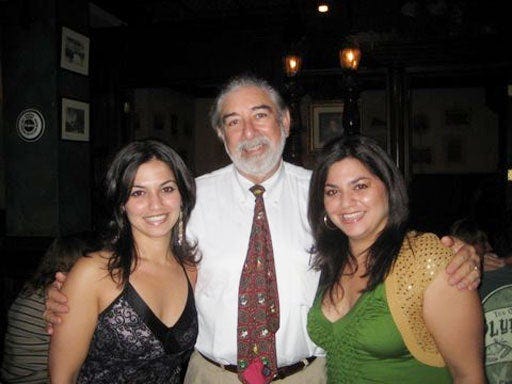
On Thanksgiving evening, November 26, 2009, the extended Sitton-Merhige-Joseph family gathered at the home of Jim and Muriel Sitton for the holiday. The gathering spanned three generations: Muriel’s parents, Dr. Antoine and Raymonde Joseph a couple married for more than fifty years were present, as were Muriel’s cousin Carole Merhige, Carole’s husband Michael, and their three adult children: Paul Merhige, thirty-five, and his twin sisters, Carla Lynn Merhige, thirty-three, and Lisa Ann Knight, also thirty-three.
Limited time deal: If you enjoy my true crime coverage and are in a place you can support, please help me continue my newsletter and keep it free for others, by upgrading here:
Lisa’s husband Patrick Knight was there, and Lisa was visibly pregnant with their first child. And at the centre of the family’s warmth that evening was Makayla Joy Sitton Jim and Muriel’s six-year-old daughter, their only child who had spent the afternoon showing off a preview of her upcoming role in The Nutcracker and who, at some point after nine in the evening, had been tucked into her bed in her Tinkerbell pajamas.
There were seventeen family members in the house that evening. Before the night was over, four of them would be dead.
Paul Merhige
Paul Michael Merhige had attended the Thanksgiving gathering because he had called his parents and they had invited him. He was generally estranged from the family his relationship with his sisters in particular had been difficult for years, defined by patterns of threat, withdrawal, and reconciliation that had left his relatives wary in ways they felt unable to fully articulate.
In 2006, three years before the massacre, his sister Lisa had filed a restraining order against him. She had withdrawn it. The reason she had filed it was that he had threatened to kill her. The reason she withdrew it was the complicated calculus of family, of not wanting to permanently rupture a relationship, of hoping the worst would not happen.
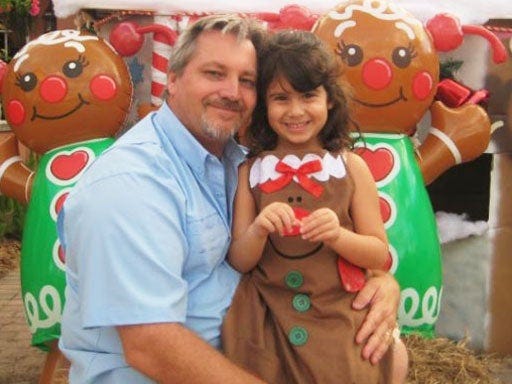
In the month before Thanksgiving 2009, Paul Merhige had visited a gun store and purchased four firearms. This was documented on surveillance footage that investigators would later review. He had no criminal record. Nothing in the legal framework available at that time prevented the purchase.
The evening proceeded normally through dinner. Paul sat with the family. They gathered around the piano. Makayla, who loved to perform, gave them a preview of her Nutcracker role. She was, by her father Jim’s description, a child who could fill a room a concentrated sweetness, his phrase for it. After the performance, Makayla was put to bed. She fell asleep in her Tinkerbell pajamas.
At some point after nine o’clock, Paul went out to his car. He was gone for approximately twenty minutes. When he came back inside, he was carrying a handgun.
He began shooting.
What He Did
The sequence of events in those minutes is documented in the accounts of the one adult wounded victim who survived Lisa Knight’s husband Patrick, who was shot but did not die and in the testimony given to investigators by family members who fled the house or were otherwise not in the direct line of fire.
Paul Merhige shot his twin sisters Carla and Lisa. He shot their mother Raymonde Joseph, Muriel’s seventy-nine-year-old grandmother who had been married to Antoine for more than fifty years.
Then he walked down the hallway.
He stepped into the room where Makayla was sleeping.
He shot her in her bed.
He came back out and shot Patrick Knight, who survived. Then he left the house, got in his car, and drove away.
Jim Sitton described what happened in terms that have stayed in the public record of this case: “He just opened fire. We were like fish in a barrel. We had already put Makayla to bed. As he left, he just stepped into her room and shot her while she was in her bed.”
He went in as an afterthought. A six-year-old child sleeping in Tinkerbell pajamas was something he addressed on the way out the door, as an afterthought.
Four people died that evening: Carla Merhige, Lisa Knight whose unborn child also died Raymonde Joseph, and Makayla Joy Sitton. Patrick Knight survived his gunshot wound after an extended recovery, including a coma.
The Manhunt
Paul Merhige fled. He had planned to flee the firearms purchased the month before, the gun retrieved from the car, the readiness with which he left the scene suggested this was not an impulsive act but one that had been contemplated and prepared for, at least in its broad outlines, in advance.
The manhunt that followed was one of the most intensive in Palm Beach County history. Florida authorities alerted law enforcement across the country. His photograph circulated. His car a royal blue 2007 Toyota Camry was described. His face appeared on America’s Most Wanted.
For thirty-eight days, Paul Merhige was not found. He moved. He used cash. He stayed in motels. He had managed, through deliberate action, to disappear from a world that was actively looking for him.
Then, on January 2, 2010, an America’s Most Wanted tip came in. The episode profiling the case had aired. Someone watching it in the Florida Keys recognised the man they had seen at a local motel.
Paul Merhige was arrested at the motel in Marathon, Florida in the Keys, just over a hundred miles from Jupiter on January 2, 2010. He had been hiding for thirty-eight days. He offered no resistance when officers arrived.
Why
The question that the family and investigators asked from the first hours after the massacre, and that has never been fully answered to anyone’s satisfaction, is why.
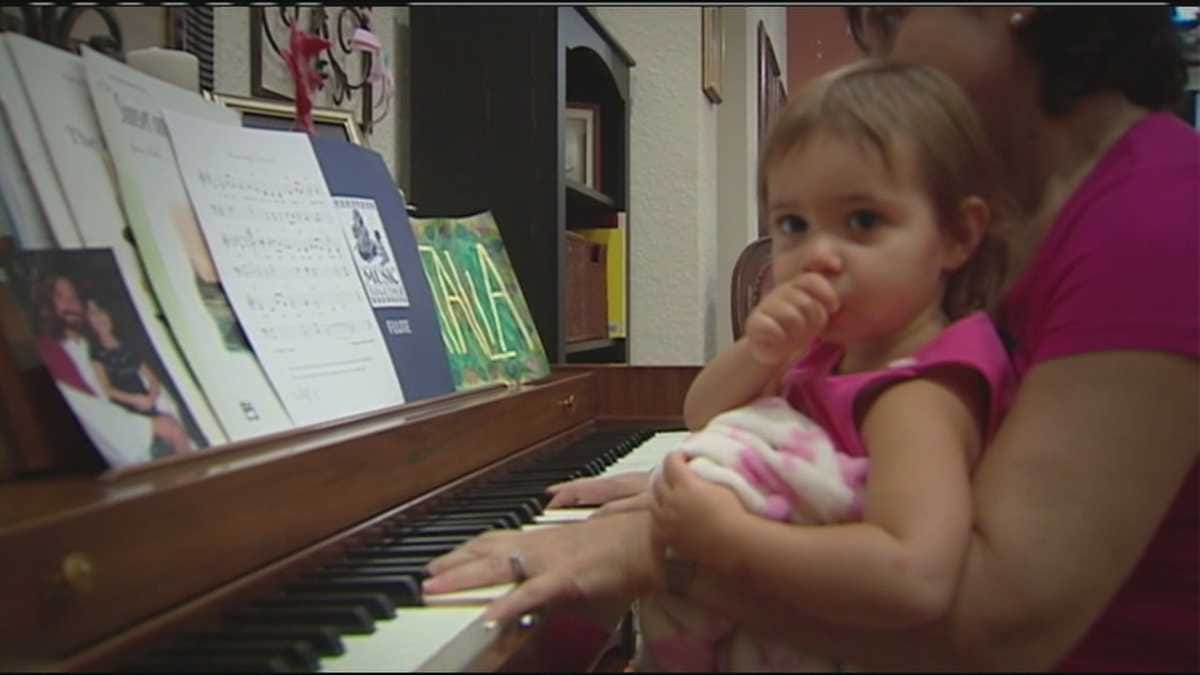
Paul Merhige had what investigators described as “ongoing resentment” within the family. The specific nature of that resentment what had accumulated over the years to produce an evening that ended with four dead family members, including a six-year-old child was explored in the legal proceedings and in the civil suit that Jim and Muriel Sitton subsequently filed against Paul’s parents.
What emerged from that civil litigation was a picture of a family that had known, on some level, that Paul Merhige was capable of something catastrophic. His mother Carole had remarked on the night of the Thanksgiving massacre, to one of her daughters, a thought she had apparently had: “I hope he doesn’t come and kill us all tonight.” Her daughter had replied that the thought had come to her too, but asked her not to say it to their father. The exchange was documented in audio recordings obtained in connection with the civil case.
His mother had written in an email to relatives before the gathering: “Everyone is going up (including Paul!!)” the exclamation marks suggesting a particular register of surprise or effort around his attendance, as if his participation had required special note.
Paul had a history of mental illness and violent threats. He had been estranged. He had purchased four firearms in October 2009. His family had noticed the warning signs, had felt the anxiety, had expressed it to each other and had not acted on it in any way that changed what happened.
The Sitton civil lawsuit against the Merhige parents argued precisely this: that Paul’s parents had known he might be dangerous and had done nothing to prevent the gathering that gave him access to his intended victims. The lawsuit alleged that they had an opportunity to stop their son before he killed their granddaughter.
Paul Merhige’s Fate
Paul Merhige was charged with four counts of first-degree murder. He was held in the Palm Beach County jail from his capture in January 2010.
What followed was an extended legal process complicated by mental health evaluations, competency hearings, and years of pre-trial proceedings. His mental health history which included prior institutionalization, documented violent ideation, and the pattern of behavior that had led his sister to file and then withdraw a restraining order three years earlier was central to both the prosecution and any potential mitigation.
In 2014, Merhige pleaded guilty to four counts of first-degree murder. He was sentenced to four consecutive life terms without the possibility of parole.
He will die in prison. He will never explain, in any full or satisfying sense, why he walked down the hallway and into a six-year-old child’s bedroom on Thanksgiving night and shot her in her sleep.
In the years after the massacre, Jim and Muriel Sitton did something specific and deliberate with their grief.
Makayla had written a story. She was six years old and she had composed a simple narrative about a bear who wants to make all his wishes come true. It was the kind of thing a child creates in the ordinary course of being a child who is learning that things can be written down and shared.
Jim and Muriel published it. They completed what Makayla had started they gave shape and illustration to her story and put it into the world because she had wanted to be an author, and because she had never had the chance to finish what she started, and because they were her parents and it was something they could do for her.
The book is called The Bear’s Castle. It exists. Makayla’s story is in it.
Jim Sitton has described the years since the massacre as a balancing act that has no natural equilibrium: moving forward in some sense while the grief does not move, staying alive while something essential to the reason for staying alive was taken on a Thursday evening in November 2009. He and Muriel have spoken publicly at various anniversaries, marking the passage of time not as healing but as survival.
Fifteen Years
Makayla Joy Sitton was born in 2003. Her middle name was Joy a name her family explained as an acronym she lived by: Jesus first, Others second, Yourself last. She loved to sing. She had been preparing for a Nutcracker performance. She had written a story about a bear.
She would have been twenty-one years old. She would have been old enough to read her own published book. Her parents have tried to imagine who she would have become the particular person that the six-year-old in Tinkerbell pajamas would have grown into over the fifteen years that she was not given.
The Thanksgiving holiday has, for the Sitton family, been restructured around the fact of what happened at their table on November 26, 2009. They have marked it. They have found, with time, small reasons to mark it differently. Muriel has spoken of working toward a version of November that is more than the anniversary of loss.
The piano is still there, presumably the one Makayla played for the family that evening. The song she performed. The preview of the Nutcracker that nobody present that evening will ever have forgotten.
Paul Merhige is in prison. His four consecutive life sentences mean he will not leave.
The book is still available. Makayla’s bear is still trying to make all his wishes come true.
Makayla Joy Sitton was six years old. She was sleeping in Tinkerbell pajamas. She had spent the evening showing her family her Nutcracker performance. Also killed that evening: Carla Merhige, 33; Lisa Ann Knight, 33, who was pregnant; and Raymonde Joseph, 79. Paul Michael Merhige is serving four consecutive life sentences without parole.


Leave a comment