Columbia, South Carolina, January 2011 a twenty-five-year-old woman and her three-year-old daughter were murdered in their apartment in an attack described as one of the most brutal crime scenes in the county’s history. The investigation stalled for six years until a palm print in the child’s blood, tested with new technology, matched a man who had spoken to police the week after the murders and walked away
Brook Pines
The Brook Pines apartment complex sits near Broad River Road in Columbia, South Carolina a residential area of a mid-sized southern city, the kind of place where young mothers live when they are building something from modest means, where neighbors hear things through thin walls and where a locked apartment door represents a reasonable expectation of safety.
Limited Time Deal: If you enjoy my true crime coverage and you can support, please help me continue my newsletter and keep it free for others, by upgrading here:
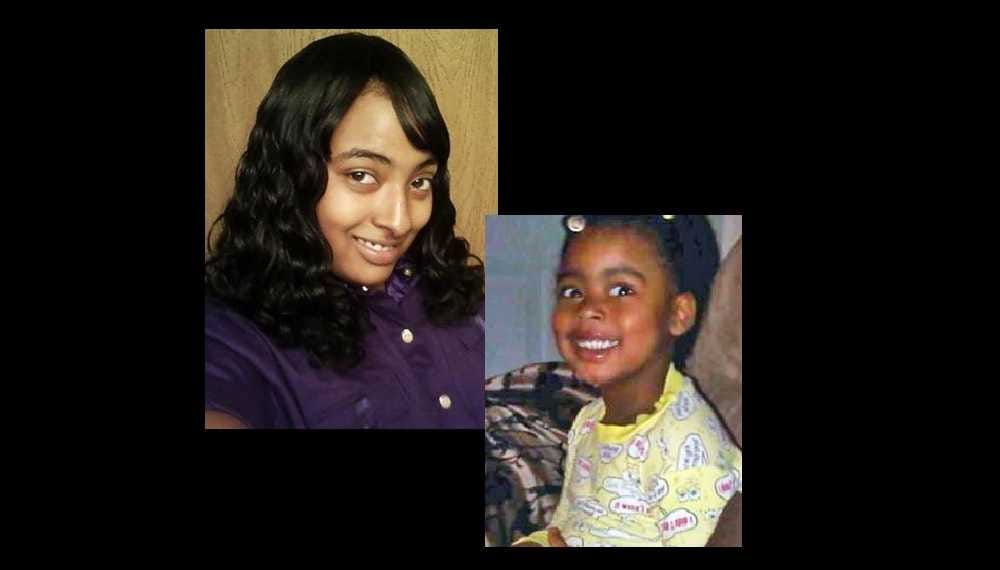
Candra “Candy” Alston was twenty-five years old. She was known by the nickname Candy to the people who loved her a name that suggested the warmth and social ease that her family and friends consistently describe. She was, by all accounts, the kind of person who had a wide circle: friends in person, friends online across the social media platforms that were becoming the fabric of everyday social life in 2011. Her stepfather Ray Lyerly called her “my little girl.” Her grandmother described her as irreplaceable in the specific, untranslatable way that grief makes irreplaceable mean something larger than the word contains.
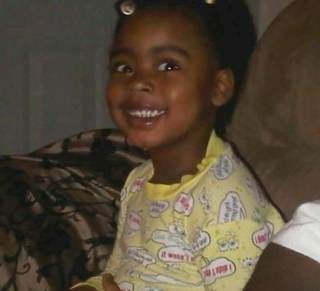
Malaysia Boykin was three years old. She was Candra’s daughter.
At some point between January 6 and January 9, 2011, both of them were killed inside their Brook Pines apartment. Candra was shot in the head. Malaysia was stabbed. Multiple times.
The Richland County Coroner, Gary Watts, who had more than three decades of experience working crime scenes in the county, said it was one of the most brutal crime scenes he had encountered in that entire career. Columbia Police Sergeant Kevin Reese, one of the investigators who processed the scene, said: “It was one of the most gruesome crime scenes I’ve witnessed.”
The police kept the specifics from the public deliberately almost nothing about the manner of death was released beyond the most basic facts, because investigators knew that the details themselves might eventually help them establish who had been there.
The Discovery and the Timeline
Candra’s father went looking for her when he had not heard from her or Malaysia in more than three days. On January 9, 2011, he found them inside the apartment.
Phone records established that the crime had occurred approximately two days before the discovery meaning the murders had taken place around January 6 or 7. Candra and Malaysia had been dead in their apartment for two to three days while the world outside continued unaware.
The absence of forced entry was the detail investigators noted first. Nobody had broken in. The door had been opened voluntarily Candra had let whoever killed them inside, or they had a key, or some access the investigators needed to account for. This told police something specific: she had known her killer. She had opened the door to someone she trusted or at least recognised.
The only things missing from the apartment were a computer, an expensive designer purse, and some children’s clothing. The pattern of what was taken or rather what the pattern suggested, because so little of apparent value was taken indicated that robbery was not the primary motive. Whatever had driven the killer to that apartment, it was not principally about theft.
Two Hundred People
The investigation that followed involved one of the largest interview pools in the Columbia Police Department’s recent history. Investigators talked to more than two hundred people family members, friends, acquaintances, online contacts drawn from Candra’s wide social network. Of those two hundred, approximately one hundred and fifty submitted DNA samples voluntarily, part of the investigation’s attempt to account for anyone who might have had biological contact with the victims or the apartment.
None of the DNA samples matched what investigators had recovered from the crime scene.
Candra had been working as an escort through internet sites when she was killed a detail that investigators disclosed carefully and that cold case investigator Mark Vinson described as relevant context without drawing explicit conclusions about risk. The nature of her work meant her social and professional circles were wide, partly documented through online records, and partly not. It meant the pool of people who might have had access to her apartment extended beyond what a conventional social network would suggest.
The investigation pursued every thread. Tips came in. Leads were followed. The database of DNA samples grew. Nothing matched.
Then, in the fall of 2011, something unexpected: through a routine computer check, investigators discovered that Kenneth Canzater Jr. a man who had been identified as an acquaintance of Candra’s within days of the murders and had spoken with investigators, denying any involvement had been arrested in February 2011 in Moreno, California, on a probation violation stemming from a 2005 robbery conviction. He was in California. He had left South Carolina almost immediately after the murders.
This was not, by itself, evidence of guilt. People move. But it placed him in a specific category: someone who had known Candra, who had been questioned and denied involvement, and who had subsequently put the country between himself and the investigation.
His name went into the file. The investigation could not place him definitively at the scene. The DNA samples could not confirm or exclude him early testing had him as one of four possible matches among the two hundred people checked, which was insufficient to act on. The case went cold.
The Composite Face
Four years after the murders, in 2015, cold case investigator Mark Vinson tried something that had never been done before in South Carolina.
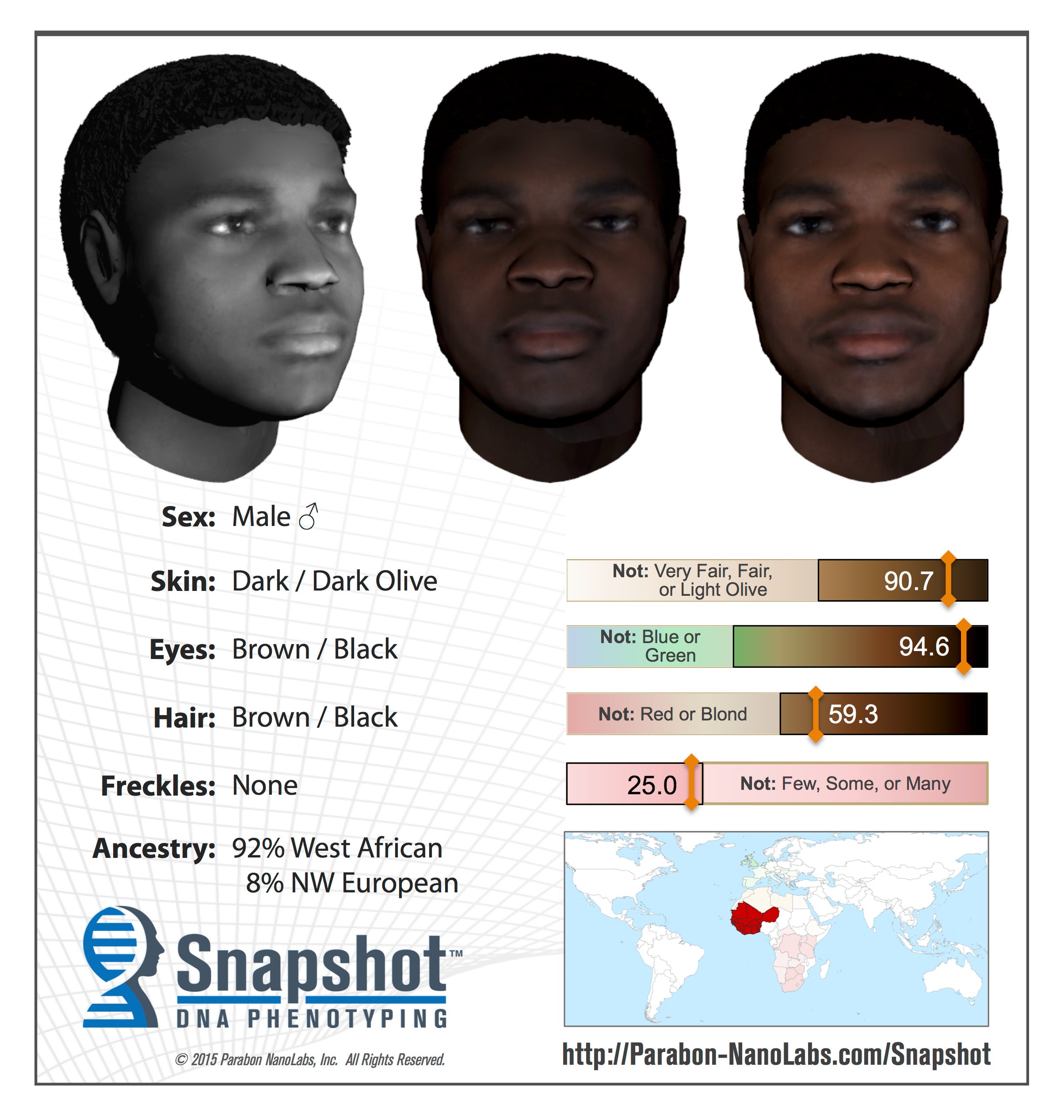
He had heard about a company called Parabon NanoLabs in Reston, Virginia, which had developed a technique called Snapshot DNA Phenotyping. The technique analyzed specific gene sequences in a DNA sample sequences that are known to influence physical appearance and produced a statistical prediction of what the person who contributed that DNA might look like: ancestry, skin color, hair color, eye color, face shape, even likely freckling. It was, essentially, a computer-generated composite sketch derived entirely from DNA rather than from witness description.
Columbia Police released the Snapshot image publicly. It was the first time this technique had been used in a South Carolina case, and among the earliest applications of forensic DNA phenotyping anywhere in the country. The image showed the face of a man: a Black male, with specific predicted features, derived from the DNA recovered from the crime scene.
The public release generated attention. It did not generate an identification. The case remained open. Canzater remained in California.
The Palm Print
In 2015, while the Snapshot image was generating press coverage, another investigation was quietly proceeding that would ultimately break the case.
The lead investigator asked SLED the South Carolina Law Enforcement Division, the state’s primary investigative and forensic agency to review all crime scene photographs with specific attention to blood spatter and blood transfer patterns. This was not a new request; the photographs had been examined before. But investigators had been thorough in their documentation of the scene, and sometimes a review with fresh eyes and different questions produces different results.
During that review, a partial palm print was identified. It had been there in the photographs all along. It was in Malaysia Boykin’s blood.
The palm print was entered into the national fingerprint database. SLED advised investigators that the result was inconclusive the print was partial enough that it could not be definitively matched or excluded.
The file noted the print. The case remained open. Time passed. Technology improved.
In February 2017, six years after the murders, SLED ran the palm print through the database again using updated, more sophisticated comparison technology. This time, the result was different.
The palm print was a positive match to Kenneth Canzater Jr.
The Arrest
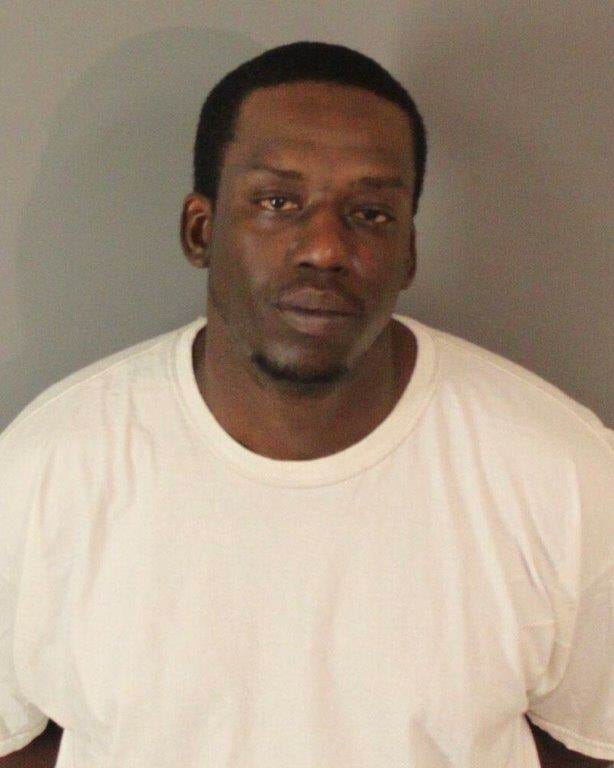
On March 23, 2017, Columbia Police flew to California and arrested Kenneth Canzater Jr. near his home in Perris, in Riverside County. He was forty-three years old. He had been living in California for six years.
At the press conference announcing the arrest, Columbia Police Chief Skip Holbrook described how the case had been broken the palm print, the technology, the six-year investment in an investigation that refused to close. Candra Alston’s family was present. A family spokesperson named Sharon Williams said: “Thank you God. Thank you to law enforcement officers about being vigilant for never giving up for this family because we knew that God would come to vindicate for this family.”
One woman in the crowd cried “he killed her” several times. Another man, as soon as Holbrook finished speaking, walked to an easel where Canzater’s mugshot was displayed and threw the photograph to the ground.
Six years of waiting had not softened what the family felt about what had been done to Candra and Malaysia.
Holbrook declined to discuss motive. He described the nature of the crime shot in the head for Candra, stabbed for Malaysia and described Canzater’s relationship with Candra as that of an acquaintance. Why an acquaintance had killed her and stabbed her three-year-old daughter in their apartment was a question he would not publicly address.
Canzater was held at a California facility while South Carolina pursued extradition. In May 2017, he was returned to Columbia by the US Marshals Service and held at the Alvin S. Glenn Detention Center in Richland County.
The Third Victim
The murders of Candra and Malaysia did not kill only two people. This is something Ray Lyerly, Candra’s stepfather, said directly when describing what the investigation’s long years had done to his family.
Candra’s mother Lyerly’s wife began dying from the day the bodies were found.
“Every day she would worry,” Lyerly said in a 2012 interview. “Every day she would try to figure out what happened.”
She died of an aneurysm. Her health had deteriorated in direct proportion to the accumulation of unanswered days in the investigation.
“Whoever did this didn’t take two lives that day,” Lyerly said. “They took three.”
He said this five years before Kenneth Canzater was arrested. He said it knowing that the person who killed his wife’s daughter and grandchild was still unidentified and still free. The grief of not knowing, compounded daily, had killed her.
When the arrest came in 2017, Lyerly was still there. He had outlasted his wife’s grief. He had lived to see the name.
The Candra Alston and Malaysia Boykin case holds a specific place in the history of forensic science because it was the first case in which DNA phenotyping the Snapshot composite was used as part of a publicly documented investigation that ultimately resulted in an arrest.
The composite itself did not identify Canzater. The palm print match did that. But the use of the Snapshot technology in 2015, and the public release of the computer-generated face, represented a moment in which law enforcement acknowledged that the traditional tools eyewitness description, standard DNA matching, conventional fingerprint comparison had been exhausted, and that something new was needed.
The something new that actually worked was older technology applied with newer methodology: the same palm print that had been in the photographs for four years, run through an improved database comparison. The lesson was not purely about cutting-edge forensics. It was about patience and persistence and the willingness to return to existing evidence with fresh approaches rather than declaring the case unsolvable.
Six years. A palm print in a child’s blood. A more sophisticated test. An arrest in California.
The case is a study in what happens when investigators refuse to close the file when the case remains active not in name only but in practice, with someone continuing to look, continuing to ask SLED to run the print again, continuing to believe that the technology that had not worked in 2011 might work differently in 2015 or 2017.
Kenneth Canzater: The Legal Record
As of the time this article was researched, the full outcome of Kenneth Canzater’s prosecution in South Carolina has not been publicly documented in available records. He was charged with two counts of murder, returned to Columbia in May 2017, and held without a publicly disclosed bail arrangement. The full resolution of the charges trial, plea, verdict has not emerged clearly in the public record available through journalism and official announcements.
What is known: he denied involvement when first questioned in January 2011. He was in California before that month was out. He lived there for six years. A palm print in Malaysia Boykin’s blood put him in that apartment. He was arrested, extradited, and charged.
If there are readers of this article who know the outcome of those proceedings, the information matters for the record, for the family, for the accounting of what happened at Brook Pines Apartments in early January 2011.
What Candra Was
The detail that emerges most consistently from everything written about this case is the warmth. Candra Alston was known by the name Candy. Her stepfather spoiled her his word, spoken without apology because he wanted to give her the best life possible. Her grandmother could not describe what the loss of her had done, because the language was insufficient.
She was twenty-five years old. She had a three-year-old daughter. She had a wide circle of friends and a lively presence on social media. She had a father who came looking for her when she went quiet for three days, and who found her, and who had to live with what he found.
Malaysia Boykin was three years old. She had a name that was specific and particular and that appears in every account of this case as the thing that cannot be abstracted a three-year-old girl named Malaysia, who was in her mother’s apartment, who was three years old.
The coroner said the crime scene was one of the most brutal he had seen in thirty years. The detective said it was one of the most gruesome he had witnessed. The police chief declined to describe the details of the savageness of the slayings.
Whatever was done to Candra and Malaysia in that apartment in early January 2011 was done by a man who then left, and drove across the country, and lived in California for six years, and waited.
He left a palm print in a child’s blood.
It was there all along.
Candra “Candy” Alston was twenty-five years old. Malaysia Boykin was three years old. They were found in their Brook Pines apartment in Columbia, South Carolina, on January 9, 2011. Kenneth Canzater Jr. was arrested in California in March 2017 and extradited to South Carolina. He had left a palm print in Malaysia’s blood. Candra’s mother died during the investigation. “Whoever did this didn’t take two lives that day,” her stepfather said. “They took three.”


Leave a Reply