Daytona Beach, Florida, 2005–2006 three women were shot in the head and left face down in the dirt over sixty days. DNA connected them to the same man. A profiler said the killer was probably white. The killer was Black. He went to college in the same city where the bodies were found, graduated, moved away, and killed again a decade later and was only caught because he flicked a cigarette into a beer can
Christmas Day, 2005
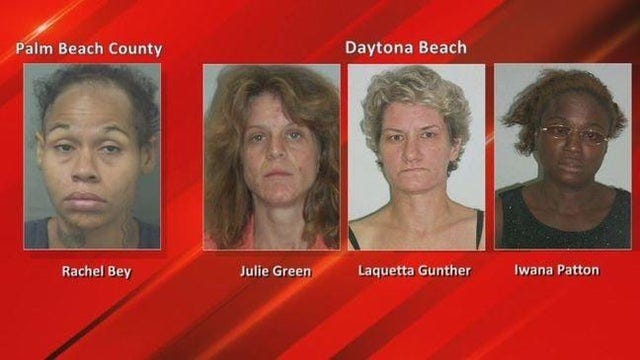
The body of Laquetta Gunther was found on Christmas Day, 2005, wedged between two buildings off Beach Street in Daytona Beach. She was forty-five years old. She was naked. She was face down in a garbage-strewn alley, shot once in the back of the head with a .40 calibre Smith & Wesson.
She had been killed on Christmas Eve. Someone had spent Christmas with their family, or alone, or at work, while Laquetta Gunther lay in that alley through the night.
She had been a labour hall worker. She worked in prostitution. She was a mother. She was the first confirmed victim of what would eventually be called the Daytona Beach Serial Killer a case that would go cold for thirteen years, resurface with a DNA hit two hundred miles south in 2016, and eventually put a man named Robert Tyrone Hayes into a courtroom in Daytona Beach in February 2022.
True Crime Weekly is a reader-supported publication. To receive new posts and support my work, consider becoming a free or paid subscriber.
Sixty Days, Three Women
The murders happened with an urgency that, in retrospect, seems almost careless as if the killer was operating with full confidence that he would not be caught, and had no particular reason to wait between kills.
Laquetta Gunther, forty-five, Christmas Day 2005. Shot in the back of the head. Left face down. Naked.
Julie Green, thirty-four, January 14, 2006 twenty days later. Her nude body was found on the edge of a construction zone off LPGA Boulevard, in what is now a subdivision called Bayberry Lakes. Shot in the back of the head. Found face down.
Iwana Patton, thirty-five, February 24, 2006 forty-one days after that. Her body was found near Mason and Williamson avenues in an undeveloped area where the Daytona Beach Police Department is now located. Shot in the head. Naked. Face down.
Three women. Three shots to the head. Three nude bodies left face down in the dirt of Daytona Beach. Sixty days from first to last, in a city that in 2006 was a busy, heavily surveilled tourist destination on Florida’s Atlantic coast a city with hotels and businesses and security cameras and traffic and the specific density of a place that hosts Bike Week and Spring Break and Daytona 500 annually.
The same weapon fired all three shots. The same DNA semen recovered in a manner that investigators described as one of the killer’s calling cards was found at two of the three scenes, linking two of the three murders definitively. Ballistic evidence from the same gun linked all three.
He was not being subtle. He was not trying to make the deaths look like something other than what they were. He was leaving evidence not through carelessness exactly, but through confidence. Through the belief, which turned out to be well-founded for thirteen years, that he would not be found.
If you enjoy my true crime coverage, please help me continue my newsletter and keep it free for others, by upgrading here for only $5 a month:
The Profile That Was Wrong
Daytona Beach police worked the case intensively in 2005 and 2006. They developed a suspect profile. They interviewed hundreds of people. They pulled together the DNA evidence, the ballistic evidence, the geographic pattern of the disposal sites.
And they developed a criminal profile of the likely killer that described him as probably white.
This is documented in reporting from the period and has been discussed by investigators in retrospect. The profile, based on FBI Behavioral Analysis Unit methodology applied to the specific characteristics of the case, suggested a white male perpetrator. The descriptor influenced how investigators weighted and prioritised suspects during the initial investigation.
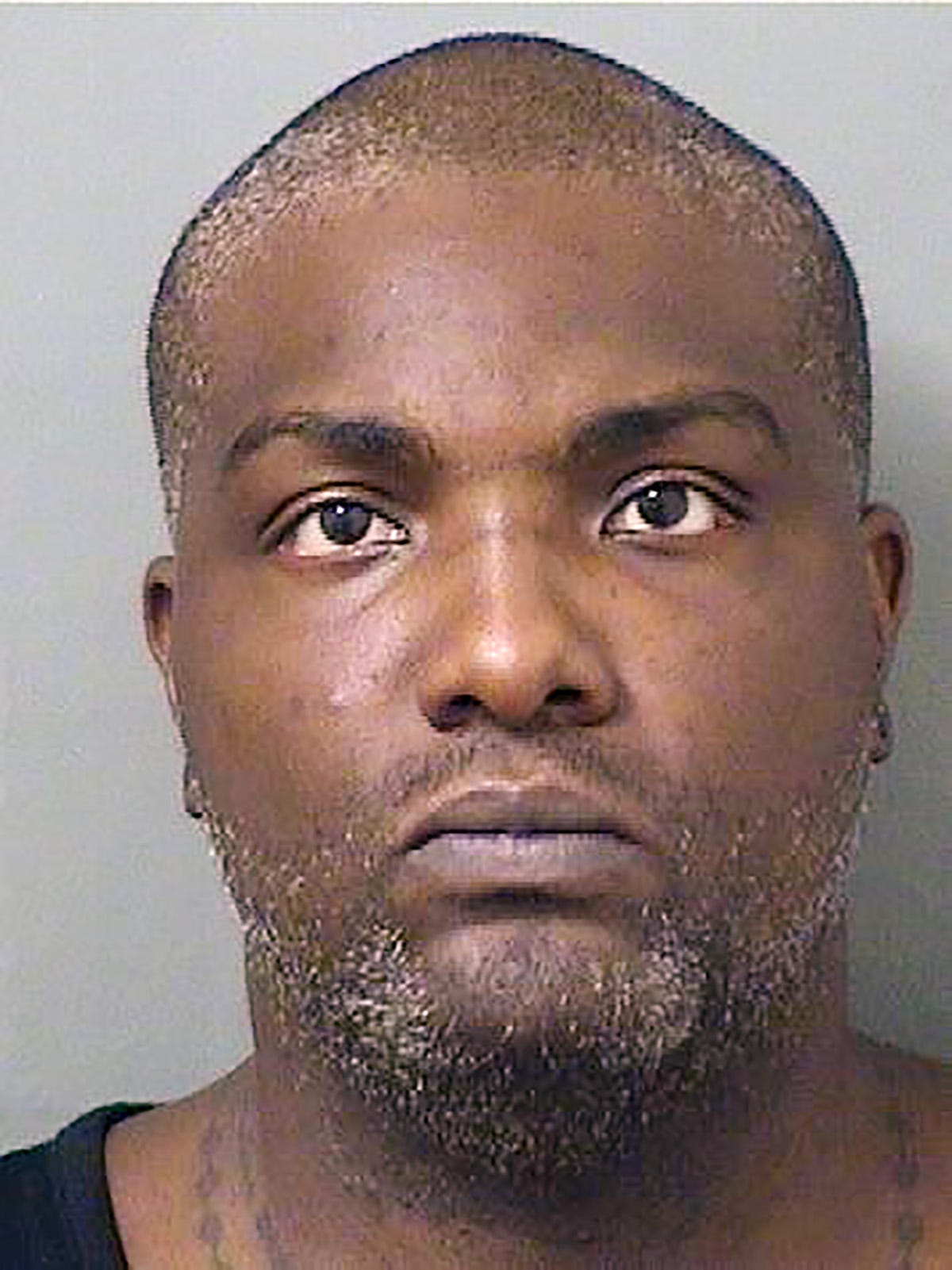
Robert Hayes was interviewed during the original investigation. He had bought a .40 calibre Smith & Wesson handgun in the weeks before the first murder. He was in Daytona Beach. He was a criminal justice and criminology major at Bethune-Cookman University, which is located in Daytona Beach and whose campus sits within the geography of the killings. He was also a former college cheerleader, six feet four inches tall, Black.
He was interviewed. He was not considered a serious suspect.
The investigators moved on.
Hayes graduated from Bethune-Cookman University in May 2006 three months after the third murder. He left Daytona Beach. He moved south, eventually settling in Palm Beach County, where he worked as a chef. He built a life. He was thirty-seven years old when the next confirmed killing occurred. He was thirty-seven when Rachael Bey died on the side of a road in Palm Beach County in March 2016.
Ten years between confirmed kills. Ten years during which investigators in Daytona Beach worked the cold case, submitted the DNA to databases, waited for a hit, and found nothing. The DNA profile existed in CODIS. Robert Hayes’ DNA was not in CODIS, because he had no prior criminal record that would have required its collection.
A Cigarette in a Beer Can
On the evening of September 15, 2019, Robert Hayes did something that an experienced investigator might describe as small and stupid, and that was in its specific way the end of everything.
He flicked a cigarette butt into a discarded beer can.
Palm Beach County Sheriff’s Office detectives were watching him. They were watching him in connection with the 2016 murder of Rachael Bey a thirty-two-year-old woman whose nude body had been found by a road crew along Beeline Highway and Indiantown Road on March 7, 2016. Bey had been sexually abused, beaten severely enough to break her jaw and several teeth, and strangled. She was left by the road. A passerby found her.
True Crime Weekly is a reader-supported publication. To receive new posts and support my work, consider becoming a free or paid subscriber.
Someone had given investigators a reason to look at Hayes. They watched him. They waited for him to discard something that would carry his DNA. He flicked the cigarette butt into the beer can. Detectives retrieved both. The cigarette butt went to the Florida Department of Law Enforcement Genetic Genealogy Team which was, at the time, the only statewide forensic genealogy team in the country, a point that Florida Governor Ron DeSantis noted with pride when the arrest was announced.
The DNA from the cigarette matched the DNA from Rachael Bey’s crime scene.
The DNA from the cigarette also matched the DNA from the Daytona Beach crime scenes thirteen years old, preserved in evidence since 2005 and 2006.
Robert Hayes was arrested on September 15, 2019. He was thirty-seven years old. He had killed three women in sixty days in Daytona Beach during his senior year of college, graduated, moved two hundred miles south, rebuilt himself as a chef with a professional life and a social circle, killed again after ten years, and been caught because he hadn’t thought about where he threw a cigarette.
The Trial
The trial of Robert Hayes on the three Daytona Beach murders began in February 2022 at the S. James Foxman Justice Center in Daytona Beach. Judge Raul Zambrano presided over a jury of sixteen people, including four alternates.
The prosecution’s case was built on three pillars that, assembled together, were difficult to argue against individually and almost impossible to argue against collectively.
The DNA evidence. Two of the three crime scenes had yielded biological material consistent with the same unknown male. That material, after thirteen years, matched Robert Hayes.
The ballistic evidence. The same .40 calibre Smith & Wesson had fired the shots that killed Gunther, Green, and Patton. Hayes had purchased a .40 calibre Smith & Wesson in the weeks before the first murder. The weapon was never recovered Hayes had disposed of it at some point in the intervening years but the spent brass recovered from the scenes was consistent with the type of weapon he had bought.
The geographic evidence. Hayes had lived in Daytona Beach during the murders. He attended Bethune-Cookman University. He was familiar with the specific streets and alleyways and undeveloped lots where the bodies were found. He had left Daytona Beach shortly after the third murder.
The defense acknowledged the guilty verdict Hayes’ attorneys did not seriously contest his conviction at trial and focused the sentencing phase on mitigation. Hayes had been raised without a father, whose own murder had defined his childhood. He had experienced abuse. He had been, by the accounts of those who knew him, a supportive friend and a gifted student. None of this explained or excused what he had done, and the defence was clear that they were not arguing otherwise. They were arguing that these facts weighed against the death penalty.
The jury could not reach unanimity on death. Judge Zambrano sentenced Hayes to three consecutive life terms without the possibility of parole.
He showed no reaction when the verdict was read. He had shown no reaction through most of the trial a controlled absence of response that the retired Sergeant Clem Malek, who had worked the original investigation, described in terms that stayed with those who heard them: he was precise, he was controlled, and he had been counting on that control to protect him for fourteen years.
The Criminology Student
The detail that distinguishes the Robert Hayes case from most serial killer cases the detail that has made it a staple of true crime podcast coverage and that sits uncomfortably in the mind long after you’ve read everything else is his major.
He was studying criminal justice. He was a criminology major.
He was learning, in the same year that he killed three women within sixty days, how crimes are investigated. How evidence is analysed. How investigators build cases. How killers are caught. The courses he attended in 2005 and 2006 were the same courses that explained the DNA methodology, the ballistic matching, the geographic profiling techniques that investigators were applying to the cases of Laquetta Gunther, Julie Green, and Iwana Patton.
His defence attorney Chris Anderson pointed to this in the sentencing phase not as an aggravating factor, but as context for the absence of a condom at two of the crime scenes. Hayes, a criminology major, had not used protection. Anderson argued this suggested a crime of passion rather than premeditation that someone planning carefully would have taken basic precautions. The prosecution’s response was that Hayes had left DNA at two scenes and not the third, suggesting he had been inconsistent rather than reckless, and that the level of planning involved in the triple murder series the same weapon, the same signature, the same method indicated clear premeditation regardless of the specific biological evidence.
The jury heard both arguments. They convicted him on all three counts.
The question of why a criminology student who understood the mechanics of criminal investigation committed murders that left DNA at multiple scenes, with ballistic evidence linking all three, in a city where he was attending university, remains in the territory of psychological analysis that the trial never definitively entered. Hayes never explained himself. Not to investigators, not to the court, not in any public statement.
He sat at the defense table and showed no reaction.
Rachael Bey and the Pending Case
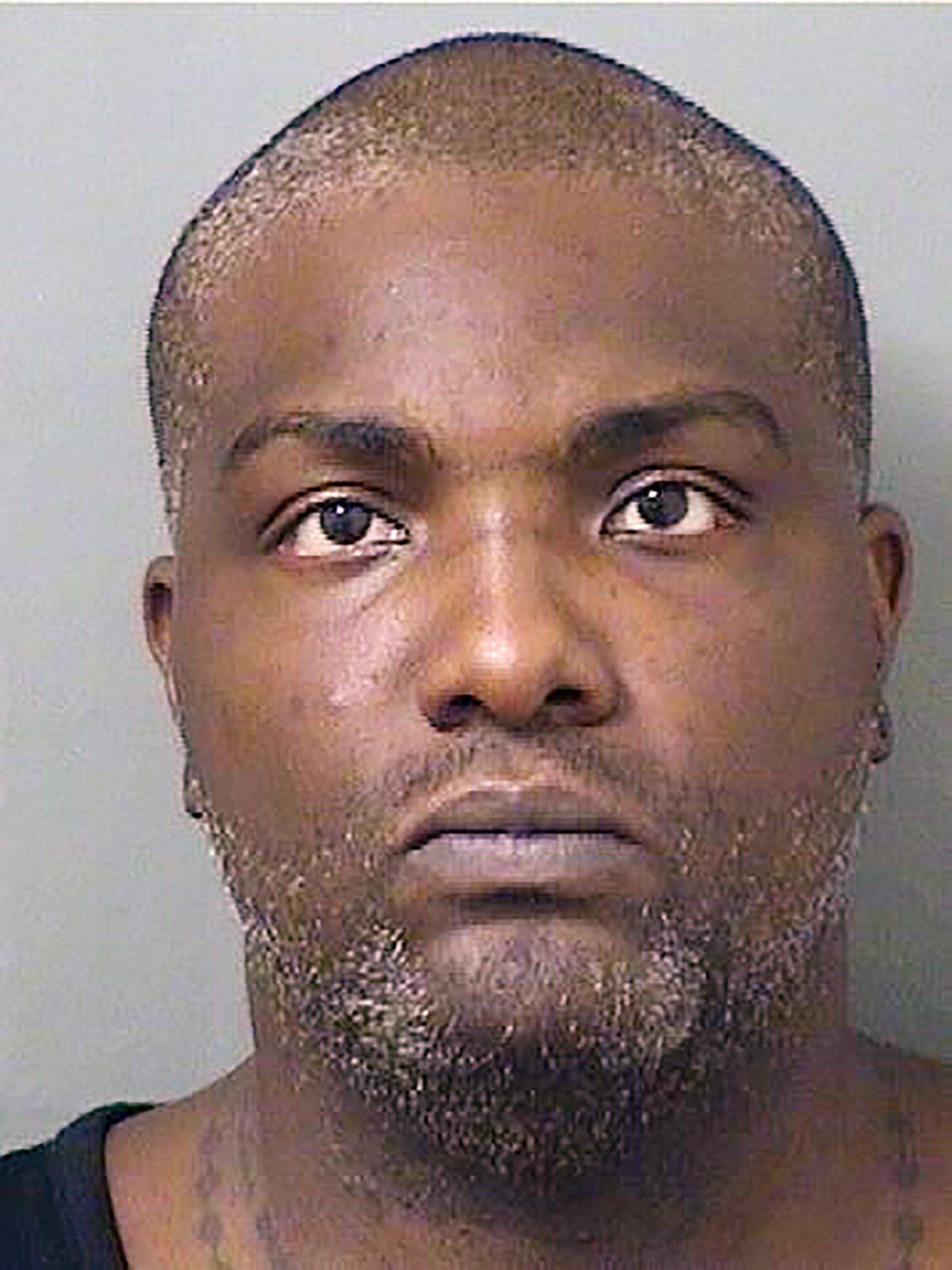
Hayes was convicted of three murders in Daytona Beach. He has not yet been tried for the fourth.
Rachael Bey, thirty-two years old, was found murdered in Palm Beach County in March 2016. Her case is what broke the Daytona Beach investigation open the DNA match that connected Hayes to both cases. Palm Beach County prosecutors sought the death penalty in their separate case. As of the time this article was researched, the Palm Beach case had not gone to trial.
The difference between the Daytona Beach murders and Rachael Bey’s murder in method, in location, in time raises a question that investigators have publicly acknowledged: are there additional victims in the ten-year gap between February 2006 and March 2016? Palm Beach Sheriff’s Captain Michael Wallace said at the time of the 2019 arrest: “We believe we took a serial killer off the streets. We’re going to be looking for additional victims.”
Whether those additional victims have been found, whether the gap between Daytona Beach and Palm Beach was truly a decade-long pause or whether there are unsolved cases in between that have not yet been connected to Hayes, is not fully established in the public record.
The Profile and Its Consequences
The racial profiling error in the original investigation has not been formally examined in any public inquiry or official report. Investigators who worked the original case have not, as far as the public record shows, been asked to formally account for why Hayes was not pursued more aggressively when he was first interviewed despite having purchased the right calibre handgun in the weeks before the first murder and living in the right geography.
The profile said probably white. Hayes was Black. He was interviewed and not further investigated. He graduated and left.
Whether a different profile, or a less rigid adherence to that profile, would have caught Hayes before Laquetta Gunther’s body cooled in that alley on Christmas Day 2005 or before Julie Green was found in the dirt on January 14, or before Iwana Patton’s body was discovered in February is a question that has no satisfying answer and no institutional consequence.
What it has is a record. The profile was wrong. The killer was not caught for thirteen years after the last confirmed Daytona Beach murder. Three women died in sixty days. A criminology student graduated and drove south.
Laquetta, Julie, Iwana
Laquetta Gunther was forty-five years old. She was found on Christmas Day.
Julie Green was thirty-four years old. She had left home to use a payphone and never came back.
Iwana Patton was thirty-five years old. Her body was found in an undeveloped lot that is now a police department.
Three women found nude and face down in the dirt of Daytona Beach over sixty days in the winter of 2005 and 2006, shot once each in the head, left by a man who was attending his criminology classes the next morning and who walked among the investigators trying to find him for three months and then left the city with a degree.
He is in prison now. Three consecutive life sentences without parole, for three murders.
The Christmas Day alley off Beach Street is now a part of a neighbourhood that has developed around it. The construction zone where Julie Green was found is now a suburb called Bayberry Lakes. The undeveloped lot where Iwana Patton was found is now the Daytona Beach Police Department.
They built a police station on the ground where he left her.
Laquetta Gunther was forty-five years old. Julie Green was thirty-four years old. Iwana Patton was thirty-five years old. Robert Tyrone Hayes was convicted of their murders in February 2022 and sentenced to three consecutive life terms without parole. He remains in Florida state custody. His trial for the murder of Rachael Bey in Palm Beach County is pending.


Leave a Reply