Norman, Oklahoma, May 9–11, 1970 two University of Oklahoma students were shot more than twenty times each and locked in a car trunk. The prime suspect was a police officer hired without a background check. He resigned four days after the bodies were found, was indicted twenty-one years later, stood trial and was acquitted because the evidence had vanished. He died in a Texas nursing home in 2002. The case is still unsolved.
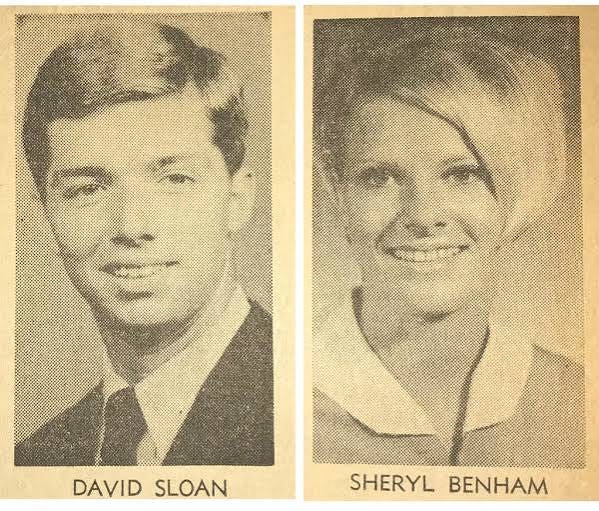
The Fraternity Party
It was the kind of warm May evening in Norman, Oklahoma, that a university town produces all the time. The semester winding down, the air going soft, parties at fraternity houses on the campus of the University of Oklahoma that carried the particular ease of young people who still believed, in the way that twenty-year-olds do, that the summer ahead was infinite and good.
If you enjoy my true crime coverage, please help me continue my newsletter and keep it free for others, by upgrading here for only $5 a month:
David Sloan was twenty-one years old. He was from Amarillo, Texas, and had come to OU in the way that young men from Texas have always made the journey across the Red River for the football, for the academics, for the particular culture of a flagship state university that stood large in the regional imagination. He was a member of the Sigma Alpha Epsilon fraternity, and on the night of Saturday, May 9, 1970, he took his girlfriend to the SAE house on the edge of campus.
Sheryl Lynn Benham was nineteen years old, from Oklahoma City. She was in her freshman year. She and David had been together in the way of college couples with a specific mixture of intensity and ordinary daily life that makes such relationships feel permanent from the inside, however young their participants.
They were seen leaving the fraternity party late that night, sometime around 11:30 p.m. They climbed into David’s 1966 Pontiac GTO the kind of car a twenty-one-year-old in 1970 was proud of and drove away from the SAE house into the Norman night.
At 2:00 a.m., when Sheryl had not come home, her parents reported her missing.
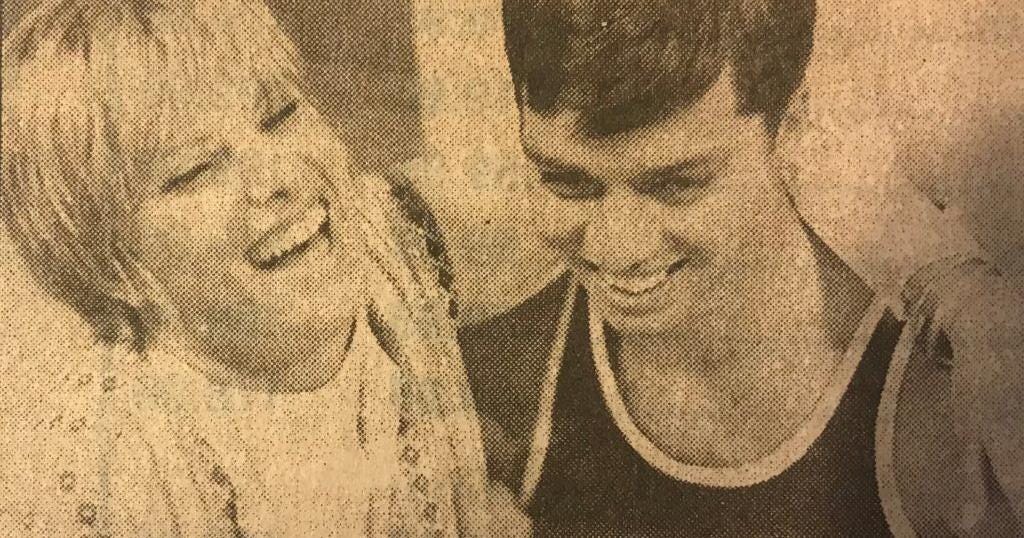
Ten Mile Flat was the local name for a stretch of rural road outside Norman that had served as a lovers’ lane for OU students and Norman residents for years a flat, isolated stretch where couples could park in privacy, away from the town’s lights and traffic. It was exactly the kind of location that was known to the student body through the informal geography of social life, and exactly the kind of location that was also known to whoever was watching.
On the morning of May 11, 1970 two days after David and Sheryl had last been seen searching friends and family found David’s Pontiac GTO parked on the rural road in the Ten Mile Flat area. The car was not damaged. Nothing about it suggested an accident.
Thanks for reading True Crime Weekly! This post is public so feel free to share it.
What it suggested was something much worse.
Blood was smeared in multiple areas inside the car. A broken pool cue lay on the front seat. Personal items belonging to both David and Sheryl were scattered across the seat and the surrounding ground. Officers who responded to the scene counted bullet holes in the vehicle multiple, from a .22 calibre rifle. The smell reached them before they opened the trunk.
David Sloan and Sheryl Benham were inside. Each had been shot at least ten times. Some accounts put the total higher more than twenty rounds fired between the two of them, a sustained assault with a semi-automatic weapon that left neither of them any chance of survival.
They had been shot in the car and their bodies placed in the trunk. The Pontiac GTO had then been parked on Ten Mile Flat and left for the two days it took searching family members to find it.
Sheryl was nineteen years old. David was twenty-one. The last time anyone confirmed seeing them alive, they were climbing into his car after a party.
Frank Gilley
The Norman Police Department began its investigation with the immediate and obvious question: who had been out on Ten Mile Flat in the hours after 11:30 p.m. on May 9? Who had been watching the lovers’ lane that night, and for how long?
The answer that emerged through the accounts of other students who had been parked on Ten Mile Flat that evening and on other evenings around the same period was specific and disturbing.
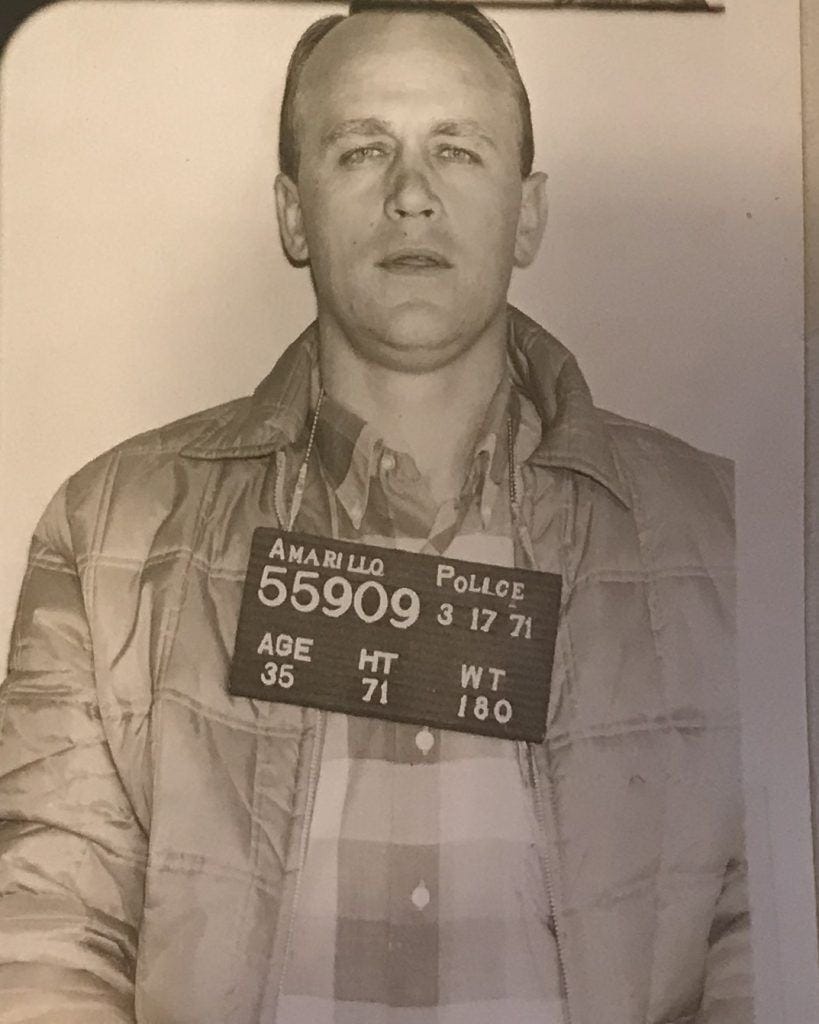
A Norman police officer had been working the area. Multiple couples reported that an officer had approached their vehicles on lovers’ lane roads in Cleveland County, shining a spotlight, asking questions, conducting what the students described as harassment the particular power dynamic of a uniformed officer approaching a parked car at night and making it clear that the occupants were unwelcome.
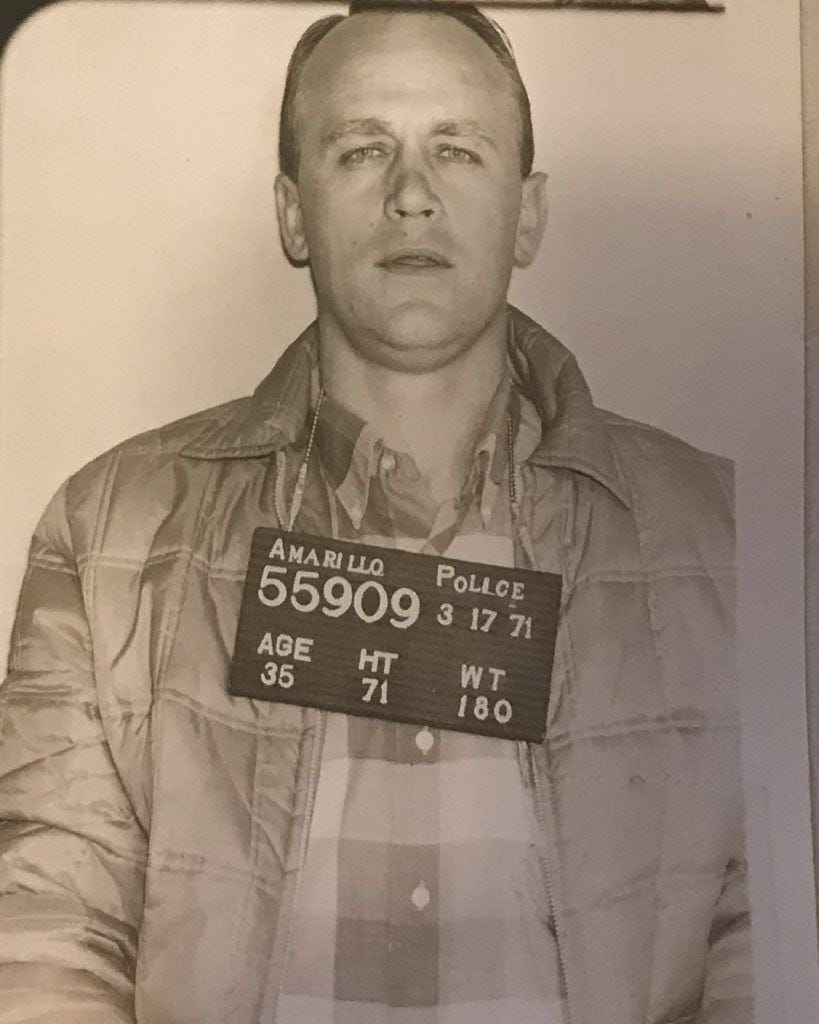
His name was Frank Edward Gilley.
Gilley had been hired by the Norman Police Department in March 1970 less than three months before the murders. He had been hired without so much as a background check. In an era when municipal police departments across the country were operating with varying degrees of professionalism and oversight, Gilley had walked into a job with a department that had not looked into who he was or what he had done before.
Four days after David and Sheryl’s bodies were found, Frank Gilley resigned from the Norman Police Department.
He did not leave the area immediately. In January 1971, eight months after the murders, it came to light that Gilley had continued impersonating a police officer on lovers’ lane roads in Cleveland County approaching parked couples in what appeared to be an official capacity, despite having resigned from the department months earlier. The pattern suggested someone who had not stopped doing what he was doing. It suggested someone who had a specific, persistent interest in couples parked in that specific geographic environment.
Investigators gave Gilley a polygraph examination. He passed. The polygraph result, under the investigative culture of the time, carried significant weight enough weight to take the formal investigative focus off him, even as individual detectives continued to believe he was responsible.
The case went cold…
True Crime Weekly is a reader-supported publication. To receive new posts and support my work, consider becoming a free or paid subscriber.
The Evidence Disappears
What happened to the evidence in the Sloan-Benham murders in the years after 1970 is the dimension of the case that is most damning and most difficult to explain away.
Evidence disappeared. Not all of it one shell casing survived but the bulk of the physical evidence that had been collected at the scene and from the car, that should have been available to any future investigation, that should have formed the foundation of any future prosecution, was gone. By the time investigators years later tried to build a case against Gilley, they found an evidence room that had been depleted in ways that no documentation satisfactorily explained.
Allegations of obstruction and cover-up within the Norman Police Department circulated for years and were eventually documented in part by a podcast produced by the University of Oklahoma’s student newspaper in 2018. The OU Daily‘s five-part investigative series Uncovered: The Lovers’ Lane Murders examined the evidence of institutional failure surrounding the case with a precision that exposed how badly the Norman PD had managed both the investigation and its aftermath.
The department had hired an officer without a background check. That officer had become the primary suspect in a double murder within two months of his hiring. The evidence collected in the investigation had gone missing. And the man who was the prime suspect had passed a polygraph and been permitted to leave to resign, to remain in the area harassing couples at lovers’ lanes, and then eventually to move to Texas and live out another thirty years of his life.
Whether the evidence disappeared through negligence, through deliberate destruction, or through some combination of the two has never been formally established. What is established is that when the case came to trial in 1991, twenty-one years after the murders, there was almost nothing left to prosecute with.
The Indictment, the Trial, and the Acquittal
In 1991, new evidence surfaced that prompted the case to be reopened. A Cleveland County grand jury indicted Frank Edward Gilley on two counts of first-degree murder for the deaths of David Sloan and Sheryl Benham.
He was arrested in DeSoto, Texas, where he had been living and working at an auto parts store. He was fifty-six years old. He was extradited to Norman, Oklahoma, to face trial.
The trial took place in October 1991. The prosecution had the single surviving shell casing. They had the accounts of students who had described Gilley harassing couples at Ten Mile Flat in the period around the murders. They had his abrupt resignation four days after the bodies were found.
They had the January 1971 impersonation incidents that suggested he had continued operating in the same area after his resignation.
What they did not have was the rest of the evidence. The physical evidence that should have formed the backbone of a murder prosecution the bullet fragments, the blood evidence, the trace material from the car, the documentation of the crime scene was gone.
The jury acquitted Frank Edward Gilley on all charges. The verdict was the legal outcome of an evidentiary situation that had been shaped, whether deliberately or through incompetence, by the twenty-one years between the crime and the courtroom. A man who most investigators who worked the case believed was responsible for two murders walked out of a Norman, Oklahoma courthouse in October 1991 as a legally innocent man.
He returned to Texas and He died in a Texas nursing home in 2002.
What Was Left
The Norman Police Department, in the years after the trial, implemented changes in hiring practices and evidence handling procedures. The specific failures that had allowed an officer to be hired without a background check, and that had allowed critical evidence to go missing, became institutional case studies in how not to manage a department. Reforms were made.
The reforms did not bring David Sloan and Sheryl Benham back. They did not restore the evidence that would have been needed to convict Frank Gilley if Gilley was guilty, which he maintained to his death that he was not.
The case is officially unsolved. Gilley’s acquittal is a legal fact, not a determination of innocence in the moral sense, but it is a legal fact that cannot be undone. A jury heard what evidence existed, found it insufficient, and acquitted him. Whatever he actually did or did not do on Ten Mile Flat on the night of May 9–10, 1970, is now a matter that the justice system has processed and returned without a verdict of guilt.
David Sloan’s family and Sheryl Benham’s family have waited fifty-five years for something that never came.
The OU Daily podcast in 2018 brought student journalists to the case with fresh eyes and the tools of modern investigative reporting. They documented the institutional failures. They traced the evidence losses. They spoke to people who remembered the case from the inside. What they produced was a clear-eyed account of how a justice system fails not dramatically, not with obvious corruption necessarily, but through a sequence of small decisions and institutional negligences that accumulate into something large enough to swallow two lives.
Sheryl’s sister Linda, who described to the podcast how her family had searched for Sheryl on the morning of May 10, has carried the weight of the case for more than half a century. David’s family has carried it for fifty-five years.
The GTO is long gone. Ten Mile Flat is just a road. The SAE fraternity house where David and Sheryl were last seen, where they climbed into his car and drove off into a May night, is still part of the OU campus geography. Students park on the roads around Norman without thinking about what happened there in 1970.
The Shell Casing
One piece of physical evidence survived the decades of loss. One .22 calibre shell casing made it through whatever happened to the rest of the evidence, and into the hands of prosecutors for the 1991 trial, and presumably into evidence storage afterward.
In the era of forensic genealogy in the era when a single hair in burlap caught a Long Island architect, when a cigarette butt in a beer can identified the Daytona Beach serial killer, when decades-old DNA from a penny necklace location is still being tested in Greene County, Tennessee a single shell casing from 1970 represents a potential thread.
Whether biological material from the scene still exists in usable form, whether the shell casing can produce evidence beyond what it produced in 1991, whether the case will ever receive the forensic attention it would need to produce new information these are questions that the Norman Police Department and the Cleveland County District Attorney’s office have not publicly addressed in recent years.
The OU Daily podcast raised these questions in 2018. The answers, if they were given, have not entered the public record.
Frank Gilley died in 2002. Whatever he knew about Ten Mile Flat on the night of May 9, 1970, died with him.
David Sloan was twenty-one years old. Sheryl Lynn Benham was nineteen.
True Crime Weekly is a reader-supported publication. To receive new posts and support my work, consider becoming a free or paid subscriber.
David Sloan was twenty-one years old, from Amarillo, Texas. Sheryl Lynn Benham was nineteen years old, from Oklahoma City. They were found in the trunk of David’s 1966 Pontiac GTO on May 11, 1970, at Ten Mile Flat outside Norman, Oklahoma. Each had been shot more than ten times. Frank Edward Gilley was indicted in 1991, tried, and acquitted. He died in 2002. The case remains officially unsolved. If you have information: Cleveland County District Attorney’s Office (405) 366-0243.
 True Crime Weekly
Leave a comment