Austin, Texas, 1995–2001 America’s most famous atheist, her son, and her granddaughter were kidnapped from their own offices by a man she had hired as a typesetter, held for thirty-five days while their money was converted into gold coins, strangled one by one in a San Antonio motel room, and dismembered. Their bodies were buried on a Texas ranch. No one knew they were dead for five and a half years.
The Most Hated Woman in America
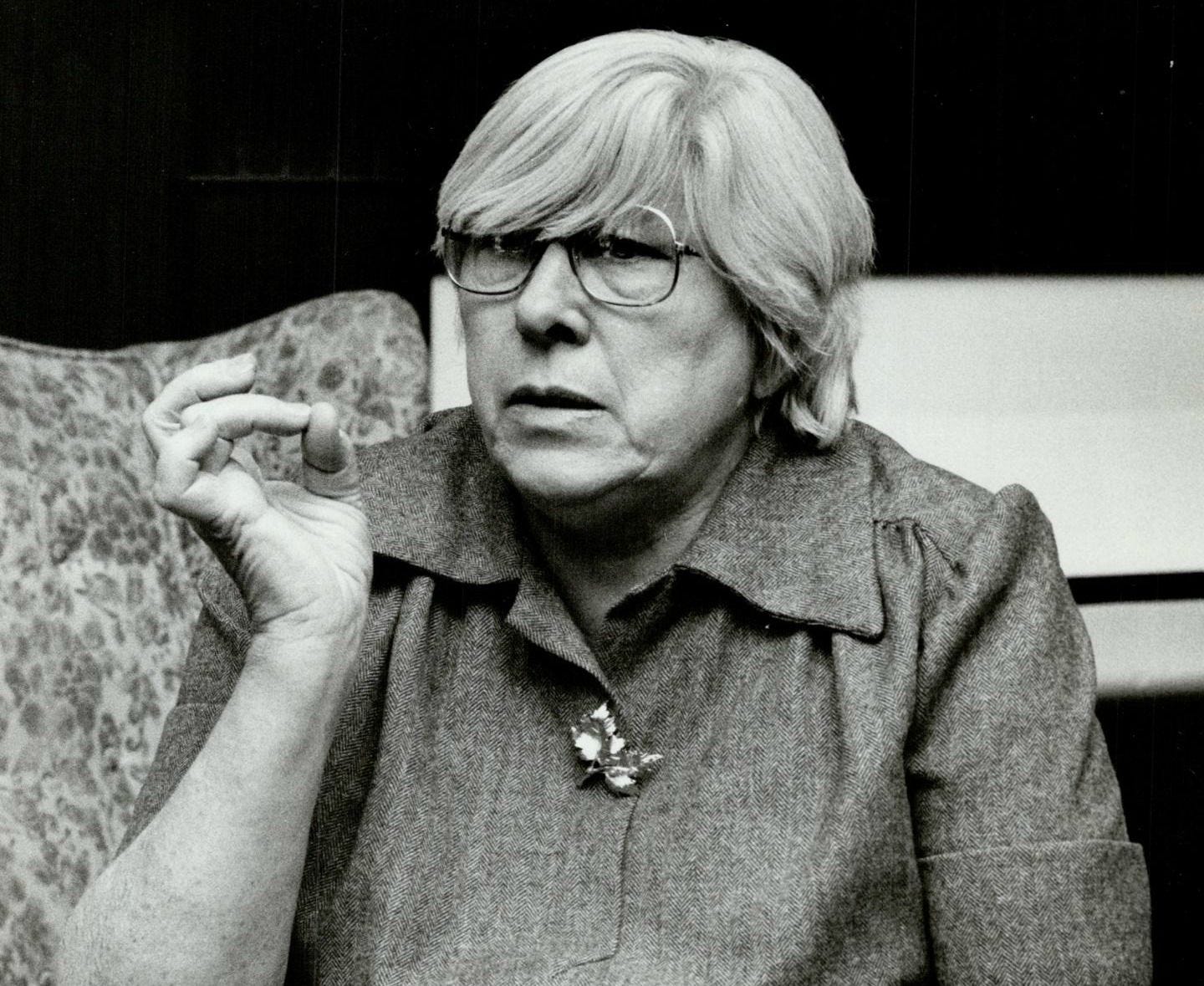
Madalyn Murray O’Hair did not object to the title. When LIFE magazine called her “the most hated woman in America” in 1964, she embraced it with the specific relish of a woman who had spent decades making herself impossible to ignore.
She had earned the designation through a specific and historically significant act. In 1960, her son William had come home from Woodbourne Junior High School in Baltimore and mentioned that the school day began with Bible readings and prayer. Madalyn was not interested in her son’s school day beginning with Bible readings and prayer. She was, in the specific and absolute sense that characterizes her entire public life, an atheist not casually, not privately, not as a personal matter she kept to herself, but as a political and cultural commitment she intended to pursue with the same vigor that religious Americans pursued their faith.
If you enjoy my true crime coverage, please help me continue my newsletter and keep it free for others, by upgrading here for only $5 a month:
She filed suit the case Murray v. Curlett was consolidated with Abington School District v. Schempp and decided by the Supreme Court in 1963 as part of a landmark ruling: school-sponsored Bible reading and prayer in public schools violated the First Amendment’s Establishment Clause. The ruling transformed American public education. Madalyn Murray O’Hair became the woman responsible for taking prayer out of public schools, which was, in the American cultural landscape of the early 1960s, about as provocative a public identity as it was possible to possess.
She founded American Atheists in 1963. She published a newsletter. She filed lawsuits. She debated ministers on television. She was loud, combative, frequently crude, unwilling to accommodate any register of conversation that she considered insufficiently honest about the absence of God. She received death threats as a matter of routine so many that they became part of the texture of her daily existence, the ambient noise of being who she was in the country she lived in.
The Family
The specific configuration of the family that would eventually disappear with her is worth understanding.
William J. Murray was her son from her first marriage the boy who had mentioned the Bible readings, whose schooling had become the pivot around which American constitutional law turned. William grew up, became an adult, and in 1980 to the specific horror and public delight of everyone who had been watching their family’s public career converted to Christianity.
He became an evangelical Christian minister. His mother described him thereafter as a “Judas” and publicly disowned him. The estrangement was complete and permanent.
Thanks for reading True Crime Weekly! This post is public so feel free to share it.
Jon Garth Murray was Madalyn’s second son, born in 1954, and the person who remained. Where William had defected to the enemy, Jon stayed. He became the president of American Atheists in title, though Madalyn retained control over the organisation’s actual operations well into her seventies. He never fully escaped her orbit. He was forty years old in 1995, living with his mother, working with his mother, travelling with his mother, described by their associates as having spent his entire adult life within an arm’s length of her.
Robin Murray O’Hair was Madalyn’s granddaughter the biological daughter of William Murray, born in 1963, who had chosen not to follow her father into Christianity and had remained with her grandmother. Madalyn formally adopted Robin. She became Jon’s adopted sister. The three of them Madalyn, Jon, and Robin — were described consistently by people who knew them as “three peas in a pod,” a closed family unit who lived together, worked together, and traveled together with a self-sufficiency that was, in retrospect, also a vulnerability.
When they disappeared, they disappeared as a unit. There was no one outside the pod who would notice they were gone in a way that produced immediate and effective action.
The New Zealand Account
By the early 1990s, American Atheists was in financial difficulty. Tax fights, legal costs, and the general expense of Madalyn’s combative public career had drained the organisation’s resources. She was in her mid-seventies, in failing health she was diabetic, with significant mobility problems and she was apparently contemplating a move to New Zealand as both a tax strategy and a way of escaping the accumulated hostility of thirty years of being America’s most famous atheist.
She had opened a bank account in New Zealand. The details of this account its exact size and the specific legal arrangements governing it were not public knowledge. What was known to people inside the organization, and what would become central to everything that followed, was that somewhere offshore there was a significant sum of money that the American Atheists organization controlled.
In 1993, needing typesetting help for the organizations newsletter, Madalyn hired an ex-convict named David Roland Waters.
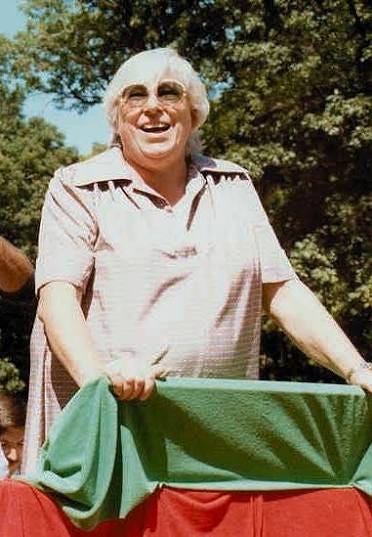
This decision explicable in the context of a cash-strapped organization that may not have had the resources to be selective, understandable given that Waters presented himself as competent and reliable, defensible in isolation would end her life, Jon’s life, Robin’s life, and Danny Fry’s life, and would send another man to prison for the rest of his natural existence.
David Roland Waters
David Roland Waters was, by the time he began working for American Atheists, a man whose history should have precluded his being anywhere near a vulnerable elderly woman and her family.
He had a history of violent criminal behaviour. He had served prison time in Illinois, where he and Gary Paul Karr had been incarcerated simultaneously a circumstance that would later prove fateful. He was, in the assessment of investigators who studied his record, a man of specific and serious danger. He was also, when he chose to be, charming, competent, and capable of presenting himself as something other than what he was.
He worked at American Atheists as a typesetter. He was trusted and he began stealing.
In 1994, Madalyn discovered that Waters had stolen approximately $54,000 from the organisation. She fired him and filed a complaint with authorities, and Waters was convicted of theft. He was placed on probation. He was angry the particular anger of someone who has been caught and has been publicly identified as a thief, the anger of someone who has been humiliated by a public figure who was not the kind of woman to let a grievance pass quietly.
He spent the next year planning what he was going to do about it.
Gary Paul Karr and Danny Fry
In July 1995, Gary Paul Karr moved to Waters’ apartment in Texas. They had been cellmates in the Illinois prison. Karr was a man of documented violent criminality armed robbery, weapons offenses, a history that read as the biography of someone who had never found a reason to stop.
True Crime Weekly is a reader-supported publication. To receive new posts and support my work, consider becoming a free or paid subscriber.
Danny Fry was a third participant in what followed, a man with his own criminal history who would not survive long enough to face justice for what he did.
The plan the three men developed was, in its basic structure, not complicated. It was the kind of plan that requires confidence in one’s ability to control a situation over an extended period of time, and that underestimates the degree to which time creates exposure. They would kidnap the O’Hair family. They would use the kidnapping to access the money in the New Zealand account. They would kill the family once they had the money.
What made the plan more complex than a simple robbery was the New Zealand account the money could not simply be taken. It had to be transferred, which took time, and the transfer required the cooperation of at least one member of the family. Jon Garth Murray was the cooperative one. He was the one who managed the financial affairs of the organisation. He was the one who could make the wire transfer happen.
This meant the family had to be kept alive for the thirty days it would take for the transfer to clear and the gold coins to be procured.
Thirty days is a long time to keep three hostages alive in a San Antonio motel.
August 27, 1995
On August 27, 1995, Waters, Karr, and Fry put the plan into effect. All three were armed with handguns. They used a delivery-man ruse to gain entry to the American Atheists offices in Austin, arriving as if making a routine delivery.
Madalyn and Jon were in the building. The kidnappers waited for Robin to arrive, knowing from their prior access to the organisation that the three would be together. When Robin appeared, all three were taken at gunpoint to the family home. There, Waters made his demands: access to the New Zealand account and its $600,000.
Madalyn reportedly laughed when they demanded $3 million. She told them they didn’t have that kind of money. She and Waters negotiated a word that sits uncomfortably but accurately describes what apparently happened and they eventually agreed on the contents of the New Zealand account.
Then came the waiting. The three O’Hairs were transported to the Warren Inn in San Antonio a motel where they waited for the wire transfer to clear from New Zealand and for the money to be converted into gold coins at a San Antonio jewelry store. For thirty days, the family and their kidnappers lived in this strange cohabitation. Waters’ subsequent confession to FBI agents, which was detailed and extraordinary, documented what those thirty days were actually like.
Waters bought a video game console. Jon, who had spent his forty years of life in his mother’s service with no particular space for his own amusements, became interested in video games. He and Waters would sit in the motel room playing video games together. Robin cheered Jon on. Madalyn, by Waters’ account, was furious not primarily about the kidnapping, apparently, but about the fact that her son was having fun, which was not something she had ever particularly encouraged.
Madalyn spent the thirty days in the motel room doing what she had done everywhere else in her life: she argued. She argued with her captors. She engaged Karr in philosophical debates about God and existence. This was, on Madalyn Murray O’Hair’s part, simply what she did in any room with any people in it. On Karr’s part, it was an irritant that reportedly made him periodically threaten to kill her ahead of schedule.
Waters told the FBI that the thirty days had produced a dynamic he found strange to describe. Jon had become something like a partner. “It got to the point where it was real bizarre, and Jon and I were like working together,” Waters said. “He was like responsible for his group, and I was responsible for my group. One of his primary responsibilities was to control Madalyn.”
Jon did not call the police. He was given access to his cell phone. He traveled without direct supervision on at least some occasions. He did not alert anyone who might have helped them.
Whether this reflected genuine psychological control by Waters the textbook dynamics of captive-captor bonding, the Stockholm effect applied to a specific and unusual personality or whether Jon had made some separate calculation about how to survive the situation, Waters’ account suggests a man who had spent forty years being his mother’s primary support and was not, even in a motel room with his kidnappers, capable of stepping outside the role she had assigned him.
September 29, 1995
The gold coins arrived at the San Antonio jewellery store on September 29, 1995. Jon Garth Murray went to pick them up $500,000 in gold coin, the proceeds of the New Zealand account, converted into a physical form that could be easily transported and difficult to trace. He returned to the motel.
That night, Waters, Karr, and Fry strangled Madalyn Murray O’Hair, Jon Garth Murray, and Robin Murray O’Hair. All three killers participated in the strangulations. The bodies were transported to a rented storage unit in Austin.
Gary Karr performed the dismemberment. He offered to do the job for a $50,000 bonus when Waters and Fry declined. “Danny and I were queasy,” Waters told the FBI. Karr did the work. The bodies were placed in 55-gallon metal drums.
Danny Fry was the fourth victim. In the days after the O’Hair murders, Waters and Karr killed Fry the third member of their group, the man they feared would eventually talk. His body was found near a Dallas creek in 1995, headless, with hands removed to prevent identification. His identity was not established until the investigation of the O’Hair murders led investigators back to him.
The gold coins were distributed among the three men and subsequently spent, gambled, and lost over the following years. Waters and Karr went their separate ways. The barrels containing the dismembered remains of the O’Hair family were eventually moved from the Austin storage unit to a ranch near Camp Wood, Texas, in the southern part of the state, where they were buried.
Five and a Half Years of Not Knowing
When the O’Hairs disappeared in late August 1995, the organizations they had built noticed quickly that something was wrong. The note left on the door of the American Atheists offices said the family had been called away on an emergency. Calls from family members in subsequent weeks were described as strange Jon and Madalyn called their associates, but the conversations were “cagey.” One senior employee said he could not get a straight answer about when they would be back. The last confirmed communication with any of the O’Hairs was September 28, 1995 one day before the gold coins were picked up and the murders occurred.
Then silence. The American Atheists organization eventually assumed that Madalyn had taken the money and the family and relocated to New Zealand, having made the move she had been discussing for years. It was not an implausible conclusion she had the account, she had the motivation, and she had a history of doing things abruptly without explaining herself. The organization continued without them.
It took the IRS to bring the case into focus. In the investigation of the Murray O’Hair family’s finances and tax status, investigators identified David Roland Waters as a person of interest in the disappearance of the $600,000. In March 1999, Gary Paul Karr was arrested on weapons charges found in possession of two loaded handguns, illegal for a convicted felon. During the investigation that followed, his connection to Waters and the O’Hair disappearance surfaced.
In December 1999, both Karr and Waters were charged with kidnapping, extortion, and robbery in connection with the disappearance. Waters pleaded guilty to conspiracy to kidnap, robbery, and murder. As part of his plea agreement struck to spare him a death penalty prosecution he agreed to lead investigators to the bodies.
In January 2001, on a cattle ranch near Camp Wood, Texas, in the southern part of the state, investigators following Waters’ directions found the buried barrels. The remains of Madalyn Murray O’Hair, Jon Garth Murray, Robin Murray O’Hair, and Danny Fry were confirmed. Madalyn Murray O’Hair was identified partly through her prosthetic hip, which bore a serial number.
The Sentencing and the Deaths
David Roland Waters was sentenced to twenty years in federal prison on March 30, 2001. He was also ordered to pay back $543,665 to the United Secularists of America and to the estates of the Murray O’Hairs. He died of lung cancer at the Federal Medical Center in Butner, North Carolina, on January 27, 2003 less than two years into his sentence.
Gary Paul Karr was convicted in June 2000 of conspiracy to commit extortion, traveling interstate to commit violent acts, money laundering, and interstate transportation of stolen property. He was acquitted of conspiring to kidnap. He was sentenced to life in prison in August 2000. In 2021, he appeared in federal court for a resentencing hearing his attorneys argued the original sentence had been miscalculated. The court maintained a sentence that kept him incarcerated. He remained in federal prison as of the most recent reporting.
Danny Fry was dead before anyone could charge him.
The detail that distinguishes the O’Hair case from other kidnapping-and-murder cases the detail that makes it sit differently in the mind is those thirty days.
Thirty days in a San Antonio motel. Madalyn Murray O’Hair, seventy-six years old, diabetic, in failing health, the most hated woman in America, arguing with her kidnappers about God while her granddaughter cheered Jon on at video games and her son played video games with the man who was going to kill him.
Waters, in his confession, described the dynamic with a candor that is itself unsettling the way Jon had become something like a collaborator, the way Madalyn had goaded Karr into philosophical debates, the way the motel room had produced its own bizarre domestic routines over a month of captivity. The family that had always functioned as a unit continued to function as a unit even in the conditions of their imprisonment. Madalyn was still managing Jon. Jon was still managing Madalyn. Robin was still the one who smoothed the friction between them.
They were strangled on the night of September 29, 1995, one by one. The order of the strangulations is not documented in the public record of Waters’ confession. What is documented is that all three killers participated, and that Gary Karr then did the work that Waters and Fry found themselves unable to do, for a bonus of $50,000.
In keeping with her wishes, Madalyn Murray O’Hair was cremated after her remains were recovered in 2001. No one prayed over her.
The Note on the Door
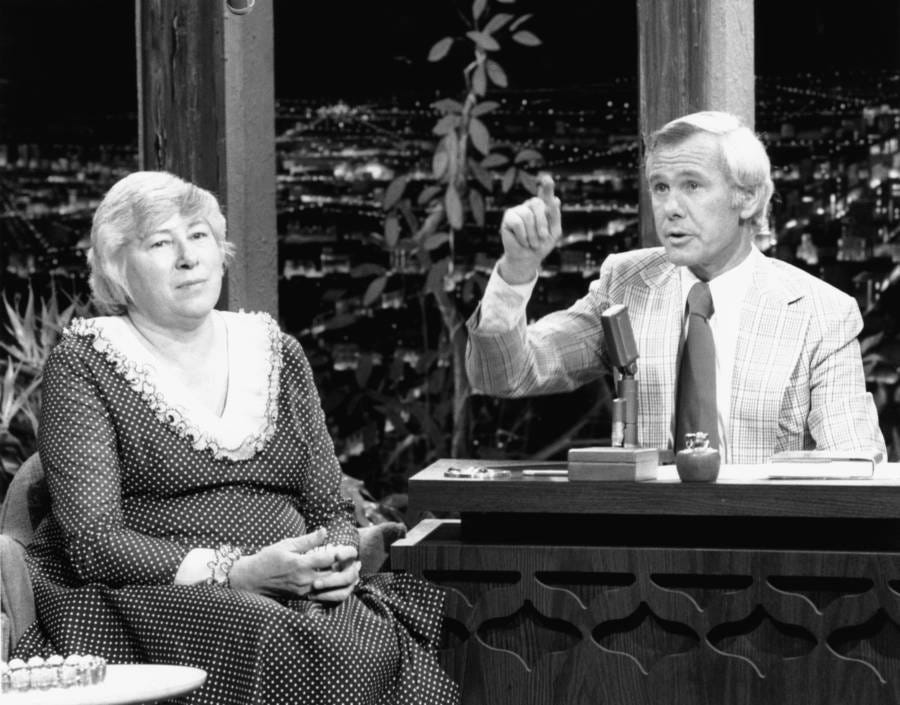
When the O’Hairs disappeared in late August 1995, they left a note on the door of the American Atheists offices: they had been called away on an emergency.
The note was not true. They had not been called away. They had been taken at gunpoint by a man with a delivery box and two armed friends, and they had been driven to a motel, and they were never coming back.
The note on the door remained there while the organization waited and wondered and gradually concluded that Madalyn had done what she had always threatened to do picked up and moved to New Zealand, taking the money and the family and leaving without a proper goodbye, because that was the kind of thing she did.
They were wrong. She was in the motel. And then she was in the barrels. And then she was in the ground on a ranch near Camp Wood, Texas, for five and a half years, while American Atheists reorganised around her absence and assumed she had gone somewhere better.
Nobody knew she was dead until 2001. Nobody prayed over her when she was found. She would have wanted it that way.
Madalyn Murray O’Hair was seventy-six years old. Jon Garth Murray was forty years old. Robin Murray O’Hair was thirty years old. They were kidnapped on August 27, 1995, and murdered on September 29, 1995. Their remains were found on a Texas ranch in January 2001. David Roland Waters died in federal prison in 2003. Gary Paul Karr is serving life in federal prison.
 True Crime Weekly
Leave a comment