Martinsburg, West Virginia, August 10, 1991 a freelance journalist investigating a sprawling government conspiracy was found dead in a hotel bathtub with his wrists slashed twelve times. His accordion file of notes was gone. His briefcase was gone. He had told his brother three weeks earlier: if something happens to me, don’t believe it’s an accident. The death was ruled a suicide and it has never been solved.
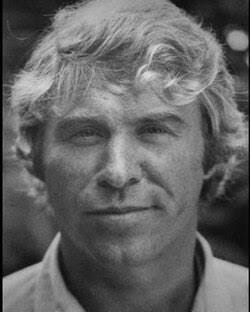
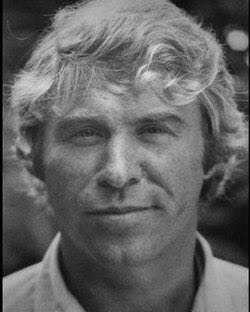
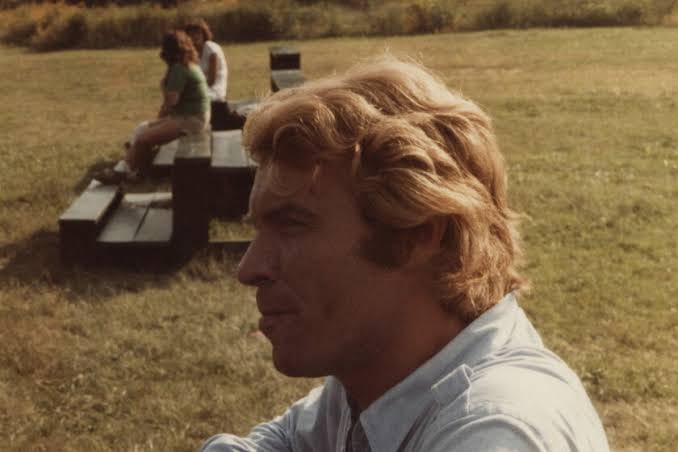
Joseph Daniel Casolaro was born on June 16, 1947, in Fort Meade, Maryland, and by the late 1980s had built a modest but respectable career in journalism around the Washington DC suburbs. He was forty-three years old, trim, with light hair and an easy manner that the people who loved him remembered as the thing you noticed first he was warm, he was sociable, he was the kind of man who could walk into a room and make people feel immediately comfortable.
He had written for computer-trade magazines and covered technology for various publications. He had owned a small music magazine. He had been married, had a son, and was living in a townhouse in Fairfax, Virginia. He was not wealthy. He was a working journalist of the kind that Washington produces in significant numbers smart, connected, perpetually pursuing the next story.
In the summer of 1990, a colleague suggested he look into something called the INSLAW case. It seemed, at first, like a fairly contained story: a small software company in Washington had accused the United States Department of Justice of stealing their product, using it without authorisation, and driving the company into bankruptcy. The company was called INSLAW. The software was called PROMIS Prosecutor’s Management Information System, a case-management program developed originally to help federal prosecutors manage their caseloads.
Danny Casolaro looked into it. He kept looking. And the more he looked, the more the story stopped being about a software company and started being about something so large that he could only describe it with a word he coined himself. He called it the Octopus.
True Crime Weekly is a reader-supported publication. To receive new posts and support my work, consider becoming a free or paid subscriber.
PROMIS
To understand what Danny Casolaro believed he had found, you have to understand what PROMIS actually was, and what someone who wanted to weaponise it could theoretically do with it.
Bill Hamilton founded INSLAW in the 1970s as a non-profit research organization, and PROMIS was the company’s principal creation software designed to manage the enormous volume of paperwork generated by the federal prosecution system, tracking defendants, cases, court dates, and evidence across multiple jurisdictions. It was, for its time, technically sophisticated. Hamilton and his team spent years developing it and had a contractual relationship with the Justice Department to deploy it in US Attorney offices across the country.
The contractual relationship deteriorated into a dispute, and by the mid-1980s INSLAW was alleging that the DOJ had not only failed to pay for the software properly but had distributed it without authorisation to other agencies and to foreign governments. A bankruptcy court judge sided with INSLAW in 1987, finding that the DOJ had stolen the software through “fraud, trickery, and deceit.” The Department of Justice appealed. The case moved through multiple proceedings and investigations over years.
What Casolaro found through his primary source, a man named Michael Riconosciuto was that the INSLAW dispute was only the visible surface of something much more disturbing.
Riconosciuto was a computer specialist who claimed to have worked for the Wackenhut Corporation, a private security company with deep ties to the intelligence community, and who said he had been contracted to modify PROMIS on behalf of the government. The modification, he claimed, was a backdoor a piece of hidden code that would allow American intelligence agencies to monitor the activities of any foreign entity that acquired and used the software. By selling or distributing a surveillance-enabled version of PROMIS to foreign governments and intelligence services, the US could, in theory, read the files and communications of the agencies it was ostensibly helping.
The buyers, Riconosciuto alleged, had included intelligence agencies in Israel, Jordan, and elsewhere. The software had been modified at the Cabazon Indian Reservation in California sovereign territory where oversight of what was happening was minimal. The man who had arranged for the distribution of the modified PROMIS, he said, was a California businessman and Reagan administration insider named Earl Brian.
This was the claim that Casolaro began investigating. His notebook filled up. His research files expanded. He connected the INSLAW-PROMIS story to the Iran-Contra affair the secret network of arms deals and fund diversions that had nearly destroyed the Reagan administration. He connected it to the BCCI banking scandal the Bank of Credit and Commerce International, the criminal financial institution whose tentacles had reached into intelligence communities across the world before its 1991 collapse. He connected it to what Oliver North had called “The Enterprise” the private intelligence network of former government operatives who had pursued their own foreign policy agenda throughout the 1980s.
He told his brother Tony that the Octopus was the most explosive investigative story of the twentieth century. He said it connected everything.
True Crime Weekly is a reader-supported publication. To receive new posts and support my work, consider becoming a free or paid subscriber.
The Threats
In the spring and summer of 1991, Danny Casolaro began receiving phone calls in the night.
He told his brother about them. He told his friend Benjamin Mason about them. Unknown voices, untraceable. The content was consistent: you are going to die.
He did not stop investigating. He was close, he told the people he trusted. He was almost there. The source he was going to meet in Martinsburg, West Virginia, in early August a man he believed would provide him with documentation of the financial connections that would prove the whole structure of the Octopus was the last piece.
Three weeks before he drove to Martinsburg, he sat down with his brother Tony and told him something specific. “Don’t believe it if something happens to me,” he said. “Don’t believe it’s an accident.”
He went to Martinsburg on August 8, 1991, and checked into the Sheraton Inn. Room 517. He had his accordion file of research notes with him the thick folder that friends said he carried everywhere, containing months of accumulated documentation, contact lists, source materials, the physical accumulation of the investigation.
He spent the evening of August 8 talking to a man staying in the adjacent room, Room 519 an occupant from Minnesota whose identity was investigated by the subsequent probe and found to be unconnected. He went to the Stone Crab Inn the following afternoon. He had what one source described as a meeting with a man named William Turner in the parking lot Turner said he had provided Danny with papers showing the corruption Danny believed tied to the Octopus. Whether that meeting actually occurred as Turner described it, and whether any such papers were actually transferred, was a matter the subsequent investigation examined without reaching firm conclusions.
On the morning of August 10, 1991, a hotel housekeeper opened Room 517 to clean it.Danny Casolaro was in the bathtub. The water was red. He was dead.
The Scene
The Martinsburg city police arrived. The West Virginia medical examiner arrived. The scene was documented. Danny Casolaro had died of blood loss from wounds to his wrists. He had been slashed twelve times eight cuts on his left wrist and four on his right. One cut was deep enough to sever a tendon. The cuts were made with a single razor blade found in the bathtub. A suicide note was present in the room.
The medical examiner ruled the death a suicide. The accordion file of research notes was gone. The briefcase was gone. Every piece of documentation Danny Casolaro had brought with him to Martinsburg the materials he had accumulated across more than a year of investigation into the Octopus had vanished from the room. The suicide note was present. The evidence of what he had been working on was not.
His family was told of his death by telephone. His brother Tony immediately contacted the Martinsburg authorities and asked that they not release Danny’s body for burial he wanted an independent autopsy conducted. The request was not honoured. Danny’s body was embalmed by a local funeral home before Tony could intervene. Embalming destroys much of the evidence that a second autopsy would have been able to examine.
Tony Casolaro collected what remained of his brother’s research the notes and clippings left in the Fairfax townhouse, the materials that had not gone to Martinsburg. He handed them to ABC News in the hope that the network would follow the investigation forward. ABC did nothing with the information. He then gave the files to a friend at Investigative Reporters and Editors at the University of Missouri journalism school, where they were archived.
In 1993, conspiracy researcher Kenn Thomas found them in those archives and began his own investigation.
What the Investigations Found
The death of Danny Casolaro did not pass without official scrutiny, though the scrutiny that followed was widely described by journalists and investigators as inadequate.The House Judiciary Committee conducted a review of the INSLAW matter, which had by then become entangled with questions about Casolaro’s death. An FBI investigation was opened. Special Counsel Nicholas Bua was appointed by Attorney General Janet Reno to examine the INSLAW case and its related conspiracy allegations.
The Bua Report, published in 1993, reached conclusions unfavourable to INSLAW and to the conspiracy theories Casolaro had been pursuing. It found no credible evidence that the DOJ had intentionally stolen PROMIS, no evidence that PROMIS had been distributed to foreign governments with a backdoor installed, and no evidence that any of the broader conspiracy threads Casolaro had been following were real. It found Michael Riconosciuto’s testimony to be not credible.
INSLAW disputed the Bua Report vigorously, filing a response that accused various government entities including, at one point, the DOJ’s Office of Special Investigations of being connected to Casolaro’s death. This accusation was not substantiated. The FBI’s own internal documents, released decades later through Freedom of Information Act requests, told a more complicated story. The documents revealed that FBI agents working the case had felt genuine unease about investigating the circumstances of Casolaro’s death. One document showed that the FBI’s BCCI Task Force which had been looking into the Bank of Credit and Commerce International had been denied access to certain materials in their investigation and had found connections between the PROMIS case, Casolaro’s death, and the CIA-linked BCCI. The FBI’s sources at one point accused the House Judiciary Committee itself of losing or destroying evidence relevant to the PROMIS investigation.
Both the FBI and the House Judiciary Committee had, according to these documents, lost or destroyed evidence. This is not the same as saying someone killed Danny Casolaro. But it is a documented pattern of institutional failure around the investigation of a case that had alleged institutional crime at its centre.
Riconosciuto’s credibility as a source is a genuine problem for any confident assessment of what Casolaro had actually found. He was arrested on drug charges days after delivering a declaration to the House Judiciary Committee a timing that many found suspicious and was convicted. He remained a controversial figure, claiming extraordinary things from prison and attracting both committed believers and committed sceptics. Some of his specific claims including the Canadian government’s use of PROMIS software, which INSLAW verified by accident in 1991 when the Canadians sent an inquiry about a bilingual version were independently confirmed. Others were not.
The specific claim about Earl Brian that he had been the conduit for the distribution of a surveillance-enhanced PROMIS was vigorously argued by Elliot Richardson, the former Attorney General who had distinguished himself during Watergate, in a New York Times article in 1992. Brian sued Richardson for defamation. He lost: the New York Court of Appeals dismissed his claim in 1995, finding that Richardson’s assertions were protected speech.
True Crime Weekly is a reader-supported publication. To receive new posts and support my work, consider becoming a free or paid subscriber.
The question of what, specifically, Casolaro had in that accordion file when he went to Martinsburg whether it contained documentation that would have supported his theory or whether it contained a more confused collection of leads and speculation cannot be answered because the file was never recovered.
The Twelve Slashes
The physical act of suicide by wrist-cutting twelve times eight cuts on the left wrist, four on the right, one deep enough to sever a tendon is the element of the crime scene that most powerfully resists the suicide conclusion for people who study the case closely. Forensic pathologists who have examined the case descriptions have noted that the number and pattern of wounds is unusual for a completed suicide. Self-inflicted wrist cutting as a method of suicide typically produces a smaller number of cuts, with tentative initial incisions and a single or small number of deep terminal wounds. Twelve separate cuts, including multiple cuts deep enough to produce the blood loss that killed him, is an unusual distribution. The severed tendon would have significantly impaired the function of the hand on which it was located, raising questions about how the subsequent cuts were made.
These observations do not constitute proof of homicide. Medical examiners and forensic experts who have reviewed the case reach different conclusions. The West Virginia medical examiner who ruled the death a suicide had access to the actual scene; critics had access only to descriptions. The embalming which destroyed much of what an independent examination might have found was the single most significant procedural failure in the aftermath of the death, and it was an irreversible one.
The Kenn Thomas and Jim Keith book The Octopus: Secret Government and the Death of Danny Casolaro, which brought the case to a wider public in 1993 and was expanded in 2003, argued that the wounds were too severe and too numerous to be self-inflicted. The Netflix docuseries American Conspiracy: The Octopus Murders, released in 2024, revisited the case in detail and attracted a new generation of viewers to questions that remain unanswered.
The Missing File
The accordion file has never been found. Tony Casolaro spent years trying to pursue his brother’s investigation and to force official accountability. Dominic Orlando, Danny’s cousin and a playwright, has described the experience of growing up with the knowledge of what happened the specific texture of a family death that is officially explained and practically inexplicable.
Danny Casolaro believed he was going to be killed. He went to Martinsburg anyway. He had a source who was going to give him what he needed. He died in a bathtub with his wrists slashed twelve times and his notes missing. The death was ruled a suicide in a state that has closed the case. Whether that conclusion is correct is a question that has not been resolved in thirty-five years.
The Octopus, whatever it was, has kept its secrets.
Joseph Daniel Casolaro was born June 16, 1947. He was forty-four years old when he died on August 10, 1991, in Room 517 of the Sheraton Inn in Martinsburg, West Virginia. His death was ruled a suicide. His research notes were never recovered. The case has never been solved.


Leave a comment