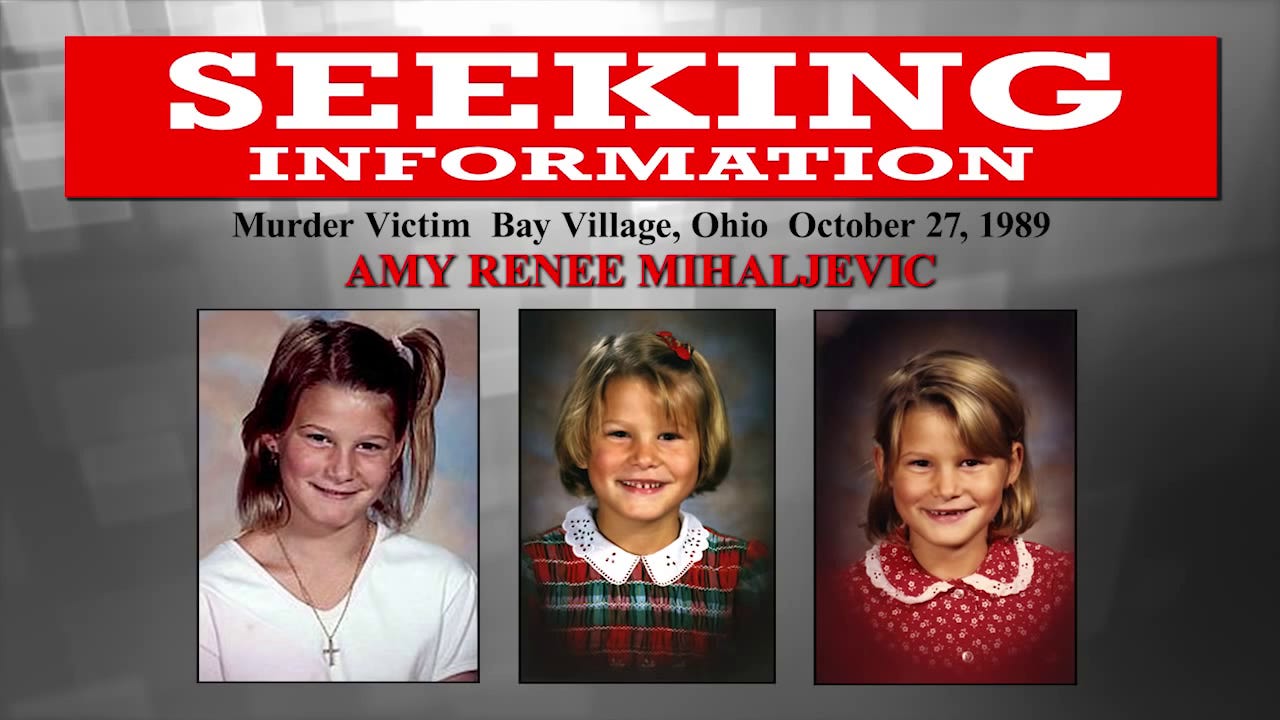
Bay Village, Ohio, October 27, 1989 a ten-year-old girl was lured from a shopping plaza by a man who called her home and said he wanted help buying her mother a secret gift for a work promotion. Her body was found one hundred days later in a field fifty miles away. A hair found on her clothing is in a California laboratory right now, being tested for DNA. Thirty-seven years after Amy Mihaljevic’s murder, her killer is still free but investigators believe they are closer than they have ever been.
True Crime Weekly is a reader-supported publication. To receive new posts and support my work, consider becoming a free or paid subscriber.
Bay Village
Bay Village is a small city on the southern shore of Lake Erie, west of Cleveland, in one of the wealthiest and quietest corners of Cuyahoga County. It is the kind of suburb that people choose specifically for what it is: safe, stable, insulated. Doors were left unlocked. Children walked to the shopping plaza after school. The community had the particular confidence of a place where nothing bad happened.
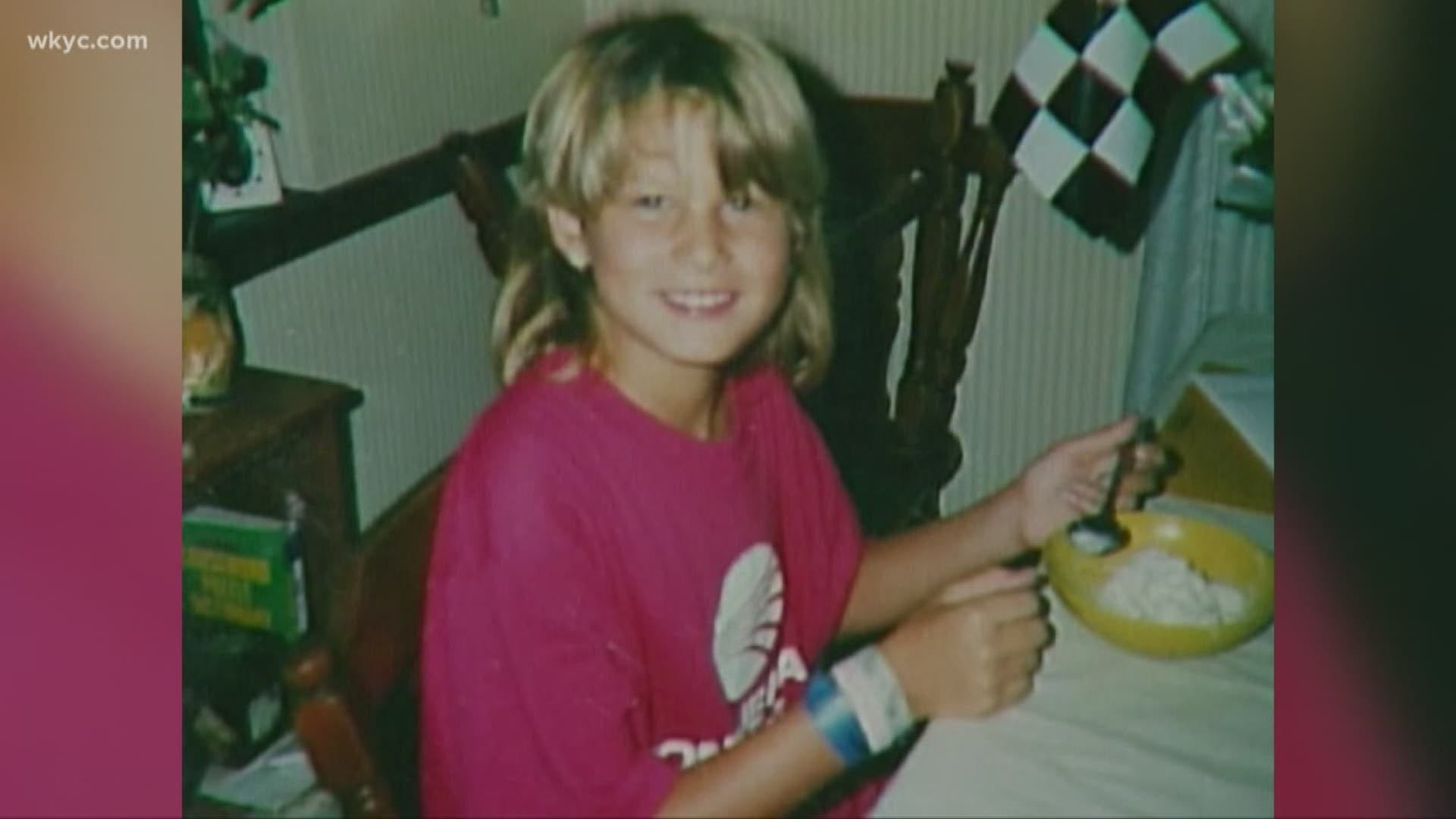
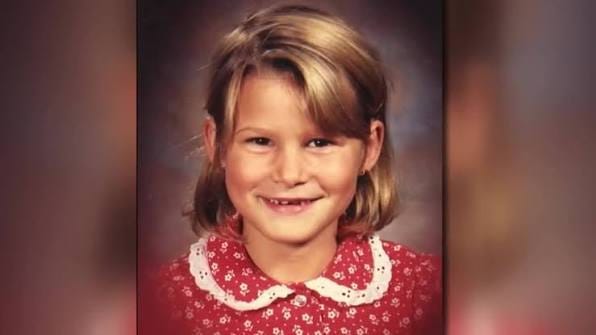
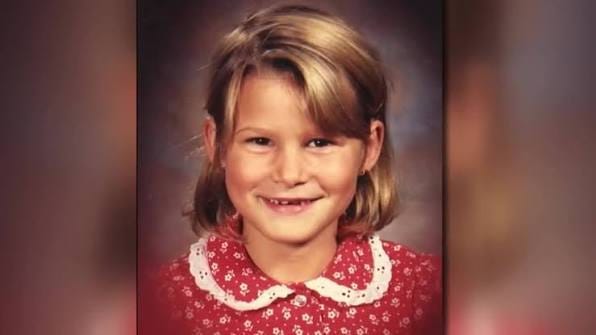
Something bad happened on October 27, 1989. Amy Renee Mihaljevic was ten years old. She was in fifth grade at Bay Middle School the fifth-grade class had been moved to the middle school building that year, though the students kept their elementary-school dismissal time of 2:10 in the afternoon. She loved horses. She wore a small cross around her neck. Her father Mark was a car salesman. Her mother Margaret sold advertising for a classifieds publication called the Trading Times.
The Trading Times detail matters because it is the thread from which everything else unravels.
The Phone Call
In the weeks before October 27, Amy Mihaljevic received a phone call at home from a man she did not know. He said he was a colleague of her mother’s. He said Margaret had received a work promotion a promotion that, he implied, Amy did not yet know about because it was meant to be a surprise. He wanted Amy’s help selecting a gift for her mother to mark the occasion. He would take her shopping after school. They would choose something special together. He knew where Margaret worked. He knew enough about the Trading Times and its environment to make the story plausible to a ten-year-old girl. He called the Mihaljevic home, not the school. He had researched Amy’s family. Amy told her friends. She told her older brother. She was excited she was going to help plan a surprise for her mother. The person who called had done precisely what child predators do when they plan an abduction: he had created a scenario that exploited a child’s love for her parent and her desire to participate in something good.
On October 27, 1989 a Friday Amy’s class was addressed by a Bay Village police officer named Mark Spaetzel, who spoke about stranger danger. He would later become a detective on her case. At 2:05 p.m., Amy and her friends walked from Bay Middle School toward the Bay Square Shopping Center, approximately a fifth of a mile away. She was last seen outside a business at the plaza, apparently waiting. A man approached her and placed his hand on her shoulder. Witnesses later described this: the hand on the shoulder, the two of them walking together through the parking lot.
He walked her to his car. She got in and they drove away. Two eyewitness accounts of the man were collected. Composite sketches were produced. He was described as white, in his thirties or forties, with a medium build. A gold or yellow-colored Oldsmobile was later identified by witnesses as having been parked in the alley behind a nearby auto shop the alley that led directly to the shopping center on the day Amy disappeared. Amy Mihaljevic was reported missing the afternoon of October 27, 1989, when she failed to come home. Her mother Margaret had received no such promotion. The story was a lie constructed to get Amy into a car.
The search for Amy was immediate and massive. Bay Village police worked the case. The FBI’s Cleveland field office was heavily involved many of the bureau’s northeast Ohio agents lived in Bay Village, and the case became personal in a way that official case assignments rarely are. America’s Most Wanted featured Amy’s case in its early years. John Walsh presented it. Her face the sandy-haired ten-year-old with the cross necklace who loved horses became one of the most widely distributed missing children’s images of the era. On February 8, 1990, one hundred days after Amy disappeared, a jogger running along Township Road 1181 in Ruggles Township in rural Ashland County, Ohio, found her.
She was in a field adjacent to the road. She was dressed in the same clothes she had been wearing on October 27 the same outfit, after three months of Ohio winter in an open field. She had been stabbed to death. The forensic findings from the scene and the autopsy provided the physical record of what the investigation would work from for the next thirty-six years. Her last meal had been a soy substance, possibly Chinese food or a processed chicken product. Yellow or gold-coloured fibres were found on her body. Blood in her underwear suggested she had been sexually assaulted. She had been dumped in the field relatively shortly after her abduction, based on the condition of the remains she had likely been killed the same day she was taken.
Three items Amy had carried to the shopping plaza were missing. Her black ankle boots. A black leather binder with “Buick, Best in Class” on the front clasp a promotional item she had brought with her. Turquoise earrings in the shape of horse heads. Her killer had taken them. Investigators have believed for thirty-six years that the killer may still have these items that they are souvenirs of a crime that the man who committed it has kept in some private place across four decades of freedom. With Amy’s body, investigators found something else: a curtain and a blanket. They were homemade. They appeared to have been used to wrap or transport her body. They were unlike anything sold in any store investigators could identify made by someone with specific domestic skills, from specific materials, in a pattern that might identify them to someone who had seen them before. The curtain has been shown repeatedly over the decades to the public and to potential witnesses. Nobody has come forward to confirm they recognize it.
The Investigation: Thirty-Seven Years
The Amy Mihaljevic investigation is the longest active case in FBI history. That designation the longest active case carries particular weight in a bureau that has worked thousands of cold cases. It means that since October 27, 1989, a federal investigation has never been closed. Not technically cold. The case generated more than fifty thousand tips. Each one was logged, assessed, and where possible investigated. Dozens of suspects submitted to polygraph examinations over the years. Bay Village Police collected DNA swabs from approximately two hundred and fifty people with some connection to Amy or her family. The FBI, at its most focused point on the case, developed what investigators described as a top-twenty-five list of suspects men who had the means, the motive, and the opportunity to make the phone call to Amy’s home and to be at Bay Square Shopping Centre on October 27, 1989.
Most of those men are still alive. The caller had to know where Amy’s mother worked. He had to know enough about the Trading Times to make his story credible to Amy. This suggests he had access to information about the family through professional contact with the Trading Times, through personal acquaintance with a Trading Times employee, or through some other channel. Investigators spent years mapping the professional and social world of everyone who might have had that access. In 2006, Bay Village police collected DNA swabs from several specific suspects. In 2007, it was reported that a longtime suspect had retained legal counsel a move that foreclosed direct investigation of that individual. In 2013, the case received renewed attention through the book A Murder in My Hometown by journalist James Renner, who spent years investigating and publicly discussed several specific suspects. His investigation pointed toward individuals connected to the Trading Times advertising world. In February 2021, investigators announced that a person of interest had emerged after a woman contacted authorities in 2019 with what they described as potentially valuable information. The specific content of that information has not been publicly released. The person of interest has not been named.
The DNA: What the Lab Is Doing Right Now
In 2016, Bay Village Police began embracing more advanced forensic techniques. Amy’s clothing her sweatshirt, sweatpants, underwear, and socks had been preserved in evidence storage for twenty-seven years. So had the blanket and the curtain investigators believe the killer used to transport her body. These items were submitted for DNA testing. The testing process has been iterative and cumulative. Amy’s clothing has been tested “a handful of times” for DNA across the years, most recently in 2024 and 2025. In October 2024, Bay Village Detective Sergeant Jay Elish made an announcement that briefly energised the investigation. DNA testing of Amy’s sweatpants had found male DNA. “We’ve definitely found some male DNA on Amy’s sweatpants that we feel is promising and may result in identifying someone,” Elish told reporters. “We’re hopeful.” The qualification came immediately. The amount of DNA collected was too small to produce a full profile using the technology currently available. “Right now we don’t have the technology in the DNA world to come up with a DNA profile with the small amount that we have,” Elish explained. But he added something significant: “We are being told it may be as close as six months to a year.”
That was October 2024. The DNA on the sweatpants was a separate discovery from a second, potentially more significant find: hairs on Amy’s clothing. Investigators discovered hairs that did not belong to Amy or to any family member hairs that, if they can be tested to a successful DNA profile, could be compared against the two hundred and fifty swabs on file or submitted to forensic genealogy databases. Those hairs are currently being tested at a laboratory in California. As of September 2025, DNA testing on the hairs was underway. Detective Sergeant Elish was asked whether the hairs might be from Amy’s killer. “If the answer is yes,” he said, “we go to phase two, where we get a profile.”
That profile would be Amy’s killer’s DNA. It could be compared against the swabs collected from suspects over three decades. It could be submitted to genealogy databases. It could identify a man who has been walking free in Ohio and who, investigators believe, most of his community has never suspected for thirty-seven years.
The Souvenirs
Bay Village police have believed for thirty-six years that Amy Mihaljevic’s killer kept her boots, her binder, and her horsehead earrings.
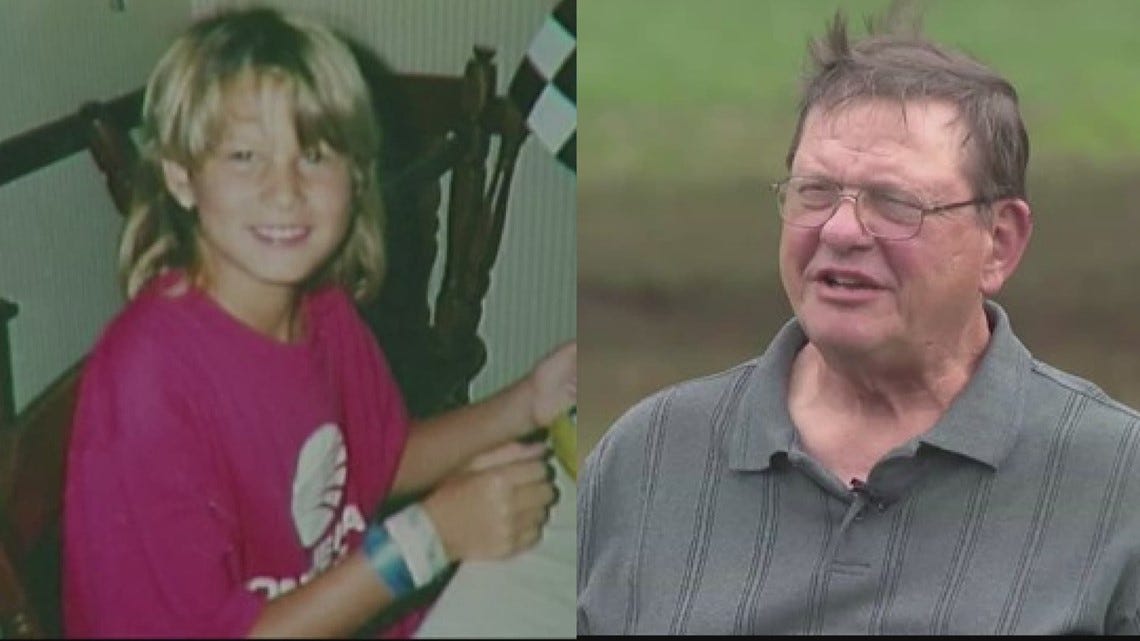
Serial offenders who keep souvenirs from their crimes keep them for reasons that forensic psychologists understand well: they are physical connections to the act, objects that can be used to relive and possess the memory of what was done. They are kept in private places in closets, in drawers, in storage units, in the specific hidden geography of a life lived in public while carrying a private secret. The binder is particularly distinctive: “Buick, Best in Class” on the front clasp. It is a promotional item, the kind distributed by car dealerships. The fact that Amy had it with her is connected, through the investigative record, to the wider question of what dealership or advertising environment connected Amy’s killer to the Trading Times and to her family. Mark Mihaljevic, Amy’s father, has spoken publicly about the case at every anniversary. He was on a business trip when Amy disappeared and came home to learn she was gone. He has said, in the plain and devastated language of a parent who has spent thirty-seven years in this specific grief: “It’s too big of a secret for someone not to have told somebody. People don’t keep secrets like this without telling somebody.” He believes Amy’s killer is still alive. He believes someone in that killer’s life knows, or suspects, or has seen something that did not fit. He believes the secret has been maintained at a cost that someone, somewhere, could end by picking up a phone.
Bay Village Now
Bay Village is not the same community it was on October 26, 1989 the last day before the question that would define it. The police officer who talked to Amy’s class about stranger danger on the morning she was taken went on to become a detective who spent years working her case. The shopping plaza where she waited for a man who told her a lie about her mother’s promotion is still there. The alley where the gold Oldsmobile was parked still exists behind the auto shop. People lock their doors now. Parents pause before leaving children alone. Bay Village has been, for thirty-seven years, a community that keeps one eye open because a man drove into their community in October 1989, took a ten-year-old girl from a shopping plaza in broad afternoon daylight, and has never been found. He is somewhere. He is probably in Ohio. He is probably according to Amy’s father and the investigators who have spent three decades tracking him still alive, still carrying the secret, still in possession of a pair of black ankle boots and a binder that says “Buick, Best in Class” and earrings shaped like horses. A hair from his head may be in a California laboratory right now.
The California Lab
Detective Sergeant Elish expected results from the California lab sometime in the fall of 2025. Whether those results have produced a viable profile whether the hair is Amy’s killer’s hair, and whether the sample is sufficient for phase two has not been confirmed in public reporting as of this writing. The investigation has been excited before and found itself disappointed. “We’ve been excited a few times with this case,” Elish said in September 2025. “We’ve learned to hold back and wait, so we’re not let down. But this is very exciting what we have.” The FBI is offering a $25,000 reward for information leading to the arrest and conviction of Amy’s killer. More than $100,000 has been spent on DNA testing in this case alone over the course of the investigation.
Amy Mihaljevic was born on December 11, 1978. She would be forty-seven years old today. She loved horses. She wore a cross necklace. She went to a shopping plaza after school to help buy a gift for her mother, because a man called her home and told her it would be a surprise, and she wanted to do something good for someone she loved. She deserved to grow up. She deserved the horses. She deserved every ordinary thing that was taken from her in a parking lot in Bay Village on a Friday afternoon in October 1989. Her killer is somewhere. The hair in the California lab may be his.
Amy Renee Mihaljevic was born December 11, 1978. She was kidnapped from the Bay Square Shopping Center in Bay Village, Ohio, on October 27, 1989. Her body was found on February 8, 1990, in a field in rural Ashland County, Ohio. She was ten years old. Her killer has never been identified. DNA testing of hair found on her clothing is currently underway at a laboratory in California.
If you have information: FBI: 1-800-CALL-FBI Bay Village Police Department: (440) 871-1234 FBI reward: $25,000


Leave a comment