Washington, DC, 2001 a twenty-four-year-old government intern disappeared in early May and was not found for thirteen months. When her skeletal remains were located in Rock Creek Park, it emerged that the DC Metropolitan Police had failed to search the area where she lay. A man was convicted of her murder. His conviction was thrown out. The witness against him had lied. The man was deported. Chandra Levy’s murder has never been solved.
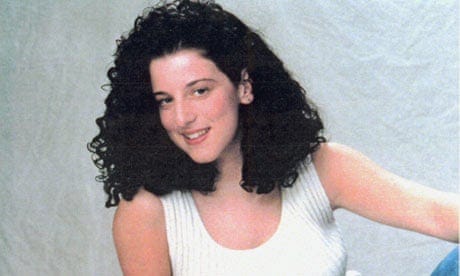
Chandra Ann Levy was born in 1977 in Cleveland, Ohio, and grew up in Modesto, California, the daughter of Robert and Susan Levy. She was, by every account of the people who knew her, ambitious in the specific way of young women who believe they are headed somewhere significant she had earned an undergraduate degree in journalism from San Francisco State University and was working toward a master’s degree in public administration at the University of Southern California. She wanted to work for the FBI. She was twenty-four years old and in Washington, DC, on an internship at the Federal Bureau of Prisons when she vanished. The spring of 2001 was her last. She had planned to return to California in early May to complete her degree. Her internship was ending. She was packing up, making arrangements, doing the ordinary work of a young woman finishing one chapter and preparing for the next. On or around May 1, 2001, Chandra Levy disappeared.
If you enjoy my true crime coverage, please help me continue my newsletter and keep it free for others, by upgrading here for only $5 a month:
She was reported missing on May 6 by her parents, who had been unable to reach her by phone for several days. The Washington Metropolitan Police Department opened a missing persons investigation. In the early weeks, the case was treated as one of the thousands of adult disappearances that occur in American cities annually distressing, but not necessarily criminal. Adults leave. Adults go off the grid. Adults sometimes simply stop returning calls. Then Chandra’s parents revealed the affair. Chandra Levy had been in a relationship with Gary Condit, the Democratic congressman from California’s 18th district Modesto’s congressman, as it happened. He was nearly thirty years older than she was. He was married. The relationship had been, by all accounts, serious on Chandra’s side and carefully hidden on Condit’s. He had never publicly acknowledged it. He had instructed people connected to him not to discuss it. When the affair became public knowledge in the summer of 2001, the Chandra Levy missing persons case transformed overnight into one of the most heavily covered media stories in America for approximately three months, until the morning of September 11, 2001, when the coverage stopped.
During those three months, the investigation focused heavily on Condit. He was interviewed multiple times. A DNA sample was collected from him and matched material found on underwear at Chandra’s apartment a finding that confirmed the affair but produced no evidence of criminal involvement. He denied any role in her disappearance. He denied having had a romantic relationship with her, a denial he would eventually soften without ever fully retracting. He was never named as a suspect. He was never charged.
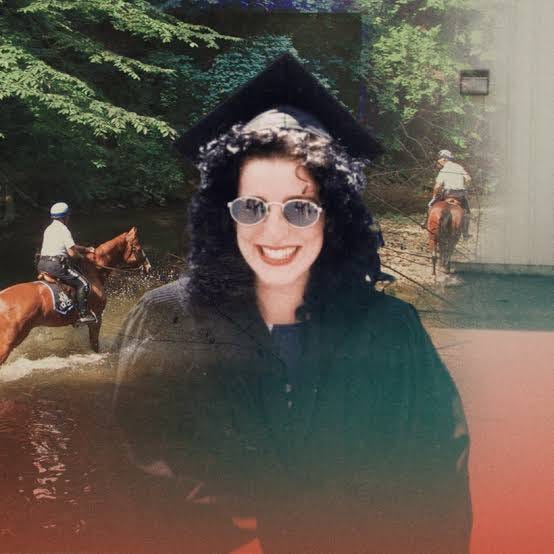
But the fixation on Condit had a catastrophic effect on the actual investigation. The Washington Metropolitan Police Department, which was simultaneously managing the political and media pressure of the congressman angle, had already identified another person of interest: a Salvadoran immigrant named Ingmar Guandique, who had been arrested in August 2001 for assaulting two women in Rock Creek Park the same park, as it turned out, where Chandra Levy’s body would eventually be found. Guandique had attacked his victims from behind on the park’s trails, in a pattern consistent with an ambush. The police identified him. They noted his attacks in the same park. They classified him as a “person of interest” and moved on. The search for Chandra’s body in Rock Creek Park was also compromised by an internal miscommunication. Police protocols directed search teams to cover only the area within one hundred yards of roads. The embankment where Chandra’s remains lay was beyond that boundary. It was not searched. On May 22, 2002, thirteen months after Chandra Levy disappeared, a man walking his dog in Rock Creek Park found her remains on a steep, overgrown embankment.
She was skeletal by then thirteen months in a DC park, through the summer and fall and winter and into the following spring. The DC medical examiner could not determine a precise cause of death from skeletal remains alone, but the circumstances of the discovery were not consistent with natural death or accident. Her jogging pants had been tied in knots a detail that investigators interpreted as indicating restraint or foul play. The medical examiner concluded that she had died through the acts of another person. The area where she was found was outside the zone police had searched the previous year. Had the search protocol been correct, or had someone walked the embankment during the initial investigation, Chandra Levy’s body might have been found within weeks of her disappearance, when there was still physical evidence to examine. The evidence that remained after thirteen months in the park was limited. There was no DNA profile of a perpetrator recovered from the scene. The investigation continued, but the physical foundation it needed had been degraded by time and by the search failures of the year before.
The Conviction
In 2009, eight years after Chandra Levy’s disappearance, prosecutors moved against Ingmar Guandique. The case rested substantially on the testimony of a fellow inmate named Armando Morales, who claimed that Guandique had confessed to the killing while they were incarcerated together. Jailhouse informant testimony is among the most legally contested forms of evidence in American criminal law it is testimony given by a person who has powerful incentives to say what prosecutors need to hear, whose credibility is difficult to assess, and whose account cannot be independently corroborated in most cases. Guandique had always maintained his innocence. He had never confessed to investigators. The prior park attacks established a pattern, but pattern evidence alone does not constitute proof of a specific murder. Nevertheless, in November 2010, a jury convicted Ingmar Guandique of the first-degree murder of Chandra Levy. He was sentenced to sixty years in prison.
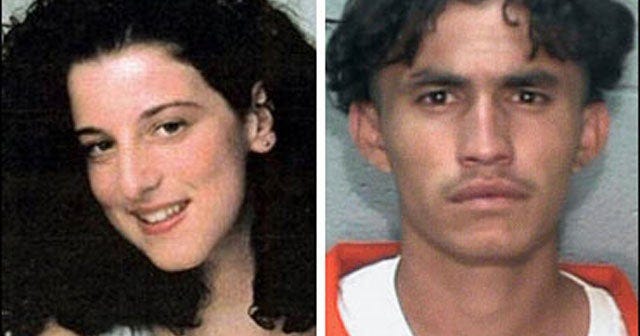
The conviction lasted six years. In 2016, prosecutors from the DC United States Attorney’s Office began reviewing the case and uncovered a serious problem with Armando Morales, the witness whose testimony had been central to the conviction. Morales had not been candid about his history as a jailhouse informant he had served in that capacity in previous cases and had not disclosed this to the defense. He had also lied under oath about other aspects of his background. The perjury and withheld information went to the core of his credibility. Without a credible witness, the prosecution had no case it could present to a new jury. In 2016, a judge vacated Guandique’s conviction. Prosecutors announced they would not retry him. Ingmar Guandique, who had spent years in federal prison for a murder the legal system could no longer prove he committed, was deported to El Salvador in 2017. The conviction had rested on a witness who lied. The witness had been used because there was no physical evidence linking Guandique to the crime. The physical evidence that might have existed had been lost during thirteen months on an unsearched embankment in Rock Creek Park. Each failure in the investigation feeds the next one.
Gary Condit lost his 2002 congressional re-election bid, a loss widely attributed to the Levy case and the questions it raised about his character and candor. He was never charged with any crime. He moved back to California and went into business. He remained, for years, the figure around whom theories about Chandra’s death continued to circulate not because evidence implicated him, but because the affair established his connection to her, and because his handling of the public scrutiny in 2001 was widely judged to be evasive and self-serving. In later years, Condit acknowledged the relationship but maintained that he had nothing to do with her death. The DNA evidence collected in 2001 had cleared him as a suspect in the murder itself. The reputational damage was permanent regardless.
True Crime Weekly is a reader-supported publication. To receive new posts and support my work, consider becoming a free or paid subscriber.
Rock Creek Park is a long, wooded federal park running through the northwest corner of Washington, DC a piece of wilderness in the middle of the capital, with hiking trails and horse paths and the kind of dense undergrowth that can swallow a person from the trail in a few feet. Chandra Levy was found on a steep embankment off one of those trails, in an area that the initial search had never reached. She had been there for over a year. The park had other victims. The two women Ingmar Guandique attacked in the summer of 2001 survived. Whether Guandique killed Chandra Levy whether the pattern of his park attacks and the discovery of her body in the same park add up to proof is a question the legal system has now twice declined to resolve through conviction. The first answer was wrong, or at least built on perjury. The second answer is that there is no answer.
The Unsolved Murder
Chandra Ann Levy was twenty-four years old. She wanted to work for the FBI. She was finishing a master’s degree and wrapping up an internship and planning to fly home to California when someone encountered her in a park and she did not come home. Her murder has never been solved. Her killer has never been convicted. The man whose conviction stood for six years was deported. The congressman whose affair with her consumed a summer of news coverage lost his career but faces no criminal jeopardy. The police department that failed to search the embankment where her body lay for thirteen months has faced no formal accountability for that failure. Susan Levy, Chandra’s mother, has given interviews over the years that contain the particular exhaustion of a parent who has watched her daughter’s murder become a political story, a media spectacle, a legal proceeding that ended in a deportation rather than a conviction. She has said she believes there was definitely something going on between Chandra and Gary Condit. She has also said she does not know who killed her daughter. Neither does anyone else.
Chandra Ann Levy was born in 1977 and disappeared on or around May 1, 2001, in Washington, DC. Her skeletal remains were found in Rock Creek Park on May 22, 2002. She was twenty-four years old. Ingmar Guandique was convicted of her murder in 2010; the conviction was vacated in 2016 and charges were dropped. He was deported to El Salvador in 2017. Her murder remains officially unsolved.


Leave a Reply