A Utah man came home on the evening of March 3, 2022, and his wife made him a drink. He was found dead before dawn. The autopsy would show fentanyl in his system at five times the lethal dose. His wife, who had already tried to kill him once on Valentine’s Day had been sourcing the drug through a dealer since December. Several months after his funeral, she self-published a children’s book dedicated to her amazing husband. She was convicted of his murder in 2026 and sentenced to life without parole.
Kamas, Utah
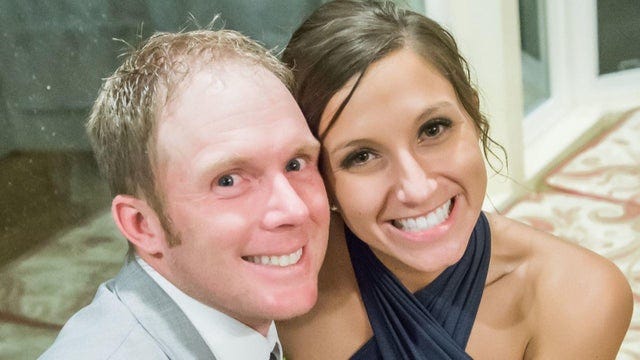
Eric Richins was thirty-three years old in the spring of 2022, living with his wife Kouri and their three sons in Kamas, a small town in Summit County, Utah, about an hour southeast of Salt Lake City. It is the kind of place where a family with three boys and a house near the mountains represents exactly the life it looks like outdoors, community, children growing up with room to run. By all accounts, Eric was generous and kind. His father, Gene Richins, would say at sentencing that the family missed him every day and would continue to honour his memory.
Kouri Richins was thirty-two. She worked in real estate. On the night of March 3, 2022, she told investigators that the couple had been celebrating the closing of a house deal. She made Eric a Moscow Mule. She served it to him in bed. She fell asleep in another room with one of their sons, who was having a night terror. When she returned to their bedroom at around three in the morning, she found Eric cold and unresponsive on the floor. She called 911, Summit County deputies arrived and declared Eric Richins dead at the scene.
The true crime cases I cover take me lots of time, if you enjoy my work, please upgrade here for only $3:
What the Autopsy Found
The cause of death was fentanyl toxicity. The concentration of fentanyl in Eric Richins’s system was five times the lethal dose a quantity that would not survive as an accidental exposure or a recreational miscalculation. The medical examiner concluded it had been ingested orally. Someone had put it in something he drank.
The autopsy opened an investigation. What investigators found when they went looking backward through the weeks before Eric’s death transformed the case from a tragedy into something else entirely.

The Valentine’s Day Attempt
February 14, 2022 three weeks before Eric Richins died he became violently ill after dinner with his wife. He believed he had been poisoned. He told a friend he thought Kouri was trying to kill him. It did not, apparently, produce a police report. It did not end the marriage. He was still at home three weeks later when she brought him the Moscow Mule.
Prosecutors alleged that Kouri had obtained fentanyl three days before Valentine’s Day. The attempt failed the dose, or the delivery, was insufficient. On February 26, she allegedly went looking for more, using a contact who connected her with a dealer in Ogden. She was building toward a second attempt, and she completed it on the night of March 3.
The investigation into how Kouri Richins obtained fentanyl traced back to December 2021 three months before Eric died. She had approached a person previously charged with drug distribution and asked for prescription pain medication, telling them it was for an investor with a back injury. She received hydrocodone. About two weeks later, she came back and asked for something stronger. She wanted fentanyl specifically. Investigators noted that she referred to it, in messages, as “some of the Michael Jackson stuff” a reference to the propofol that killed Michael Jackson, apparently used as shorthand for a drug that could stop a person’s heart. The acquisition was not impulsive. It was methodical. It began months before Eric’s death, it continued through a failed first attempt, and it concluded on the night she made him a drink to celebrate a real estate deal.

One detail that emerged during the investigation concerned Kouri’s phone during the hours she said she was in another room with her son. Her phone, according to investigators, had been opened multiple times during those hours. Messages were sent and received. Messages were deleted. If she had been asleep beside a child having a night terror, as she described, the phone activity did not fit the account she gave.
On March 5, 2023 almost exactly one year after Eric Richins was found dead on the floor of their bedroom Kouri Richins self-published a children’s book.
Its title was Are You With Me? Its description said it was written to bring peace and comfort to children who have lost a loved one. The dedication read: Dedicated to my amazing husband and a wonderful father.
It was the detail that made the case national news. The image of a woman who had, prosecutors alleged, laced her husband’s drink with a five-times-lethal dose of fentanyl, watched him die, and then written a grief book for children dedicated to him was the kind of detail that does not need editorializing. The book became the symbol of the case in the same way that particular details in particular cases become symbols: not because they are the most legally significant element, but because they crystallise something about the nature of what happened. She was arrested in May 2023, about two months after the book’s publication.
The case went to trial in early 2026. Kouri Richins was charged with aggravated murder, attempted aggravated murder for the Valentine’s Day poisoning, two counts of insurance fraud, and forgery. The defense rested without calling any witnesses. Closing arguments were held with the public excluded from the courtroom, at the family’s request. After approximately three hours of deliberation, the jury returned guilty verdicts on all counts. The financial motive the prosecution had emphasized throughout insurance policies, beneficiary designations, the architecture of a plan aimed at a payout was reflected in the fraud counts the jury also sustained. She had not only killed him. She had, prosecutors argued, been killing him for money, and had taken steps to collect on his death.
Upgrade here to support my time and writing covering true crime cases for only $3:
The Sentencing
On May 13, 2026, Judge Richard Mrazik sentenced Kouri Richins to life in prison without the possibility of parole. He said she was “simply too dangerous to be free.” He described the case as one in which she had attempted to kill Eric once, failed, doubled down, and completed the act for monetary gain.
Eric’s father asked for the maximum. He described his son as the man his family would miss every day. Kouri’s mother asked the court not to impose a bar on parole and said the jury had been wrong that her daughter was incapable of murder. The couple’s sons submitted written statements. The oldest, now thirteen years old, said he would feel unsafe if his mother were ever released. He said he feared she would come after him and his brothers. He said he did not miss Kouri.
Kouri Richins, at sentencing, apologized to her sons for their hardship and said she had never abandoned them. Her attorneys announced they would appeal. She maintains her innocence.
Kamas, Utah
The three boys Eric Richins left behind are growing up in the absence of a father who, his family says, was kind and generous and is missed every day. They are also growing up as the sons of the woman convicted of killing him with the grief book, the dedication, the Moscow Mule, and the five-times-lethal dose as the record of how their family ended. Eric Richins was thirty-three years old. He came home on the night of March 3, 2022, and his wife made him a drink, and he did not survive until morning. His children wrote to the court that they did not miss her.
Eric Richins was found dead in his Kamas, Utah home on March 4, 2022. He was thirty-three years old. Kouri Richins was arrested in May 2023. She was convicted of aggravated murder, attempted aggravated murder, two counts of insurance fraud, and forgery in early 2026. On May 13, 2026, she was sentenced to life in prison without the possibility of parole. She has appealed her conviction.


Leave a Reply