Shelley Ann Werner was fifteen years old when she was last seen alive in the parking lot of Wilt’s Grocery Store on Lincoln Way East in Mishawaka, Indiana. It was June 16, 1980 a Monday evening in the kind of small mid-American city where children still moved through the world with something approaching freedom. Shelley was from Osceola, a community just east of Mishawaka in St. Joseph County, and she was the sort of fifteen-year-old who attracted no particular concern from the people who knew her. A car pulled up. Someone she recognized or at least, someone whose face she did not entirely flee got out or rolled down a window, and then she was gone. A witness later reported seeing a person enter her vehicle at the supermarket. That witness’s account would be distilled into a composite sketch that circulated through the region’s newspapers and police bulletins in the weeks that followed. No arrest came from it.
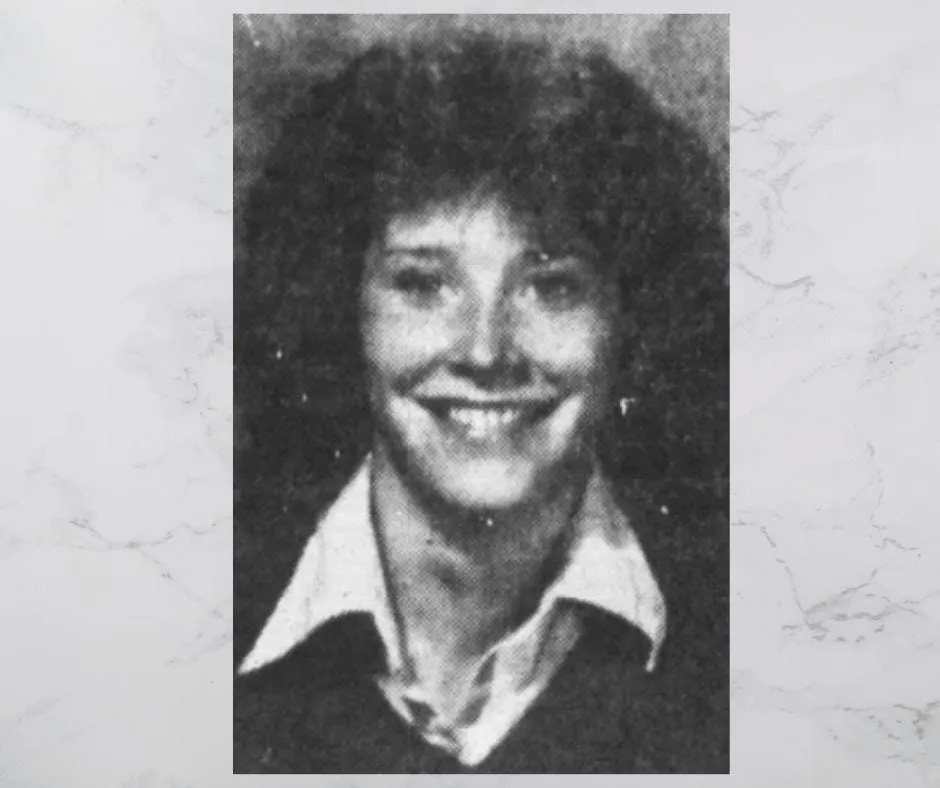
Ten days later, on June 26, Shelley’s body was found near an abandoned railroad line on Madison Road, about a mile west of US-31 in St. Joseph County. She was partially clothed. An autopsy determined she had been killed by a gunshot wound to the head. Her death was ruled a homicide. The St. Joseph County Metro Homicide Unit began what would become, over the next four decades, one of the most exhaustive cold case files in the region’s history nearly 150 witnesses interviewed, nearly 150 leads followed, a binder that would eventually run to forty-three years of accumulated material and still arrive at the same destination: an open case, three unnamed men, and no charges.
The investigation in those early years had the quality of urgency that violent crimes against children command. Shelley’s disappearance made regional and national headlines. Michiana Crime Stoppers recreated the scene at the grocery store. The composite sketch was published and republished. Tips came in. None of them led anywhere productive, and investigators would later say they understood why: the people who might have spoken knew what had happened to Shelley Werner, and they were afraid of the men who had done it.
The people who might have spoken knew what had happened to Shelley Werner, and they were afraid of the men who had done it.
Unlock exclusive deep dives into chilling mysteries, unsolved cases, forgotten crimes, and shocking investigations. Get subscriber-only stories you won’t find in our free newsletter.
Subscribe for just $5/month:
True Crime Weekly is a reader-supported publication. To receive new posts and support my work, consider becoming a free or paid subscriber.
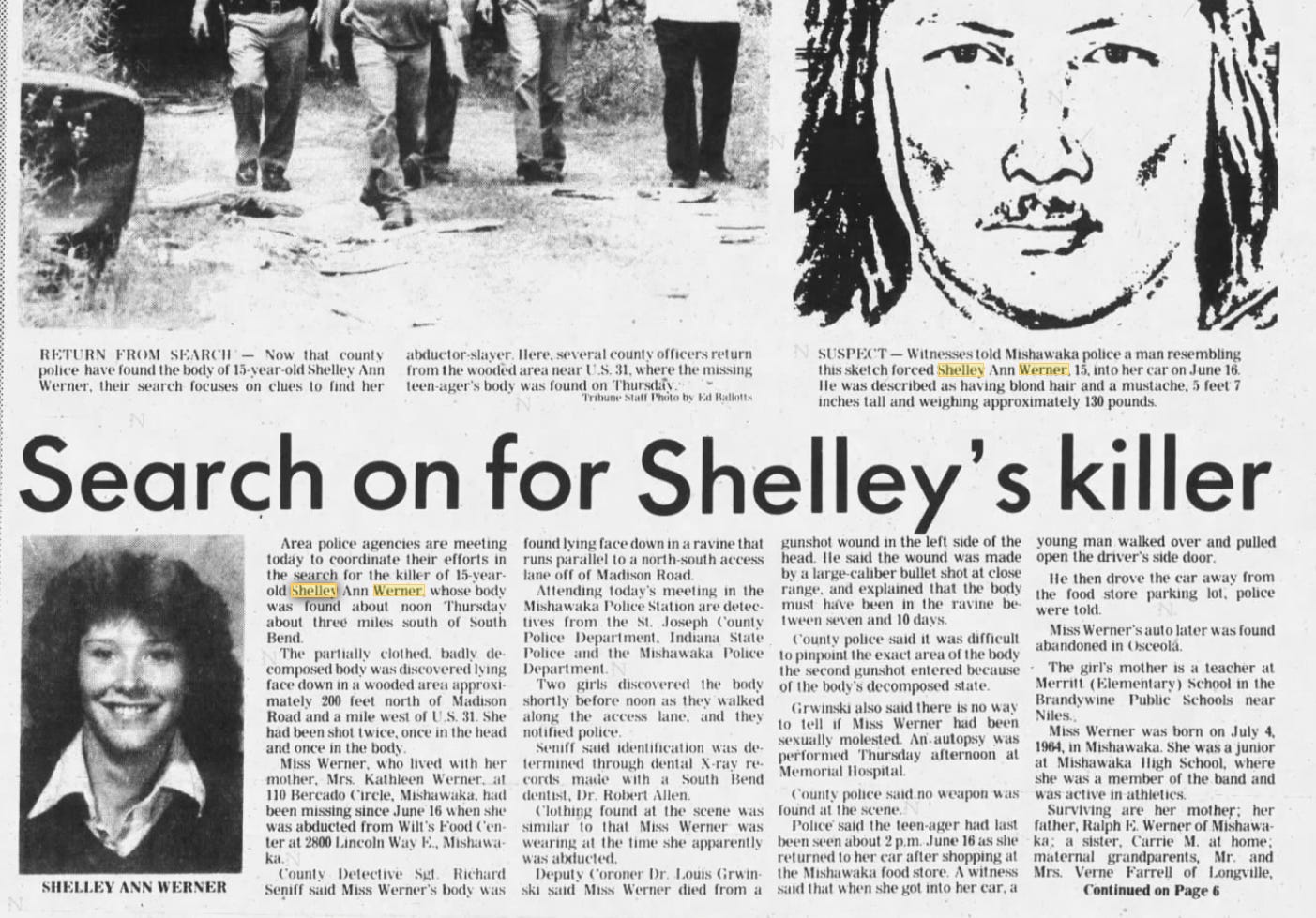
What investigators did not know in 1980, and what they would not fully understand for decades, was that the answer to what happened to Shelley was available almost from the beginning not in the forensic evidence, not in the composite sketch, not in the witness who had seen a car at the grocery store, but in the conversations of three men who had apparently felt free enough to discuss what they had done. According to witnesses who would eventually come forward, the three men responsible for Shelley’s abduction and murder had not been careful about silence. They had spoken. The problem was that they had also made clear to the people around them what the consequences of repeating those conversations would be, and in a small community where the men had presence and reach, that threat had been effective for a very long time.
The break in the case did not come through technology. It did not come through a DNA match or a cold case review powered by genealogical databases. It came through a woman who had known what she knew for years and had not been able to say it out loud while two of the three men remained alive. When the second of them died one in 2001, another in 2010 she made contact with investigators. She told them she had been intimidated by one of the suspects, that the threat had been personal and direct, and that she had spent decades carrying information she could not safely release. When investigators asked her to tell them what she knew, she did.
What she described was targeted. The three men had known Shelley Werner not closely, not as friends or family, but in the way that people in overlapping small-town orbits sometimes know each other at a remove. She would have recognized their faces. They were older than she was, by five to ten years. The attack on her was not random. It was aimed.
In January 2022, the Mishawaka Police Department formed a Cold Case Unit staffed by volunteer retired officers former South Bend homicide investigators who brought decades of experience back to files that had been sitting without active attention since the Metro Homicide Unit disbanded in late 2021. Former detective James Campbell led the work on Shelley’s case, alongside David Dosmann, Tim Corbett, Sam Walsh, and Donna Newcomer. They took the original witness’s account and began building outward from it, locating additional people who could corroborate what she had said. What they assembled, piece by piece, was a picture the St. Joseph County Prosecutor’s Office ultimately deemed conclusive. The evidence was sufficient for charges. The problem was that there was no one left to charge.
The third suspect, whose fate had been unknown to investigators for years, had died in 2018. He had vanished from view in a way that made it impossible for law enforcement to locate him while he was alive, and investigators only learned of his death when they tracked him down to close the loop. All three men were gone. No DNA evidence in the case was identifiable the lab results had been inconclusive so there would be no posthumous forensic confirmation, no genetic match to anchor the case to any name in a public record. What existed was witness testimony, corroborated and cross-referenced by a cold case unit that had spent more than a year on a forty-three-year-old file.
True Crime Weekly is a reader-supported publication. To receive new posts and support my work, consider becoming a free or paid subscriber.
On April 26, 2023 the day Shelley Ann Werner would have turned fifty-eight years old the Mishawaka Police Department announced that the case was closed. They did not name the three men. They said there was no legal mechanism by which names could be attached publicly to suspects who could not be charged, tried, or given the opportunity to respond to accusations in a court of law. They said the evidence was conclusive. They said the attack had been targeted. They said a key witness had come forward only after two of the suspects died, and they said they understood why she had waited.
Shelley’s parents had died before the case was resolved. Her sister, reached by investigators, said she was grateful for the conclusion. The Mishawaka Cold Case Unit said it had seven other unsolved murders still under active review. James Campbell said fear and threats from suspects toward witnesses had been the single greatest obstacle in this case that the machinery of intimidation had been more effective at suppressing the truth than any failure of forensic technology or investigative will.
What that means, translated plainly, is that three men who abducted and killed a fifteen-year-old girl in a grocery store parking lot on a summer evening in Indiana spent their entire lives without being prosecuted for it. They died in possession of whatever comfort the passing years had given them, in whatever circumstances they had made for themselves in the decades after June 1980. No one who loved Shelley Werner ever watched a verdict come down. No name was read aloud in a courtroom. The cold case unit found the answer. The answer arrived too late to mean anything except the naming of a closed file.
Shelley Ann Werner was fifteen years old.


Leave a Reply